Showing posts with label this week. Show all posts

03 January, 2020

Time to stand up and change

When I returned to work this week, I found a Christmas beetle at the bottom of my coffee cup.
There it sat, nose down, perfect and shiny, with it’s hairy little legs splayed as if it had just finished off the dregs of my pre-holiday latte and was full to the brim.
John Lewis.
It was dead of course, but it made me think — where have all the Christmas beetles gone?
We used to get plagues of the little blighters on our verandah every year — as an advanced warning of the seasonal silliness to come.
Now, their dwindling numbers are a warning of something more serious.
Australia has been burning since September and the inferno is not over yet — we’ve still got two months of summer to go.
As I write, navy ships and military aircraft are evacuating people from scenes of apocalyptic fire zones.
Thousands of firefighters are battling more than 100 bushfires in NSW and about 40 in Victoria.
The Australian capital is blanketed in dense smoke 21 times above the hazard rating.
So far, the fires have claimed 17 lives and destroyed more than 1000 homes.
While the fires themselves bring out the best in us by bringing people together to support each other, they are also now fanning the f lames of dissent and argument.
Are the fires caused by climate change? If so what do we do about it?
Some people reason like this: perhaps the fires are caused by climate change, but fires have happened before and the climate has changed before, there’s nothing we can do about it — so let’s all get on with the job of living with it.
Barnaby Joyce summed it up the conservative attitude neatly when he said it was all part of God’s plan, and unless we respect that we’re ‘‘going to get nailed’’.
Barnaby was right in the last part — we are going going to get nailed — or more accurately, roasted. But only if we adopt the ostrich approach and do nothing.
There is also an ostrich economic argument: Australia’s
emissions are so small compared to the rest of the world that anything we do won’t make any difference, so let’s do nothing and continue business as usual.
So yes, there have always been fires and droughts and yes Australia’s greenhouse gas emissions are smaller than China’s — but the point is, the fires, droughts and emissions are getting worse and things have to change. Now is the time to stand up and be counted and do something to tackle the situation.
It’s a simple concept that goes beyond tinkering with taxes and bureaucracy reforms — it’s called leadership. Lead the way, point to the bigger picture, don’t rely on others to take up the slack, in the words of another conservative — be a lifter not a leaner.
There are plenty of Australians who are lifting up their fellow citizens right now, sacrificing their time, their money and some tragic cases, their lives to make the world a safer, better place.
We need to make sure their efforts are not in vain, that we can change things, and that the Christmas beetle will return.
● John Lewis is a journalist at The News

An opinion piece from The Shepparton News by John Lewis - “Time to stand up and change.”

17 December, 2019

Victoria braces for hottest ever December day

A heatwave sweeping Victoria this week is expected to break decades-old temperature records, fuel bushfires and strain emergency departments.
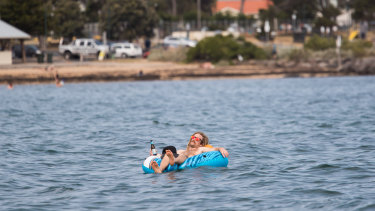
Chilling out at Williamstown beach on Tuesday.
Melbourne is set to swelter through 39 degrees on Wednesday, with a respite of 23 degrees on Thursday, before climbing to 41 degrees for Friday's heatwave peak.
Tradies will down tools at many construction sites on Wednesday and Friday due to the CFMMEU's hot weather policy, including large developments in Melbourne's CBD.
Emergency services will be at their highest level of readiness on Friday as temperatures soar above 40 degrees across most of the state, with some towns in the north-west potentially reaching 47 degrees.

Read the story from The Age by Zach Hope - “Victoria braces for hottest ever December day.”

11 December, 2019

New coalmines in Queensland don’t help existing communities, they hurt them

This week in Queensland, Anthony Albanese has been devastating in exposing the lies, hypocrisy and absurdity of the National party’s election “promise” to build a new coal-fired power station. 
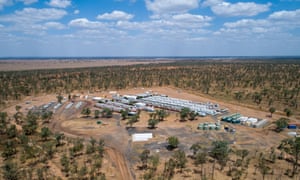
Overhead view of mine site and land clearing in campsite
The consequence of interstate competition to
attract new coalmines is that taxpayers and
the world’s climate pays a high price.
That even the idea of building such a power station hasn’t demolished the economic environmental and political credibility of the Morrison government tells you a lot about what is wrong in Australian politics today.
But how do we square the circle on the broader coal debate? Internationally, the debate between those who think it’s time we talked about fossil fuel supply (think Adani, the Keystone XL pipeline or the Canadian oil sands) and those who want to keep the focus on fossil fuel demand (think talk of targets, trajectories and closing down coal power stations) has been brewing for some time.
But there’s no need to fight. Alfred Marshall was the economist who invented what we now think of as supply and demand curves. He was once asked whether it was supply or demand that determined price – his response was that it was like asking if it was the upper or lower blade of the scissors that did the cutting.

Read the story from The Guardian by Richard Denniss - “New coalmines in Queensland don’t help existing communities, they hurt them.” 

17 November, 2019

Actually, it is climate change

The quote you are about to read did not come from Scott Morrison, although our prime minister repeatedly invoked the same sentiments this week, every time someone asked him about the role of climate change in eastern Australia’s unprecedented bushfires.

Firefighters from the ACT on watch and act near Possum
 Brush, just south of Taree, NSW, on Tuesday.
“This sort of response isn’t helpful. Families are mourning. Offer a prayer and temper your desire for politics …”

Nor is this next quote from New South Wales Premier Gladys Berejiklian, who deemed it “inappropriate” to talk about the causes of climate change while her state was burning: “This is a time for people to grieve, to mourn, and to heal. This is not a time for political discussions or public policy debates.”

Those words aren’t attributable to Barnaby Joyce or Michael McCormack, or John Barilaro, or any of the other advocates of a bigger Australian fossil fuel industry. Nor was it Joel Fitzgibbon, or other “coalies” on the Labor side.

Actually, the quotes come from the United States’ National Rifle Association. The first was in response to the 2017 Las Vegas shooting, in which nearly 60 people were killed and more than 400 were injured. The second came after the 2007 Virginia Tech massacre, in which 32 died and 17 were wounded.


Read the story from The Saturday Paper by Mike Seccombe — “Actually, it is climate change.”

09 June, 2019

Coalition’s lies, damned lies and election-winning strategies

This week highlighted a number of massive problems we have in this country.
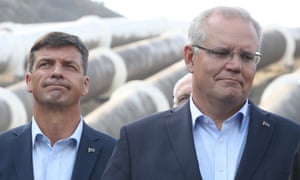
Angus Taylor and Scott Morrison
‘Morrison revealed what he really thinks by appointing
Angus Taylor minister for emissions reduction.’
The most obvious of course is the horrendous intrusions on freedom of the press. But a close second is the revelation about how poorly we debate and treat issues of the economy and climate change.
Everything you need to know about how we rate the importance of climate change is how the latest economic national accounts and greenhouse gas emissions data were released.

Read the story from The Guardian by Greg Jericho - “Coalition’s lies, damned lies and election-winning strategies.”

31 January, 2019

Polar vortex descends on US with 'dangerous, extremely rare' wind chills

Washington: Nearly 90 million people will experience temperatures at or below minus 17 degrees Celsius this week, from the Midwest to New England, and 25 million of those will face temperatures below minus 28 degrees Celsius,the US National Weather Service says.
The polar vortex dips down into the US.CREDIT:
Wind chill temperatures plummeted to minus 45.5 degrees Celsius in the Dakotas and northern Minnesota on Tuesday morning, and the painfully frigid air is forecast to spread south-east into Minneapolis, Milwaukee, Chicago and Detroit.


Read the story from The Age by Angela Fritz - “Polar vortex descends on US with 'dangerous, extremely rare' wind chills.”

31 October, 2018

Early season records set to tumble as hot air mass looms from the north

Parts of Victoria, South Australia and New South Wales are set to swelter through record-breaking temperatures this week, according to the Bureau of Meteorology.
Sydney is forecast to experience a low-intensity
 heatwave over the next few days.
The temperature in Melbourne could hit 34 degrees Celsius tomorrow — 11C over the average November maximum.

Adelaide, meanwhile, is set to reach 36C, which is 12C over the average.

On Friday, Sydneysiders could be facing a 37C day, which is 13C over the average.

Jenny Sturrock, senior forecaster with the Bureau of Meteorology, says the temperatures will set "early season records" tumbling.


Read the story from ABC News by Kate Doyle and Simon Galletta  - “Early season records set to tumble as hot air mass looms from the north.”

06 October, 2018

Earth’s climate monsters could be unleashed as temperatures rise

This week, hundreds of scientists and government officials from more than 190 countries have been buzzing around a convention centre in the South Korean city of Incheon.
Fundamental questions are being raised about the ability
 of governments to stop the Earth from spiralling into a ‘hothouse’.
They are trying to agree on the first official release of a report – the bit called the Summary for Policymakers – that pulls together all of what’s known about how the world might be affected once global warming gets to 1.5C.

What will happen to coral reefs? How will extreme weather events and droughts change? What about heatwaves? And then, what are the different “pathways” that economies could choose to keep temperatures to 1.5C?

On Monday morning, the summary document is expected to be released, and there will be a cascade of headlines around the world.


Read the story by Graham Readfearn from The Guardian - “Earth’s climate monsters could be unleashed as temperatures rise.”

30 July, 2018

How Did the End of the World Become Old News?

There has been a lot of burning lately. Last week, wildfires broke out in the Arctic Circle, where temperatures reached almost 90 degrees; they are still roiling northern Sweden, 21 of them. And this week, wildfires swept through the Greek seaside, outside Athens, killing at least 80 and hospitalizing almost 200. At one resort, dozens of guests tried to escape the flames by descending a narrow stone staircase into the Aegean, only to be engulfed along the way, dying literally in each other’s arms.
The fire this time (in Sweden).
Last July, I wrote a much-talked-over magazine cover story considering the worst-case scenarios for climate change — much talked over, in part, because it was so terrifying, which made some of the scenarios a bit hard to believe. Those worst-case scenarios are still quite unlikely, since they require both that we do nothing to alter our emissions path, which is still arcing upward, and that those unabated emissions bring us to climate outcomes on the far end of what’s possible by 2100.


Read the story by David Wallace-Wells from the New York magazine - “How Did the End of the World Become Old News?”

14 July, 2018

Climate Change Is Fueling Record-Breaking Heat

Soaring temperatures shattered records from Ottawa to Oman this week, as the Northern Hemisphere endured an oppressive hot spell. A heat dome cooked much of the eastern United States and parts of Canada, setting all-time temperature records in New Hampshire, Vermont and Montreal, where extreme heat took the lives of dozens of people in the city and the surrounding areas.
Source: Environmental Protection Agency.

The scorcher is an urgent reminder that climate change is already fueling dangerous heat, and that rising temperatures will imperil a growing a number of people in the years to come.

Carbon pollution from cars, trucks, factories, farms and power plants is trapping heat, driving up the average surface temperature of the Earth. This is shifting the entire distribution of temperatures, meaning we see fewer cold days and more warm days. When the weather is so hot it breaks records, look for a human fingerprint.


Read the Nexus Media story by Jeremy Deaton  - “Climate Change Is Fueling Record-Breaking Heat.”

09 April, 2018

Record temperatures forecast as unseasonable heatwave hits southern Australia

Record-breaking temperatures will continue in southern parts of Australia this week, with Adelaide set to cop the brunt of the heat today.
Beachgoers can expect temperatures in the mid-30s early this week in Adelaide.
Temperatures have peaked in the mid-30s in Adelaide and an April heatwave record looks set to be broken in the state capital.

Extreme heat in early April is not abnormal, but with 34 degrees Celsius in Adelaide on Sunday, 35C forecast for today and 33C on Tuesday, a significant record is in danger.


Read the story by Camron Sleesor from ABC News - “Record temperatures forecast as unseasonable heatwave hits southern Australia.”

09 February, 2018

'Wisterian' to give his farewell lecture at University of Melbourne

A longtime friend of Beneath the Wisteria will this week give his farewell lecture at the University of Melbourne.

Professor
David Karoly.
Professor David Karoly became a “Wisterian” soon after the group was set up in 2011 and because of that connection has visited and spoken in Shepparton several times. He also spoke at the Tatura Transition Towns first annual film festival.

And only recently he visited and spoke at Beneath the Wisteria.

The climate scientist will soon be leaving the university to take up a position in Melbourne with the CSIRO.
That final lecture, entitled “Reflections on a decade of climate change research” will be held in the Fritz Lowe Theatre at midday on Wednesday, February 14 at the university’s School of Earth Sciences and ARC Centre of Excellence for Climate System Science.

Professor Karoly said, “I joined the School of Earth Sciences at the University of Melbourne in May 2007 as an ARC Federation Fellow, with more research funding, more independence and more opportunities to tackle interesting problems than I’d ever had before.”

Pointing to Wednesday’s lecture he said, “I will reflect on the state of climate change science in 2007, at the time of the release of the IPCC Fourth Assessment. 

“I will then describe outcomes from some of the research projects I undertook with a group of outstanding graduate students and research fellows. These include attribution of extreme weather events, evaluation of impacts of climate change, multi-proxy paleoclimate reconstruction for Australia, and coupled stratospheric chemistry and climate modelling. 

“I will also reflect on developments in global and national climate change policy since 2007, a period of many ups and downs, and describe some of my engagement at the science-policy interface and in the media over the last decade. It certainly hasn’t been boring!” he said.


More information is available from Clair Denby at the Melbourne Sustainable Society Institute.

10 December, 2017

Mid-week scorcher on the way for the southeast

The mercury is set to sizzle in Australia's southeast this week, with some areas likely to push 40 degrees. 
Temperatures will begin to climb from Monday. 
A very hot air mass will gradually approach from the northwest over the coming days, blanketing the southeast in very hot temperatures.

Although tomorrow will be hot in many inland areas of the southeast, even hotter temperatures will begin arriving on Tuesday, with the peak of the heat on Wednesday and Thursday.


(No mention that this might be connected to climate change - Robert McLean)