Showing posts with label net zero emissions. Show all posts

06 May, 2020

Garnaut: Australia will lose competitive advantage if no clean energy transition

A strong future Australian economy can be created by embracing a low emissions economy, and risks sacrificing much of its economic advantages if its doesn’t, according to one of Australia’s leading economists.
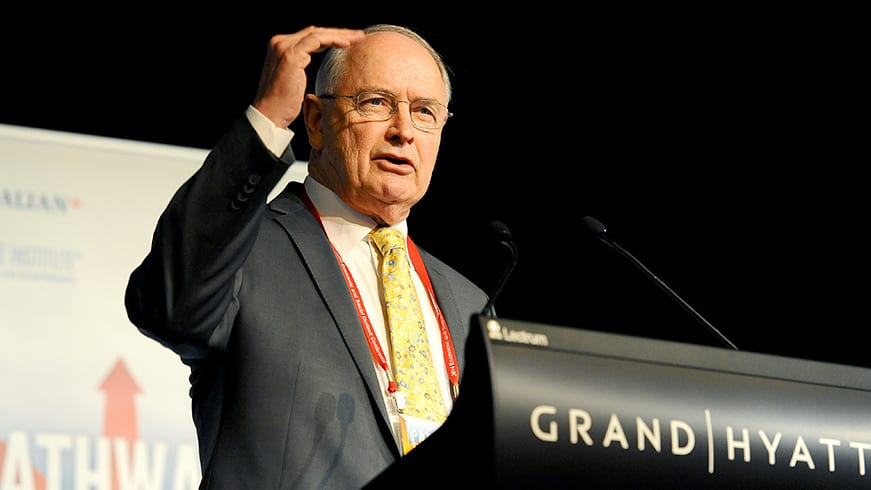
Garnaut: Australia will lose competitive advantage if no clean ...
Ross Garnaut - we need to accelerate our transition to renewable energy.
Addressing the Stimulus Summit co-hosted by the Smart Energy Council and RenewEconomy, leading economist Professor Ross Garnaut said that there is an increasing appreciation of the benefits of acting on climate change, and the opportunities that exist in accelerating the transition to a clean energy economy.
Expressing optimism about the opportunities that exist in a transition to zero net emissions, Garnaut said that the transition provides a way for Australia to invest in future industries, while also supporting the economy to recover after the impacts of Covid-19.
Read the story from RenewEconomy by Michael Mazengarb - “Garnaut: Australia will lose competitive advantage if no clean energy transition.”

26 February, 2020

Labor’s biggest climate problem is itself

Anthony Albanese doesn’t need to convince the majority of Australian voters to support his plan for net zero emissions by 2050. Let me say that again: Labor doesn’t need to “sell” its climate change policy. Instead, it’s an issue that needs to be managed.
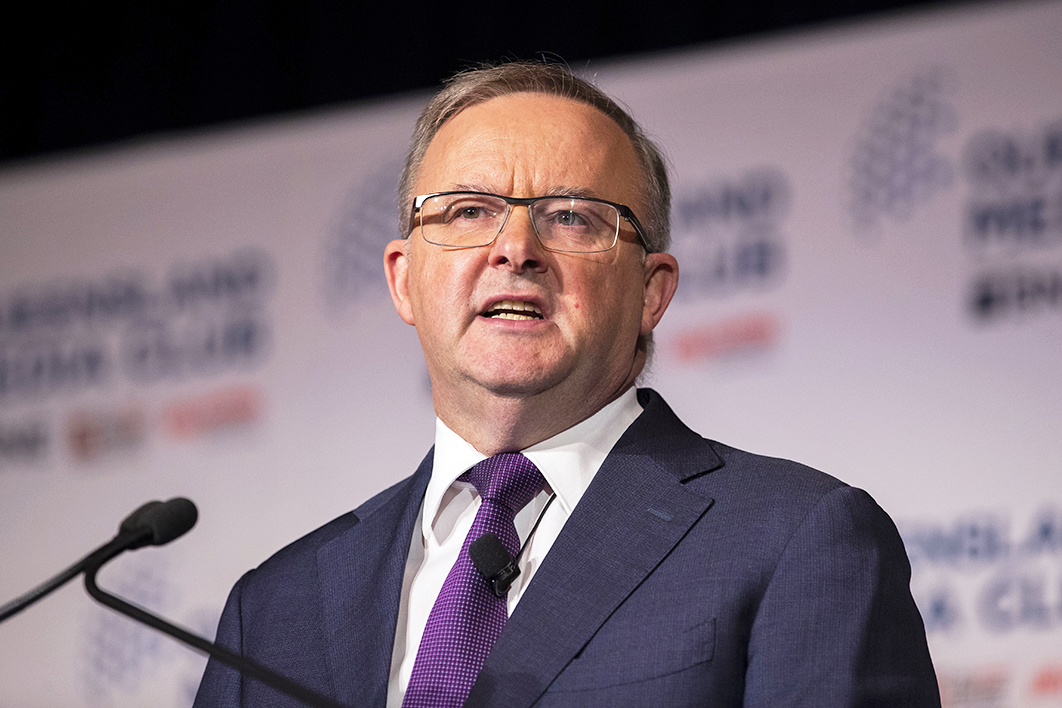
Anthony Albanese.
The assumption that every prescription taken to an election must get majority support is just one of those fallacies of political analysis. As noted before, no one would seriously assert that Labor’s tenth-order campaign promise to “increase the numbers of doctors in remote, rural and regional Australia” got a thumbs down from the voters when they elected the Coalition in May last year. People voted primarily on other stuff. Not everything in a campaign is a vote decider; in fact, most of it isn’t.
It is revisionism of the highest order to describe climate policy as meaningfully responsible for Labor’s 2019 defeat. The fault for the loss of that winnable contest lies with the big juicy targets the party presented to the government, most importantly the thing the Coalition (and some in the media, helpfully) dubbed “the retirement tax,” along with the fictional “death tax” and the very real housing policy — probably in that order. Throw in Bill Shorten’s evasive demeanour and longer-term doubts about Labor and the economy (which both Bob Hawke and Kevin Rudd also had to deal with to win office), and it was a perfect storm.

Read the story from Inside Story by Peter Brent - “Labor’s biggest climate problem is itself.”

21 February, 2020

Choose it or lose it - Australia has a last chance to avert climate catastrophe.

Australia has become the “poster-child for irresponsibility on climate change” according to Christiana Figueres, the former head of the UN’s Framework Convention on Climate Change, who was instrumental in delivering the Paris Agreement in 2015. Figueres is in Australia on a speaking tour, and in an interview this morning said the world had to halve greenhouse-gas emissions by 2030 if it wished to limit warming to 1.5 degrees. “If we are not at that point by 2030,” she says, “we will not be able to control the consequences of unmitigated climate change anymore, and the entire world will see scenarios like the Australian bushfires.” In her co-written book The Future We Choose, Figueres paints a frightening picture of a worst-case 2050, in which huge swathes of Asia, Africa and Australia are uninhabitable. But Figueres is also surprisingly optimistic: she laughs off the suggestion the Paris Agreement is unravelling; she highlights the possibility that global emissions may finally have peaked and will trend downwards after flattening last year; and she insists that if the world can reach net zero emissions by 2050, it is not too late to keep warming to 1.5 degrees.
Christiana Figueres.
Figueres says of 189 countries that have ratified the Paris Agreement, only one – the United States – has pulled out, and while both Brazil and Australia have raised serious concerns, neither has indicated an intention to withdraw. More worrying, according to Figueres, is that so far only 80 countries have registered improved national emissions reduction targets ahead of this year’s climate talks in Glasgow – as part of the Paris Agreement, signatories are meant to ratchet up their level of ambition every five years – and mostly those are small economies. “It is really important to see the larger countries doing the same,” she says. Prime Minister Scott Morrison’s gambit of taking some form of technology target to Glasgow, rather than a commitment to reduce emissions to net zero by 2050, will not suffice, according to Figueres. “I frankly think every industrialised country has to take on an economy-wide target.”

Read the story from The Monthly by Paddy Manning - “Choose it or lose it - Australia has a last chance to avert climate catastrophe.” 

31 January, 2020

Want to decarbonise faster? We need to become more productive

Decarbonising the Australian economy is vital and will cost money. The longer we put it off, the quicker we need to do it to get to net zero emissions by 2050. 
Productivity isn’t everything, but in the long run, it’s almost everything
- Paul Krugman 
Australia will need new power plants, some new transmission lines, new battery storage, new appliances and many other changes. It will be a much softer hit to the economy if we spend that money over several decades rather than just one. This is why getting cracking on decarbonisation is vital — to spread the cost out over time.
Governments and companies can act as a buffer for the costs for a time by paying upfront and holding debt, but this can’t last forever. We will pay back government debt with taxes and pay back company debt via higher prices, lower wages, and lower returns on investments.
If the costs of change are too high in any one period, Australians will start to notice. Consumers could face higher taxes, higher prices and potentially even lower pay. Such a confluence would put living standards at risk, raise the spectre of populist politics and put at risk the viability of the whole vital project. 

Read the story from Crikey by Jason Murphy - “Want to decarbonise faster? We need to become more productive.”