Showing posts with label Paris agreement. Show all posts

19 March, 2020

Study: global banks 'failing miserably' on climate crisis by funneling trillions into fossil fuels

The world’s largest investment banks have funnelled more than £2.2tn ($2.66tn) into fossil fuels since the Paris agreement, new figures show, prompting warnings they are failing to respond to the climate crisis.
 JP Morgan Chase, the US banks Wells Fargo, Citi and Bank of America dominate financing for fossil fuels, accounting for nearly a third of the £2.2tn.
JP Morgan Chase, the US banks Wells
 Fargo, Citi and Bank of America
dominate financing for fossil fuels,
accounting for nearly a third of the £2.2tn.
The US bank JP Morgan Chase, whose economists warned that the climate crisis threatens the survival of humanity last month, has been the largest financier of fossil fuels in the four years since the agreement, providing over £220bn of financial services to extract oil, gas and coal.
Analysis of the 35 leading global investment banks, by an alliance of US-based environmental groups, said that financing for the companies most aggressively expanding in new fossil fuel extraction since the Paris agreement has surged by nearly 40% in the last year.

Read the story from The Guardian by Patrick Greenfield and Kalyeena Makortoff -  “Study: global banks 'failing miserably' on climate crisis by funneling trillions into fossil fuels.” 

26 February, 2020

10,000 academics sign Unisuper divestment petition

More than 10,000 Australian academics and university employees have signed a petition asking $85 billion superannuation fund Unisuper to divest from companies they say are incompatible with the Paris climate agreement.
More than 10,000 university professionals have signed a petition asking Unisuper to divest from the fossil fuel industry.
More than 10,000 university professionals have signed a
petition asking Unisuper to divest from the fossil fuel industry.
Unisuper has 450,000 members, largely working in the tertiary education sector, and is the default fund for all major metropolitan universities including the University of Melbourne, RMIT, the University of Sydney, the University of Technology Sydney and the University of Queensland.
It is also the fund of choice for most major regional universities, including the Australian National University, Charles Sturt University and the University of Wollongong.
The industry fund was one of five revealed to have billions invested in the global fossil fuel industry, alongside HESTA, Cbus, AustralianSuper and Hostplus. Unisuper's records show it has almost $8 billion invested in 14 thermal coal mines and 13 oil and gas companies. The fund previously stated it had no plans to divest from these assets.

Read the story from The Age by Charlotte Grieve - “10,000 academics sign Unisuper divestment petition.”

21 February, 2020

The government's sudden passion for climate technology is newfound and insincere

If you’re committed to the Paris agreement – to keep the increase in global average temperature to well below two degrees above pre-industrial levels, and pursue efforts to limit the increase to 1.5 degrees – then at a minimum, logically, scientifically, you’re committed to net-zero carbon emissions by 2050.
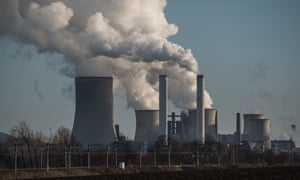
CO2 emissions from power plant
‘With the technology available now
to begin deep decarbonisation,
it’s time to acknowledge that when
 it comes to achieving net-zero
emissions, failing to plan is planning to fail.’
So far, at least 77 countries have committed to the target, as has every state and territory in Australia. The fact that prime minister Scott Morrison is pushing back hard against the calls for such a target sends yet another strong signal that his government still denies the need to tackle climate change.
Sensing it must be seen to do something, but committed to doing nothing substantive, the government is arguing that investing in technology is the superior pathway to… to… to what? Are billions of dollars of public funds about to be allocated to a strategy that delivers on an unspoken goal?
This passion for technology is newfound and insincere. In truth, our government has a long history of undermining climate technologies.

Read the story from The Guardian by Simon Holmes à Court - “The government's sudden passion for climate technology is newfound and insincere.” 

Choose it or lose it - Australia has a last chance to avert climate catastrophe.

Australia has become the “poster-child for irresponsibility on climate change” according to Christiana Figueres, the former head of the UN’s Framework Convention on Climate Change, who was instrumental in delivering the Paris Agreement in 2015. Figueres is in Australia on a speaking tour, and in an interview this morning said the world had to halve greenhouse-gas emissions by 2030 if it wished to limit warming to 1.5 degrees. “If we are not at that point by 2030,” she says, “we will not be able to control the consequences of unmitigated climate change anymore, and the entire world will see scenarios like the Australian bushfires.” In her co-written book The Future We Choose, Figueres paints a frightening picture of a worst-case 2050, in which huge swathes of Asia, Africa and Australia are uninhabitable. But Figueres is also surprisingly optimistic: she laughs off the suggestion the Paris Agreement is unravelling; she highlights the possibility that global emissions may finally have peaked and will trend downwards after flattening last year; and she insists that if the world can reach net zero emissions by 2050, it is not too late to keep warming to 1.5 degrees.
Christiana Figueres.
Figueres says of 189 countries that have ratified the Paris Agreement, only one – the United States – has pulled out, and while both Brazil and Australia have raised serious concerns, neither has indicated an intention to withdraw. More worrying, according to Figueres, is that so far only 80 countries have registered improved national emissions reduction targets ahead of this year’s climate talks in Glasgow – as part of the Paris Agreement, signatories are meant to ratchet up their level of ambition every five years – and mostly those are small economies. “It is really important to see the larger countries doing the same,” she says. Prime Minister Scott Morrison’s gambit of taking some form of technology target to Glasgow, rather than a commitment to reduce emissions to net zero by 2050, will not suffice, according to Figueres. “I frankly think every industrialised country has to take on an economy-wide target.”

Read the story from The Monthly by Paddy Manning - “Choose it or lose it - Australia has a last chance to avert climate catastrophe.” 

20 February, 2020

Summary for Policymakers of IPCC Special Report on Global Warming of 1.5°C approved by governments

Incheon, Republic of Korea, October 8 – Limiting global warming to 1.5°C would require rapid, far-reaching and unprecedented changes in all aspects of society, the IPCC said in a new assessment. With clear benefits to people and natural ecosystems, limiting global warming to 1.5°C compared to 2°C could go hand in hand with ensuring a more sustainable and equitable society, the Intergovernmental Panel on Climate Change (IPCC) said on Monday.


The Special Report on Global Warming of 1.5°C was approved by the IPCC on Saturday in Incheon, Republic of Korea. It will be a key scientific input into the Katowice Climate Change Conference in Poland in December, when governments review the Paris Agreement to tackle climate change.
“With more than 6,000 scientific references cited and the dedicated contribution of thousands of expert and government reviewers worldwide, this important report testifies to the breadth and policy relevance of the IPCC,” said Hoesung Lee, Chair of the IPCC.
Ninety-one authors and review editors from 40 countries prepared the IPCC report in response to an invitation from the United Nations Framework Convention on Climate Change (UNFCCC) when it adopted the Paris Agreement in 2015.

Read the story from the Intergovernmental Panel on Climate Change - “Summary for Policymakers of IPCC Special Report on Global Warming of 1.5°C approved by governments.”


15 February, 2020

U.S. Doesn’t Need Trump to Honor Paris Climate Agreement

With or without President Donald Trump, the United States will work to address climate change. Not because of the Paris agreement, which is nonbinding. Not because backing out would earn the ire of the other 194 countries that have signed on to reducing their greenhouse gas emissions.
Image result for U.S. Doesn’t Need Trump to Honor Paris Climate Agreement
With or without President Donald Trump, the U.S.
will work to honour the Paris agreement.
The U.S. will work to address climate change because it cares about environmental health and economic stability.
The Paris climate agreement, which went into effect in November, was an attempt to keep global temperatures from rising more than 2 degrees Celsius in this century—a level at which, science tells us, the impacts to the planetary ecosystem will be insurmountable. Though nonbinding, it allowed countries to set their own goals for reducing atmospheric-heating emissions, largely from the combustion of fossil fuels, and asked wealthy countries to chip in to help developing nations in their efforts. The agreement was met with praise worldwide, and the active role taken by President Obama put the U.S. in a place of climate leadership.

Read the story from Yes! magazine by Stephen Miller - “U.S. Doesn’t Need Trump to Honor Paris Climate Agreement.”


06 February, 2020

Climate change claim questioned

I note the comments made by Federal Member for Nicholls Damian Drum (News, February 4) and would contest many of his facts and statements but none more than his contention that ‘‘Australia leads the world’’.
This claim couldn’t be further from the truth on the international stage where Australia has played a destructive role from Kyoto negotiations in 1997 to the most recent gathering of nations in Madrid last year, with its intention to use Kyoto ‘‘credits’’ to meet its Paris Agreement targets.
"Those credits are highly
contentious" - John Pettigrew.
These ‘‘credits’’ are highly contentious for two reasons: how they were achieved and the intention to use these credits to weaken Australia’s response to the Paris Agreement.
Australia’s Kyoto delegation was dominated by representatives of the fossil fuel industries and led by Coalition Environment Minister Senator Robert Hill.
Throughout these negotiations Australia demanded special treatment, despite being one of the most affluent of developed countries and the highest per capita emitter in the world.
Australia negotiated a target at Kyoto in 1997 which allowed an increase in Australia’s greenhouse emissions by eight per cent above 1990 levels, three per cent higher than other developed countries.
Not satisfied with this concession, the Australian delegation then demanded what is known as ‘‘the Australia clause’’, which allowed the inclusion of carbon emission credits from reduced land clearing.
This inclusion allowed Australia’s emissions from fossil fuels to potentially rise by 25 to 30 per cent above 1990 levels as land clearing (not occurring in other developed countries) had already reduced dramatically at the time.
The Howard Government then, after demanding these concessions and undermining global emission targets, refused to ratify the Kyoto Agreement.
Australia, in announcing its intention to use ‘‘surplus’’ Kyoto credits to achieve its modest Paris targets, has again put our country at odds with the rest of the world and is again holding back global action to reduce emissions.
The Coalition Government was elected with an emission reduction target of 26 to 28 per cent by 2030 on 2005 levels, a clear mandate.
However, the use of ‘‘Kyoto credits’’ was never mentioned before or during this election and cannot be seen in any way as being endorsed by the electorate.
In September last year, Prime Minister Morrison twice told Today our per capita emissions would fall by half between now and 2030: ‘‘We will reduce our carbon emissions per capita by half between now and 2030.
‘‘Our per capita emissions will fall by half over the next 10 years.’’
If, as Prime Minister Morrison insists, Australia will meet its Paris targets ‘‘in a canter’’, why would Australia continue to threaten the use of Kyoto credits?
Australia should drop any intention to use these dubious credits and join with nations of the world to ensure that realistic and ambitious carbon reduction targets are set and met.

Letter from John Pettigrew, Bunbartha, published in The Shepparton News - “Climate change claim questioned”


16 December, 2019

Australia and Brazil carbon credits will put 1.5C out of reach, 31 countries say

Carbon market rules being pursued by Australia and Brazil are not in line with the 1.5C temperature goal of the Paris Agreement, according to 31 countries who broke from tense discussions at the UN climate talks in Madrid.
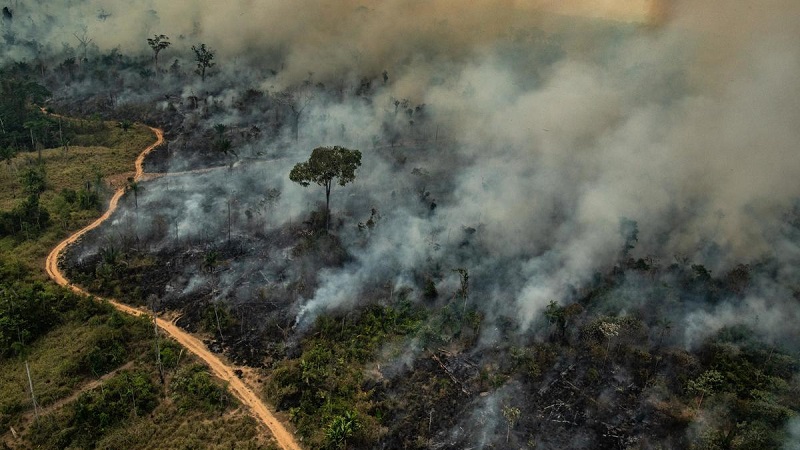
Aerial picture of wildfires in the city of Altamira, State of Para, Brazil.
Led by Costa Rica, they published a set of 11 benchmarks they said represented the “minimum” standard to ensure integrity of the global carbon trading system due to come into effect next year.
The ‘San Jose principles’ were signed by 30 other countries including France, Germany, the UK, Spain and New Zealand.
Carlos Manuel Rodriguez, Costa Rica’s environment minister, said the principles present “a definition of success” on the new carbon market rules and “keep the door open” for limiting warming to 1.5C.

11 December, 2019

Government 'falling behind' industry views on climate change

Representatives from around 200 countries, including Australia, are meeting in Madrid this week to discuss climate targets and how they'll meet their commitments under the Paris agreement.


Ahead of the talks, the Australian Climate Roundtable group issued a statement, urging Australia to adopt policies that put it on a stable path to net-zero greenhouse gas emissions.
The climate roundtable brings together an unusual alliance of industry representatives, unions, farmers and environmental NGOs.
Listen to the interview from Radio National by Hamish Macdonald - “Government 'falling behind' industry views on climate change.

09 December, 2019

About 100 countries at UN climate talks challenge Australia's use of carryover credits

Australia’s plan to use an accounting loophole to meet its international emissions targets has been formally challenged at UN climate talks, with about 100 countries wanting the practice banned under the Paris agreement.
Extinction Rebellion protesters at the COP25 UN climate talks in Madrid
Extinction Rebellion protesters at the COP25 UN climate talks
 in Madrid where Australia’s use of carryover credits has been
challenged by about 100 countries.
Delegates from developing countries led by Belize and Costa Rica have introduced a ban on using carryover credits from the Kyoto protocol into the text of the rulebook for the Paris climate agreement, which is being debated at a meeting in Madrid.
It is a crucial debate for the Morrison government as it relies on using the accounting measure to meet its commitment under the Paris deal. The emissions reduction minister, Angus Taylor, arrived in Madrid on Sunday to make Australia’s case at the second week of the talks.
Emissions projections released as Taylor left Australia suggested the Morrison government was on track to meet its 2030 target (at least a 26% emissions cut below 2005 levels), but only if it used carryover credits. Without them it expected emissions to achieve just a 16% cut. Government advisers found Australia’s fair share under a meaningful global deal would be at least 45%.

Read the story from The Guardian by Adam Morton - “About 100 countries at UN climate talks challenge Australia's use of carryover credits.”

14 September, 2019

Littleproud’s gaffe and PM's reluctance only reinforce Australia's climate reputation

On one level it appeared just another week in Australian climate politics. A ridiculous statement by a government minister made headlines; the crossbench pushed for stronger action; the prime minister’s office quietly suggested he may not fulfil the next step of the Paris agreement, a deal he has repeatedly promised voters he would honour.
Image result for david littleproud
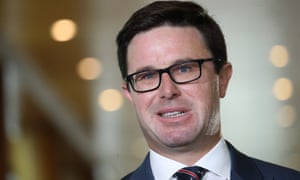
David Littleproud - flip flopping on climate.
Meanwhile, much of the media coverage of climate policy focused on what the opposition might do if it wins power in three years’ time.

But the repercussions from decisions made public this week may reverberate longer than was immediately obvious.

First, the ridiculous. David Littleproud, the minister responsible for drought and natural disasters, made international news after telling Guardian Australia he did not know if climate change was manmade. By Thursday, he was saying he had always accepted the science on the role humans play in the climate changing. He blamed his initial statement on a TV interview being cut short, neglecting to acknowledge it first appeared in an email responding to questions from this publication.


Read the story from The Guardian by Adam Morton - “Littleproud’s gaffe and PM's reluctance only reinforce Australia's climate reputation.”

29 May, 2019

Trump’s New Climate Plan Involves a Guy Who Compared Pollution to ‘Jews Under Hitler’

Withdrawing the United States from the Paris Agreement was only the beginning. According to a new report from the New York Times, the Trump administration is poised to enter a dangerous, politically motivated new front of its war on climate science. “It reminds me of the Soviet Union,” Philip Duffey, an expert who served on the National Academy of Sciences, told the paper.
Vehicles move along the the New Jersey Turnpike in 2017
while a factory emits smoke. The United States is still c
ontributing to the global greenhouse gas emissions as
the Trump administration has dismantled the U.S.
foreign policy to reduce carbon pollution.
In the coming months, the White House is expected to officially vanquish what’s left of Obama-era regulations to curb emissions from tailpipes and power plants. Though the scientific community agrees that to pumping carbon dioxide into the environment will be catastrophic for future generations, the administration isn’t very concerned with the state of the planet beyond the president’s potential lifespan. According to the Times, U.S. Geological Survey Director James Reilly — a former petroleum geologist appointed by Trump — has ordered his office to only study the effects of climate change up to 2040. Doing so would paint a relatively rosy picture of the effects of climate change, as the rate of warming isn’t expected to increase precipitously until the middle of the century.


15 May, 2019

UN chief: ‘Climate change is running faster than what we are’

During a joint press conference with New Zealand Prime Minister Jacinda Ardern on Sunday, United Nations Secretary-General António Guterres had a grim warning for the public: the world is “facing a climate emergency” and is “not on track” to meet the objectives outlined in the Paris Agreement.
New Zealand Prime Minister Jacinda Ardern and United
Nations Secretary-General António Guterres had a grim
 warning for the public.
Guterres explained that the political will to fight climate change has faded, resulting in “climate change [is] running faster than what we are.”

The fact of the matter, says Guterres, is that countries are not living up to their commitments under the 2016 Paris Agreement, which calls for limiting temperature increases to 1.5 degrees Celsius.


Read the story from Nation of Change by Alexandra Jacobo - “UN chief: ‘Climate change is running faster than what we are’.”

23 April, 2019

Greta Thunberg backs climate general strike to force leaders to act.

Greta Thunberg, the 16-year-old Swedish environmental activist, has given her support for a general strike for the climate, saying the student movement she inspired needs more support from older generations to ensure politicians keep their promises under the Paris agreement.
Greta Thunberg (second from right), with others on the
 panel, the director of the documentary, 'Age of Stupid',
Fiona Armstrong (left), Anna Taylor from Britain's Student
Climate Movement, and Caroline Lucas, an MP from
Britain's Green Party.
Speaking at a public event in London as Extinction Rebellion protests continued in the capital, the initiator of the school strike for climate movement was typically frank about the scale of the problem the world faces and the impact her campaign has made. “People are slowly becoming more aware, but emissions continue to rise. We can’t focus on small things. Basically, nothing has changed,” she said.

At several points, she stressed the need for the protests to spread. “This is not just young people being sick of politicians. It’s an existential crisis,” Thunberg said. “It is something that will affect the future of our civilisation. It’s not just a movement. It’s a crisis and we must take action accordingly.”


Read the story from The Guardian by Jonathon Watts -  “Greta Thunberg backs climate general strike to force leaders to act.”

03 January, 2019

Meeting Paris Agreement Targets Would Create 24 Million Jobs Globally

This month, when diplomats met in Poland to negotiate the implementation of the Paris Agreement, the United States took on the role of the villain. The United States, which plans to formally withdraw from the pact, rejected a landmark scientific report and touted the need for fossil fuels. Why? In justifying his opposition to the Paris Agreement, Trump has repeatedly said that it will eliminate millions of U.S. jobs.
A construction worker - one of the 24 million jobs
 to be created globally in meeting the Paris agreements.
According to research, however, his position is unfounded, especially over the long term. By working to achieve the stated goal of the Paris Agreement, to limit warming to 2 degrees C, most countries will see a net gain in employment.

“Our findings show that if we take action to limit climate change, we will have more jobs by 2030 than by not doing anything,” said Guillermo Montt, author of the study and a senior economist in the research department of the International Labor Office, a special UN agency that focuses on labor issues. “More jobs will be created than those that are lost, so the economy and countries as a whole stand to gain.”


Read the Nexus Media story by Marlene Cimons - “Meeting Paris Agreement Targets Would Create 24 Million Jobs Globally.”

27 December, 2018

Trump Imperils the Planet

It’s hard to believe but it was only three years ago this month — just after 7 p.m., Paris time, Dec. 12, to be precise — that delegates from more than 190 nations, clapping and cheering, whooping and weeping, rose to celebrate the Paris Agreement — the first genuinely collective response to the mounting threat of global warming. It was a largely aspirational document, without strong legal teeth and achieved only after contentious and exhausting negotiations. But for the first time in climate talks stretching back to 1992, it set forth specific, numerical pledges from each country to reduce emissions so that together they could keep atmospheric temperatures from barreling past a point of no return.
CreditCredit
Illustraton:Enzo Pérès-Labourdette
Two weeks ago, delegates met at a follow-up conference in Katowice, Poland, to address procedural questions left unsettled in Paris, including common accounting mechanisms and greater transparency in how countries report their emissions. In this the delegates largely succeeded, giving rise to the hope, as Brad Plumer put it in The Times, that “new rules would help build a virtuous cycle of trust and cooperation among countries, at a time when global politics seems increasingly fractured.”


Read the opinion from The New York Times - “Trump Imperils the Planet.”

19 December, 2018

Australia needs to take a leadership position on climate change

Three years after the Paris Agreement was struck, we now finally know the rules – or most of them, at least – for its implementation.
A participant in the UN climate summit in Katowice, Poland. 
The Paris Rulebook, agreed at the UN climate summit in Katowice, Poland, gives countries a common framework for reporting and reviewing progress towards their climate targets.


Read the story from The Age by Kate Dooley - “Australia needs to take a leadership position on climate change.”

22 October, 2018

Wentworth byelection backlash reignites tensions inside the Morrison government over climate policy

A ferocious voter backlash has inflamed the Morrison government’s internal row on climate change as Liberal MPs call for stronger policies to assure voters that Australia can meet the Paris agreement to cut carbon emissions.
Liberal Party candidate Dave Sharma faced
questions during the campaign about the
government's commitment to climate change policies. 
CREDIT:
The government is reeling from a savage swing in the Wentworth byelection, sparking renewed argument over decisions including a sudden shift in foreign policy on Israel, and deepening fears of a wipeout at the federal election due by May.

As Parliament resumes on Monday, the Liberal Party was on track to lose Wentworth to independent candidate Kerryn Phelps, with an update on Sunday night giving her almost 51 per cent of the vote.


Read the story from The Age by David Crowe and David Wroe - “Wentworth byelection backlash reignites tensions inside the Morrison government over climate policy.”

28 August, 2018

Scott Morrison faces test on Paris climate deal

Prime Minister Scott Morrison is facing his first foreign policy test ahead of a regional visit next week, as Pacific leaders urge him to deepen Australia’s cuts to greenhouse gas emissions and cement Australia’s commitment to the Paris agreement on climate change.
Prime Minister Scott Morrison is greeted at Quilpie airport by David Littleproud.
The moves heighten pressure on the new Prime Minister to confirm his stance on the global climate deal as two new cabinet ministers take on the Energy and Environment portfolios amid talk of a policy reset.

Fiji Prime Minister Josaia "Frank" Bainimarama wrote to Mr Morrison on Monday to congratulate him on his elevation while also seeking a commitment to tackle carbon emissions.

“We cannot settle for business as usual and we certainly cannot tolerate any backward steps,” Mr Bainimarama said of the urgent need to address climate change.

“I appreciate Australia’s commitment in this fight so far and I believe that this commitment must grow even stronger moving forward.


Read the story from The Age by David Crowe and Fergus Hunter - “Scott Morrison faces test on Paris climate deal.”

04 July, 2018

Tony Abbott urges withdrawal from Paris agreement, despite signing Australia up as PM

Tony Abbott, the prime minister who signed Australia up to the Paris agreement before losing the Liberal party leadership in 2015, now says Australia needs to pull out of the treaty to end “the emissions obsession that’s at the heart of our power crisis”.
Tony Abbott before his speech at the Australian
 Environment Foundation event in Melbourne urging Australia to abandon the Paris climate agreement.
In a significant escalation of his campaign against the national energy guarantee, and in an overt political attack on Malcolm Turnbull, Abbott used a speech to a group of climate sceptics on Tuesday night to claim he would not have signed up to the Paris treaty had he known the US would withdraw from it.

Despite saying in 2015 that Australia was making a “definite commitment” to a 26% reduction in emissions and “with the circumstances that we think will apply ... we can go up to 28%” – Abbott says now he didn’t anticipate, as prime minister, “how the aspirational targets we agreed to at Paris would, in different hands, become binding commitments”.


Read the story from The Guardian by Katharine Murphy - “Tony Abbott urges withdrawal from Paris agreement, despite signing Australia up as PM.”