Showing posts with label 2017. Show all posts

14 June, 2018

The potential pitfalls of sucking carbon from the atmosphere

LAST WEEK, CANADIAN company Carbon Engineering published research findings that show how carbon dioxide could be sucked up from the atmosphere for less than $100 per ton. In 2017, the world emitted some 32.5 gigatons of the stuff. But hey—baby steps.
Picture from Carbon Engineering.
Scientists have long speculated that so-called "negative emissions" technologies like CO2 removal could not only slow the accumulation of carbon in the air, but even reverse it. Before last week, though, all that speculation was, well, largely speculative; nobody had convincingly demonstrated how to pull off negative emissions at scale. Previous estimates had pegged the cost of sucking carbon from the skies, for instance, at $600 per ton—way too pricey to qualify as a viable cleanup solution. The findings from Carbon Engineering, which appear in the latest issue of the journal Joule, point the way toward a future in which negative emissions are not only technically possible but financially feasible.


Read  the story by Robbie Gonzalez from Wired  - “The potential pitfalls of sucking carbon from the atmosphere.”

15 May, 2018

‘Glaring inconsistency': National emissions jump may be underestimated

Australia's greenhouse gases rose for a third consecutive year in 2017, led by emissions from the gas and transport sectors, according to federal government data.
Land-clearing is on the increase in Queensland and NSW
but national emissions are showing a decline, puzzling analysts.
Environmental groups, however, say the true emissions figure may be under – estimated because large-scale land clearing – particularly in Queensland and lately in NSW – is not being accurately represented.

The National Greenhouse Gas inventory for last year, released without fanfare at the end of last week, showed emissions were up 1.5 per cent compared with 2016 to 533.7 million tonnes of carbon dioxide-equivalent.


Read Peter Hannam’s story from The Age - “‘Glaring inconsistency': National emissions jump may be underestimated.”

07 May, 2018

Americans are falling in love with bike share

BAD NEWS FOR the cool kids who depend on their sweet fixies for cultural cachet: Cycling has hit the mainstream. According to a report just released by the National Association of City Transportation Officials, residents and tourists in US cities took 35 million bike-share trips in 2017, up a whopping 25 percent from the year previous.
US riders took 35 million bike-share trips in 2017,
a 25 percent increase over 2016, as the shared
rides spread to more and more cities.
Today, there are more than 100 bike-share systems across the country, operated by eight major companies, NACTO reports. They are, of course, in the most densely populated cities, like New York, which alone accounted for 40 percent of 2017’s trips, and Washington, DC. (It helps that those cities’ public transit systems have had a rough few years.)

“We’re seeing bike-share, in the densest, most populated cities, become part of the urban fabric,” says bike-share operator Motivate's CEO, Jay Walder. (Motivate runs popular systems in New York, California’s Bay Area, Chicago, Portland, and other cities.) “It’s no longer a niche or alternative, but a fundamental part of that.”


Read the story by Aarian Marshall from Wired - “Americans are falling in love with bike share.”

29 March, 2018

Australia’s emissions rise again in 2017, putting Paris targets in doubt

Australia’s greenhouse gas emissions in 2017 were again the highest on record when unreliable data from sectors including land clearing and forestry are excluded, according to consultants NDEVR Environmental.
Rising greenhouse gas pollution comes despite
 decline in electricity sector emissions.
Even including land clearing, overall emissions show a continued rising trend, which began in about 2011, putting Australia’s commitment under the Paris agreement further out of reach.

The rising greenhouse gas pollution comes despite continued decline in emissions from the electricity sector, following increased renewable energy generation and the closure of Australia’s dirtiest coal power station, Hazelwood.


Read Michael Slezak’s story from The Guardian - “Australia’s emissions rise again in 2017, putting Paris targets in doubt.”

07 March, 2018

Australian homes, business installed 6.5 solar panels per minute in 2017

We know that Australian homes and businesses were installing rooftop solar at a record-breaking clip in 2017, but the latest data from the Clean Energy Regulator makes that official – and how.


According to the CER’s latest update on the Small-Scale Renewable Energy Scheme, solar panels were installed on rooftops at a mind-bending rate of 6.5 per minute in 2017, adding a total of 1057MW new capacity for the year.

This equates to 3.5 million solar panels being fixed to Australian rooftops, or more than 9500 installed every day, the CER said.

All told, there was a 41 per cent increase in installed renewable energy capacity across all states and territories compared to 2016, the report says.


Read the One Step off the Grid story by Sophie Vorrath - “Australian homes, business installed 6.5 solar panels per minute in 2017.”

04 February, 2018

The oceans have never been hotter than they are now

2017 was only the second-warmest year on record, according to NASA. But when it comes to the ocean, temperatures have never been warmer.
Our oceans have never been warmer.
New data from the Chinese Academy of Sciences’ Institute of Atmospheric Physics analyzing ocean data from the last half-century shows a clear trend: The oceans are steadily getting warmer, with this year registering the hottest yet. And while the atmospheric temperature is more susceptible to year-to-year shifts, the data from the Earth’s waters shows the consistency with which our world is heating up.

“The ocean heat records are so impressive because they’re absolutely on a steady warming trend,” Robert Anderson, a geochemist at Columbia University, told VICE News. “People who point to pauses in global warming haven’t looked at the warming of the oceans.”


Read the Vice News story by Alex Lubben - “The oceans have never been hotter than they are now.”

State of the Union: Trump Glorifies Coal, Shuts Eyes to Climate Risks

It was a distinct irony to hear President Donald Trump open his State of the Union address by reciting the litany of climate calamities that the nation survived in 2017.
President Trump talked about energy, but only fossil
fuels; extreme weather, but not climate change; and
 jobs and trade, without mentioning the thousands
 of U.S. solar jobs his tariff plan puts at risk.
"We endured floods and fires and storms," he said, as he recognized the bravery of public servants who had saved dozens of people trapped in a hurricane and a wildfire.

But he said not a word about the manmade global warming that makes those risks more dangerous year after year. And his only discussion of energy policies made no nod to the clean energy transformation that scientists prescribe to lower greenhouse gas emissions and reduce the risks.


Read the Inside Climate News story by John H. Cushman Jr - “State of the Union: Trump Glorifies Coal, Shuts Eyes to Climate Risks.”

21 January, 2018

As NASA reveals stunning images, Antarctica had record low sea-ice coverage in 2017

NASA has released stunning photos of the Antarctic ice caps after its most recent expeditions last year.
Snow and ice on the Creswick Peaks. The light blue
areas on the cliff face indicate melting.
However, Antarctica had a record-low sea ice coverage of 6.61 million square kilometres in 2017, the US National Oceanic and Atmospheric Administration said in its latest report.

In November last year, NASA conducted two missions as part of its Operation IceBridge, which is in its ninth year of flights to map the snow and ice of Antarctica.

On November 4, the IceBridge team flew its "Endurance West" mission, which specifically targets sea ice. 

Then, on November 12, a high-priority mission was conducted over the Larsen C Ice Shelf, as it had been significantly reshaped a few months earlier after it shed an iceberg that measured 5060 square kilometres.

During each flight, nearly 8000 photographs were taken, which revealed several large fractures in the ice.


Read the story by Charles Goodsir in today’s Melbourne Age - “As NASA reveals stunning images, Antarctica had record low sea-ice coverage in 2017.”

10 January, 2018

Weather disasters cost the US a record $390 billion in 2017

Washington: Hurricanes Harvey, Irma and Maria combined with devastating Western wildfires and other natural catastrophes to make 2017 the most expensive year on record for disasters, the National Oceanic and Atmospheric Administration reported on Monday.
Firefighter Ryan Spencer battles a wildfire as it burns
along a hillside toward homes in La Conchita, California in December. 
The disasters caused $US306 billion ($390 billion) in total damage in 2017, with 16 separate events that caused more than $1 billion in damage each. The bulk of the damage, at $265 billion, came from hurricanes in particular.


Read Chris Mooney’s story in today’s Melbourne Age - “Weather disasters cost the US a record $390 billion in 2017.”

Record warmth in the east made 2017 Australia's third-hottest year on record

Australia's posted its third-warmest year on record in 2017, with the eastern half including NSW and Queensland notching their hottest annual readings.
Another relatively hot year across the nation, with
 conditions on the dry side in eastern Australia.

The Bureau of Meteorology's annual report showed the nation's area-averaged mean temperatures – taking in daily highs and lows – were 0.95 degrees above its 1961-90 baseline at 22.75 degrees.
Read Peter Hannam’s story from today’s Melbourne Age - “Record warmth in the east made 2017 Australia's third-hottest year on record.”

08 January, 2018

Winds of change: Britain now generates twice as much electricity from wind as coal

Just six years ago, more than 40% of Britain’s electricity was generated by burning coal. Today, that figure is just 7%. Yet if the story of 2016 was the dramatic demise of coal and its replacement by natural gas, then 2017 was most definitely about the growth of wind power.

Wind provided 15% of electricity in Britain last year (Northern Ireland shares an electricity system with the Republic and is calculated separately), up from 10% in 2016. This increase, a result of both more wind farms coming online and a windier year, helped further reduce coal use and also put a stop to the rise in natural gas generation.


Read the story by a Teaching and Research Fellow from the Chemical and Biological Engineering at the  University of Sheffield, Grant Wilson, on The Conversation - “Winds of change: Britain now generates twice as much electricity from wind as coal.”

02 January, 2018

Why 2017 was a good year for climate

On the face of it, there was plenty of bad news for the climate in 2017. Donald Trump announced that the United States would withdraw from the 2015 Paris agreement and promised to reverse the decline of the coal industry. The Turnbull government rejected proposals for an efficient transition to a low-carbon energy sector, instead announcing a half-baked National Energy Guarantee designed as a lifeline for coal-fired power. Globally, CO2 emissions appeared to rise by around 2 percent, after remaining stable for three years in a row.
Last nail? Protesters outside the Melbourne offices of the Downer
 Group in June this year. The company was contracted to build the
 Carmichael coal project in the Galilee basin of Queensland, but the
 deal was rescinded in December.
But a closer look reveals a lot more good news than bad, with two major developments standing out. The first is an emerging global consensus, encompassing national governments, financial institutions and civil society, that the era of coal-fired electricity generation must end, and soon.

Typifying this trend is the new Powering Past Coal Alliance, made up of national and provincial governments pledged to phase out coal-fired electricity generation by 2030. Launched with twenty members in November 2017, the Alliance expanded rapidly to include major businesses, and now has nearly sixty members. Its government members include Britain, Canada, New Zealand and a number of other developed countries, middle-income countries such as Mexico and Costa Rica, and developing countries such as Angola and Ethiopia. Not surprisingly, Pacific Island nations, endangered by sea-level rise, are well represented.


Read the story by John Quiggan on Inside Story - “Why 2017 was a good year for climate.”

01 January, 2018

A great year for clean energy in Australia ends, while bad news for coal continues

In 20 years we’ll look back on 2017 as a turning point for the climate challenge. It hasn’t been all good news – carbon emissions increased globally and in Australia – but the mission to avoid dangerous climate change no longer appears completely hopeless.
 ‘It’s undeniable that the energy transition is well under way — but
Australians could be forgiven for despairing when coal dominates our politics and media cycle.
Until recently few in the mainstream were calling time on coal – yet numbers out of China and India showed that the coal building spree is fast winding down and the International Energy Agency, who are traditionally coal boosters, reported that coal is facing a “decade of stagnation” after global demand peaked in 2014. In May, the head of infrastructure investment at BlackRock, the world’s largest investment manager, announced that “coal is dead”.

Meanwhile renewable energy broke new records — China installed seven solar panels a second and India’s energy minister now expects to install 200GW of renewables by 2022.

While it’s undeniable that the energy transition is well under way, Australians could be forgiven for despairing when coal dominates our media cycle. Who can forget the federal treasurer, Scott Morrison, brandishing a lump of coal in the first session of parliament, goading: “This is coal — don’t be afraid, don’t be scared”?


Read the piece on The Guardian by Simon Holmes à Court - “A great year for clean energy in Australia ends, while bad news for coal continues.”

22 December, 2017

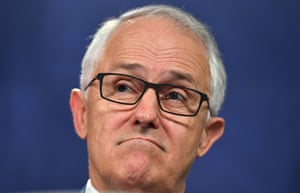
A lump of coal - metaphor for a wretched year for Malcolm Turnbull

The moment that summed up the political year 2017 for me came in the first sitting week when treasurer Scott Morrison marched into parliament brandishing a lump of coal.
‘The marriage equality vote was a step forward for the nation, but the process was expensive and needlessly divisive, the May federal budget was rightly portrayed as Labor-lite, while a bank royal commission has been imposed on a reluctant government’
 ‘The marriage equality vote was a step forward for the nation,
but the process was expensive and needlessly divisive, the
May federal budget was rightly portrayed as Labor-lite, while
 a bank royal commission has been imposed on a reluctant government’
“This is coal – don’t be afraid, don’t be scared”, the treasurer cried out maniacally, before passing it along his front bench where Barnaby Joyce proceeded to fondle it like Gollum his precious ring.
The coal stunt was a none-too-subtle attempt to shift the focus of energy policy away from the imperative of transitioning to a renewable future by opening a new wave of investment in fossil fuels.

The premeditated stunt locked the Coalition in behind a coal lobby that had been running a coordinated campaign to besmirch renewables since an extreme weather event had led to blackouts in South Australia in late 2016.

The lump of coal act was also the final surrender by a prime minister who had built a public persona around his determination to take meaningful action on climate change.


Read the opinion piece by Peter Lewis on The Guardian - “A lump of coal - metaphor for a wretched year for Malcolm Turnbull.”

18 December, 2017

Power prices forecast to fall over next two years but AEMC warns they won't last

Power prices in Australia rose almost 11% during 2017 but a new forecast says they will fall over the next two years because of the entry of 5,300 MW of new generation capacity into the national electricity market – most of it renewable.
The Liddell power station in New South Wales. Power prices in Australia rose almost 11% during 2017. 
A new assessment from the Australian Energy Market Commission predicts power prices will fall over the next two years, beginning in mid-2018.

But the AEMC, which played a significant role in designing the Turnbull government’s proposed national energy guarantee, says the price reductions won’t last if governments don’t settle an energy policy that provides incentives for investing in dispatchable power.


Read Katherine Murphy’s story on The Guardian - “Power prices forecast to fall over next two years but AEMC warns they won't last.”

19 November, 2017

What could Australian sustainable cities look like in 2040?

It’s 2040.

As you wake and look outside, things might not look hugely different to 2017 – there aren’t any hoverboards or sky highways – but Australian cities have managed to cut their greenhouse gas emissions by 80 percent.
Many of the technologies required to get
us to a greener future already exists.
 
And how your day unfolds will look very different depending on how we reached this point.

As you step outside some changes are obvious. Renewable energy is now everywhere. You pass bladeless wind turbines, and solar farms on city skyscapers. On your way, you walk through an urban farm and the concrete jungle is greener with roof and vertical gardens throughout the city. But you’ve had to make some concessions in terms of privacy and lifestyle.

So what’s changed? And how did we get here?

These are just some of the questions explored in the final report from the Visions and Pathways 2040 research project which looks at how we can rapidly reduce Australian cities’ emissions to avoid catastrophic climate change as we approach the end of what’s being called the ‘critical decade’.


Read the University of Melbourne Pursuit story - “What could Australian sustainable cities look like in 2040?”