Showing posts with label homes. Show all posts

06 April, 2020

Here’s what the coronavirus pandemic can teach us about tackling climate change

Every aspect of our lives has been affected by the coronavirus. The global economy has slowed, people have retreated to their homes and thousands have died or become seriously ill.
Here's what the coronavirus pandemic can teach us about tackling ...
We need to pay close attention and so understand what lessons
we can draw from COVID-19 crisis to apply to the climate crisis.
At this frightening stage of the crisis, it’s difficult to focus on anything else. But as the International Agency has said, the effects of coronavirus are likely to be temporary but the other global emergency – climate change – is not.
Stopping the spread of coronavirus is paramount, but climate action must also continue. And we can draw many lessons and opportunities from the current health crisis when tackling planetary warming.
Read the story from The Conversation by Natasha Chassagne - “Here’s what the coronavirus pandemic can teach us about tackling climate change.”

03 February, 2020

How long until drought-stricken towns run out of water?

Gardens are dead, people skip showers and water quality has worsened — the big dry dominates conversation in coffee shops, pubs and homes.
Two young boys washing hands at sink in bathroom smiling.
Tenterfield pre-school children learn to soap their
 hands with the tap off to conserve water.
This is what day zero is like in Australia, as an unprecedented drought leaves 55 towns at risk of running out of water, if they haven't already.
It's forced states and councils to fork out hundreds of millions of dollars on emergency water infrastructure.
An ABC analysis of data provided by state and local governments paints a dire picture across New South Wales, Queensland and parts of Western Australia and the Northern Territory.
It is a situation changing weekly as recent and forecast rainfall tops up thirsty weirs, rivers and dams.


13 November, 2019

Fire, climate change and prescribed burning: What do the experts have to say?

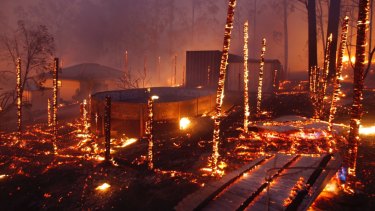
As flames destroyed lives and homes in recent days, there's been a lot of debate about past fires, finger-pointing over prescribed burning, questioning the influence of climate change, or if indeed it was the right time to be talking about it at all.
Map of Australia with red indicating big increase in fire danger focused on border region, QLD, NSW, VIC, SA
But what do scientists have to say? 
Ross Bradstock, a bushfire risk management expert at the University of Wollongong, did not mince words when asked about the current fires.
"We are now in uncharted territory," he said. 
"We've gone over the one-million-hectare mark at least for the forests and the plants in the eastern part of NSW — this is unprecedented." 
Of course fires have happened before, but Dr Bradstock said the 2019-20 fire season in New South Wales had already exceeded the infamous major fire periods of January 1994 and Christmas 2001.
With summer still to come, and given the current forecast and outlook, things aren't looking good. 

11 November, 2019

This is not normal: what's different about the NSW mega-fires

I write this piece reluctantly because there are still possible fire victims unaccounted for; people have lost loved ones, and hundreds of families have lost their homes. My heart goes out to them. I don’t want to detract in any way from the vital safety messages that our fire commissioners and Premier will be making about Tuesday’s fire potential.
Burning properties in Rainbow Flat after fire from the Hillville Fire broke containment lines and crossed the Pacific Highway.
Burning properties in Rainbow Flat after fire from
the Hillville Fire broke containment lines and crossed
the Pacific Highway.
Everyone needs to heed the fire service warnings to prepare, to have a plan, and to leave early if you’re not properly prepared. Know that the best firefighters in the world – volunteer and paid – will be out in force from NSW agencies and interstate to do battle with the worst that an angry Mother Nature can throw at us. But as we saw on Friday, the sheer scale and ferocity of mega fires can defy even the best efforts.

In the past I’ve have heard some federal politicians dodge the question of the influence of climate change on extreme weather and fires by saying, “It’s terrible that this matter is being raised while the fires are still burning.” But if not now, then when?

“Unprecedented” is a word that we are hearing a lot: from fire chiefs, politicians, and the weather bureau. I have just returned from California where I spoke to fire chiefs still battling unseasonal fires. The same word, “unprecedented”, came up.


Read the opinion piece from The Sydney Morning Herald by Greg Mullins - “This is not normal: what's different about the NSW mega-fires.”

13 September, 2019

Extreme Weather Displaced a Record 7 Million in First Half of 2019

Extreme weather events displaced a record seven million people from their homes during the first six months of this year, a figure that put 2019 on pace to be one of the most disastrous years in almost two decades even before Hurricane Dorian battered the Bahamas. 
The Internal Displacement Monitoring Center, which compiles data from governments, United Nations humanitarian agencies and media reports, concluded in a report published Thursday that floods, landslides, cyclones and other extreme weather events temporarily displaced more people in the first half of this year than during the same period in any other year.
“In today’s changing climate, mass displacement triggered by extreme weather events is becoming the norm,” the center said in its report, adding that the numbers represent “the highest midyear figure ever reported for displacements associated with disasters.” The center has been publishing annual data since 2003. 

Read the story from The New York Times by Somini Sengupta - “Extreme Weather Displaced a Record 7 Million in First Half of 2019.”

18 May, 2019

U.N. Secretary-General Warns of 'Total Disaster' If Global Warming Isn't Stopped

UNITED NATIONS (AP) — The United Nations secretary-general said the world must dramatically change the way it fuels factories, vehicles and homes to limit future warming to a level scientists call nearly impossible.
UN Secretary-General António Guterres. 
That’s because the alternative “would mean a catastrophic situation for the whole world,” António Guterres told The Associated Press in an exclusive interview.

Guterres said he’s about to tour Pacific islands to see how climate change is devastating them as part of his renewed push to fight it. He is summoning world leaders to the U.N. in September to tell them “they need to do much more in order for us to be able to reverse the present trends and to defeat the climate change.”


01 October, 2018

The global climate refugee crisis has already begun

When Hurricane Florence struck the shores of North and South Carolina and Virginia, more than a million evacuees fled their homes seeking shelter from the storm. For some, there will be no return home, as their homes are damaged beyond repair or beyond what they can afford to repair. All these displaced people are not simply evacuees fleeing a dangerous hurricane. They are climate refugees.
Climate refugees are already a reality.
There are a couple of reasons why climate change is creating a new category of refugee. First, climate change contributes to rising seas. As ocean water warms, it expands. That, along with simultaneous increased melting of the world’s mountain glaciers and the Greenland and Antarctic ice sheets, contributes to rising sea levels. Sea level rise is already one factor producing climate refugees around the world.


Read the story from The Hill - “The global climate refugee crisis has already begun.”

11 April, 2018

Queenslanders to benefit from health plan to combat climate change impacts

In the aftermath of the king tides that swept through streets and homes in the Torres Strait early last month, Queensland Emergency Services Minister Craig Crawford called on governments at every level to take the need for protection of low-lying communities more seriously.
Grey's Bay, Bowen Queensland.
“Whether people are believers or not in climate change, sea levels are rising and governments need to do something about it,” he said.

The post below, by Sue Cooke and Fiona Armstrong from the Climate and Health Alliance, and Dr David Rissik, Project Manager at the National Climate Change Adaptation Research Facility, relates to an important consultation that is currently occurring in Queensland.


Read the Croakey story by Sue Cooke, Fiona Armstrong and David Rissik - “Queenslanders to benefit from health plan to combat climate change impacts.”

24 March, 2018

See everything bad about climate change in a swingle Californian town

MONTECITO IS COMING back to life this morning. The 9,000 person town to the east of Santa Barbara has been empty since Tuesday, when mandatory evacuations forced residents out of their homes for the fifth time in four months.
Rain continues to fall on the flood-damaged area in
Montecito, CA where many residents have evacuated.
This week it was a channel of tropical moisture called the Pineapple Express, dumping bands of intense rain and triggering flash floods throughout Southern California. In January it was a once-in-a-200-year storm that dropped half an inch of water in five minutes, unleashing massive mudslides that ripped houses from their foundations and killed 27. In December it was the deadly Thomas Fire that incinerated 280,000 acres—the largest wildfire in California history.

To some, Montecito might just seem like a town hit by a string of superlatively bad luck. But to people crunching the numbers it looks less like an outlier and more like an inevitability of climate change. If you want to see what California looks like in the future, you don’t need a crystal ball. You just need to hop on the 101 and drive until you hit Montecito.


17 March, 2018

This whirlpool turbine can be installed in a week and could power up to 60 homes

This whirlpool turbine can power dozens of homes, providing energy 24 hours a day. 
The water-powered turbine is a natural fit for the Goulburn Valley.
Belgian company Turbulent have possibly come up with a solution to generate energy for small-scale rural areas, but you need to live near a river.

The turbine can be installed in most rivers and canals, using the flowing water to produce energy - which the creators claim is enough to power up to 60 homes.


07 March, 2018

Australian homes, business installed 6.5 solar panels per minute in 2017

We know that Australian homes and businesses were installing rooftop solar at a record-breaking clip in 2017, but the latest data from the Clean Energy Regulator makes that official – and how.


According to the CER’s latest update on the Small-Scale Renewable Energy Scheme, solar panels were installed on rooftops at a mind-bending rate of 6.5 per minute in 2017, adding a total of 1057MW new capacity for the year.

This equates to 3.5 million solar panels being fixed to Australian rooftops, or more than 9500 installed every day, the CER said.

All told, there was a 41 per cent increase in installed renewable energy capacity across all states and territories compared to 2016, the report says.


Read the One Step off the Grid story by Sophie Vorrath - “Australian homes, business installed 6.5 solar panels per minute in 2017.”

26 February, 2018

Tornadoes destroy homes in Tennessee, Kentucky as wild storms hit central US

At least five people have been killed as severe thunderstorms swept through the central US, spawning tornadoes that flattened homes, gale force winds and widespread flooding.
Gio Rodriguez, 8, sits outside his Tennessee home after a
 storm which caused chaos across much of the central United States.
The system, stretching from Texas to the Canadian Maritime provinces, had prompted several emergency declarations even before the dangerous storms arrived.

Storm crews confirmed two tornadoes touched down in middle Tennessee and Kentucky, with maximum-sustained winds of 193 kilometres per hour.

One of the tornados struck in south-central Kentucky, causing homes to collapse and cars to flip over, and a 79-year-old woman died after her Adairville home was destroyed, the Logan County Sheriff's Office said.


28 January, 2018

Paris on flooding high alert as swollen River Seine set to rise further

Hundreds of people have been evacuated from their homes along the swollen Seine as the river kept rising after it burst its banks in Paris, engulfing scenic quays and forcing part of the Louvre museum to close to protect its priceless artworks from floodwaters.
The flooding Seine River has caused innumerable troubles in Paris.
The river had reached 5.75 metres (19.9 feet) at 8 pm local time on Saturday, more than four metres above its normal height, and was set to hit a peak on Sunday night at around six metres.

Seemingly interminable rains in France over the past couple of weeks caused the river to rise inexorably, leading city authorities to shut down all boat traffic on the Seine in Paris, keeping tourists off the capital's famed sightseeing Bateaux Mouches.


Read Rory Mulholland’s story in The Telegraph - “Paris on flooding high alert as swollen River Seine set to rise further.”

12 November, 2017

The future of climate refugees

As climate change causes sea levels to rise, vulnerable populations in countries like Tuvalu, Bangladesh and Vietnam are threatened with the very real prospect of losing their homes and migrating inland.
Vunidogoloa was moved 2 km inland to escape
 the impacts associated with climate change.
In some places, like Fiji, this is happening already.

In 2014, the entire village of Vunidogoloa on Vanua Levu was forced to move to higher ground 2 kilometres inland to escape coastal erosion and regular flooding - environmental impacts that villagers and the Fiji Government attribute to climate change.


Read the Unversity of Melbourne Pursuit story - “The future of climate refugees.”

11 October, 2017

Northern California firestorm ‘literally exploded,’ killing 15 and destroying hundreds of homes

High temperatures and fast winds are fueling more than a dozen wildfires across California, forcing more than 20,000 northern California residents to evacuate their homes and communities. At least 15 people have died, and more than 200 have been reported missing, after several fires spread rapidly throughout Monday.
Flames from massive wildfire in Napa, California.
The fires ignited late Sunday night and into Monday morning and have since spread over 50,000 acres across Napa and Sonoma counties, destroying at least 2,000 structures and sending at least 100 to the hospital with injuries ranging from burns to smoke inhalation. The Tubbs Fire — which is currently burning at 27,000 acres — has prompted the evacuation of at least 10 neighborhoods in the city of Santa Rosa, which has a population of 125,000. Two hospitals have also been evacuated after the fire jumped across Highway 101 between Sunday night and Monday morning.


(Those in denial about climate change simple refer to such events as the Californian fires as “natural events” and then end the conversation. They in fact leave the ambulance parked at the bottom of the cliff, collecting the victims, but never wondering, or asking what’s happening, why the people are falling over the cliff.
Falling back on repeated rhetoric, that argue that it is insensitive and unfair to the victims to discuss the potential cause of the fires while the difficulty is actually happening.

Although the Californian fires may be natural in some respects, they are clearly worsened our warming world and surely those of us not intimately involved with the catastrophe have every right to speculate on the cause of the fires and what should be happening to lessen the severity of such events - Robert McLean)

12 September, 2017

For Hurricane Irma, the metrics are measured in millions

Washington: Already key metrics are being measured in the millions - millions evacuated from their homes, millions without power and millions effectively twiddling their thumbs as daily life grinds to a halt.
US Federal Emergency Management
 Agency director Brock Long.
 

As Hurricane Irma dawdles northwards, there were forecasts of dangerous storm surges in its wake, with Florida Governor Rick Scott warning: "The biggest thing you can do now is pray.”

And tens of millions in the rest of the country were glued to TVs, watching it all.

When news emerged from the Keys, there were reports of ferocious winds and buildings submerged in floodwaters and of power and mobile phone services being down, but Key West, at least, seemed to have escaped anticipated catastrophe.


Read Paul McGeough’s story in today’s Melbourne Age - “For Hurricane Irma, the metrics are measured in millions.”

02 September, 2017

Hurricane Harvey’s warning to all

Nobody wants to pick on Texas, or especially Houston, after a 1,000-year weather event that for several days turned the city into a lake and dispossessed thousands of their homes, belongings and, in some cases, loved ones.
Kathleen Parker.
The ultimate effects of the storm blandly named Harvey are yet to be fully understood. What is known is that most of the homes destroyed were uninsured for flooding and that U.S. taxpayers will be doing much of the bailing.

Meanwhile, comparisons to Hurricane Katrina 12 years ago are intriguing, if one is fortunate enough to be hugging dry land. Chief among the obvious differences is the death toll. Katrina took close to 2,000 lives. As of Friday, Harvey’s toll was 46, and the figure wasn’t expected to rise significantly.


Read the opinion piece on The Washington Post by Kathleen Parker - “Hurricane Harvey’s warning to all.”

17 July, 2017

Let's get together and go 100%

From our homes and smartphones to the electricity running our local grocery stores, clean energy is not only possible – it’s already happening. 

Image result for 100% image
Solutions Project accelerates the transition to 100% clean energy by championing a movement that is more inclusive, more collaborative, and more celebratory.

Through storytelling, grantmaking, and capacity building, we honor clean energy leaders, invest in promising solutions, and build relationships between unlikely allies.

Together, we can make renewable energy a reality for everyone – 100% for 100%.


Check out more about 100% here.

30 August, 2016

Coastal councils are already adapting to rising seas

Sarah Boulter writes about
protecting our coasts.
The wild storms that lashed eastern Australia earlier this year damaged property and eroded beaches, causing millions of dollars' worth of damage. As sea levels rise, the impact of storms will threaten more and more homes, businesses and services along the coastline.

CSIRO projections suggest that seas may rise by as much 82cm by the end of the century. When added to high tides, and with the influence of winds and associated storms, this can mean inundation by waters as high as a couple of metres.

As a community, we have to start deciding what must be protected, and how and when; where we will let nature take its course; how and if we need to modify the way we live and work near the coast; and so on. Many of these decisions fall largely to local governments.

Read the piece on The Conversation by a Research Fellow from the National Climate Change Adaptation Research Facility at Griffith University, Sarah Boulter - “Coastal councils are already adapting to rising seas – we’ve built a website to help.”

02 December, 2013

Cherry Tree Range wind farm is approved


The idea for wind farm that will power about 20 000 homes has been given the go ahead.

The “Cherry Tree Range” wind farm has been approved the planning application for the farm.

A release from the BEAM Mitchell Environment Group headed: “BEAM welcomes the VACT decision to approve the Cherry Tree Range Wind Farm” acknowledges some disagreement in the community.

BEAM president, Mr Richard Telford, said, “We hope all parties might agree that we should now heal some divisions and work towards achieving the best possible outcome.”