Showing posts with label rising. Show all posts

07 January, 2020

Australia can expect far more fire catastrophes. A proper disaster plan is worth paying for

Australia is in the midst of inconceivably bad bushfires. The death toll is rising, thousands of buildings have been destroyed and whole communities displaced. This scale is like nothing before, and our national response must be like nothing that has come before.
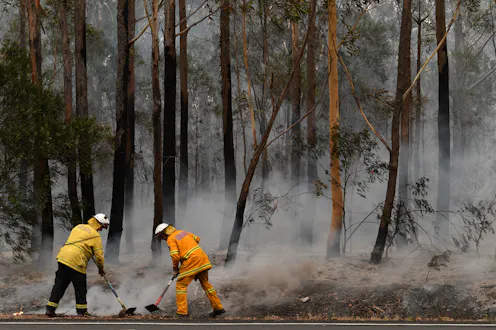
Image result for Australia can expect far more fire catastrophes. A proper disaster plan is worth paying for
Australia needs a nationally mobile, fully-funded
 emergency management workforce.
Prime Minister Scott Morrison on Sunday somewhat acknowledged the need for unprecedented action. He took the extraordinary step of calling up 3,000 Australian Defence Force reservists and mobilising navy ships and military bases to aid the emergency response. This has never before happened in Australia at this scale.

Read the story from The Conversation by the Professor of Hazards and Disaster Risk Sciences from the University of Sydney, Dale Dominey-Howes -  “Australia can expect far more fire catastrophes. A proper disaster plan is worth paying for.” 

15 August, 2019

Climate explained: why plants don’t simply grow faster with more carbon dioxide in air

Rising atmospheric carbon dioxide (CO₂) is warming our climate, but it also affects plants directly. 
Fast-growing plantation trees store less carbon per surface area
 than old, undisturbed forests that may show little growth.
A tree planted in the 1850s will have seen its diet (in terms of atmospheric carbon dioxide) double from its early days to the middle of our century. More CO₂ generally leads to higher rates of photosynthesis and less water consumption in plants. So, at first sight, it seems that CO₂ can only be beneficial for our plants.
But things are a lot more complex than that. Higher levels of photosynthesis don’t necessarily lead to more biomass production, let alone to more carbon dioxide sequestration. At night, plants release CO₂ just like animals or humans, and if those respiration rates increase simultaneously, the turnover of carbon increases, but the carbon stock doesn’t. You can think of this like a bank account – if you earn more but also spend more, you’re not becoming any richer.

Read the story from The Conversation by an Associate Professor, from Auckland University of Technology, Sebastian Leuzinger -  “Climate explained: why plants don’t simply grow faster with more carbon dioxide in air.”

10 December, 2018

Climate change likely to make us more stupid, study finds

Rising carbon dioxide emissions could cause a decline in the brainpower of workers around the world, according to new research.
Rising levels of carbon dioxide could affect concentration
 and decision-making of global workforce.
A new study by academics at University College London (UCL) found that higher amounts of greenhouse gas in the atmosphere could affect our memory, concentration and decision-making abilities.

Raised CO2 in workplaces lacking proper ventilation is known to make employees more sluggish and less able to successfully complete tasks.


Read by Adam Forrest from the Independent - “Climate change likely to make us more stupid, study finds.”

13 September, 2018

As temperatures rise, wildflowers are under stress

Every summer, hikers and photographers look forward to bursting blooms of alpine wildflowers in the high country of the Rocky Mountains. But as the climate changes, temperatures are rising, spring snowmelt is occurring earlier in the year, and shrubs are encroaching – a convergence of stressors that could cause the flowers to appear in smaller numbers or even go extinct.
Photo credit: Gabriella Pardee.
It’s a problem that affects more than just the scenic beauty of the area. A wildflower decline could tip over a series of other dominos in the ecosystem, potentially affecting soil nutrient cycling, pollinators, invertebrate communities, and the food chains that depend on them. Researchers are concerned about these changes and are studying these ecosystems, looking for hints of the changes a warming climate could bring.


Read the story by Kristen Pope from Yale Climate Connections - “As temperatures rise, wildflowers are under stress.”

20 February, 2018

Rising CO2 levels are making your food less nutritious

Rising carbon dioxide levels are causing climate change. But they could also be making the food on your plate less nutritious.
This looks great, but as the world
warms it is becoming less nutritious.
Loladze: “Every time you eat, say, a carrot or a bread or potatoes, the quality of it is different than, all else being equal, it was, say, a hundred years ago.”

Irakli Loladze, of Nebraska’s Bryan College of Health Sciences, studies how carbon dioxide levels affect plant nutrients. He analyzed studies from around the world that examined the nutrient levels of plants grown in experiments with elevated levels of CO2.

The data include more than 7,000 samples of 130 plant varieties, including rice, wheat, and other grains, as well as fruits and vegetables.


Read the Yale Climate Connections story by Jan O’Brien - ‘Rising CO2 levels are making your food less nutritious.”

10 February, 2018

Residents fear over-development in new Anglesea masterplan

Tensions are rising in coastal Anglesea amid a proposal to redevelop sections of unused land for tourist and residential accommodation, in another sign of commercial pressure facing communities on the Great Ocean Road.
Anglesea residents are rallying against development plans for the former Alcoa site. 
The proposed redevelopments were contained in a “concept masterplan” released in late January by Alcoa, which operated a mine and power station in Anglesea until 2015.


Read the story by Benjamin Preiss in The Age - “Residents fear over-development in new Anglesea masterplan.”

29 January, 2018

The land of ice embracing climate change

Greenland's massive ice cap is melting at alarming speed, raising fears of sea levels rising around the world.
A sheep farm in Greenland.
But for many of Greenland's 56,000 residents, melting ice means money.

"I'm quite optimistic," Andrias Olsen, a fleet manager with the State fishing company Royal Greenland, said.

"We're seeing some higher stocks due to climate change — at least due to warmer sea temperatures — but also due to the ice cap melting.

"A lot of nutritious water comes down the big fjord systems, which creates optimal conditions for fishery.”

Almost 80 per cent of Greenland is covered by an ice cap, meaning everyone has to make a living on the coast.


Read the ABC News story by foreign correspondent Eric Campbell - “The land of ice embracing climate change.”

28 January, 2018

Paris on flooding high alert as swollen River Seine set to rise further

Hundreds of people have been evacuated from their homes along the swollen Seine as the river kept rising after it burst its banks in Paris, engulfing scenic quays and forcing part of the Louvre museum to close to protect its priceless artworks from floodwaters.
The flooding Seine River has caused innumerable troubles in Paris.
The river had reached 5.75 metres (19.9 feet) at 8 pm local time on Saturday, more than four metres above its normal height, and was set to hit a peak on Sunday night at around six metres.

Seemingly interminable rains in France over the past couple of weeks caused the river to rise inexorably, leading city authorities to shut down all boat traffic on the Seine in Paris, keeping tourists off the capital's famed sightseeing Bateaux Mouches.


Read Rory Mulholland’s story in The Telegraph - “Paris on flooding high alert as swollen River Seine set to rise further.”

25 January, 2018

Energy broker to bargain on behalf of state's poorest households

Thousands of vulnerable Victorian households struggling to keep up with rising energy bills will be given free access to a broker who will collectively bargain for a cheaper deal on their behalf.
The state government is creating a broker to
act on behalf of vulnerable households.
The broker would act in the interests of low-income earners who in many cases spend hundreds of dollars a year more on energy than they would if put on the best available offer.


Read Adam Carey’s story in today’s Melbourne Age - ”Energy broker to bargain on behalf of state's poorest households.”

02 January, 2018

The Most Powerful Evidence Climate Scientists Have of Global Warming

Earth's temperature is rising, and it isn't just in the air around us. More than 90 percent of the excess heat trapped by greenhouse gas emissions has been absorbed into the oceans that cover two-thirds of the planet's surface. Their temperature is rising, too, and it tells a story of how humans are changing the planet.

This accrued heat is "really the memory of past climate change," said Kevin Trenberth, the head of climate analysis at the National Center for Atmospheric Research and co-author of a new paper on ocean warming.

It's not just the amount of warming that is significant—it's also the pace.

The rate at which the oceans are heating up has nearly doubled since 1992, and that heat is reaching ever deeper waters, according to a recent study. At the same time, concentrations of carbon dioxide in the atmosphere have been rising.

The charts that follow show how the oceans are changing and what they're telling us as a thermometer of global warming.


Read the Inside Climate News story by Sabrina Shankman and Paul Horn - “The Most Powerful Evidence Climate Scientists Have of Global Warming.”

03 December, 2017

Use solar panels and batteries to put the power back in your hands

Australia's power bills have been rising, and represent one of the largest threats to household budgets.
Peter Youll with his Tesla battery, which has
 paid for itself before the warranty ran out.
From 2008 to 2016, power prices in Victoria and NSW more than doubled; in the 2017 September Quarter Consumer Price Index, the single biggest increase was electricity, which jumped 8.9 percent.

In response, many Australians are reducing reliance on or leaving the electricity grid and looking to solar power and other technologies to cut their power bills.

Peter Youll and Michael Peters are two ordinary Australians who wanted to make a change, not only to their power bills but for the climate.


Read Cole Latimer’s story in today’s Melbourne Age - “Use solar panels and batteries to put the power back in your hands.”

15 November, 2017

High energy costs make vulnerable households reluctant to use air conditioning: study

The trifecta of rising electricity prices, soaring temperatures and concerns over possible blackouts risks increasing heat-related deaths and illness this summer, as households struggle to afford to run cooling appliances.
With a hot summer forecast, keeping cool will put
 a strain on financially vulnerable households.
Over the past year, our Heatwaves, Homes & Health research project has investigated the impact of electricity policy on heat-vulnerable and financially constrained households in Melbourne, Dubbo and Cairns. Many of these households live in poor quality homes that typically heat up quickly and cool down slowly.

Our findings reveal that schemes to reduce energy demand (like raising electricity prices during heatwaves and encouraging electricity conservation to avoid blackouts) could increase health and wellbeing risks, unless they take into account housing, health and socioeconomic disadvantages.


14 September, 2016

Earth's oceans absorbing most of the globe's excess heat

Record High Annual Mean
 Surface Temperatures, 2015.
Ocean temperatures have been consistently rising for at least three decades. Scientists believe that global sea surface temperatures will continue to increase over the next decade as greenhouse gases build up in the atmosphere.

According to a report by the International Union for Conservation of Nature released last week, the Southern Hemisphere has experienced intense warming over the past decade, with strong heat accumulation in the midlatitude regions of the Pacific and Indian Oceans.

Natural patterns such as El Niño and La Niña can have year-to-year effects on temperatures. Individual storms can also influence ocean temperatures for months or longer. But the overall temperature trends by decade reveal a backdrop of human-caused warming.

Read Tim Wallace’s story in The New York Times - “Oceans Are Absorbing Almost All of the Globe’s Excess Heat.”

18 May, 2014

Rising temperatures push credit ratings down


Climate change threatens to unseat and damage many things with the latest being credit ratings.

The Huffington Post writes about this newest threat in a story headed: “Climate change will hurt nations’ credit rating, S&P warns”.

According to the report, Standard and Poor’s Ratings Services has warned that rising global temperatures will put downward pressure on sovereign credit ratings.