Showing posts with label carbon dioxide. Show all posts

07 March, 2020

Transport is letting Australia down in the race to cut emissions

At a time Australia is meant to be reducing its greenhouse emissions, the upward trend in transport sector emissions continues. The latest National Greenhouse Gas Inventory report released last week shows the transport sector emitted 102 million tonnes (Mt) of carbon dioxide equivalent (MtCO₂-e) in the 12 months to September 2019. This was 18.9% of Australia’s emissions. 
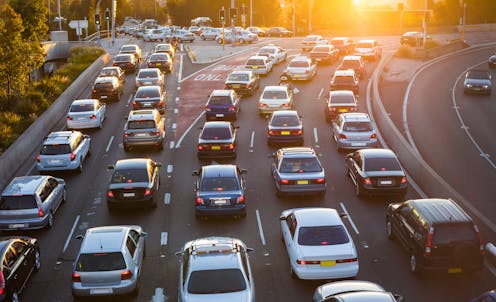
Image result for Transport is letting Australia down in the race to cut emissions

Overall, the trend in emissions from all sectors have been essentially flat since 2013. If Australia is to reduce emissions, all sectors including transport must pull their weight. 
Transport emissions have gone up 64% since 1990. That’s the largest percentage increase of any sector. 
Read the story from The Conversation by the Honorary Principal Fellow from the University of Wollongong, PhillipLaird - “Transport is letting Australia down in the race to cut emissions.”

06 March, 2020

Climate explained: how growth in population and consumption drives planetary change

The growth of the human population over the last 70 years has exploded from 2 billion to nearly 8 billion, with a compounding net growth of over 30,000 per day. We all breathe out carbon dioxide with every breath. That equates to about 140 billion CO₂ breaths every minute. Isn’t it logical that atmospheric carbon will continue to increase with the birth rate regardless of what we do about fossil fuel reduction?
Image result for Climate explained: how growth in population and consumption drives planetary change
Rapid population growth and increased consumption are
now seen as the main drivers of environmental changes.
This question touches on the core of our impact on planetary change. It highlights the exponential growth in the human population, but also homes in on the potential direct input of carbon dioxide from humans, through respiration. 
As I explain in more detail below, our breathing does not contribute to the net accumulation of carbon dioxide in the atmosphere. But population growth, combined with an increase in consumption, is now seen as the main driver of change in the Earth system. 

Read the story from The Conversation by the Professor of Geology, from the Auckland University of Technology, Michael Petterson  - “Climate explained: how growth in population and consumption drives planetary change.” 

Tropical forests losing their ability to absorb carbon, study finds

Tropical forests are taking up less carbon dioxide from the air, reducing their ability to act as “carbon sinks” and bringing closer the prospect of accelerating climate breakdown.

Amazon forest canopy at dawn.
Amazon forest canopy at dawn. The loss of forests as ‘carbon
sinks’ is likely to make climate breakdown more severe.
The Amazon could turn into a source of carbon in the atmosphere, instead of one of the biggest absorbers of the gas, as soon as the next decade, owing to the damage caused by loggers and farming interests and the impacts of the climate crisis, new research has found.

If that happens, climate breakdown is likely to become much more severe in its impacts, and the world will have to cut down much faster on carbon-producing activities to counteract the loss of the carbon sinks.

“We’ve found that one of the most worrying impacts of climate change has already begun,” said Simon Lewis, professor in the school of geography at Leeds University, one of the senior authors of the research. “This is decades ahead of even the most pessimistic climate models.”


Read the story from The Guardian by Fiona Harvey - “Tropical forests losing their ability to absorb carbon, study finds."

08 July, 2019

Climate change could be paused by planting trees, researchers say, as they map out available land

Planting trees to reduce the amount of carbon dioxide in the atmosphere seems like a no-brainer in the fight against climate change.
Rows of new saplings in a field.
Australia is one of six countries that together hold
around 50 per cent of the world's tree planting potential.
But until recently it's not been clear how much land we'd need to make a tangible difference to warming, and whether we'd need to reclaim farm and residential land to do it.
Now new research published today in Science estimates there's enough suitable unused land on the globe for reforestation to store around 205 gigatonnes of carbon.
That's enough to buy us about 20 years in the fight against climate change, according to researcher Jean-Francois Bastin from the Institute of Integrative Biology in Zurich.

24 June, 2019

Climate crisis: CO2 levels rise to highest point since evolution of humans

Levels of the damaging greenhouse gas carbon dioxide have reached an alarming new milestone at the world’s oldest measuring station in Hawaii.

Burning fossil fuels remains the biggest producer of CO2
Burning fossil fuels remains the biggest producer of CO2. 
The Mauna Loa Observatory, which has measured the parts per million (ppm) of CO2 in the atmosphere since 1958, took a reading of 415.26ppm in the air on 11 May – thought to be the highest concentration since humans evolved.

The Scripps Institution of Oceanography measures CO2 levels at Mauna Loa daily. The observatory, on Hawaii’s largest volcano, was built to test air quality on the remote Pacific islands because it is far from continents and pollution, while the area lacks vegetation, which can interfere with results.


Read the story from the Independent by Harry Cockburn - “Climate crisis: CO2 levels rise to highest point since evolution of humans.”

15 May, 2019

It was 84 degrees near the Arctic Ocean this weekend as carbon dioxide hit its highest level in human history

Over the weekend, the climate system sounded simultaneous alarms. Near the entrance to the Arctic Ocean in northwest Russia, the temperature surged to 84 degrees Fahrenheit (29 Celsius). Meanwhile, the concentration of carbon dioxide in the atmosphere eclipsed 415 parts per million for the first time in human history.
Carbon dioxide levels from approximately 1750
 to present. (Scripps Institute of Oceanography)
By themselves, these are just data points. But taken together with so many indicators of an altered atmosphere and rising temperatures, they blend into the unmistakable portrait of human-induced climate change.

Saturday’s steamy 84-degree reading was posted in Arkhangelsk, Russia, where the average high temperature is around 54 this time of year. The city of 350,000 people sits next to the White Sea, which feeds into the Arctic Ocean’s Barents Sea.


20 October, 2018

Tropical deforestation now emits more CO2 than the EU

To stay under 2 degrees Celsius of warming and thereby stave off the worst effects of climate change, more funding must be allocated to forest-focused global warming mitigation strategies. That’s the takeaway from a new analysis by Global Forest Watch (GFW) this month. The numbers suggest that forests, harnessed effectively, could be a powerful climate mitigation tool, but “forests have long been overlooked as a climate change solution,” said Nancy Harris, Research Manager for GFW.
Deforestation is now one of largest emitters of 
 carbon dioxide, ranking just below the U.S. and 
significantly higher than the EU.
One consequence of this oversight, according to climate scientists, is that the contributions of deforestation and forest degradation to climate change have received less attention than fossil fuel emissions. Tree cover loss contributes to global carbon emissions because trees naturally capture and sequester atmospheric carbon as they grow. When the trees are consumed by forest fires or cleared and burned to make way for pastureland, carbon that took decades to store is released back into the atmosphere near-instantaneously.


Read the story from Mongabay  by Rachel Fitts - “Tropical deforestation now emits more CO2 than the EU.”

14 June, 2018

The potential pitfalls of sucking carbon from the atmosphere

LAST WEEK, CANADIAN company Carbon Engineering published research findings that show how carbon dioxide could be sucked up from the atmosphere for less than $100 per ton. In 2017, the world emitted some 32.5 gigatons of the stuff. But hey—baby steps.
Picture from Carbon Engineering.
Scientists have long speculated that so-called "negative emissions" technologies like CO2 removal could not only slow the accumulation of carbon in the air, but even reverse it. Before last week, though, all that speculation was, well, largely speculative; nobody had convincingly demonstrated how to pull off negative emissions at scale. Previous estimates had pegged the cost of sucking carbon from the skies, for instance, at $600 per ton—way too pricey to qualify as a viable cleanup solution. The findings from Carbon Engineering, which appear in the latest issue of the journal Joule, point the way toward a future in which negative emissions are not only technically possible but financially feasible.


Read  the story by Robbie Gonzalez from Wired  - “The potential pitfalls of sucking carbon from the atmosphere.”

14 May, 2018

Carbon dioxide in the atmosphere hits record high monthly average

April monthly average exceeds 410 parts per million for the first time in recorded history.

The average concentration of carbon dioxide in the atmosphere was 410.31 parts per million (ppm) for the month of April, according to the Keeling Curve measurement series made at the Mauna Loa Observatory in Hawaii.

This marks the first time in the history of the Mauna Loa record that a monthly average has exceeded 410 parts per million. This also represents a 30-percent increase in carbon dioxide concentration in the global atmosphere since the Keeling Curve began in 1958. In March, Scripps Institution of Oceanography at the University of California San Diego observed the 60th anniversary of the data series, the first measurements of which were 315 ppm.


Read the report by Rob Monroe from the Scripps Institution of Oceanography - “Carbon dioxide in the atmosphere hits record high monthly average.”

11 May, 2018

Cracking a climate conundrum

In 2015, we earthlings – some 7.5 billion of us – discharged 36 billion tons of carbon dioxide into the air from many tailpipes and smokestacks. That is about the same amount of planet-warming gas belched out in 2014, and the figure remained largely unchanged in 2016.
Forest fires in Indonesia, September 2011.
After a century of exponential growth in the mass of carbon dioxide ejected into the air, the leveling-off of the output caught many observers by surprise. It’s explained partly by widespread substitution of natural gas for coal in electricity production and by expanded use of wind and solar energy.

Although the amount of CO2 ejected into the air leveled off in 2015, the quantity accumulating in the atmosphere did not let up. Rather, it spiked. Indeed, the concentration of the gas increased that year by 3 parts per million (ppm), 50 percent more than in the previous year and the average annual increase of the prior four decades. Researchers hadn’t observed an increase so large since they began systematic measurements of CO2 in the atmosphere back in 1958. The amount of CO2 in the air probably hadn’t surged so much in a single year since at least the end of the last ice age – 10,000 years ago.

Read the story by Daniel Grossman from Yale Climate Connections - “Cracking a climate conundrum.”

07 May, 2018

Earth’s atmosphere just crossed another troubling climate change threshold

For the first time since humans have been monitoring, atmospheric concentrations of carbon dioxide have exceeded 410 parts per million averaged across an entire month, a threshold that pushes the planet ever closer to warming beyond levels that scientists and the international community have deemed “safe.”
Recent CO2 measurements at Mauna Loa Observatory in Hawaii.
The reading from the Mauna Loa Observatory in Hawaii finds that concentrations of the climate-warming gas averaged above 410 parts per million throughout April. The first time readings crossed 410 at all occurred on April 18, 2017, or just about a year ago.

Carbon dioxide concentrations — whose “greenhouse gas effect” traps heat and drives climate change — were around 280 parts per million circa 1880, at the dawn of the industrial revolution. They’re now 46 percent higher.


Read the story by Chris Mooney from The Washington Post - “Earth’s atmosphere just crossed another troubling climate change threshold.”

20 March, 2018

Unprecedented' marine heatwave triggered huge carbon-dioxide release

A severe heatwave off north-western Western Australia hammered the world's largest region of seagrass, triggering the release of as much as nine million tonnes of carbon dioxide, a paper by international researchers has found.
Shark Bay, one of the world's largest intact seagrass regions
was hammered in a marine heatwave that lasted two months
 in the summer of 2010-11.
Two months of temperatures 2-4 degrees above average in the summer of 2010-11 resulted in the loss of about 1000 square-kilometres of seagrass in Shark Bay by 2014, or about a fifth of its extent, according to the paper which was published on Tuesday in Nature Climate Change.


Read Peter Hannam’s story from The Age - “‘Unprecedented' marine heatwave triggered huge carbon-dioxide release.”

20 February, 2018

Rising CO2 levels are making your food less nutritious

Rising carbon dioxide levels are causing climate change. But they could also be making the food on your plate less nutritious.
This looks great, but as the world
warms it is becoming less nutritious.
Loladze: “Every time you eat, say, a carrot or a bread or potatoes, the quality of it is different than, all else being equal, it was, say, a hundred years ago.”

Irakli Loladze, of Nebraska’s Bryan College of Health Sciences, studies how carbon dioxide levels affect plant nutrients. He analyzed studies from around the world that examined the nutrient levels of plants grown in experiments with elevated levels of CO2.

The data include more than 7,000 samples of 130 plant varieties, including rice, wheat, and other grains, as well as fruits and vegetables.


Read the Yale Climate Connections story by Jan O’Brien - ‘Rising CO2 levels are making your food less nutritious.”

12 February, 2018

Buried at sea: State hunts for underground home for carbon emissions

A search has begun off the coast of Gippsland’s Ninety Mile Beach for a place to bury millions of tonnes of carbon dioxide beneath the seabed as a way to cut Victoria’s greenhouse gas emissions.
The Minerals Council of Australia said carbon capture and 
storage could play a long-term role in reducing emissions
 from coal-fired power stations in Gippsland.

Researchers hope to find porous rock formations deep beneath the ocean, into which the state will inject gas piped from fossil-fuel based industries such as the Latrobe Valley’s coal-fired power stations.

The Andrews and Turnbull governments are spending $150 million to try to kickstart the carbon capture and storage project in Gippsland, but say it will only go ahead if the fossil fuels industry backs the technology with a significant financial investment of its own.

Critics argue more than $1 billion has already been spent on carbon capture and storage trials and pilot projects in Australia, with very little to show for it.


Read Adam Carey’s story in The Age - “Buried at sea: State hunts for underground home for carbon emissions.”

(Just a few years ago a leading climate scientist said, in answer to a question of carbon capture a storage that it was a yet to be proved technology, noting that had succeeded in a few small trial sites, but no one was really sure how the process could be scaled up, successfully. I'm far from sure that there has been much success in firming up the process and the Minerals Council would certainly endorse this move as it does little more than forestalls the adoption of a zero carbon way of life, a change that would see the demise of large parts of its industry - Robert McLean)

18 January, 2018

Microwaves in EU countries emit as much carbon dioxide as 7 million cars, study reveals

Microwaves across the European Union emit as much carbon dioxide as nearly 7 million cars, according to a new study. 
Comparing microwaves to cars is like
comparing ‘apples and oranges’, critics say.
 
Researchers at the University of Manchester carried out the first ever comprehensive research into the environmental impacts of microwaves, considering their whole life cycle, from “cradle to grave”. 

They found that the machines are responsible for 7.7 million tonnes of carbon dioxide equivalent per year in the EU, which is the same as the annual emissions of 6.8 million cars. 


Study narrows range of Earth's warming response as greenhouse gases rise

New research has sharply narrowed the likely estimate of how much the Earth will warm with a doubling of carbon dioxide in the atmosphere, potentially honing estimates that have stood for a quarter century.
Estimating how much the planet will warm as we lift
greenhouse gas levels has been an active area of research.
The long-standing estimate for the so-called equilibrium climate sensitivity used by the Intergovernmental Panel on Climate Change had been that surface temperatures would rise between 1.5 and 4.5 degrees for each doubling of CO2 or equivalent greenhouse gases.


Read Peter Hannam’s story in today’s Melbourne Age - “Study narrows range of Earth's warming response as greenhouse gases rise.”

24 December, 2017

Flying home for Christmas? Carbon offsets are important, but they won’t fix plane pollution

But all this travel comes at a cost. According to the Global Sustainable Tourism Dashboard, all Australian domestic trips and one-way international journeys (the other half is attributed to the end point of travel) amount to 15 million tonnes of carbon dioxide for 2016. That is 2.7% of global aviation emissions, despite a population of only 0.3% of the global total.


Flying home for Christmas.
Australia is an important player in the global tourism business. In 2016, 8.7 million visitors arrived in Australia and 8.8 million Australians went overseas. A further 33.5 million overnight trips were made domestically.

The peak month of air travel in and out of Australia is December. Christmas is the time where people travel to see friends and family, or to go on holiday. More and more people are aware of the carbon implications of their travel and want to know whether, for example, they should purchase carbon offsets or not.


Read the piece on The Conversation by Susan Becken and Brendan Mackey - “Flying home for Christmas? Carbon offsets are important, but they won’t fix plane pollution.”

23 November, 2017

Nationalize the Fossil Fuel Industry

We are sitting on a time bomb: more than 500 gigatons of carbon dioxide in the United States completely under the control of unaccountable fossil fuel corporations. These companies have so many incentives to turn their reserves into profitable returns on investment—are we really ready to stake our collective future on the hope that these companies go green in time to avert climate catastrophe? As the Trump administration continues to run down the carbon clock as quickly and as irresponsibly as it can, the time has come to promote solutions that can deal with this massive private control of fossil fuel reserves. A future government may have no choice but to de-privatize control of these reserves, which would detach them from single-minded profit interests and take fossil fuel companies, powerful forces of climate opposition, out of the equation as we genuinely figure out the rest of the green transition.
The Exxon Mobil refinery in Baton Rouge, La., is one of the
largest in the country. It stands at a stretch of the Mississippi River
 known as "cancer alley" for its high number of oil and gas industry
 sites. To shut down the industry for good, the government must buy
 out privately owned fossil fuel reserves. 
The 2017 Atlantic Hurricane season kicked-off with a series of record-breaking storms hitting the United States, leaving behind scenes of complete destruction in large areas of Texas, Florida, Puerto Rico and the Virgin Islands. It has been scary to see climate scientists’ predictions unfold before our eyes, and realize that this is our new “normal.” But the lack of debate around real solutions to mitigate further climate impacts is even scarier—as we’ve seen this week at the UN climate conference in Bonn, Germany, where the United States attempted to promote fossil fuels as the “answer” to the climate problem, an initiative that former New York mayor Michael Bloomberg has compared to “promoting tobacco at a cancer summit.” This season made crystal clear we need a game-changing solution to ensure that fossil fuels remain unburned and in the ground.


Read the In These Times story by Carla Skandier - “Nationalize the Fossil Fuel Industry.”

14 November, 2017

Fossil fuel emissions hit record high after unexpected growth: Global Carbon Budget 2017

Global greenhouse emissions from fossil fuels and industry are on track to grow by 2% in 2017, reaching a new record high of 37 billion tonnes of carbon dioxide, according to the 2017 Global Carbon Budget, released today.

The rise follows a remarkable three-year period during which global CO₂ emissions barely grew, despite strong global economic growth.

But this year’s figures suggest that the keenly anticipated global peak in emissions – after which greenhouse emissions would ultimately begin to decline – has yet to arrive.

The Global Carbon Budget, now in its 12th year, brings together scientists and climate data from around the world to develop the most complete picture available of global greenhouse gas emissions.


01 November, 2017

World greenhouse gas levels made unprecedented leap in 2016

Global average carbon dioxide concentrations rose by 0.8% during 2016, the largest annual increase ever observed. According to figures released overnight by the World Meteorological Organisation, atmospheric CO₂ concentrations reached 403.3 parts per million. This is the highest level for at least 3 million years, having climbed by 3.3 ppm relative to the 2015 average.
The unprecedented rise is due to carbon dioxide emissions from fossil fuels (coal, oil and gas) and the strong 2015-16 El NiƱo event, which reduced the capacity of forests, grasslands and oceans to absorb carbon dioxide from the atmosphere.


Read the piece on The Conversation by a trio of authors - “World greenhouse gas levels made unprecedented leap in 2016."