Showing posts with label deforestation. Show all posts

05 March, 2020

How hundreds of small ‘Gardens of Eden’ guard against total deforestation in Ethiopia

Ethiopia’s northern highlands were once covered by trees. But over the past century, development and exponential population growth have all but wiped out the region’s forests, transforming the landscape into an expanse of brown fields, given over to cattle grazing and agriculture. 
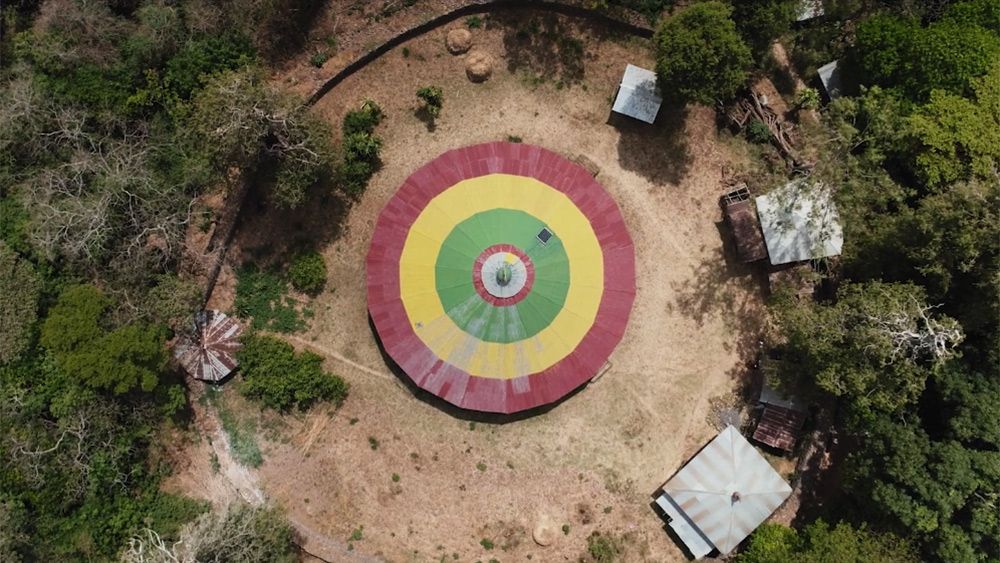
Image result for How hundreds of small ‘Gardens of Eden’ guard against total deforestation in Ethiopia
The small gardens of Ethiopia guard against deforestation.
However, an aerial view of the region reveals small pockets of green with round buildings in the middle, dotting the barren expanses. 

Born of the centuries-old belief of the Ethiopian Orthodox Tewahedo Church that churches should be surrounded by forests so as to resemble the Garden of Eden, these sites have become valuable sanctuaries of biodiversity amid the extreme pressures of population growth.


22 December, 2019

Top scientists warn of an Amazon ‘tipping point’

Deforestation and other fast-moving changes in the Amazon threaten to turn parts of the rainforest into savanna, devastate wildlife and release billions of tons carbon into the atmosphere, two renowned experts warned Friday. 
“The precious Amazon is teetering on the edge of functional destruction and, with it, so are we,” Thomas Lovejoy of George Mason University and Carlos Nobre of the University of Sao Paulo in Brazil, both of whom have studied the world’s largest rainforest for decades, wrote in an editorial in the journal Science Advances. “Today, we stand exactly in a moment of destiny: The tipping point is here, it is now.”
Combined with recent news that the thawing Arctic permafrost may be beginning to fill the atmosphere with greenhouse gases, and that Greenland’s ice sheet is melting at an accelerating pace, it’s the latest hint that important parts of the climate system may be moving toward irreversible changes at a pace that defies earlier predictions.

Read the story from The Washington Post by Chris Mooney and Brady Dennis - “Top scientists warn of an Amazon ‘tipping point’.”

31 August, 2019

Great Barrier Reef outlook downgraded to 'very poor' as threats mount

The Great Barrier Reef is at "a critical point" with the marine park's outlook downgraded on Friday from "poor" to "very poor" due to coral bleaching and deforestation.
The Great Barrier Reef has had its outlook downgraded in a further sign that scientists fear for the future of the world's largest reef system as climate change and other threats mount.
The Great Barrier Reef has had its outlook downgraded in a further
 sign that scientists fear for the future of the world's largest reef
 system as climate change and other threats mount.
Climate change resulting in rising sea temperatures was blamed in the federal government's five-year Great Barrier Reef Outlook Report 2019 highlighting the most significant threats to the reef.
"The current rate of global warming will not allow the maintenance of a healthy reef for future generations," the report said. "Everything possible should be done to create recovery windows."
The Great Barrier Reef Marine Park Authority's chiefs said management efforts would reduce some pressures and the sheer size of the reef means it remains "an extraordinary experience for visitors".

Read the story from The Age by Peter Hannam - “Great Barrier Reef outlook downgraded to 'very poor' as threats mount.”

03 August, 2019

Amazon deforestation leads to firing of scientist after President Jair Bolsonaro takes issue with data

The head of Brazil's National Institute for Space Research (INPE) has been sacked amid criticism by President Jair Bolsonaro about the agency's reports on deforestation in the Amazon.
Recent data from the internationally renowned INPE
showed an 88 per cent rise in deforestation in June.
After meeting with the country's Minister of Science and Technology, Ricardo Galvao said his mandate would be terminated before the end of his term next year due to an "unsustainable" situation.
Minister Marcos Pontes later confirmed Mr Galvao's departure on Twitter and thanked him for his dedication.
Since taking office in January, the administration of Mr Bolsonaro — a climate change sceptic — has consistently clashed with environmentalists and others over possibly opening up the Amazon rainforest to development and agribusiness.

18 November, 2018

At the root of the problem: the best books about deforestation

Iceland’s Christmas advert about palm oil’s links with deforestation was banned last week, because it was said that the short Greenpeace-made animation was “political”. But how else to convey the devastation caused by the conversion of rainforest to plantations to provide cheap vegetable oil?
 An orangutan seen through a haze caused
by forest clearing in Borneo, Indonesia.
Veteran US entomologist EO Wilson, a world authority on biodiversity, offers the planetary view. Destroying rainforest for economic gain, he says, is like “burning a Renaissance painting to cook a meal”. In his 2002 book The Future of Life, he asserts that the loss of forest over the last 50 years has been one of the most profound environmental changes in the history of Earth: “The forests are the abattoirs of extinction, shattered into fragments that are then being severed, adulterated or erased one by one. The last frontiers of the world are effectively gone, an Armageddon is approaching.”


Read the story from The Guardian by John Vidal - “At the root of the problem: the best books about deforestation.”

20 October, 2018

Tropical deforestation now emits more CO2 than the EU

To stay under 2 degrees Celsius of warming and thereby stave off the worst effects of climate change, more funding must be allocated to forest-focused global warming mitigation strategies. That’s the takeaway from a new analysis by Global Forest Watch (GFW) this month. The numbers suggest that forests, harnessed effectively, could be a powerful climate mitigation tool, but “forests have long been overlooked as a climate change solution,” said Nancy Harris, Research Manager for GFW.
Deforestation is now one of largest emitters of 
 carbon dioxide, ranking just below the U.S. and 
significantly higher than the EU.
One consequence of this oversight, according to climate scientists, is that the contributions of deforestation and forest degradation to climate change have received less attention than fossil fuel emissions. Tree cover loss contributes to global carbon emissions because trees naturally capture and sequester atmospheric carbon as they grow. When the trees are consumed by forest fires or cleared and burned to make way for pastureland, carbon that took decades to store is released back into the atmosphere near-instantaneously.


Read the story from Mongabay  by Rachel Fitts - “Tropical deforestation now emits more CO2 than the EU.”

15 September, 2018

Why Growth Can’t Be Green

Warnings about ecological breakdown have become ubiquitous. Over the past few years, major newspapers, including the Guardian and the New York Times, have carried alarming stories on soil depletion, deforestation, and the collapse of fish stocks and insect populations. These crises are being driven by global economic growth, and its accompanying consumption, which is destroying the Earth’s biosphere and blowing past key planetary boundaries that scientists say must be respected to avoid triggering collapse.
Joan Wong illustration for Foreign Policy
Many policymakers have responded by pushing for what has come to be called “green growth.” All we need to do, they argue, is invest in more efficient technology and introduce the right incentives, and we’ll be able to keep growing while simultaneously reducing our impact on the natural world, which is already at an unsustainable level. In technical terms, the goal is to achieve “absolute decoupling” of GDP from the total use of natural resources, according to the U.N. definition.


Read the Foreign Policy story by Jason Hickel - “Why Growth Can’t Be Green.”

16 May, 2018

Can bribes save the rainforest?

Rainforests are some of the only pieces of lush wilderness left on the planet. Just about every bit of land that isn’t frozen or desert has been turned into farmland. Unfortunately, deforestation is a big problem. A popular solution has been to offer locals payments for NOT cutting down trees. But does this system actually work? A group of scientists set out to find the answer.
Can bribes save the rainforests?
The scientists knew that these bribes could go wrong. According to classical economic theory, people are selfish; they do whatever helps them the most. That means that the villagers could easily just take payments and keep harvesting trees.

Lots of research suggests that adding money to a situation can backfire. The villagers, who may have previously valued the forest for itself, might now start to look at it just as a source of income. After the bribes, they might cut down even more trees as a result.


Read the Ilana Strauss story from Treehugger - “Can bribes save the rainforest?”

10 April, 2018

Colombia’s top court orders government to protect Amazon forest in landmark case

BOGOTA (Thomson Reuters Foundation) - Colombia’s highest court has told the government it must take urgent action to protect its Amazon rainforest and stem rising deforestation, in what campaigners said was an historic moment that should help conserve forests and counter climate change.

In their ruling on Thursday, the judges said that Colombia - which is home to a swathe of rainforest roughly the size of Germany and England combined - saw deforestation rates in its Amazon region increase by 44 percent from 2015 to 2016.

“It is clear, despite numerous international commitments, regulations ... that the Colombian state has not efficiently addressed the problem of deforestation in the Amazon,” the supreme court said.

The ruling comes after a group of 25 young plaintiffs, ranging in age from seven to 26, filed a lawsuit against the government in January demanding it protect their right to a healthy environment.


Read Anastasia Maloney’s story from Reuters - “Colombia’s top court orders government to protect Amazon forest in landmark case.”

18 March, 2018

Queensland is one of the world’s worst places for deforestation

MOST deforestation takes place in poor countries. In richer places, trees tend to multiply. Australia is an unhappy exception. Land clearance is rampant along its eastern coast, as farmers take advantage of lax laws to make room for cattle to feed Asia. WWF, a charity, now ranks Australia alongside Borneo and the Congo Basin as one of the world’s 11 worst “fronts” for deforestation.
Queensland is losting the equivalent of 1,000
rugby pitches’ worth of forest disappear every day.
The worst damage occurs in the north-eastern state of Queensland, which has more trees left to fell than places to the south, where agriculture is more established. It has been responsible for over half of Australia’s land clearance since the 1970s. Its bulldozers are at present busier than they have been for a decade. They erased 395,000 hectares of forest, including huge tracts of ancient vegetation, between 2015 and 2016—the equivalent of 1,000 rugby pitches a day. As a share of its forested area, Queensland is mowing down trees twice as fast as Brazil.


14 November, 2017

Thousands of scientists issue bleak ‘second notice’ to humanity


In late 1992, 1,700 scientists from around the world issued a dire “warning to humanity.” They said humans had pushed Earth's ecosystems to their breaking point and were well on the way to ruining the planet. The letter listed environmental impacts like they were biblical plagues — stratospheric ozone depletion, air and water pollution, the collapse of fisheries and loss of soil productivity, deforestation, species loss and catastrophic global climate change caused by the burning of fossil fuels.

“If not checked,” wrote the scientists, led by particle physicist and Union of Concerned Scientists co-founder Henry Kendall, “many of our current practices put at serious risk the future that we wish for human society and the plant and animal kingdoms, and may so alter the living world that it will be unable to sustain life in the manner that we know.”

But things were only going to get worse.


25 June, 2017

Dead koala found in logging coupe reignites push for new protected national park

(The thought that some of Australia’s fauna is dying because of logging in Victorian forests is grim enough, but deforestation of any size anywhere, not only because that it kills the indigenous species, but the removal of trees, big or small, many or few, worsens further the drivers of climate change, and so not only will we be killing our indigenous wildlife, we will, ultimately, be killing ourselves - Robert McLean.)

Logging destroys the infrastructure up which our
indigenous animals depend and ultimately the
deforestation worsens climate change threatening
the broader wellbeing of humanity.
A dead koala has been found between fallen trees in a logged forest that the Andrews government could have protected – had it not ignored advice from its own scientific committee.

The Sunday Age has obtained graphic images of the lifeless animal slumped over branches in the Acheron Valley north of Warburton, in a confronting example of the potential impact of logging in Victoria.

Read Farrah Tomazin’s story in today’s Melbourne Age - “Dead koala found in logging coupe reignites push for new protected national park.”

17 June, 2017

A hidden cost of corruption: environmental devastation

The Patuca River is a long, shining serpentine — achingly beautiful — that travels through the last great swath of pristine rain forest in Central America. On the map, the region is a fat green stripe, indicating two national parks end to end. But the water, as I trail my fingers in the warm bath, is tawny brown. It is carrying way too much sediment: acres of dirt washed down by the deforestation that’s making way for cattle ranches along the supposedly protected banks, and tons more dumped by construction on a massive hydroelectric dam a day’s voyage upstream.

The construction site of the Patuca III dam,
which is designed to generate 105 megawatts
 of power. There are currently no plans for it to
supply electricity to the communities along the
 river whose lives will be impacted. 

Both are existential threats to this place and its people. And both are products of the pervasive and sophisticated corruption that characterizes the Honduran government.
I have spent a decade living through and researching how corruption has helped fuel some of the world’s most significant security crises — from the expansion of violent extremism to revolutions and their bloody aftermaths. Last year, I began wondering if similar links exist between corruption and another grave threat: environmental devastation. It didn’t take long to find them.

Read the story on The Washington Post by Sarah Chayes - “A hidden cost of corruption: environmental devastation."

13 March, 2017

Species on the move

As climate change impacts habitats around the world, species are on the move, trying to adapt — and survive.
With climate change comes
a new threat to Lemurs.

Lemur - these furry, charismatic mammals adored by many, are intrinsic to Madagascar. Roughly 100 lemur species live in the African island nation, where they play a critical ecological role in maintaining the forest habitats. 

Healthy lemur populations mean a healthy environment—but lemurs are far from thriving. 

Habitat loss from deforestation has been devastating, making the species among the most endangered in the world. 

Further losses—like those projected from climate change—could trigger extinction cascades. That could have disastrous consequences both ecologically and economically, because lemur-driven tourism revenue is central to Madagascar's economy. 


Read the Inside Climate News story - “Species on the move.”

04 December, 2015

Australia under fire in Paris for its negotiating trickery


A
ustralia is under fire at the Paris climate talks amid concern it is taking advantage of overly flexible rules to claim greenhouse gas emissions are falling when they are actually on the increase.

Alliance of Small
Island States.
Prime Minister Malcolm Turnbull drew applause from fellow leaders at Monday's summit opening when he declared that Australia would ratify the second phase of the Kyoto Protocol - the existing climate treaty that applies to some industrialised countries only.

Australia is relying on its negotiating teams securing a definition of emissions that allows the country to count a reduction in deforestation towards its target.

However, delegates from a grouping called the Association of Small Island States expressed concern that the definition would in reality allow Australia to increase its industrial emissions by 2020 to about 11 per cent above 2000 levels while still being able to claim it is meeting its target of a 5 per cent cut in that period.

Read the story by Tom Arup and Peter Hannam in today’s Melbourne Age - “Paris UN Climate Conference 2015: Turnbull's Kyoto pledge generates angst.”

31 July, 2015

Preventing the loss of Indonesian mangroves would slow climate change


P


Add caption
reventing the loss of Indonesian mangroves would help in the global fight against climate change, new research shows.

The study, published recently in Nature Climate Change, estimated that if Indonesia halts mangrove deforestation it could reduce its total greenhouse gas emissions by between 10% to 31%.

That would be globally significant, since Indonesia is among the world’s highest contributors to global emissions – ranked 12th in the world in 2012, according to European Commission figures, behind others led by China, the US and the European Union, and just ahead of Australia.

01 October, 2014

Carbon equilibrium has become serious carbon debt


The earth remained in carbon equilibrium for millennia, until humans seriously disrupted that delicate balance.

A few people plodding about the place did not interfere with that stability until a couple of centuries ago when man discovered how to unlock the carbon deposits the earth had squirrelled away over billions of years.

About two hundred years ago we stumbled upon oil and as the decade passed with build machines of every variety powered by internal combustion engines and armed with those we assaulted the world’s forests.

Like smoking to the human body, it was a direct attack on the world’s lungs and deforestation is now one of the key reasons we are now facing this profit and growth driven-dilemma of climate change.

The latest issue of The Conversation has a report on the recent UN Climate Summit in New York a new forest agreement — the New York Declaration on Forests, headed: “Stopping global deforestation will take more than words”, but appears to hold little hope of it making much difference.

02 July, 2014

Indonesia leads the world in felling trees, despite moratorium


This graphic shows clearly how
 the Indonesian forests have
 been disappearing.
Deforestation is one of the greatest causes of climate change and a near neighbour is now the world’s worst offender.

Not only does deforestation make substantial contribution to the world’s carbon dioxide emissions, it also results in habitat loss and animal extinction.

A story published today by the ABC and headed: “Indonesia overtakes Brazil in clearing tropical forests resulting in habitat loss and animal extinction, scientists claim” tells of this worrying behaviour.


Meanwhile, Time magazine tells a similar damning story in an article headed: “Indonesia Now Has the Highest Rate of Deforestation in theWorld”.