Showing posts with label industry. Show all posts

13 April, 2020

Carbon emissions from fossil fuels could fall by 2.5bn tonnes in 2020

Global carbon emissions from the fossil fuel industry could fall by a record 2.5bn tonnes this year, a reduction of 5%, as the coronavirus pandemic triggers the biggest drop in demand for fossil fuels on record.
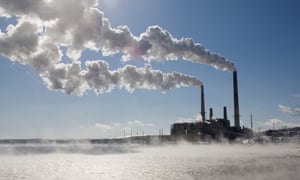
Coal-fired power plant in winter with emissions blowing
Analysts expect a slump in heavy industry to drive
 demand for gas and coal down by about 2.3% each.
The unprecedented restrictions on travel, work and industry due to the coronavirus is expected to cut billions of barrels of oil, trillions of cubic metres of gas and millions of tonnes of coal from the global energy system in 2020 alone, according to data commissioned by the Guardian.
Read the story from The Guardian by Jillian Ambrose - “Carbon emissions from fossil fuels could fall by 2.5bn tonnes in 2020.”

12 March, 2020

Electric buses can reduce costs, improve air quality and support local industries

In Australia, technology and industry are ready for policy support to aid the transition from diesel. Precision Buses in Adelaide is producing electric buses locally as part of contracts with South Australia, NSW, Queensland and Victoria and Australia’s largest bus body manufacturer, Volgren has begun production of electric buses at their headquarters in Melbourne.
Image result for precision buses
Electric buses cut costs, improve air quality and support local industries.
In December 2019, ClimateWorks Australia was invited to make a submission to the New South Wales government inquiry into electric buses for regional and metropolitan public transport networks. With transport currently contributing 21% of the state’s annual greenhouse gas emissions, decarbonising transport systems is critical to achieving the NSW Government’s net zero emissions objective. States have the chance to drive a rapid transition to reduce emissions by electrifying bus fleets and powering vehicles with 100% renewable energy.
Existing trials show the moment is ready to be seized. Transit Systems Leichhardt depot is trialling electric buses on some of Sydney’s busiest routes. Premier is already trialling an electric bus from their Nowra depot, with reports that the bus can cover 290km per day across 15 hour shifts, returning with a 45% charged battery, and that the electric bus has reduced daily running costs 72% compared to diesel buses. Public transport can be powered by renewable energy, as demonstrated with Sydney’s Metro NorthWest sourcing all the project electricity needs from NSW’s Beryl Solar Farm.

04 November, 2019

It's time to speak out - call for climate conversation

Shepparton climate action campaigners have called on business, industry and community leaders to speak out and start conversations on the issue of tackling climate change in the district.
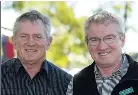
Terry Court (left) and
 John Pettigrew
.
Veteran environmental crusaders John Pettigrew, Rob McLean and Terry Court have written to politicians, chief executives, school principals and senior managers around the Goulburn Valley calling on them to support and encourage staff and employees to speak out on responses to climate change.‘‘We want to convince our leaders in the community to take a more proactive role on this issue — to speak out professionally and personally on the need to focus on climate change,’’ Mr Court said.
He said 30 letters had been sent to the leaders of organisations such as Goulburn Valley Water and Goulburn-Murray Water, Goulburn Broken Catchment Management Authority, Goulburn Ovens Institute of TAFE, dairy companies, the Chamber of Commerce and private industry to ask for support.
Mr Court said the response had been positive so far.
‘‘We have already had a remarkable response from our leaders.’’
He said many organisations around the area were already implementing changes to address the climate change issue.
‘‘But this is no longer enough. Public silence on the issue by our leaders is no longer acceptable if we are to focus on regional responses,’’ Mr Court said.
‘‘In order to accelerate our efforts and effectiveness we ask that you extend your personal commitment openly to empower your staff and the community to take action,’’ the letter states.
The letter campaign comes nearly a month after they called on Greater Shepparton City Council to declare a climate emergency. Mr McLean has said they are yet to receive a response from the council.
Mr Court said the letter to leaders was not asking them to declare a climate emergency.

Story from The Shepparton News.

21 December, 2018

Hydrogen: has its time come?

Hydrogen is hot. Industry and government – local and foreign – are all talking about it, and some are even investing. Significantly.
Hydrogen is already being used as a fuel, like
 this hydrogen-powered forklift in Japan. 
The intense interest in hydrogen is primarily based on fundamental chemistry. The reaction of hydrogen with air releases energy without producing carbon dioxide or any other greenhouse gases.


Read the Pursuit story by Professor Michael Brear, University of Melbourne - “Hydrogen: has its time come?

14 September, 2018

Industry calls for NEG resurrection to end 'cycle of hope and despair’

Industry is urging Federal Parliament to salvage the National Energy Guarantee as Labor contemplates adopting the contentious policy that triggered the Turnbull government's implosion.
Business groups want Labor to consider adopting the national energy guarantee.
Business groups and other stakeholders have despaired at the loss of almost a year of intense work and negotiation over the energy plan, which promised to provide investor certainty and consistent market rules after more than a decade of policy upheaval.

Senior Labor sources have confirmed the opposition is seriously considering resurrecting the National Energy Guarantee, subject to discussion with stakeholders, believing it could achieve the bipartisan support needed to broker an enduring ceasefire in Australia’s climate wars.


20 April, 2018

Multi-billion-dollar potential for Western Australia's carbon farming industry

A new carbon farming pilot project across the Southern Rangelands could signal the start of a new multi-billion-dollar industry for Western Australian pastoralists.
Station owners believe further tenure reform is needed
before carbon farming will take hold in Western Australia.
This week the State Government gave approvals for WA pastoralists to participate in the Commonwealth's $2.55 billion Emissions Reduction Fund (ERF) and upcoming reverse auction.

Already established in states such as NSW and Queensland, under the scheme land owners are paid for practices that reduce carbon dioxide emissions, like conserving native vegetation on their land.

Landholders can then earn carbon credits for their practices, which they can sell on the carbon market to companies that want to offset their emission costs.

Agriculture Minister Alannah MacTiernan said she hoped the 12-month pilot program would be the first step towards creating an accessible carbon farming industry in WA.


03 April, 2018

Which generates more greenhouse gases, transportation or buildings?

It all comes back to buildings.

A few months ago I wrote that transportation is now the biggest source of US CO2 emissions, noting that the switch from coal to natural gas for power generation had caused emissions from power generation to decrease while cars kept turning into trucks and emitting more. More recently, the Rhodium Group released final US emissions numbers for 2017, including other sectors, like industry and buildings.


Architect Gregory Duncan saw this graph and suggested that architects and others in the industry should not get complacent just because the yellow line was so low, way lower than power or transportation.


Read the Treehugger story by Lloyd Alter - “Which generates more greenhouse gases, transportation or buildings?

Biofuel the forgotten renewable energy, report says

Australia's biofuel industry has the potential to add more than 8000 jobs and $1 billion a year in revenue to the economy despite being neglected for more than a decade.
Biofuels in Australia are mainly made from food processing waste.
Queensland University of Technology economists have outlined how Australia could lift its energy security by increasing the levels of locally-produced biofuels and bioproducts.  The first step was to grow our bioethanol and other biofuel industries, lead author Ian O’Hara said.


Read Cole Latimer’s story from The Age - “Biofuel the forgotten renewable energy, report says.”

29 March, 2018

NT Government told risks can be mitigated if fracking moratorium is lifted

The Northern Territory Government is expected to soon decide if it will lift a fracking moratorium, after an 15-month inquiry concluded the risks associated with the industry could be managed.
The NT fracking inquiry has delivered a final report to government.
The Scientific Inquiry into Hydraulic Fracturing in the Northern Territory chair, Justice Rachel Pepper, handed a final report to the NT Government on Tuesday.

If all 135 recommendations it contained were implemented, the inquiry determined that "the challenges and risks associated with any onshore shake gas industry in the NT can be appropriately managed”.

But Justice Pepper described the recommendations as "a complete package", and said it was critical each one was implemented in full, if government decided to lift the ban.

Read the story from ABC News by Emily JB Smith - “NT Government told risks can be mitigated if fracking moratorium is lifted.”


(The best way to manage to risks associated with fracking is to stop it completely, along with abandoning our search for and use of fossil fuels - Robert McLean)

19 February, 2018

Victorian native timber industry faces fresh crisis as cuts to supply are felt in manufacturing

Victoria's native timber industry is facing a fresh crisis, despite a $62 million injection from the Andrews Government to keep a Gippsland mill with its 250 jobs afloat.
Carjo Furniture in the Melbourne suburb of Reservoir employs 30 people.
Last year the Government took the unprecedented step of spending $62.1 million of taxpayer funds to buy the Heyfield hardwood timber mill, after the previous owners declared it was no longer viable.

But while the mill stayed open, the amount of timber it processes has been drastically cut and the workforce has already been reduced to 150.

Flow-on businesses relying on Heyfield's Victorian Ash timber now say the reduced supply is beginning to affect their bottom line.

More than 20,000 people rely on hardwood to manufacture products in Victoria.


24 January, 2018

Barnaby Joyce rejects petrol car sales ban amid Coalition debate on electric vehicles

Transport Minister Barnaby Joyce has quashed the prospect of Australia replicating overseas bans on the sale of new petrol and diesel cars, as the Turnbull government debates whether to encourage the electric vehicle industry.
Barnaby Joyce: ''Australia's transport policies
are modelled on Australia's needs."
Environment and Energy Minister Josh Frydenberg this week strongly backed the prospects of electric vehicles in Australia against opposition from conservative backbenchers. He told Sky News on Tuesday that critics who ridiculed the technology would "probably be the ones buying them in a decade's time".


Read Nicole Hasham’s story in today’s Melbourne Age - “Barnaby Joyce rejects petrol car sales ban amid Coalition debate on electric vehicles.”

20 January, 2018

Adidas moves forward sustainability in fashion

Adidas, one of the global leaders in the sporting industry, has partnered with Fashion For Good – a global platform acting as a convener for change, to scale up sustainable innovation in the apparel industry.

The partnership intends to illustrate the benefits of cross-industry collaboration to integrate disruptive innovations in the fashion supply chain.

Katrin Ley, Managing Director at Fashion for Good, said: “Together with Adidas and our other partners, we are accelerating the transition to a circular apparel industry and reimagining the way fashion is designed, made, worn and reused”.


Read the Climate Action story - “Adidas moves forward sustainability in fashion.”

20 December, 2017

Heavy industry the winner under new carbon trading proposal

A government proposal to allow international carbon credit trading has buoyed the Australian manufacturing industry, but may have little impact on cutting energy sector emissions.
Manufacturers may invest in cheaper offsets, rather than lower emissions technology.
Manufacturers may invest in cheaper offsets,
rather than lower emissions technology. 
The manufacturing, smelting and energy sectors - some of the highest carbon-emitting industries in Australia - could look overseas to buy carbon credits to reduce their comparative emission levels without investing in higher-priced domestic carbon credits or lower-emissions technology under a proposal in the Turnbull government's latest climate change policy review. 


Read Cole Latimer's story in today’s Melbourne Age - “Heavy industry the winner under new carbon trading proposal.”

05 December, 2017

Toyota to build world first hydrogen and renewables plant

Toyota will build the first megawatt-scale hydrogen fuel and renewable generation plant, setting a new energy benchmark that experts hope with pave the way for Australia's hydrogen industry.

By 2030, between 10 million and 15 million cars
and half a million trucks will be hydrogen-powered globally.
Toyota North America will build the plant to support its operations at the Port of Long Beach, in the US, using agricultural waste to generate electricity, water and hydrogen.

Dubbed the Tri-Gen facility, the plant will generate around 2.35 megawatts of electricity and close to one tonne of hydrogen per day, providing enough daily power for more than 2300 homes and 1500 hydrogen-powered cars.

It will come online in 2020, and be used as proof of concept for large-scale hydrogen generation and renewable energy plants.


Read Cole Latimer’s story in today’s Melbourne Age - “Toyota to build world first hydrogen and renewables plant.”

23 November, 2017

Australian red meat sector sets 2030 carbon neutral target at Alice Springs producer forum

Research and marketing group Meat and Livestock Australia (MLA) says the country's red meat industry could be carbon neutral by 2030.

Richard Norton says the target will prove farming
 red meat is environmentally sustainable.
The challenge was set for the cattle and sheep sectors by managing director Richard Norton during his address at the MLA annual general meeting in Alice Springs on Wednesday.

It follows the start of a CSIRO research project in the past 12 months, funded by MLA, to identify ways the industry could become carbon neutral.

In 2015, a separate study by CSIRO found cattle and sheep produced almost 70 per cent of Australian agriculture's greenhouse gas emissions.


(The idea that Australia’s red meat industry - particularly red meat from sheep and cattle - will ever be carbon neutral is fanciful as all the evidence points precisely in the wrong direction - Robert McLean)

14 November, 2017

Fossil fuel emissions hit record high after unexpected growth: Global Carbon Budget 2017

Global greenhouse emissions from fossil fuels and industry are on track to grow by 2% in 2017, reaching a new record high of 37 billion tonnes of carbon dioxide, according to the 2017 Global Carbon Budget, released today.

The rise follows a remarkable three-year period during which global CO emissions barely grew, despite strong global economic growth.

But this year’s figures suggest that the keenly anticipated global peak in emissions – after which greenhouse emissions would ultimately begin to decline – has yet to arrive.

The Global Carbon Budget, now in its 12th year, brings together scientists and climate data from around the world to develop the most complete picture available of global greenhouse gas emissions.


A step back': Emissions rise as world economy gathers pace

Global carbon dioxide emissions from fossil fuels and industry have renewed their climb after a three-year pause, driven higher by quickening economic growth and the failure to find alternatives particularly to oil, international researchers say.
Carbon emissions will rise 2 percent in 2017 to almost 37 billion tonnes as the world economy heads for 3.6 percent annual growth. Total emissions, including from land clearing, push that tally to 41 billion tonnes.

A slightly faster pace of GDP expansion in 2018 will also send emissions from industry and fossil fuel combustion higher for at least another year, according to the 2017 Global Carbon Budget.

"This year's carbon budget news is a step back for humankind," said Amy Luers, executive director of Future Earth, a sponsor of the report.


Read the story by Peter Hannam in today’s Melbourne Age - “‘A step back': Emissions rise as world economy gathers pace.”

01 November, 2017

World 'very likely' heading for three degrees of warming by 2100 — UN report

A UN Environment report says there's a "worrying" shortfall between the goals of the Paris Climate Agreement and the current pledges by global governments and industry to cut carbon pollution.
Fran Kelly.

The 2017 Emissions Gap Report is published ahead of the next round of UN climate talks starting next week in Bonn, Germany, and it finds that the world is currently on track for at least three degrees of warming.

That's double the most ambitious goal of the Paris Agreement, which is aiming for one and a half degrees by 2100.

The report also says no more new coal fired power stations should be built, and that existing coal fired plant should be phased out more rapidly — unless they're retrofitted with Carbon Capture and Storage technology.


Listen to the Radio National report by Fran Kelly - “World 'very likely' heading for three degrees of warming by 2100 — UN report.”

19 October, 2017

Battery storage proponents despondent about future under National Energy Guarantee

Some in the fledgling tech-metals mining and processing industry are dismayed that the Federal Government's new energy policy does not appear to support renewable energy storage such as batteries.
The flow battery, also known as a redox battery, is made
 with vanadium, another tech-metal found in Australia.
Australian Vanadium chief executive Vincent Algar said the National Energy Guarantee (NEG) unfairly pitted the batteries and renewable energy storage sector against fossil fuel electricity producers such as oil and gas.

"With coal and gas considered a dispatchable energy source under the NEG, what incentive will there be to source dispatchable energy from a battery?" he said.

Dispatchable power can be turned on and off and used immediately as needed.

The NEG will mandate that energy retailers need to buy a certain amount of energy from dispatchable sources, which include coal, gas, and pumped hydroelectricity storage.


13 October, 2017

Australia’s solar juggernaut is coming quicker than anyone thinks

It is perhaps not surprising that the fossil fuel industry has hit the panic button and is pushing hard for the Turnbull/Abbott Coalition government to dump the proposed clean energy target and replace it with something that might be called a coal energy target.


They can see what’s coming – and there is probably no better way to describe it than a solar juggernaut.

The fact that solar will become the dominant energy source appears to be under no doubt, even the International Energy Agency admits it. And the CSIRO and AEMO appear to be in agreement that even behind the meter solar will account for around half of all demand by the 2040s or 2050s.

But what if it happened a lot quicker than that? Australia’s grid prices have jumped again to absurdly high levels, and this has lit a fire under the rooftop solar market, which will be followed by a major push by corporate buyers into the large-scale market. The solar sector could boom in ways not previously imagined.


Read the story by Giles Parkinson on RenewEconomy  - “Australia’s solar juggernaut is coming quicker than anyone thinks.”