Showing posts with label transportation. Show all posts

04 November, 2019

How we feel about our cars means the road to a driverless future may not be smooth

There is a reasonable expectation that autonomous vehicles will dominate the future of transport. Utopian visions suggest these driverless vehicles will lead to dramatic changes to our cities and their transportation. 
Autonomous vehicles operating on a network would allow traffic to move safely and seamlessly through cities. They would use less space per vehicle. Traffic flow would be unhindered by traffic lights or other traditional driver signals. 
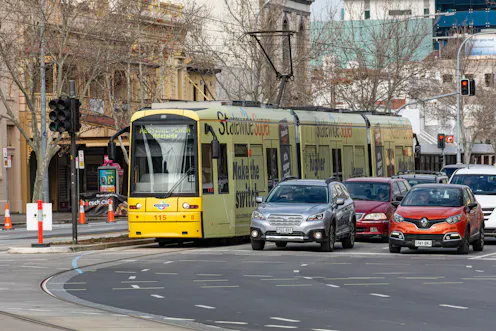
Image result for How we feel about our cars means the road to a driverless future may not be smooth
Car owners’ attachment to driving and the willingness
of others to switch from public transport could confound
 rosy predictions for autonomous vehicles.
More efficient transportation would use less fuel. Urban spaces could be repurposed as parking needs virtually disappear.
But this utopian vision depends on a range of factors. In particular, these predictions largely rely on how current car drivers respond to the advent of autonomous vehicles. 
Our research suggests people’s attitudes to driving and their cars could limit the predicted benefits to traffic flow and city efficiency, at least during the initial transition to driverless vehicles. 

Read the story from The Conversation by a Senior Lecturer from the University of Adelaide, Raul A. Barreto -  “How we feel about our cars means the road to a driverless future may not be smooth.”

27 March, 2019

Maryland should study the climate effects of highway expansion before committing to it

Maryland needs a new vision for transportation, one that focuses on moving people vs. cars as swiftly as possible while protecting our health, environment and planet. The first step toward this vision is to recognize that the current process does not work. Now, no Maryland or federal law requires an analysis of greenhouse emissions associated with major transportation projects. Though the Obama administration had issued guidance for agencies to consider greenhouse gas emissions and impacts of climate change in National Environmental Policy Act reviews, the Trump administration promptly scrapped this with an executive order in 2017.
Traffic flows along interchanges that link Interstates
 495 and 270 in April 2018 in Bethesda. 
Transportation is the largest source of climate-disruption carbon pollution in Maryland. More than 8 in 10 Marylanders now live in counties that do not meet federal clean-air standards for ozone, in large part because of tailpipe emissions from gas and diesel-powered vehicles. If we continue on our this trajectory, the state will be 1 million passenger cars worth of pollution above our state’s climate goal of reducing greenhouse gas pollution 40 percent by 2030. Using a 1960s approach to solving our state’s congestion issues — investing in more highway infrastructure — is only going to exacerbate the problem by encouraging more people to drive, resulting in more toxic air pollution, more cancers and respiratory illnesses and more damage to our environment while only temporarily addressing congestion.


Read the story from The Washington Post by Parris N. Glendening - “Maryland should study the climate effects of highway expansion before committing to it.

13 February, 2019

Bill and Melinda Gates Unveil Big Plan for the Environment

In their annual letter, Gates and his wife Melinda hone in on what he says are the “five grand challenges” to combating climate change and global warming: agriculture, buildings, electricity, manufacturing, and transportation. Bill Gates wrote that Breakthrough Energy Ventures, the $1 billion fund he’s a partner in, will be using the “five challenges” as a guide for all future investments they make, which will focus on where emissions come from.
Bill Gates - five grand challenges.
“It’s important that people know that electricity, it’s only a quarter of the emissions,” Gates said in a promo video for the letter. “Things like cement, steel, meat—there’s a lot of other activities that are generating 75 percent of it.


Reads the story from the The Daily Beast by Molly C. Enking - “Bill and Melinda Gates Unveil Big Plan for the Environment.”

03 April, 2018

Which generates more greenhouse gases, transportation or buildings?

It all comes back to buildings.

A few months ago I wrote that transportation is now the biggest source of US CO2 emissions, noting that the switch from coal to natural gas for power generation had caused emissions from power generation to decrease while cars kept turning into trucks and emitting more. More recently, the Rhodium Group released final US emissions numbers for 2017, including other sectors, like industry and buildings.


Architect Gregory Duncan saw this graph and suggested that architects and others in the industry should not get complacent just because the yellow line was so low, way lower than power or transportation.


Read the Treehugger story by Lloyd Alter - “Which generates more greenhouse gases, transportation or buildings?”

18 February, 2018

Sea Level Rise Is Accelerating: 4 Inches Per Decade (or More) by 2100

The rate of sea level rise is accelerating so fast that some coastal communities could confront an additional 4 inches per decade by the end of the century—a growing concern now confirmed by thorough measurements from space.
Rising sea levels increase the risk of storm surge flooding in coastal cities
like Charleston, South Carolina, shown here after Hurricane Matthew.
 
At that rapid pace of change, vulnerable communities might not be able to keep up. Storm surges will increase erosion and damage homes, businesses and transportation infrastructure in some areas. In other places, seawater will intrude on freshwater aquifers. In South Asia and the islands, people will lose the land where they live and farm. And the changes will arrive much faster than they do today.

Scientists have been warning about this speed-up for many years based on computer climate simulations. A new study released Monday confirms the modeled trend with a detailed analysis of satellite observations spanning a quarter of a century.


Read the Inside Climate News story by Bob Berwyn - “Sea Level Rise Is Accelerating: 4 Inches Per Decade (or More) by 2100.”

25 October, 2017

Climate Change Will Bring Major Flooding to New York Every 5 Years

New York is a city on the water. For hundreds of years, its rivers and harbor have worked to its advantage, bringing it speedy transportation and pleasant temperatures.
Joseph Leader, the vice president of the New York
MTA, inspects a flooded escalator down to a
                                  subway platform in the days after Hurricane Sandy.
s
after Hurricane Sandy.
The next couple hundred years may not be as smooth sailing. Global warming, caused by the release of carbon-dioxide pollution into the atmosphere, will cause the seas to rise and the storms to intensify around the city. A new study from an all-star list of climate scientists attempts to estimate how a few of climate change’s symptoms—higher seas, large storm surge, and more intense hurricanes—will intersect in New York over the next 300 years.

It isn’t pretty. Sea-level rise will make every tropical cyclone that hits New York more likely to release damaging floods. For instance, storm floods of nearly seven-and-a-half feet once occurred only a couple times per millennium. In today’s somewhat warmed climate, 7.5-foot floods are projected to happen every 25 years. By 2030, these floods will occur every five years.


Read The Atlantic story by Robinson Meyer - “Climate Change Will Bring Major Flooding to New York Every 5 Years.”

15 September, 2017

The end of denial

Sarah Severn.
At the time of writing this there are 71 large uncontained wildfires in the US, and over 8 million acres have burned. The fire in the Columbia River Gorge has displaced hundreds of residents, shut down Interstate 84 and burned 52 square miles (134 square kilometers).

On the East Coast Hurricanes Harvey & Irma could together cost the US 290bn according to Joel Myers of Accuweather and, as reported in US news, he cites “business disruptions, higher unemployment and transportation and infrastructure damage, along with crop loss and elevated gas prices that are expected to impact people across the country.”  Lt General Russel L Honore , author of Leadership in the New Normal, stated in an interview with CNN that, “40% of small businesses fail after disasters like Irma.” His point was that they do not have the financial resiliency to deal with this level of business disruption.


Read the story by the Strategic Advisor to Washington Business for Climate Action, Sarah Severn - “The end of denial.”

24 April, 2017

Architects finally are taking climate change seriously. Sort of

In our recent post American Institute of Architects takes a stand on climate change I ended up by quoting architect and writer Lance Hosey, and his survey that found “as many as a third of architects are skeptical about climate change.”
Lance tweeted me an update that he just published in Architectural record, a new survey which found that the situation has improved significantly, that now fully 93.6 percent of architects actually believe that human activity is changing the climate.

Given that architects design the buildings that are the single biggest source of greenhouse gases, that’s a good thing. Too bad that less than half of them actually know that. (Until recently, based on my analysis, I thought transportation was the biggest source in America, and I teach this stuff).


26 May, 2016

Conventional energy production and transport soon obsolete

Cars such as this BMWi8 will be
commonplace with a decade or so.
Within just 15 years conventional energy production and transport will have been rendered obsolete by the revolution taking place in batteries, solar power and electric cars.

The startling thesis by energy disruption guru and Stanford University lecturer Tony Seba has been around for a couple of years but after originally being dismissed as crazy, is now catching serious attention from investors.

There is "no excuse" for any board of a utility in Australia not to know what's coming, he says, outlining a world with little centralised power generation, 100 per cent electric vehicles and minimal private car ownership.

21 November, 2015

Stanford professor says barriers are social and political, not technical and economic


A
s world leaders prepare to gather in Paris for a landmark climate summit, a new analysis from Stanford University and University of California researchers lays out roadmaps for 139 countries, including the world’s major greenhouse gas emitters, to switch to 100 percent clean, renewable energy generated from wind, water and sunlight for all purposes by 2050.

Mark Z. Jacobson, a Professor of Civil and Environmental Engineering at Stanford University and director of the school’s Atmosphere/Energy Program, said the roadmaps should give negotiators and leaders confidence that they can meet energy demands in all energy sectors—including electricity, transportation, heating and cooling, industry and agriculture—with clean sources.