Showing posts with label water. Show all posts

02 October, 2019

‘Barbaric': Adani's giant coal mine granted unlimited water licence for 60 years

The proposed Adani coal mine, which will be Australia's biggest, has been granted unlimited access to groundwater by the Queensland government in a move farmers fear will drain huge amounts of water from the Great Artesian Basin.
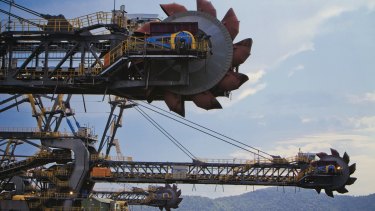
Nine coal mines are planned for Queensland's Galilee Basin.
According to a copy of Adani's water licence signed last Wednesday and obtained by Fairfax Media, the $16 billion Carmichael mine merely needs to monitor and report the amount of water it extracts under a permit that runs until 2077.
The mine – one of nine proposed for the Galilee Basin west of Rockhampton – can conduct its own review of its groundwater model without independent or government oversight.
There are also no impact levels specified that will trigger a halt to mining, and the company is able to offset any significant water loss elsewhere, the licence shows.

Read the story from The Sydney Morning Herald by Peter Hannam - “‘Barbaric': Adani's giant coal mine granted unlimited water licence for 60 years.”

03 February, 2019

Mildura deputy mayor joins climate-driven challenge to Nationals in Mallee

The deputy mayor of Mildura, Jason Modica, will become the second independent candidate to challenge the National party in the seat of Mallee – running on the issues of water, climate change and people power.
 The deputy mayor of Mildura, Jason Modica, will become
 the second independent candidate to challenge the
National party in the seat of Mallee.
Known as “Jake the Tradie”, Modica served on Mildura council with Ali Cupper, who unexpectedly won the state seat of Mildura last year as an independent, a seat held by the Nationals on a 8% margin.

Modica enters the field after the sitting Nationals MP, Andrew Broad, a vocal supporter of traditional marriage, announced his retirement following New Idea allegations he met up with a younger woman in Hong Kong via a sugar daddy dating website.


Read the story from The Guardian by Gabrielle Chan - “Mildura deputy mayor joins climate-driven challenge to Nationals in Mallee.”

10 June, 2018

Can We Innovate Our Way Out of an Impending Water Crisis?

Water, particularly in the Western United States, has always been inextricably linked to the economy. Historical investments in infrastructure like the Hoover Dam and the California Aqueducts have been used to create whole new industries and the communities to support them. 
WaterStart was created in 2013 in response to
 two of the biggest global events to impact
 Nevada: the financial downturn and climate change.
However, today these communities are under serious pressure from rapidly growing populations, dwindling federal investments in new infrastructure and the impacts of climate change via 18 years of ongoing drought.

For most Americans, water is something we “solved” a long time ago. “Water crisis? That’s like the California Drought, lead pipes in Flint Michigan or the dams breaking in New Orleans, right?”

Few of us would think of the Great Recession as a water crisis. Yet for communities trying to respond to more than a decade of drought while their tax base evaporates, many utility operators and city officials wereand arein crisis management mode. Further loss of revenue caused by mandatory conservation has only exacerbated the situation.


Read the Medium story by Nate Allen - “Can We Innovate Our Way Out of an Impending Water Crisis?

12 May, 2018

How is climate change affecting Mexico?

As Mexico City’s chief resiliency officer, Arnoldo Kramer, said to The New York Times, “Climate change has become the biggest long-term threat to this city’s future. And that’s because it is linked to water, health, air pollution, traffic disruption from floods, housing vulnerability to landslides — which means we can’t begin to address any of the city’s real problems without facing the climate issue.”
Climate change is threatening to push a
crowded capital toward a breaking point.
And we’d argue the same is true for the rest of the nation – and the world. Climate change touches every aspect of our lives.

Here are three leading ways climate change is already hitting Mexico and its people. Plus, as a bonus, two ways you can take action today to help solve the climate crisis.


Read the Climate Reality Project story - “How is climate change affecting Mexico?

26 April, 2018

‘Mountains and mountains of plastic': life on Cambodia's polluted coast

Looking down into the water that lies beneath the ramshackle houses of Sihanouk, Cambodia, it is hard to imagine that the sea is there at all. Instead, there is dense layer upon layer of plastic waste clogging the water, piling up around poles that support the wooden homes, carpeting the beach.
Photographs from Sihanouk in the country’s south west
reveal locals living amid a staggering tide of plastic pollution
New images of from Sihanouk, in the country’s south west, depict in horrifying detail the extent of Cambodia’s growing problem of plastic pollution and how the tide of unbiodegradable rubbish has become part of the fabric of the lives of communities living in poverty.


Read the story by Hannah Ellis-Peterson from The Guardian - “‘Mountains and mountains of plastic': life on Cambodia's polluted coast.”

13 April, 2018

Is Pakistan running out of water?

The sight of water flowing from taps may soon be a luxury, with people having to queue up at tankers for just a bucket load of water for their daily needs. Meanwhile, affluent neighbourhoods in gated communities may install desalination plants paid for (by volume) by wealthy homeowners.
Pakistan’s explosive population growth means less water for everybody .
If we are to try and bring some order to this chaotic picture of near future, the starting point for Arif Anwar, who heads the non-profit research organization International Water Management Institute (IWMI), will be to ensure that cities are water secure.

This is because the day-to-day injustice from inadequate water supply hits people with precarious livelihoods the most. In fact, for several years now, the chaotic picture of the future is already a reality in scores of informal settlements in the port city of Karachi.


Read Zofeen T Ebrahim’s story from thethirdpole.net - “Is Pakistan running out of water?

01 April, 2018

Sun shield’ could be used to protect Great Barrier Reef from warming, say scientists

A protective film 50,000 times thinner than a human hair could be used to protect coral reefs from rising temperatures.
Areas of the Great Barrier Reef could be protected
 from rises in temperatures using a 'sun shield' 
By applying a layer of protection to the surface of the water researchers think parts of the Great Barrier Reef could be effectively cooled, preventing deadly coral bleaching events.

This ‘sun shield’ is made from the same substance that makes up the coral skeletons themselves – calcium carbonate.

Read the Independent story by its science correspondent, Josh Gabbatiss - “‘Sun shield’ could be used to protect Great Barrier Reef from warming, say scientists.”


(Personally, the idea of any form of geo-engineering is offensive as it is little more than an extension and sustenance of ideas that permit the maintenance of business as usual, a philosophy that has brought us to a point that life as we understand and enjoy it may well collapse, bringing to an end the near-goldilocks-like conditions of the past 10,000 years which have allowed humanity to thrive. However, an Irish friend has suggested that the Beneath the Wisteria blog would be decidedly more balanced if the geo-engineering idea was allowed more exposure - he provided a the link to this story - Robert McLean)

02 March, 2018

UMass Amherst Political Economy Research Institute’s Toxic 100 Names the Top U.S. Climate, Air and Water Polluters

The University of Massachusetts Amherst Political Economy Research Institute (PERI) today published new editions of its lists of the top corporate air and water polluters and top greenhouse gas emitters in the United States using the most recent data available from the U.S. Environmental Protection Agency.
Top U.S. polluters identified.
PERI unveiled its 2018 Greenhouse 100 index, ranking U.S. companies by their emissions responsible for global climate change according to the U.S. EPA Greenhouse Gas Reporting Program, and the Toxic 100 Air and Toxic 100 Water indexes, ranking U.S. industrial polluters using the U.S. EPA Toxics Release Inventory. The PERI indexes also include environmental justice indicators to assess impacts on low-income people and minorities.


21 February, 2018

Drought forcing Queensland graziers to sell off cattle.

Water is a crucial issue in Queensland right now where graziers are having to sell off thousands of head of cattle as they stare down their sixth year of drought.
Six years of unrelenting drought is putting
pressure on Queensland farmers.
As parched conditions drag on in more than 30 Queensland shires food and water are dwindling for stock.

Graziers in the west are being forced to spend big money on adjustment to keep their animals alive or to simply sell.


Listen to the Radio National Breakfast interview by Hamish Macdonald - “Drought forcing Queensland graziers to sell off cattle.

10 February, 2018

Seaweed fishing in Zanzibar

Zanzibar has two main islands and around 50 surrounding islets and if you’re on one of the islands as the sun rises chances are that you will see the woman of Zanzibar knee deep in the water harvesting seaweed.
Seaweed fishing in Zanzibar. 
Seaweed is the third largest industry after tourism and cloves. 80% of the workforce are women and the money they make can help send their children to school and to build houses. Lisa De Bode travelled to Zanzibar, for the World Policy Journal, to meet the women and find out what the challenges will be moving forward and whether or not the women be able to meet them?


Listen to the ABC Radio National discussion with Geraldine Doogue - “Seaweed fishing in Zanzibar.”

21 December, 2017

The holes in Santa’s stocking: Mapping food loss from the farm and beyond

Imagine, just imagine, you withdraw $1000 from the ATM for Christmas and they slide out as they do, on their tiny conveyor belts, but some of them are crumpled a bit, so you don’t take those ones, and when you’re walking home you cross the road too fast and a few loose ones flick up and get lost to the wind, and you get home and lay the money out to count it and the kids push some notes to the side because they smell funny so you throw those out too, and then you count how much you’ve got left and you’re pleased because you’ve got $400 and that seems fine because you always end up with $400.
Christmas is a time for plenty and celebrating all we
have. Without food loss, we’d have even more to celebrate! 
We’ve used ‘money’ as an analogy for food here—food, the stuff we pour 2/3rds of our water into producing, the stuff we clear land to make farms for, the stuff that keeps us alive.

Dr Pablo Juliano, one of our principle researchers heading up a project to map food loss, says food losses between the paddock and retailer worldwide might be as high as 60 per cent. This of course depends on the country and many other factors, but is a shameful waste regardless. Like the above analogy, food waste occurs at a number of ‘places’ along the supply chain: at the source (farm), at the stores, and, you’ll know all about this one, in the home.


10 December, 2017

‘Existential threat': climate change risks finally grab Australia's attention

When Cyclone Evan slammed into Samoa five years ago next week, it triggered the near-complete loss of power and water supplies in the capital, Apia, and forced villagers to relocate to schools and the university for months.
An overhead view of Ejit, of the Marshall Islands, where
rising sea levels are already an inescapable part of daily life.
The category-4 tempest was the strongest to hit the Pacific nation in a couple of decades. For Samoan Brianna Fruean, one of the Pacific Climate Warriors, it was another sign - along with rising sea levels, and more intense floods and droughts - that action needed to be taken. 

"Climate change is happening right in front of our eyes," Fruean said this week on the sidelines of a meeting in Fiji of Civicus, a global civil society group.

Helen Clark - the former New Zealand prime minister and an ex-senior United Nations official - was also at the Suva gathering. Clark says she is not surprised by its central topic.


Read Peter Hannam’s comment in today’s Melbourne Age - “‘Existential threat': climate change risks finally grab Australia's attention.

02 November, 2017

If we all stopped eating beef, what would happen to the land?

When the land down the road from Lorraine Lewandrowski’s home in New York State’s Herkimer county was sold, it was bought by developers who turned the land into a subdivision.


“The people who bought the lots from us were nice enough, and they all told me that they wanted to be out in the country,” says Lewandrowski a lawyer and a dairy farmer in Central New York. “But they couldn’t grasp what they were doing. The meadows that were alive with little bird fledglings the developers were plowing under to make these 10 acre lawns.”
It’s hard to argue that that was an ecological improvement over the land’s previous incarnation as a farm.

For the past month, many Popular Science staff members have engaged in No Red October in which they eschewed eating beef. The reason was not masochism but environmentalism: livestock accounts for 12-percent of global climate change emissions. And beef which requires 28 times more land and 11 times more water to produce chicken or pork while emitting five times more climate-changing emissions seems like a natural place to cut back. 

Especially since Americans annually eat 54 pounds of beef, or a little more than a pound a week.


Read the Popular Science story by Kendra Pierre Louis - "If we all stopped eating beef, what would happen to the land?

26 October, 2017

How climate change affects the building blocks for health

In August last year, a third of the residents of the North Island township Havelock North fell acutely ill with gastroenteritis after their water was contaminated with campylobacter.
More intense rainfalls have caused flooding
throughout New Zealand, as seen here in Northland.
Following a long dry spell, the heaviest daily rainfall in more than ten years had washed the pathogenic organism from sheep faeces into the aquifer that supplies the town’s drinking water. The Havelock North supply, like many in rain-rich New Zealand, was not treated with chlorine or other disinfectants, and this was the country’s largest ever reported outbreak of waterborne disease.

This is just one example of how climate change may affect our health, according to a report released by the Royal Society of New Zealand today.


Read the piece on The Conversation by Professor Alistair WoodWard from the University of Auckland - “How climate change affects the building blocks for health.”

25 October, 2017

Climate Change Will Bring Major Flooding to New York Every 5 Years

New York is a city on the water. For hundreds of years, its rivers and harbor have worked to its advantage, bringing it speedy transportation and pleasant temperatures.
Joseph Leader, the vice president of the New York
MTA, inspects a flooded escalator down to a
                                  subway platform in the days after Hurricane Sandy.
s
after Hurricane Sandy.
The next couple hundred years may not be as smooth sailing. Global warming, caused by the release of carbon-dioxide pollution into the atmosphere, will cause the seas to rise and the storms to intensify around the city. A new study from an all-star list of climate scientists attempts to estimate how a few of climate change’s symptoms—higher seas, large storm surge, and more intense hurricanes—will intersect in New York over the next 300 years.

It isn’t pretty. Sea-level rise will make every tropical cyclone that hits New York more likely to release damaging floods. For instance, storm floods of nearly seven-and-a-half feet once occurred only a couple times per millennium. In today’s somewhat warmed climate, 7.5-foot floods are projected to happen every 25 years. By 2030, these floods will occur every five years.


Read The Atlantic story by Robinson Meyer - “Climate Change Will Bring Major Flooding to New York Every 5 Years.”

21 October, 2017

Global pollution kills 9m a year and threatens 'survival of human societies’

Pollution kills at least nine million people and costs trillions of dollars every year, according to the most comprehensive global analysis to date, which warns the crisis “threatens the continuing survival of human societies”.
A Bangladeshi rickshaw puller rides past smoke created
 by burning waste materials on a street in Dhaka.
Toxic air, water, soils and workplaces are responsible for the diseases that kill one in every six people around the world, the landmark report found, and the true total could be millions higher because the impact of many pollutants are poorly understood. The deaths attributed to pollution are triple those from Aids, malaria and tuberculosis combined.

The vast majority of the pollution deaths occur in poorer nations and in some, such as India, Chad and Madagascar, pollution causes a quarter of all deaths. The international researchers said this burden is a hugely expensive drag on developing economies.


Read Damian Carrington’s story on The Guardian - “Global pollution kills 9m a year and threatens 'survival of human societies’.”

20 October, 2017

Pollution kills 9 million people each year, new study finds

Dirty air in India and China. Tainted water in sub-Saharan Africa. Toxic mining and smelter operations in South America. Pollution around the globe now contributes to an estimated 9 million deaths  annually — or roughly one in six — according to an in-depth new study published Thursday in the Lancet. If accurate, that means pollution kills three times more people each year than HIV/AIDS, tuberculosis and malaria combined, with most of those deaths  in poor and developing countries.


Traffic moves at dusk in New Delhi, home
 to some of the world’s most polluted air. 
“Going into this, my colleagues and I knew that pollution killed a lot of people. But we certainly did not have any idea of the total magnitude of the problem,” said Philip Landrigan, dean of global health at the Mount Sinai School of Medicine and co-chair of the commission behind the report. “I think all of us were really surprised when we saw this.”

The two-year project, which relied on data from researchers in more than 130 countries documenting the causes of disease and premature deaths in recent decades, found that poor air quality was the most significant pollution-related killer. That includes both outdoor pollution tainted by mercury, arsenic and other harmful particulates, and household air dirtied by the burning of wood, dung and other organic materials. The result: An estimated 6.5 million deaths in 2015 from heart disease, strokes, lung cancer and other respiratory problems.


Read The Washington Post story by Brady Dennis - “Pollution kills 9 million people each year, new study finds.”

28 August, 2017

Boomtown, Flood Town

HOUSTON — For the third time in eight years, water gushed into Virginia Hammond’s northwest Houston home.
An aerial shot of downtown Houston
during the "Tax Day Flood" in April. 
It was 2 a.m. on April 18. Over the next several hours, her two granddaughters — ages 12 and 15 — perched on tables, scared to put their feet in the dark gray floodwater rising below them. It nearly topped 3 feet.

“They couldn’t get in the beds because the beds were wet. They couldn’t go to the bathroom because the water was over the toilet bowl,” Hammond recalled.

“We were in there, well, trapped.”

The storm that pummeled Hammond’s modest brick home — nicknamed the “Tax Day” flood because it fell on the deadline to file federal income taxes — came just 11 months after another, on Memorial Day 2015, that also crippled the city.


Read the Texas Tribune story - “Boomtown, Flood Town.”

30 July, 2017

Murray-Darling: testing times expected as extended dry period approaches

Farmers and nature have been at odds in the Murray-Darling Basin ever since the first European settlers, desperate for water, found that river flows were unreliable and out of sync with their needs.
Water bird populations have dropped
two-thirds from 1980s levels. 
"For would-be irrigators the problem with the River Murray was that the bulk of the annual flow occurred at the wrong time of year," Daniel Connell, a research fellow at the Australian National University, notes in his book Water and Politics in the Murray-Darling Basin.

"The time of peak flows under natural conditions in the rivers of southern Australia is winter and spring but the main growing season when agriculture needs water is the late summer and autumn. 

Even draining Australia's three longest rivers – the Darling, Murray and Murrumbidgee – over 1 million square kilometres, flows are also highly variable. The biggest year, 1956, saw volumes 17 times the worst, in 2006.


Read Peter Hannam’s story in the Melbourne Age - “Murray-Darling: testing times expected as extended dry period approaches.”