Showing posts with label land. Show all posts

29 December, 2019

Losing the woods for the trees: Green light for logging near popular hiking track.

Large swathes of land next to a popular hiking track in the western district have been approved for clear-felling, sparking fresh concerns about protecting native forests ahead of the ban on logging.
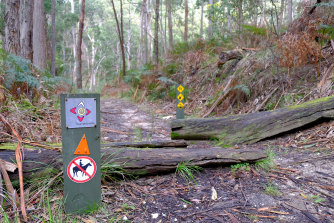
The Beeripmo walking track at Richards Campground in Mount Cole State Forest.
The Victorian government's timber agency, VicForests, has been given approval to intensively log native trees from huge sections within the Beeripmo Walk, a bushwalking destination lauded for its cool fern gullies and tall forests.

Read the story from The Age by Sumeyya Ilanbey - “Losing the woods for the trees: Green light for logging near popular hiking track.

23 October, 2019

Farmers are getting ready for climate change

Son La is a poor and underdeveloped province in North-western Vietnam, bordering Laos and 350km away from Hanoi. It has a population of 1.696 million, of which 87% live in rural areas and 94% are ethnic minorities. Son La has a mountainous landscape with over 87% of land on steep slopes of at least 25 degrees. Son La has a tropical monsoon mountainous climate, with cold dry winters and hot rainy summers. The geography and climate of the region makes it highly vulnerable to climate change and prone to natural disasters such as droughts, floods and frosts.


Mr. Cường’s in front of his rice field. He shared
some of his challenges from climate change
  impacts, and his methods for rice production. 
Son La’s people rely on agriculture for their livelihoods with 58% of land used for agriculture or forestry. Rice is the main food crop, but farmers generally do not produce enough rice for their own consumption, or to sell at nearby markets. To generate a supplementary income, farmers grow corn, coffee and plums or raise chickens and pigs. Low incomes and income instability due high reliance on agriculture and weather reinforce high poverty rates which are equal to 40–58% at the project sites.
Farming communities are poor and lack technical knowledge and methods to sustainably manage the land and the biodiversity. It leads them to not have enough food between the rice seasons and it reinforces barriers to development.
Read the Medium story by Thuân Sarzynski - “Farmers are getting ready for climate change.”

15 April, 2018

Agrihoods: Replacing Boomer Golf Courses With Millennial Farms

Millennials are hearkening back to simpler times by transitioning golf courses and other vacant patches of land into community farms, imbued with nature’s bounty and earthly goodness. There are now approximately 150 of these developments — called “Agrihoods” — popping up complete with chickens, goats, cows and even bees a' plenty!
Golf courses make way for community farms.
Agrihoods are quickly becoming the 21st-century’s rendition of those trendsetting golf communities baby boomers relocated to in the 1980s & 90s. Decades back, moving to a community with a golf course demonstrated a certain caché. It was a status symbol of sorts that marked one's station in life. Over the years, this type of real estate escalated in value — in large part due to large swath of green pastoral vistas.

Over the years however, preferences change, particularly when a new generation emerges with new lifestyle choices.
Such is the case with today's millenniums who favor a food culture that see the benefits in farm-to-table fare. In today's organic oriented milieu, the young have turned to local farming and Community Supported Agriculture [CSA].


Read the story by Ron Callari from Pets Lady - “Agrihoods: Replacing Boomer Golf Courses With Millennial Farms.”

12 April, 2018

Australia’s 2017 environment scorecard: like a broken record, high temperatures further stress our ecosystems.

While rainfall conditions were generally good across Australia in 2017, record-breaking temperatures stressed our ecosystems on land and sea, according to our annual environmental scorecard. Unfortunately, it looks like those records will be broken again next year – and again in the years after that.
Indicators of Australia’s environment in 2017 compared to the
 previous year. Similar to national economic indicators
they provide a summary, but also hide regional variations,
complex interactions and long-term context.
Our terrestrial environment has done relatively well in 2017, mainly thanks to good rainfall and leftover soil moisture from the year before. However, such a short summary for a country the size of a continent is bound to hide large regional differences. 2017 was no exception.

Western Australia and the Northern Territory received good rains, with vegetation growth, river flows and wetland area all coming in above average. By contrast, Queensland and particularly New South Wales saw a reversal of the previous year’s gains.

10 February, 2018

Residents fear over-development in new Anglesea masterplan

Tensions are rising in coastal Anglesea amid a proposal to redevelop sections of unused land for tourist and residential accommodation, in another sign of commercial pressure facing communities on the Great Ocean Road.
Anglesea residents are rallying against development plans for the former Alcoa site. 
The proposed redevelopments were contained in a “concept masterplan” released in late January by Alcoa, which operated a mine and power station in Anglesea until 2015.


Read the story by Benjamin Preiss in The Age - “Residents fear over-development in new Anglesea masterplan.”

07 December, 2017

Out of control' wildfires explode in California and tens of thousands flee

Ventura, California: Ferocious fires tore through Southern California on Tuesday, local time, burning massive stretches of land in a matter of hours and forcing tens of thousands of people from their homes.
A firefighter pulls a water hose as a wildfires continue to burn in Santa Paula, California.
As firefighters in Ventura County grappled with an explosive blaze northwest of downtown Los Angeles, others across the region confronted additional fires that burned during the day and forced more evacuations. Authorities issued ominous warnings of more dangers to come during a "multiday event" across the area, as weather forecasters said the region faces "extreme fire danger" until at least Thursday, due to intense Santa Ana winds and low humidity.


Read the story in today’s Melbourne Age - “‘Out of control' wildfires explode in California and tens of thousands flee.”

25 November, 2017

Queensland farmers suspected to have defied tree clearing controls in 'deforestation frenzy’

Queensland farmers are suspected of having defied rare federal government intervention and cleared a large swath of land without commonwealth approval, according to conservationists.

Cleared land on the property.
The native vegetation was in a reef catchment, meaning the clearing could worsen pollution on the Great Barrier Reef. Government-commissioned studies show it provided habitat to several threatened species.

Queensland is experiencing a boom in tree clearing – rates jumped 33% in 2016, in a region that is already considered the only “global deforestation hotspot” in the developed world. About 400,000 hectares were cleared in 2015-16, meaning Queensland now has two-thirds the annual rate of deforestation of the Brazilian Amazon.


02 November, 2017

If we all stopped eating beef, what would happen to the land?

When the land down the road from Lorraine Lewandrowski’s home in New York State’s Herkimer county was sold, it was bought by developers who turned the land into a subdivision.


“The people who bought the lots from us were nice enough, and they all told me that they wanted to be out in the country,” says Lewandrowski a lawyer and a dairy farmer in Central New York. “But they couldn’t grasp what they were doing. The meadows that were alive with little bird fledglings the developers were plowing under to make these 10 acre lawns.”
It’s hard to argue that that was an ecological improvement over the land’s previous incarnation as a farm.

For the past month, many Popular Science staff members have engaged in No Red October in which they eschewed eating beef. The reason was not masochism but environmentalism: livestock accounts for 12-percent of global climate change emissions. And beef which requires 28 times more land and 11 times more water to produce chicken or pork while emitting five times more climate-changing emissions seems like a natural place to cut back. 

Especially since Americans annually eat 54 pounds of beef, or a little more than a pound a week.


Read the Popular Science story by Kendra Pierre Louis - "If we all stopped eating beef, what would happen to the land?

11 October, 2017

Push for state gas policy changes

Farmers would receive royalties and a final say on gas projects under a new policy designed to fix Victoria’s energy crisis.

Shadow Energy Minister David Southwick.
Shadow Energy Minister David Southwick released the Opposition’s new energy policy this week, which he said could get new gas flowing in six to 12 months.

Under the policy a ban on new onshore gas projects would be lifted, but a ban on fracking would remain.

Any new gas supplies found would need to service Victoria, in a bid to reduce power prices which have risen sharply in the past 12 months.

‘‘We know the dairy industry is suffering from escalating power prices and they need the gas,’’ Mr Southwick said.

He re-assured farmers a policy change would keep them in control of their land through a right of veto and a 10 per cent royalty payment on what gas is found.

‘‘If the industry is not able to convince the landowners, then the landowners have the right to say no,’’ he said.
There would be no right of appeal for industry if the landowners vetoed.

The policy looks set to be one of the major policy fights at next year’s Victorian Government elections.
Under current legislation onshore gas exploration and is under moratorium until June 30, 2020.

With lower barriers to entry for onshore gas production than offshore, he said Victorians could see the benefit of increased prices soon if the policy is adopted.

All gas produced would be for Victorian consumption and not for the export market, but this could be changed.

‘‘If we have an abundance of gas or there is an emergency situation in the other states there is an opportunity for the minister to step in,’’ he said.

Although he planned to take the policy to next year’s election, he called on Premier Daniel Andrews to ease the moratorium now.


Story from today’s Shepparton News - "Push for state gas policy changes".

08 October, 2017

The Anthropocene: Has human impact changed Earth forever?

Despite our early existence compared to Earth’s age (humans have only been around for 200.000 years, whereas the planet emerged 4.6 billion years ago), the mark we are leaving on our world is already pretty obvious.

We’ve started by chopping down trees in order to clear the land for agriculture. Then we’ve settled permanently and created the first civilisations, that is to say, the first cities. We have also managed to develop complex technologies and learned how to use external sources of energy, including fossil fuels, with consequences we would soon find out.
And it was over the last two centuries which cover the Industrial Revolution (18th century) and “The Great Acceleration” onset around the 1950’s that the global effects of human activities have become clearly noticeable.

Humanity has brought about such a planetary change that Paul Crutzen, a Dutch Nobel laureate chemist, could no longer agree that he was living in the Holocene the current geological epoch which began around 10.000 years ago. So back in 2000, he and a colleague, Eugene Stoermer, decided to coin what they considered to be the new geological epoch we were entering as the Anthropocene the age of man.


03 October, 2017

Powering the region

Greater Shepparton’s ‘solar city’ tag appears to be gaining traction again, as the City’s council last month received an application for a $34 million solar farm for land in Tallygaroopna.

It follows the council’s recent efforts to develop a significant solar facility on Goulburn Valley Link land south of Mooroopna.

Meanwhile, Moira Shire Council in August pushed ahead with a 100 megawatt solar farm for Wunghnu.

The council had also earlier this year received an application for a fourth solar farm development near Tatura, but little detail on the proposal has followed.

The applicant of the Tallygaroopna proposal, named as X-Elio Australia, has lodged an application for the use and development of land in Tallygaroopna for a solar farm, described as ‘‘in the floodway overlay and land subject to inundation overlay’’ in council application details, removal of native vegetation and business identification signage.

Local engineering firm Spiire appear to be involved with the application, listed as a contact.

The application suggests the applicants have met with the council regarding the proposal.

The proposal is for agricultural land on Victoria St, Tallygaroopna.

Detail accompanying the planning application estimates the proposal’s ‘‘peak power’’ at 30 MW.

The large-scale solar farm for Mooroopna was addressed during the confidential section of last month’s council meeting, but one councillor questioned why the ‘‘exciting’’ matter was discussed behind closed doors.
Little detail was offered following by the council or Mayor Dinny Adem following the meeting.

But Cr Adem recently indicated the Mooroopna solar development would likely produce a facility generating between 10 and 15 MW.

Council chief executive Peter Harriott in July was optimistic the first sod would be turned this year.

Following an expressions of interest call to parties interested in leasing land south of Mooroopna for a large-scale solar facility, the council moved to a limited tender process to develop the facility.

Moira Shire Council in August voted to approve a planning permit for a large-scale solar farm on more than 500 ha east of Wunghnu.

The project proposes 350 000 solar panels, estimated to provide 100 MW of energy to the grid.
Earlier this year, CleanGen proposed a 45 MW facility on 125 ha for Ferguson Rd, Tatura, at a cost of about $50 million.

Construction was expected to generate more than 200 jobs.


Story from today’s Shepparton News by Thomas Moir - “Powering the region.”

23 August, 2017

Only green growth can bring prosperity

Our global commons – the land, seas and atmosphere we share, and the ecosystems they host – are under severe threat from human activities.

We can have cities that are attractive and
 productive, where we can move and breathe,
and where communities flourish.
We are at risk of irreversibly damaging the natural assets of the planet that allow human communities to thrive and prosper.

Our world is being depleted of plant and animal species at an alarming rate, our natural landscapes and productive agricultural land are becoming progressively degraded, and our cities are choking from air pollution and congestion. In addition to this, our atmosphere is filling up with greenhouse gases that are pushing us towards the potentially catastrophic impacts of climate change.

We are making the world a more hostile and difficult place for ourselves and for future generations. But we have the opportunity to save and preserve our global commons by implementing the global agenda created by the international agreements in 2015 on sustainable development, finance and climate change.


Read The Guardian story - “Only green growth can bring prosperity.”

20 March, 2014

Misleading stories, but the threshold is still just 22 years away


Just 22 years stands between what we have today and what we will have after crossing a climate threshold.

A story published by Scientific American headed: “Earth will cross the climate danger threshold by 2036” tells us that the rate of global warming may have hit a plateau, but a climate crisis still looms in the near future.

The Scientific American article points to seriously misleading articles in several stories published by various international media, but added: “Global warming continues unabated and it remains an urgent problem.”

It reports: “Most scientists concur that two degrees C of warming above the temperature during pre-industrial time would harm all sectors of civilization – food, water, health, land, national security, energy and economic prosperity.”