Showing posts with label global warming. Show all posts

03 May, 2020

Hot Mess: Why haven’t we fixed climate change?

It’s been just over three decades since most of us first heard about global warming. 
Hot Mess: Why haven't we fixed climate change? - Sunday Extra ...

Meanwhile, the 20 hottest years on record have all occurred in the last quarter-century and that’s brought increased temperatures, drought, storms and bushfires on an unprecedented scale.  
Why have we done relatively little in response?
Hot Mess is the new short series as a part of RN Presents. It can be heard on Sunday Extra in place of Background Briefing during May.
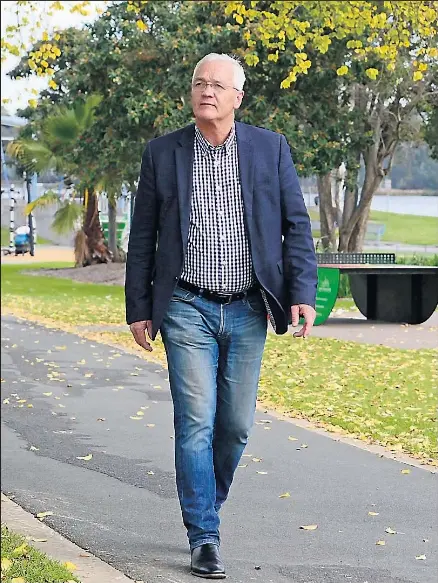
Featured on the show is Briton, George Marshall, who is the founder of England’s Climate Outreach Information Network, the author of the book, “Don't Even Think About It: Why Our Brains Are Wired to Ignore Climate Change”, and who the Shepparton-based group, Slap Tomorrow, brought to the city in early 2105.
Listen to Ricard Aedy on Radio National - “Hot Mess: Why haven’t we fixed climate change?

19 April, 2020

I’ve Studied Climate Change Up-close for the Past Three Years. Here’s How We Can Save the Planet, and Our Global Economy

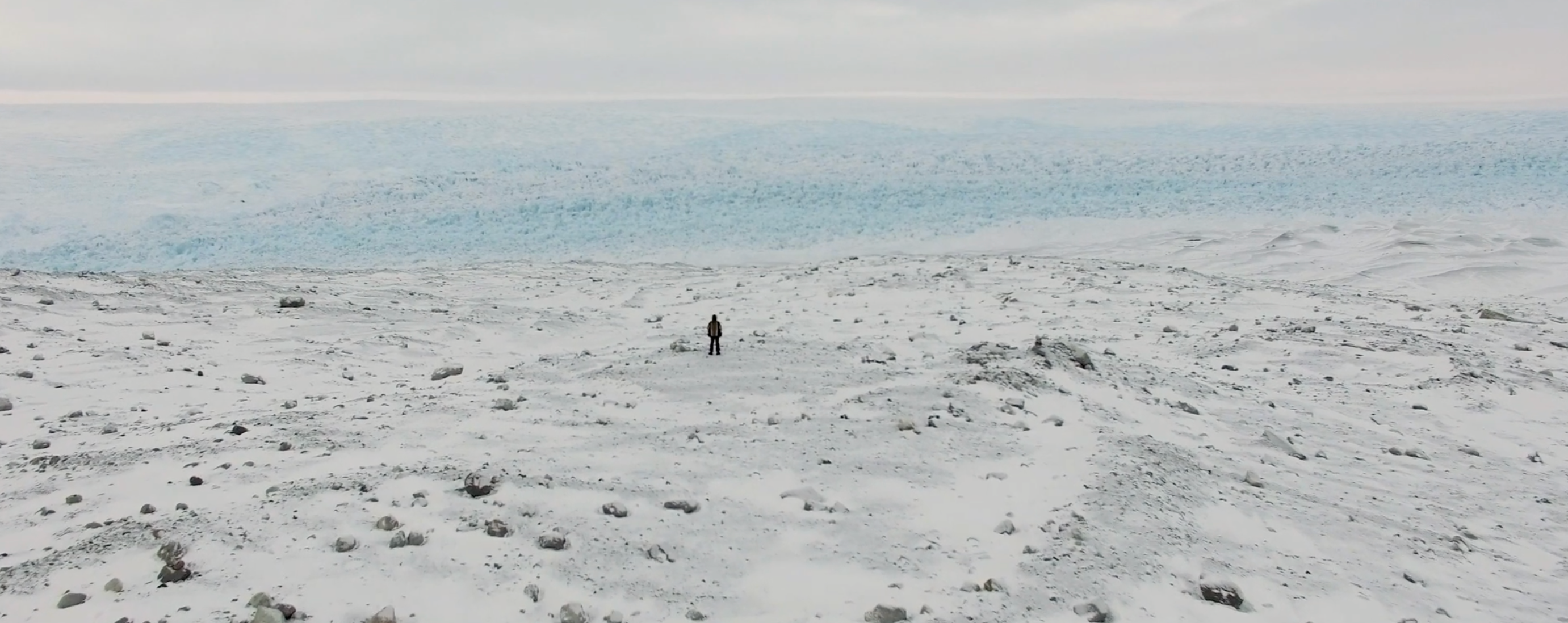
For the past three years, I’ve endeavored to learn just how drastically global warming is changing our planet and our lives.
Studying global warming for three years.
And what I’ve learned is staggering. The threat of global warming on our global well-being looms larger and more immediately than most of us know or care to consider. And this apathy is perhaps the greatest obstacle when it comes to addressing global warming, the most pressing crisis in the history of human civilization.
For the vast majority of us, the effects of global warming are minimal. We might have a rainier spring or an extended summer, but these are minor inconveniences, and they belie the enormity of the issue.
So I decided to visit sites around the world where the effects of our global warming are most pronounced and interview subject-area experts in each location. In order to fully understand global warming and its impact on our environment and economy, I had to experience it first-hand.

11 March, 2020

Australia’s Carryover Climate Credits Are Setting a Dangerous Precedent

What do Prime Minister Scott Morrison, US President Donald Trump and Brazil’s President Jair Bolsonaro have in common?

Well, Trump’s taken to Twitter to spew the conspiracy that global warming was “created by and for the Chinese”, Morrison told Australians “don’t be scared” when he brought a lump of coal into parliament in 2017, and Bolsonaro claimed environmental issues only matter to “vegans who eat vegetables”.

Last year, all three countries were literally up in flames while their respective leaders stonewalled against acting on climate change.

But even so, Australia’s the only nation that’s attempting to cheat the Paris Agreement by using ‘carryover climate credits’ from a previous treaty.

Read the story from Rolling Stone Magazine by Eden Gillespie - “Australia’s Carryover Climate Credits Are Setting a Dangerous Precedent.

13 February, 2020

A Trillion Trees: How One Idea Triumphed Over Trump’s Climate Denialism

WASHINGTON — People warned Marc Benioff, the billionaire chief executive of Salesforce, not to bother talking to the White House about global warming. But Mr. Benioff, a tech mogul and environmental philanthropist, felt sure he had found a climate change solution that even President Trump could love: Planting trees.
Never mind that the idea came from former Vice President Al Gore, who has demanded Mr. Trump’s resignation over his energy policies. Never mind that Mr. Trump has begun the yearlong process of withdrawing America from the Paris Agreement on climate change, mocked Greta Thunberg, the teenage climate activist, and worked to eliminate every regulation aimed at reducing planet-warming emissions.
The idea of planting one trillion trees had one enormous political advantage: It was practically sacrifice-free, no war on coal, no transition from fossil fuels, no energy conservation or investment in renewable sources of power that Mr Trump loves to mock, like the windmills that cause cancer or the solar panels that are not “strong enough.”

Read the story from The New York Times by Lisa Friedman - “A Trillion Trees: How One Idea Triumphed Over Trump’s Climate Denialism.”

09 February, 2020

The USA is more responsible for climate change than any country

When you can get conservatives and libertarians to admit that global warming is real, serious, and caused by humans, almost inevitably they start pointing fingers at India and China. What is the reality of the USA’s contributions to global warming vs the rest of the world’s?
Putting things in balance.
It’s worth casting our eyes back over different points in history with visualizations from Our World in Data’s site CO and other Greenhouse Gas Emissions to help answer this question. Let’s start at the turn of the 20th Century.
Which countries were already racking up big emissions? The UK was in the lead with 17.7 billion tons as befits its status as origin of both the steam locomotive and the Industrial Revolution. The USA wasn’t far behind at 11.4 billion tons. Germany was lagging at 6.73 billion tons. China? 95 thousand tons.
But things have changed since then, right? Oh, yeah. Let’s fast forward to 1966.

Read the Medium story by Michael Barnard - “The USA is more responsible for climate change than any country.”

04 February, 2020

Australia leads way on climate change

The Federal Member for
Nicholls, Damian Drum.

The News is running a continuing series of interviews with community leaders about their views on climate change.
We asked four questions:
1: What is your position on global warming and climate change?
2: Are we doing enough to mitigate the impact of climate change in the region?
3: Do community and business leaders have a role in advocating for more action, and positioning our region to take advantage of emerging opportunities?
4: What is your number one priority to help mitigate the impacts of climate change? 
Today we feature the responses of Federal Member for Nicholls Damian Drum.
What is your position on global warming and climate change?
I defer to the scientists who have accepted that human behaviour is having an impact on our changing climate. I also accept that there are many scientists who believe that there are other factors at play in our changing climate in addition to human activity.
Are we doing enough to mitigate the impact of climate change in the region?
Australia is leading the way among all other countries in the world by a considerable margin in relation to renewable energy, particularly rooftop solar energy panels. According to a recent paper by Australian National University, Australia’s current per capita renewables deployment rate leads the world at 250 watts per person per year, ahead of Uruguay in second at 125 watts, and Germany in third at 100 watts.
Australia currently contributes approximately 1.3 per cent of global emissions.
The 2030 Paris Agreement target we are working towards will see our per capita emissions decrease by more than 50 per cent, and at present we estimate we are five years ahead of these targets.
Our reduction over this time, combined with changes from other countries, is expected to decrease our global contribution to approximately 0.7 per cent by 2030.
We have signed, ratified, and maintained our commitment to the Paris Agreement, unlike many of the ‘dirty’ polluting countries including Iran and Turkey, or the United States of America who will officially withdraw from the agreement altogether in November 2020.
These facts continually get ignored by those who are trying to push a narrative that Australia is not doing enough.
It is also important to remember that mitigating the impact of climate change comes at a cost.
I firmly believe that we not only have a responsibility to move Australia towards a renewable energy future, but also to provide our families and businesses with access to low-cost and reliable energy.
Do community and business leaders have a role in advocating for more action?
The role of community and business leaders is to ensure that this transition towards even more renewable energy takes place in a manner that doesn’t devastate family and business budgets.
Our electricity and gas costs, both at a domestic and commercial/industrial level, have already risen significantly as we transition away from fossil fuels towards renewable energy.
We need to be mindful that it is often the poorest families in our communities who often live in the least energy-efficient homes. Our community and business leaders also have a role in advocating for the truth to find its way to the mainstream media.
What is your number one priority to help mitigate impacts of climate change?
My number one priority is to continue to push the fact that Australia is leading the way in mitigating the impacts of climate change. However, if we all accept that our environment is drier, and that the climate is changing, then we also need to accept that we can’t apply the same rules and regulations that we’ve had in the past to this new drier environment.
At this stage, the biggest effects of climate change are being felt in agriculture. If we are going to receive less rainfall into the future, we can’t continue to have the agricultural sector carry all the cost of having less water. As it stands, we have taken too much water from agriculture in our endeavours to create a healthier river system, and we need to correct this situation to have the environment share in the compromise required by a future with less water.
We also need to accept that we have a role to play in reducing fuel loads in our forests and on our roadsides. We need to give our departments greater flexibility to carry out fuel reduction burns, and allow people an ability to clear more than just 10 m away from their house on their own land if necessary to reduce their fire risk.
I FIRMLY BELIEVE THAT WE NOT ONLY HAVE A RESPONSIBILITY TO MOVE AUSTRALIA TOWARDS A RENEWABLE ENERGY FUTURE, BUT ALSO TO PROVIDE OUR FAMILIES AND BUSINESSES WITH ACCESS TO LOW-COST AND RELIABLE ENERGY. — DAMIAN DRUM

Story from The Shepparton News -  “Australia leads way on climate change.”

25 January, 2020

Climate change escalating so fast it is 'beyond point of no return’

(This story was published in December 2016 - the recent bushfire crisis in Australia confirms its point, for those who understand what has happened - is happening - in Australia point to the cause as hotter and drier conditions brought upon by human-induced climate change)

Global warming is beyond the “point of no return”, according to the lead scientist behind a ground-breaking climate change study.

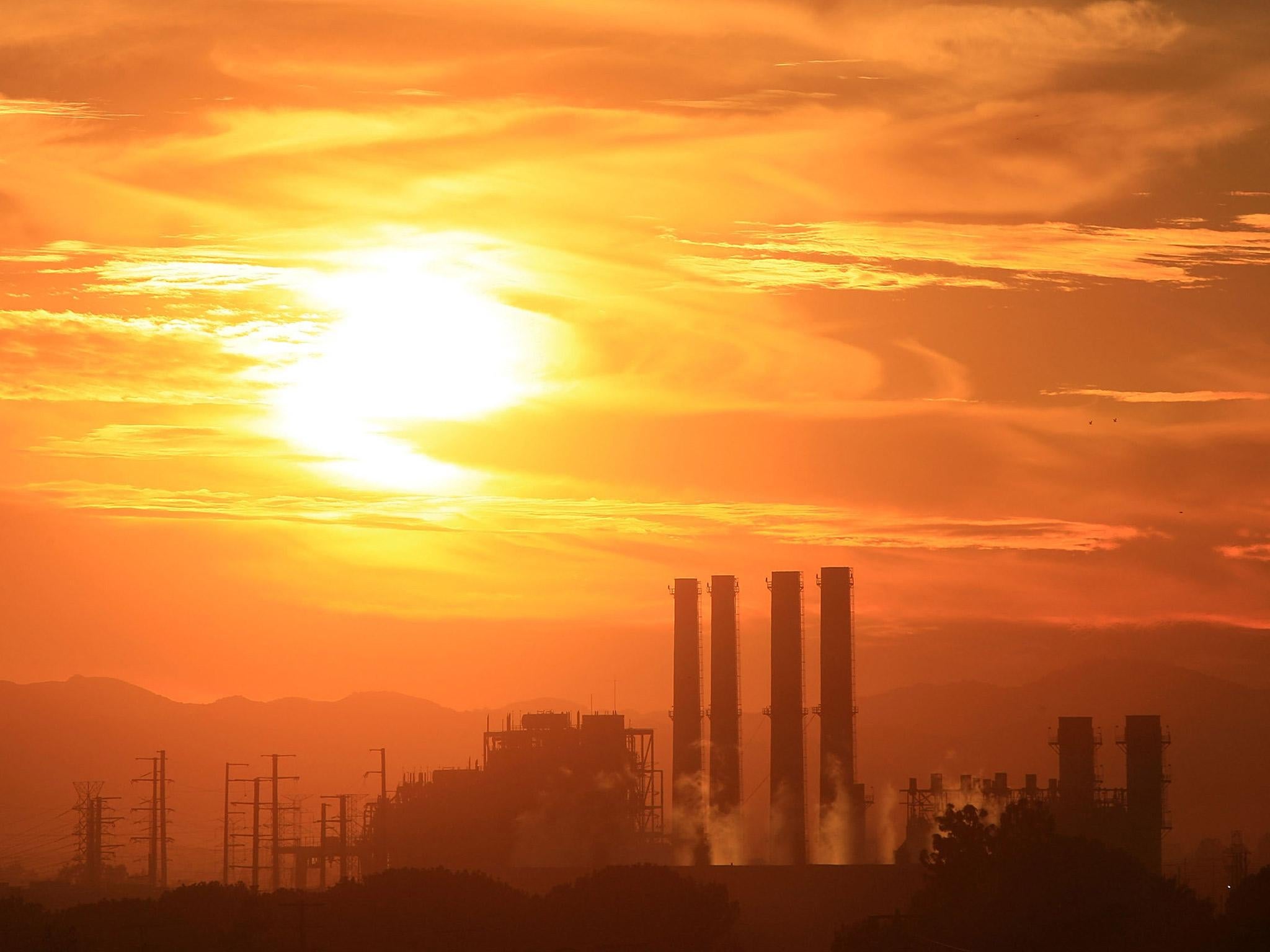
The San Fernando Valley Generating Station in Sun Valley, California
The San Fernando Valley Generating Station in Sun Valley, 
The full impact of climate change has been underestimated because scientists haven't taken into account a major source of carbon in the environment.

Dr Thomas Crowther’s report has concluded that carbon emitted from soil was speeding up global warming.


Read the story from the Independent by Peter Walker - “Climate change escalating so fast it is 'beyond point of no return’.”

31 December, 2019

Famous French cheeses at risk from climate change

Paris: Global warming is threatening the production of some of France's most famed cheeses because increasingly frequent extreme weather is affecting how much fresh local grass cows eat.
Fourme d'Ambert blue-veined French cheese from the region of Auvergne is among the cheeses at risk.
Fourme d'Ambert blue-veined French cheese from the
region of Auvergne is among the cheeses at risk.
Producers say it is becoming physically impossible to respect appellation rules imposed on a number of cheeses that limit the amount of dry hay livestock can consume.
And they are increasingly having to ask French food authorities to relax those strict conditions so they are allowed to sell their cheeses.

Read the story from The Age by Henry Samuel - “Famous French cheeses at risk from climate change.”

08 November, 2019

‘This is a big deal': Mighty glacier finally succumbs to climate change

Massachusetts: One of the world's thickest mountain glaciers is finally succumbing to global warming, a new analysis reports.
An aerial view of Alaska's Taku glacier near Juneau.
The Taku Glacier, located north of Juneau, Alaska, has started to retreat as temperatures rise, said Mauri Pelto, a glaciologist at Nichols College in Massachusetts.
Up until now, of the 250 glaciers that he has studied, all had retreated except one: Taku Glacier.But an analysis shows that Taku has lost mass and joined the rest of the retreating glaciers.
"This is a big deal for me because I had this one glacier I could hold on to," Pelto told NASA's Earth Observatory. "But not anymore. This makes the score climate change: 250, and alpine glaciers: 0."

Read the story from The Age by Doyle Rice - “‘This is a big deal': Mighty glacier finally succumbs to climate change.”

18 October, 2019

12 years, idiots! | Or why we’ll fail to save our planet

It is as clear as it gets. Scientists are warning us that we have just over a decade to correct the course of global warming. We fail, we die.


In 12 years we might just be able to make it. Unfortunately, I am pretty sure that we won’t. And the reason is simple: we are a short-term society.

Now, at this point one may be tempted to start arguing over whether this is all anthropogenic or simply cyclical in nature. The truth is probably nuanced. But that would be a waste of precious time. If somebody had to warn you that you have 12 seconds to duck an oncoming bullet, would you spend time discussing whether you are the intended target or whether it’s just a ricochet?

Read the Medium story by André Corrado - “12 years, idiots! | Or why we’ll fail to save our planet.”

26 August, 2019

The climate change metaphor

To write about climate change or global warming, as a concept that encompasses and affects almost all areas of life, requires delimiting a scope or an approach beforehand. It is simply too big to grasp otherwise. That is why, before diving in through this series, I feel compelled to pick-up my words where I left them in my previous article and to continue exploring the roots of climate change, yet not from a scientific standpoint, but from a conceptual one. To be able to think and to act on this overwhelming phenomenon, with or without putting a label on it, we need, as humans, to understand it. If we are going to assume the responsibility that we have on its acceleration, we must first visualize it and correctly comprehend it. That is, of course, if we manage to overcome the inherent difficulty of talking about something that we are not able to see or touch.

The complexity of a concept - climate change.
Climate change is something so big, so complex and so powerful that just imagining it poses a mental challenge, just like it is to imagine the universe. Even if we have a clear idea about whether it affects us or how it does so, climate effects are everywhere, but we only experience them through phases or moments. Climate change consists of many individual elements and it cannot be reduced to them, but only as a whole (think of a heat wave, a flood or a hurricane). We do not perceive climate change as it is, we do not touch it; it absolutely defies the definition of what a thing is; we only see the raindrops, the dry land, the snow, at a specific time. But the fact that we cannot perceive it as a whole does not mean that it does not exist or that the correlation is there.


Read the Medium story by Roger Molins  - “The climate change metaphor.”

28 July, 2019

Special report: A 30-year alarm on the reality of climate change

Three decades have passed since then-NASA scientist James Hansen testified before the Senate Energy committee and alerted the country to the arrival of global warming. 

Why it matters: The predictions of the world's leading climate scientists have come true, with dire consequence for the planet.
Image result for Special report: A 30-year alarm on the reality of climate change
  • In the 30-year period prior to Hansen’s testimony, the Earth’s surface was, on average, less than 0.2°F warmer than the 20th-century average. In the 30 years since, the planet’s surface has, on average, undergone a six-fold temperature increase. 
  • Hansen's temperature projections weren't exactly on target, since he projected a slightly higher amount of warming than what has occurred, but about two-dozen climate scientists told Axios that overall, his main conclusions were right.

Read the Axios story by Harry Stevens - “Special report: A 30-year alarm on the reality of climate change.”

15 July, 2019

Climate insecurity - The real threat is staring us in the face

As if the climate emergency was not already bad enough, today’s revelations that the Australian Defence Force is concerned about the security implications of global warming only underscores the fiddle-while-Rome-burns incompetence of our federal government. This morning the ABC revealed documents showing the military warning of increased “sea-borne migration” due to warming, which could mean 100 million refugees seeking to come to Australia. Meanwhile, serving defence chief Angus Campbell has warned [$] that China might occupy Pacific islands abandoned as seas rise. Today it’s the ADF in the news, but just about every Australian institution is calling for urgent action to limit greenhouse gas emissions and to try to limit warming to 1.5 degrees: the Reserve Bank, ASIC, the courts and the banks who have refused to fund Adani’s coalmine. Everyone, that is, except Australia’s denialist politicians and their media cheerleaders who seem determined to drive the country over a cliff.
Prime Minister Scott Morrison on the USS Ronald Reagan. 
Last week David Attenborough told a British parliamentary inquiry it was “extraordinary” that climate-change deniers were in power in Australia, given we are “already facing having to deal with some of the most extreme manifestations of climate change”. As economist Ross Garnaut warned more than a decade ago, Australia’s large agricultural sector and a reliance on trade with developing nations in Asia, which are also put at risk by rising temperatures, makes it one of the most vulnerable countries in the developed world.


Read the story from The Monthly by Paddy Manning - “Climate insecurity - The real threat is staring us in the face.”

11 July, 2019

‘Barking mad’: Barnaby Joyce slams the idea we can fix climate change

Barnaby Joyce says the idea Australia can stop climate change is “barking mad”, and global warming is a better problem than the next ice age.
Barnaby Joyce has declared the idea Australia can
stop climate change as "barking mad". 
The former Nationals leader once famously warned Australians they could pay $150 for a lamb roast, as a result of Julia Gillard’s carbon tax.

Contrary to the United Nations Intergovernmental Panel on Climate report, Mr Joyce is warning the climate change crisis campaign is overblown and says the push to reduce carbon emissions is pointless.

“The very idea that we can stop climate change is barking mad. Climate change is inevitable, as geology has always shown,” Mr Joyce said in a Facebook post.


Read the story from The New Daily by Samantha Maiden - “‘Barking mad’: Barnaby Joyce slams the idea we can fix climate change.”

25 June, 2019

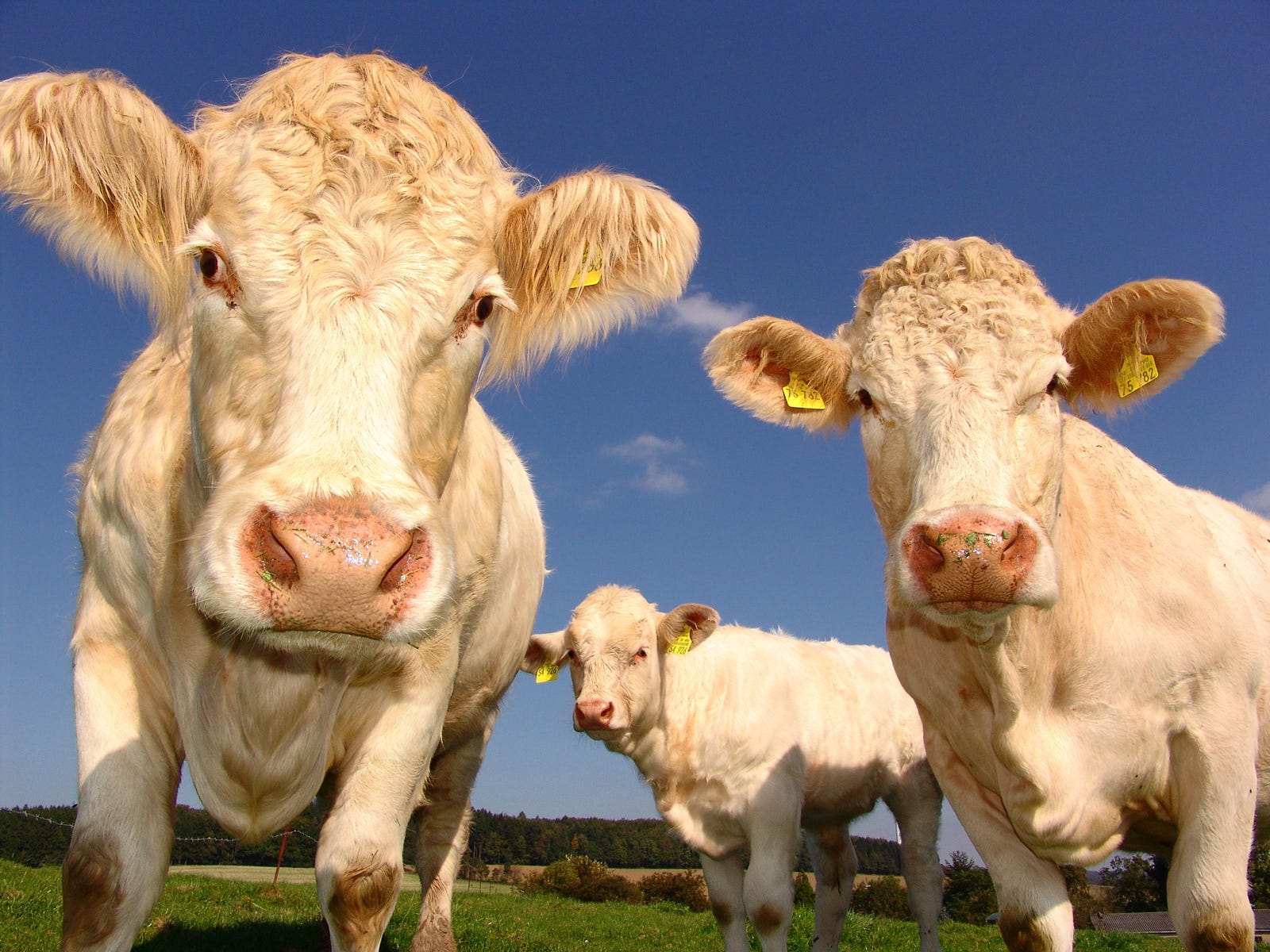
The methane myth: Why cows aren’t responsible for climate change

From burping cows to grazing sheep, when it comes to global warming the finger of blame is invariably pointed at the livestock industry these days.
Cows have become the bad boys of climate change
— but their place in the global warming debate
is unfair, says air quality expert Frank Mitloehner.
Animal agriculture is causing greenhouse gas (GHG) emissions to rise, say critics, and if we’re serious about tackling climate change then we need to cut red meat from our diets and switch cow’s milk for nut juices in our tea.
It’s an argument that’s gained a significant amount of traction, with more and more people adopting vegan diets in response to repeated reports — including from the United Nations — that livestock are a major contributor to the world’s environmental problems.
But while animal agriculture is by no means blameless in the global warming debate, it seems the industry’s impact on the environment is not as significant as critics suggest.


Read the Medium story by Caroline Stocks - “The methane myth: Why cows aren’t responsible for climate change.”

23 June, 2019

How to Talk to a Climate Skeptic: Responses to the most common skeptical arguments on global warming

Here is a complete listing of the articles in “How to Talk to a Climate Skeptic,” a series by Coby Beck containing responses to the most common skeptical arguments on global warming. There are four separate taxonomies; arguments are divided by:
Image result for How to Talk to a Climate Skeptic: Responses to the most common skeptical arguments on global warming
Individual articles will appear under multiple headings and may even appear in multiple subcategories in the same heading.


07 June, 2019

Victoria pushed to make much deeper emission cuts, but quicker coal closures loom.


Victoria has been urged to cut its carbon emissions by as much as 60 per cent over the next 10 years – more than double the Morrison government’s 26 to 28 per cent target – to help the state play its part in preventing the worst effects of global warming.
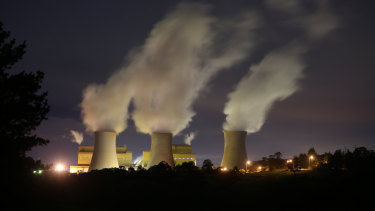
A coal reckoning? Yallourn Power Station in the Latrobe Valley, Victoria.


An expert panel chaired by Greg Combet, the former federal Labor minister for climate change, called on the Andrews government to make deep cuts to emissions in the next decade in sectors including electricity, industry and agriculture.


01 June, 2019

Insights From The Wilderness – Human Civilization Will Not Survive Climate Intensification

I recognize that the title of this StonyHill Nugget is alarming and that I will be accused of holding extremist views on global warming and climate intensification. But I am concerned that the media and our government are not telling us the truth. Stated simply, the 1% that control the media, and the reigns of political power in Washington and other nations around the globe, have absolutely no desire or motivation to talk about the real threats embedded in global warming.
Image result for resilience logo
They know that the global economy is extremely fragile…..and talking about the deeper truths embedded in global warming and climate intensification would quickly kill the golden goose that is laying eggs of pure petroleum gold for them. The realities of global warming embedded in the Governmental Global Warming Crisis Report released by governmental scientists on the Friday following Thanksgiving were clear. Global warming is not only going to change life as we know it by the end of the century, but also the impacts of global warming are already changing life as we know it ….and the rate of change is going to continue to accelerate

Read the story from Resilience by Dick Rauscher  -  “Insights From The Wilderness – Human Civilization Will Not Survive Climate Intensification.”