Showing posts with label staggering. Show all posts

19 April, 2020

I’ve Studied Climate Change Up-close for the Past Three Years. Here’s How We Can Save the Planet, and Our Global Economy

For the past three years, I’ve endeavored to learn just how drastically global warming is changing our planet and our lives.
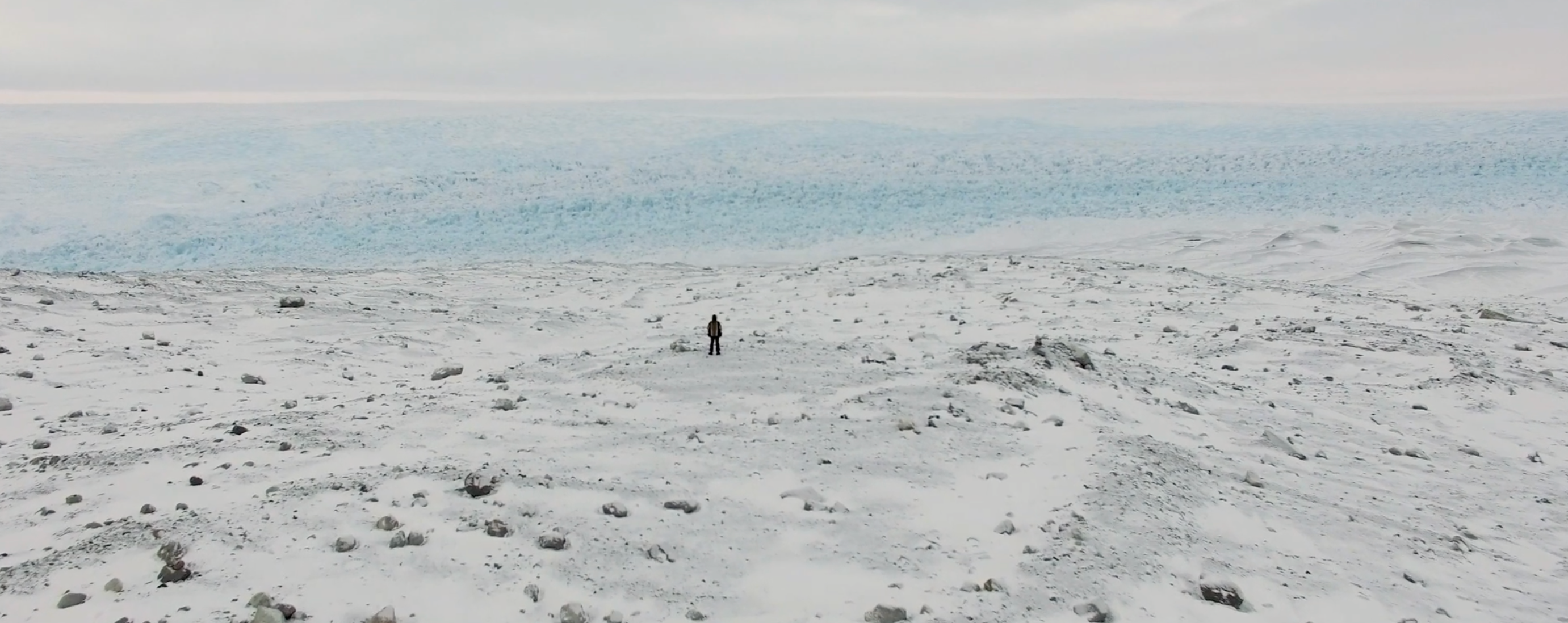
Studying global warming for three years.
And what I’ve learned is staggering. The threat of global warming on our global well-being looms larger and more immediately than most of us know or care to consider. And this apathy is perhaps the greatest obstacle when it comes to addressing global warming, the most pressing crisis in the history of human civilization.
For the vast majority of us, the effects of global warming are minimal. We might have a rainier spring or an extended summer, but these are minor inconveniences, and they belie the enormity of the issue.
So I decided to visit sites around the world where the effects of our global warming are most pronounced and interview subject-area experts in each location. In order to fully understand global warming and its impact on our environment and economy, I had to experience it first-hand.

14 October, 2019

Scientists Want to Make Harming the Environment a War Crime

Forests burned to the ground. Rivers damaged by broken infrastructure. Animals slaughtered and driven from their habitats. The environmental impacts of war are staggering, yet they’re often overshadowed by the societal wreckage created by conflict.
Image result for Scientists Want to Make Harming the Environment a War Crime
Making harming the enviornment a war crime.
Now in a letter published in the scientific journal Nature, a group of scientists is urging the United Nations to make it a war crime to harm the environment during times of conflict. The UN’s International Law Commission is in talks through Aug. 8, and the scientists are calling on attending members to create a framework “to protect the environment in regions of armed conflict.”
“We call on governments to incorporate explicit safeguards for biodiversity, and to use the commission’s recommendations to finally deliver a Fifth Geneva Convention to uphold environmental protection during such confrontations,” the petition reads. 

Read the story from Global Citizen by Joe McCarthy and Erica Sanchez - “Scientists Want to Make Harming the Environment a War Crime.”

10 March, 2018

Why aren’t Australia’s environment laws preventing widespread land clearing

Australia has national environment laws – the Environment Protection Biodiversity Conservation Act (EPBC Act). Yet given the staggering rates of land clearing taking place, resulting in the extinction and endangerment of plants and animals in Australia, these laws are clearly not working.
Land clearing, as seen here in a property near St
George, Queensland, does not trigger Australia’s
 Environmental Protection and Biodiversity Act. 
About 395,000 hectares of regrowth and old growth vegetation were cleared during 2015-16 in Queensland. Australia is set to clear up to 3 million hectares of native forest by 2030, and more than 1,800 plant and animal species are currently listed as threatened nationally.

When the EPBC Act was first implemented in 1999, the idea was for it to provide reinforced federal environmental protection to areas of national environmental significance. But in reality, many projects that come within the ambit of the Act are not rigorously evaluated for their environmental impact.


Read the piece on The Conversation by  the Director of the Centre for Energy and Natural Resources Law at Deakin Law School from Deakin University, Samatha Hepburn - “Why aren’t Australia’s environment laws preventing widespread land clearing.”

17 February, 2018

In 2020 Bitcoin will consume more power than the world does today

Can the world afford Bitcoin? The cryptocurrency is enjoying something of a resurgence as investment and central banks weighed its benefits and caused its value to balloon.
A single Bitcoin transaction could power a house for a month.
But generating Bitcoin requires a truly staggering amount of energy. The electricity used in a single Bitcoin transaction, for instance, could power a house for a month.

And bitcoin mining (the process of generating a bitcoin) now consumes the same amount of electricity every year as Denmark - 33TWh, according to one recent report.


Read the World Economic Forum story by Adam Jezard - “In 2020 Bitcoin will consume more power than the world does today.”

10 July, 2016

Arctic sea ice races towards oblivion

The summer sea ice cover over the Arctic raced towards oblivion in June, crashing through previous records to reach a new all-time low.

The Arctic sea ice extent was a staggering 260,000 sq km (100,000 sq miles) below the previous record for June, set in 2010. And it was 1.36m sq km (525,000 sq miles) below the 1981-2010 long-term average, according to the National Snow and Ice Data Center.

That means a vast expanse of ice – an area about twice the size of National Snow– has vanished over the past 30 years, and the rate of that retreat has accelerated.

Aside from March, each month in 2016 has set a grim new low for sea ice cover, after a record warm winter.

Read The Guardian story - “Arctic sea ice crashes to record low for June.”