Showing posts with label animals. Show all posts

25 January, 2020

Strength From Grief: How Aboriginal People Experience the Bushfire Crisis

How do you support people forever attached to a landscape after an inferno tears through their homelands: decimating native food sources, burning through ancient scarred trees, and destroying ancestral and totemic plants and animals?
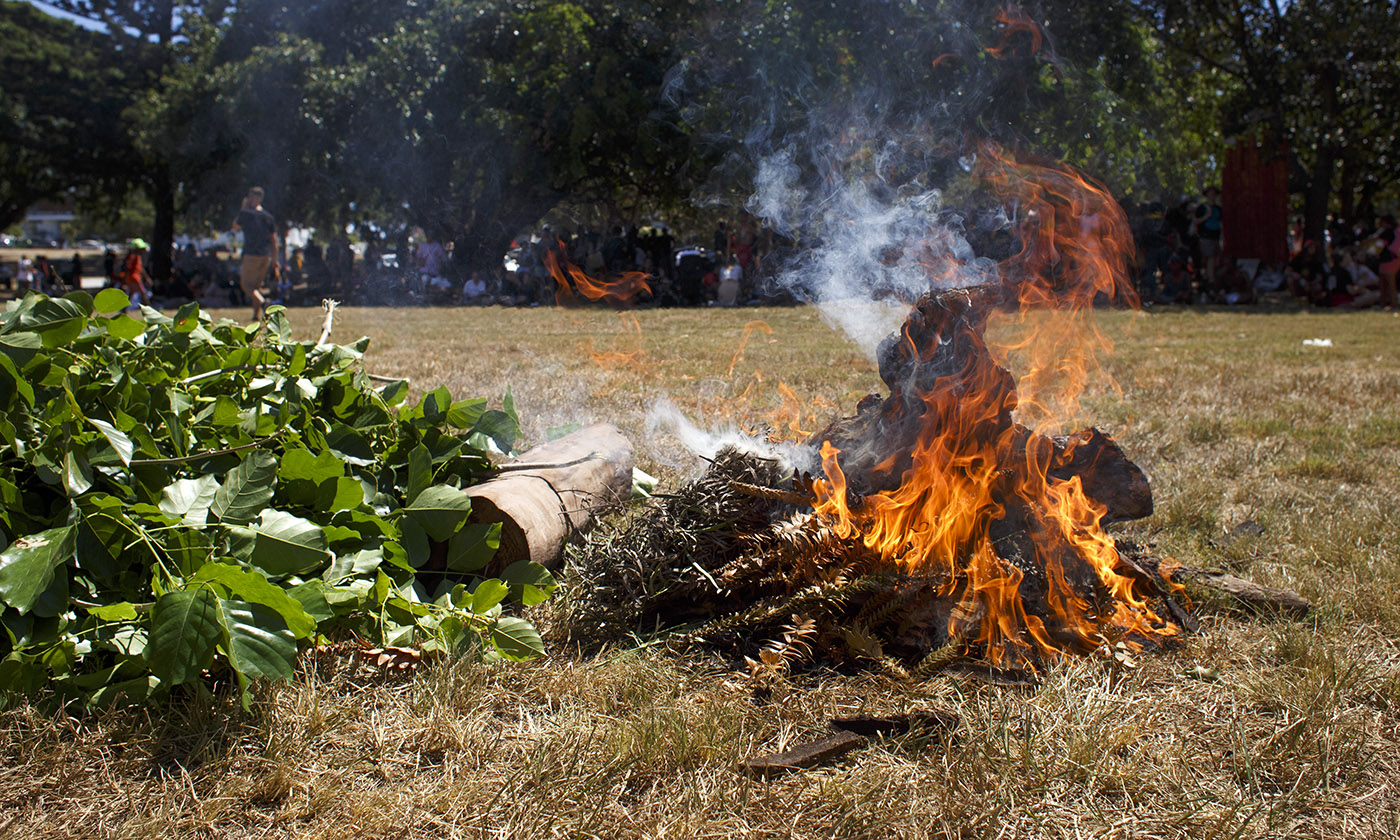
Image result for Strength From Grief: How Aboriginal People Experience the Bushfire Crisis
A fire being prepared for a traditional smoking
ceremony during a protest by indigenous
Australian people against Australia Day, a day
 synonymous with decades of systematic
 abuse and genocide, on January 26th, 2016.
The fact is, the experience of Aboriginal peoples in the fire crisis engulfing much of Australia is vastly different from that of non-Indigenous peoples.

Colonial legacies of eradication, dispossession, assimilation, and racism continue to affect the lived realities of Aboriginal peoples. Added to this is the widespread exclusion of our peoples from accessing and managing traditional homelands. These factors compound the trauma of these unprecedented fires.

As Australia picks up the pieces from these fires, it’s more important than ever to understand the unique grief that Aboriginal peoples experience. Only through this understanding can effective strategies be put in place to support our communities to recover.


11 January, 2020

Strength from perpetual grief: how Aboriginal people experience the bushfire crisis

How do you support people forever attached to a landscape after an inferno tears through their homelands: decimating native food sources, burning through ancient scarred trees and destroying ancestral and totemic plants and animals? 
Image result for Strength from perpetual grief: how Aboriginal people experience the bushfire crisis
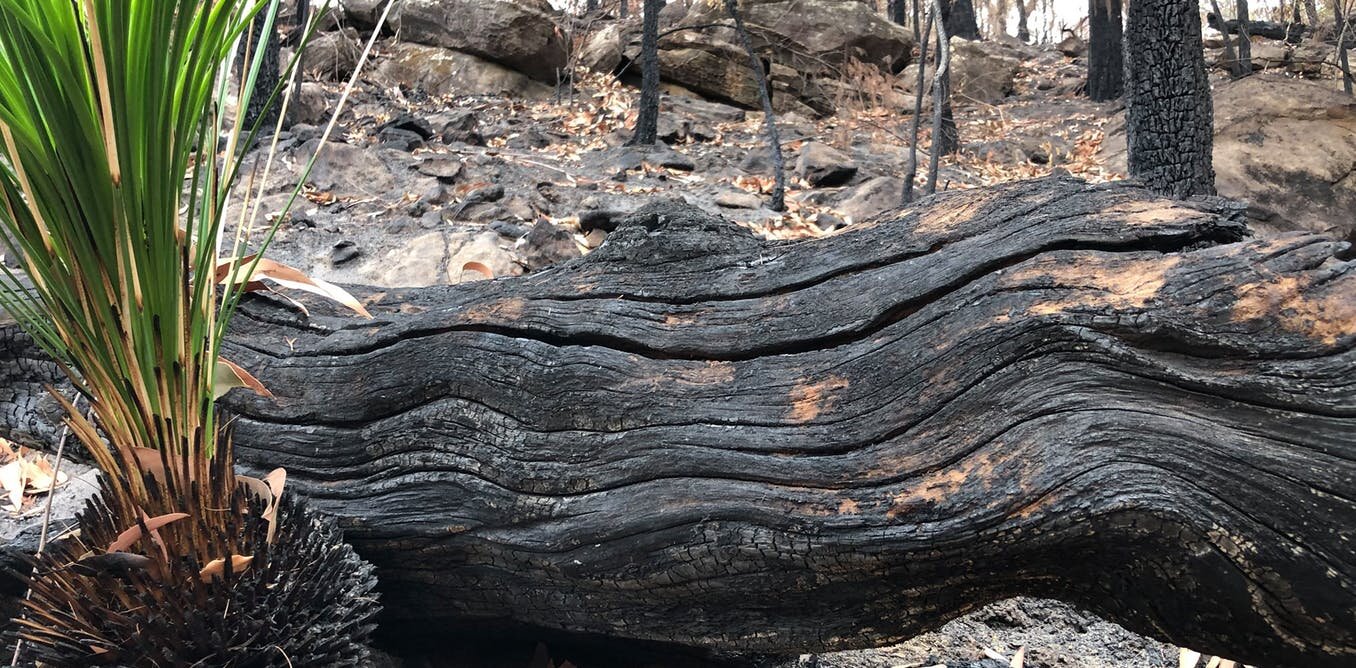
Regrowth one month after fires at Colo Heights, NSW.
A legacy of displacement and racism inflames bushfire
 trauma for Aboriginal Australians.
The fact is, the experience of Aboriginal peoples in the fire crisis engulfing much of Australia is vastly different to non-Indigenous peoples.
Colonial legacies of eradication, dispossession, assimilation and racism continue to impact the lived realities of Aboriginal peoples. Added to this is the widespread exclusion of our peoples from accessing and managing traditional homelands. These factors compound the trauma of these unprecedented fires.

28 June, 2019

Minister grants woodlands protection after years of delay by predecessors

The environment minister, Sussan Ley, has added more plants and animals to Australia’s national list of threatened species, including woodlands that had been eligible for protection for years.

Native bush and woodland in Tasmania
Native bush and woodland in Tasmania. Sussan
Ley has listed the state’s woodlands dominated by
black gum or brookers gum as critically endangered.
Ley announced on Friday afternoon that the Nabarlek, found in the Northern Territory, had been added to Australia’s list of critically endangered mammals.

Four frogs – the Baw Baw frog, the white-bellied frog, the yellow-spotted tree frog and the Kuranda tree Frog – have had their status upgraded from endangered to critically endangered.

The minister also confirmed that three woodlands that had been delayed from receiving protection by her predecessors Josh Frydenberg and Melissa Price – in some cases for years – would now be listed under national environment laws.


Read the story from The Guardian by Lisa Cox - “Minister grants woodlands protection after years of delay by predecessors.” 

09 April, 2019

35,000 Protestors in Berlin Call for Agricultural Revolution

Organizers said 35,000 people marched through the streets of the German capital on Saturday to say they're "fed up" with industrial agriculture and call for a transformation to a system that instead supports the welfare of the environment, animals and rural farmers.
Demonstrators participate in a protest march over
agricultural policy on Jan. 19 in Berlin, Germany. 
Many held placards reading "Eating is political" at the action in Berlin, which coincided with the so-called "Green Week" agricultural fair.

The protest also featured a procession of 170 farmers driving tractors to the rally at the Brandenburg Gate.


Read the story from EcoWatch by Andrea Germanos - “35,000 Protestors in Berlin Call for Agricultural Revolution.”

03 October, 2018

The new normal? How climate change is making droughts worse

The hardest part of drought is the retreat. Communities withdraw into their shell. Workers leave town as they lose jobs and often housing, animals are sent away, class sizes drop, activity shrinks, dust drifts in through every crack in the house. It’s slow, which is why it messes with your head, creeping forward until something snaps and what begins as confusion reaches consensus.
Australian Prime Minister Scott Morrison holds up a photo
from February 2016 of what sheep and cattle graziers Stephen
 and Annabel Tully's property used to look like. 
When Scott Morrison became prime minister in August, nearly seven years after the Queensland dry began, he announced drought was his first priority. He headed up Quilpie way, in the south-west of the state, and stood with farmers as he was asked pointed and persistent questions about climate change.

“Whether it is climate change or it is not,” Morrison said, “is completely irrelevant to everybody here.”

For people suffering from lack of income, both in town and farm, drought is awful and relentless as each day dawns an overwhelming blue. Often communities get so focussed on surviving from day to day, it is difficult to see a bigger picture. While the consequences of drought for regional communities don’t change, the conversations about it are changing, centring more and more on best management in a changing climate. What if this is the new normal?


Read the story from The Guardian - “The new normal? How climate change is making droughts worse.”

24 July, 2018

Severe drought threatens wild horses in American West: ‘Every animal in the desert is dying from thirst’

Volunteers and government officials are scrambling to protect wild horses in the American West, where the animals are facing harsh drought conditions that have already led to dozens of deaths.
Wild horses in the American West face dangerous drought
conditions that have dried of their food and water supplies.
In a stretch of land that includes parts of Arizona, Utah, Colorado, Nevada, and New Mexico, land managers are rushing to help the horses survive through the dry conditions that have reached an intensity in some areas that have not been seen for decades, if not centuries.

“It has never been this bad,”  Simone Netherlands, the president of  Arizona-based Salt River Wild Horse Management Group, told The Independent. 


10 March, 2018

Why aren’t Australia’s environment laws preventing widespread land clearing

Australia has national environment laws – the Environment Protection Biodiversity Conservation Act (EPBC Act). Yet given the staggering rates of land clearing taking place, resulting in the extinction and endangerment of plants and animals in Australia, these laws are clearly not working.
Land clearing, as seen here in a property near St
George, Queensland, does not trigger Australia’s
 Environmental Protection and Biodiversity Act. 
About 395,000 hectares of regrowth and old growth vegetation were cleared during 2015-16 in Queensland. Australia is set to clear up to 3 million hectares of native forest by 2030, and more than 1,800 plant and animal species are currently listed as threatened nationally.

When the EPBC Act was first implemented in 1999, the idea was for it to provide reinforced federal environmental protection to areas of national environmental significance. But in reality, many projects that come within the ambit of the Act are not rigorously evaluated for their environmental impact.


Read the piece on The Conversation by  the Director of the Centre for Energy and Natural Resources Law at Deakin Law School from Deakin University, Samatha Hepburn - “Why aren’t Australia’s environment laws preventing widespread land clearing.”

03 December, 2017

The changing disease climate

Virus and bacterial diseases don’t appear out of nowhere, and most require a host to stay active, reproduce and evolve. Insects and other animals play a key role in this - around 60 percent of infectious diseases that affect humans are zoonotic – which means they’re spread from animals to humans.
Australia has never experienced a large outbreak of foot-and-mouth disease.
But this is a pattern also true of 75 percent of new or emerging infectious diseases.

Tracking disease prevalence, spread and movement among populations of animals is the role of veterinary epidemiologists like Dr Simon Firestone, Professor Mark Stevenson and Dr Anke Wiethoelter at the University of Melbourne.

“A nice analogy would be that a traditional veterinarian’s client is a single animal; a veterinary epidemiologist’s client is the country and all the farms and animals in that ecosystem,” Professor Stevenson says.


Read University of Melbourne Pursuit story - “The changing disease climate.”

16 October, 2016

Keeping watch on temperature and rainfall with ClimateWatch

ClimateWatch was developed by Earthwatch with the Bureau of Meteorology and The University of Melbourne to understand how changes in temperature and rainfall are affecting the seasonal behaviour of Australia's plants and animals.

The first continental phenology project in the Southern Hemisphere, ClimateWatch enables every Australian to be involved in collecting and recording data that will help shape the country’s scientific response to climate change.

Check out the ClimateWatch website.

31 March, 2016

Forum looks at 'Species on the Move'

Plants and animals all over the world are responding to warming temperatures, many by shifting where they live.

A team of international experts were in Tasmania’s Hobart in February to talk about the surprising ways climate change is affecting the planets natural ecosystems – from the Arctic to the tropics, on land and in the ocean.

The “Species on the Move” public forum heard how a changing climate is impacting Indigenous communities in the Arctic.

This special event featured a series of short talks and was followed by question and answer sessions.