Showing posts with label landscape. Show all posts

21 April, 2020

In times of coronavirus and climate change, we must rethink national security.

The catastrophic summer bushfires incinerated the livelihoods and the lifestyles of so many Australians who live along our coastal fringe. And while the landscape is recovering, albeit slowly, their circumstances are not. Indeed, the arrival of the pandemic has smashed their personal and economic security even further. The hit to the national economy from the combined events will be comparable to that of the second world war, the debt taking decades to run down.

A member of the Defence Force watches over as returning overseas travellers are ushered towards waiting buses for the beginning of their 14-day quarantine after arriving at Sydney International Airport in Sydney, Australia, 29 March 2020.
Millions of Australians are significantly less secure now
than they were six months ago. And if our citizens
 are not secure, how can the nation be secure?’
Australia has not been at war. We have not been attacked by an enemy using armed force to subject the nation to its will. Yes, some troops were called out in an act of political theatre, and the navy put to sea, but not a shot was fired, nor a bombing sortie flown. Yet millions of Australians are significantly less secure now than they were six months ago. And if our citizens are not secure, how can the nation be secure?
Read the story from The Guardian by Allan Behm - “In times of coronavirus and climate change, we must rethink national security.” 

11 January, 2020

Strength from perpetual grief: how Aboriginal people experience the bushfire crisis

How do you support people forever attached to a landscape after an inferno tears through their homelands: decimating native food sources, burning through ancient scarred trees and destroying ancestral and totemic plants and animals? 
Image result for Strength from perpetual grief: how Aboriginal people experience the bushfire crisis
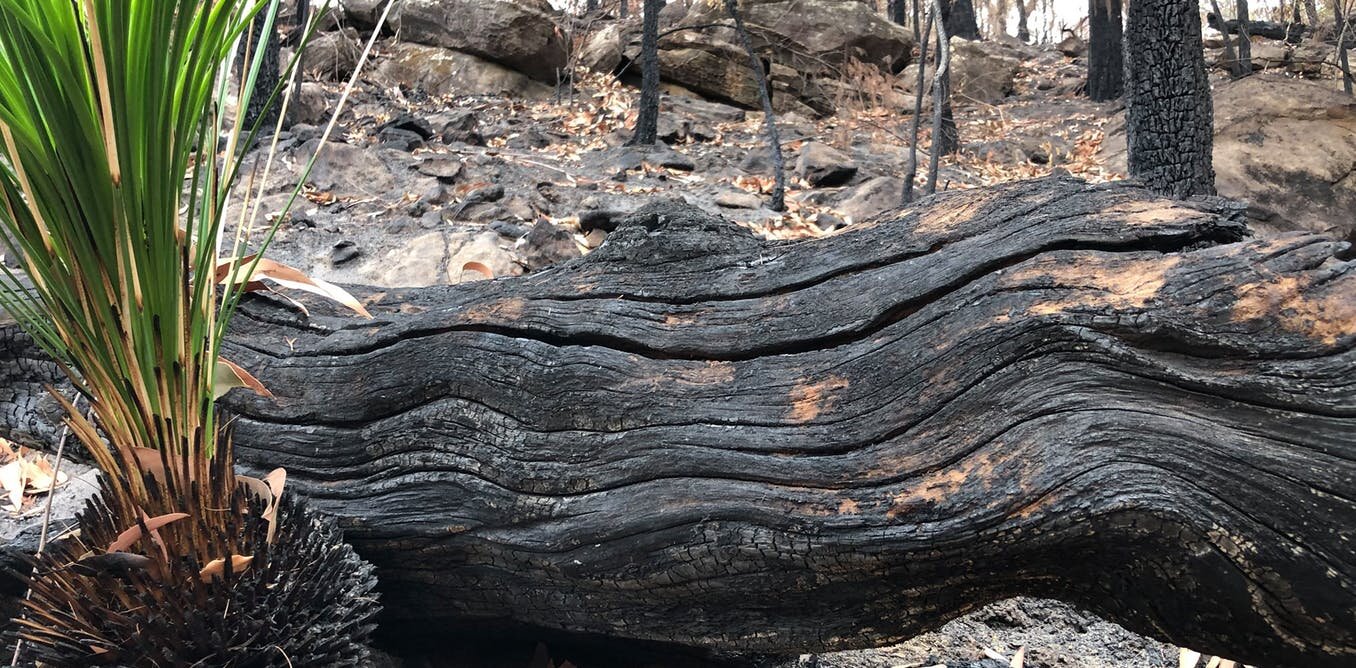
Regrowth one month after fires at Colo Heights, NSW.
A legacy of displacement and racism inflames bushfire
 trauma for Aboriginal Australians.
The fact is, the experience of Aboriginal peoples in the fire crisis engulfing much of Australia is vastly different to non-Indigenous peoples.
Colonial legacies of eradication, dispossession, assimilation and racism continue to impact the lived realities of Aboriginal peoples. Added to this is the widespread exclusion of our peoples from accessing and managing traditional homelands. These factors compound the trauma of these unprecedented fires.

26 August, 2019

The Horrifying Science of the Deforestation Fueling Amazon Fires

Being a rainforest, the Amazon isn’t supposed to burn out of control, unlike California’s drier landscape, which is built to burn and burn explosively. Yet here we are, watching swaths of the Amazon go up in flames. And we can easily nail down the cause: humans. Deforestation is what’s driving these blazes, and there is some horrifying science behind that.

Deforestation is at the core of Brazil's out-of-control fires in the Amazon. 
Since the 1970s, 20 percent of the Amazon has been deforested, totaling about twice the area of California. But deforestation isn’t an organized shrinking of the rainforest, paring it down from the edges in. Humans carve out farmlands, sometimes leaving a neat edge where the forest meets the fields, or even creating islands of forest surrounded by crops or grazing fields for cattle. Indeed, agriculture is far and away the primary driver of deforestation in Brazil.

You might think that well, things could be worse, at least these can operate like actual islands—self-contained spots of green in a sea of agriculture. And you wouldn't be alone.


Read the Wired story by Matt Simon - “The Horrifying Science of the Deforestation Fueling Amazon Fires.”

20 March, 2018

The Future of Energy Transformation

This week, many conversations at CERAWeek in Houston— one of the world’s leading energy events— revolved around the massive transformation that is reshaping the global energy landscape. Topics ranged from energy and climate policy to innovation and investment in an energy market that is going through unprecedented change. The growing role of renewables and the impact of distributed energy technologies were two frequently discussed examples. 
At GE, we believe that the energy transformation is playing out as an evolution: from a centralized, one-directional grid, into a decentralized, decarbonized, digitized network that’s smarter and more productive.  

This evolution brings together seemingly competitive energy offerings—solar, coal, wind and gas—that combine traditional and emerging energy to deliver more efficient and effective results.


Read the story from LinkedIn by GE Chairman and CEO, John Flannery - “The Future of Energy Transformation.”

07 January, 2017

Huge Antarctic iceberg about to break off and slide into the sea

There is now only about 20 kilometres
of ice attaching the mass to Antarctica.
A huge iceberg, one of the biggest ever recorded, is about to break off Antarctica.

Part of the Larsen C ice shelf is now hanging by only a relative thread after a crack expanded quickly last month. There is now only about 20 kilometres of ice attaching it to Antarctica – and when it splits off, it will form an iceberg as big as a US state or Trinidad and Tobago.

When that happens, it will radically change the landscape of the Antarctic Peninsula, according to scientists who are tracking it. It could even lead to the wider break-up of the entire shelf, according to a statement from the scientists.

Read Andrew Griffin’s story in the Independent - “Huge Antarctic iceberg about to break off and slide into the sea.”

19 August, 2015

'Jobs, jobs, jobs' is hollow argument - Ross Gittins


Jobs, jobs, jobs” is the cry of the Australian Coalition Government and it has been the Prime Minister, Tony Abbott, who has said he will never put the environment ahead of the economy.

Ross Gittins - questioning the
pleas of the Abbott Government.
And with the environment running in a distant last place, the government is doing all it can to ensure massive industrial projects become a fixed part of our landscape, and along with that, the jobs they promise.

This endless bleating about jobs is a fallacy as explained by Ross Gittins in his article in today’s Age - “Economists' concerns with emissions reduction target not what you'd expect.”