Showing posts with label environment. Show all posts

24 April, 2020

Action looms over 'steep, unexplained' spike in power plant pollution

Environment and health groups have launched legal complaints against the operators of coal-fired power stations in Victoria and NSW after new data revealed huge increases in dangerous particulate pollution from their plants.
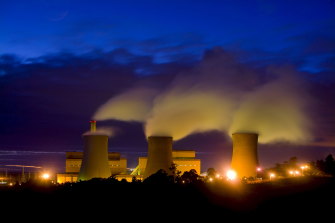
Steam pours out of the cooling towers at Yallourn power station.
Steam pours out of the cooling towers at Yallourn power station. 
In NSW, the Environment Protection Authority has confirmed it will conduct an investigation.
In Victoria, a legal complaint lodged with the state’s Environment Protection Authority calls for an investigation into EnergyAustralia – the owners of the Yallourn power station – over alleged pollutant breaches.
A coalition of Victorian groups, including Environmental Justice Australia and Doctors for the Environment, say Yallourn increased emissions of PM10 coarse-particle pollution by 45 per cent in the most recent reporting year, despite one of its generating units being offline for maintenance during that time.
Read the story from The Age by Miki Perkins - “Action looms over 'steep, unexplained' spike in power plant pollution.”

02 February, 2020

Counting the costs of Australia's bushfires

It's not easy to estimate the total economic cost of Australia's bushfires that have burnt through vast areas of the country, especially as the fire season may continue as late as March. The total impact on human lives, the economy and environment is complicated and some costs may continue to grow for years to come. 
Image result for bushfires scenes"
Considering the cost of the Australian bushfires.
The guests were Mayor of Shoalhaven Shire, Amanda Findley; Australian Laureate Fellow in Economics, University of Queensland, John Quiggin; Professor of Economics, Deakin Business School, Researcher, Bushfire and Natural Hazards CRC, Mehmet Ulubasoglu; and the Chief Economist, The Australia Institute, Richard Denniss.

Listen to the ABC podcast, The Money - “Counting the costs of Australia's bushfires.”

27 January, 2020

The biggest threat to our planet is the belief that someone else will save it

When Anika Molesworth’s family purchased a sheep station in Far West NSW in 2000, little did 12-year-old Anika know that that it would be the catalyst for her lifelong passion for the environment.

Anika Molesworth - she argues the biggest threat to the
 planet is that we are waiting for someone else to save it.
Anika’s family had fallen in love with the “starkly beautiful piece of Australia” and began planning their future on the farm – but then the rain stopped falling. It barely fell for the next decade.

“It was a steep learning curve into farming, and it opened my eyes to the fragility of our natural world, and how connected everything and everyone is to it,” says Anika.

“Climate change means this part of Australia – my home – will become hotter and drier, and will experience more frequent and intense droughts and dust storms,” says Anika. “It was living through the Millennium Drought, having my eyes opened to its impacts, that cemented my commitment to farmers and to my work to ensure their resilience in the face of climate change.

“It has led me to undertake a PhD in agricultural and environmental science, meet royalty and global leaders, and talk on stages like TEDx in front of thousands of people.”


Read the story from Business Chicks by Nicky Champ - “The biggest threat to our planet is the belief that someone else will save it.”

15 December, 2019

Nothing about Australia's current fire crisis is normal

WE'VE barely hit summer, but it's been a horrendous start to the bushfire season. At least two million hectares of bushland have been destroyed, more than 1000 homes lost and the damage to our environment and native wildlife is yet to be confirmed. It's hit close to home, even for those in the cities. 

Dr Sophie Lewis - nothing about the current bushfire crisis is normal.
Sydney and Canberra have been shrouded in smoke, with pollution levels rivalling those of Beijing and Delhi. Schools are being advised to keep children indoors and masks have become a common sight on our streets. Nothing about this is normal.

While we've always had bushfires, what we have experienced in the last few months is unprecedented. There is a clear trend that fire weather is increasing. We're seeing longer fire seasons and more extreme and catastrophic fire danger days.


Read the story from The Canberra Times by Dr Sophie Lewis - “Nothing about Australia's current fire crisis is normal.”

24 August, 2019

How climate change is affecting life in the Italian Alps.

Photographer James Whitlow Delano has focused on environmental issues for much of his career. This interest was sparked early on in his life, he says: “I’ve always been strongly affected by the environment … since I was a young child living beside a nuclear research lab in California.”

From left, Fondazione Montagna Sicura (FMS) glaciologists
Paolo Perret, Simone Gottardelli and supervisor Fabrizio
Troilo measure movement in the moraine of the
receding and thinning lower reaches of the Brenva Glacier
with a satnav (satellite navigation) device, accurate to a
tenth of a millimeter, which they call the "bomba" (bomb). 
Delano has worked around the world but now lives in Japan, where he works on, among other subjects, climate change. The work is so important to him that in 2015, he founded the Everyday Climate Change Instagram feed that presents the work of photographers documenting climate change around the world.

In some of his most recent work, Delano traveled to the Valle d’Aosta mountains and valleys of the Italian Alps to see the impact of climate change there. What he found was an area — a cultural crossroads since before the time of the Romans — that has been losing its glaciers at an alarming rate over the past three decades.


Read the story from The Washington Post - “How climate change is affecting life in the Italian Alps.

18 June, 2019

Environment reporters facing harassment and murder, study finds

Thirteen journalists who were investigating damage to the environment have been killed in recent years and many more are suffering violence, harassment, intimidation and lawsuits, according to a study.
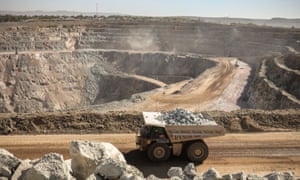
Goldmining in Tanzania.
Goldmining in Tanzania. 
The Committee to Protect Journalists (CPJ), which produced the tally, is investigating a further 16 deaths over the last decade. It says the number of murders may be as high as 29, making this field of journalism one of the most dangerous after war reporting.
On every continent, reporters have been attacked for investigating concerns about abuses related to the impact of corporate and political interests scrambling to extract wealth from the earth’s remaining natural resources.
These resources end up in all manner of products – from mobile phones to pots and pans – with consumers largely unaware of the stories behind them.

Read the story from The Guardian by Juliette Garside and Jonathon Watts - “Environment reporters facing harassment and murder, study finds.” 

15 June, 2019

Sussan Ley: I'll be an environmentalist as minister

The new environment minister, Sussan Ley, has declared herself an “environmentalist”, saying she is prepared to fight for the environment around the cabinet table even when colleagues disagree with her.
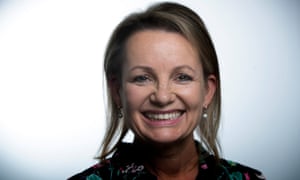
Sussan Ley
Environment Minister, Sussan Ley.
Ley, who welcomed the Queensland government’s decision on Thursday to give the green light to the Adani coalmine, told Guardian Australia she wanted to see more action on recycling, threatened species and biodiversity protection, and a greater focus on individual action to achieve a better environment.
But in the lead-up to a 10-yearly review of the country’s Environment Protection and Biodiversity Conservation Act, Ley has also flagged that she wants approval times for major projects cut, has left the door open to lifting the country’s ban on nuclear power, and has questioned whether land clearing is responsible for species loss.


Read the story from The Guardian by Sarah Martin - “Sussan Ley: I'll be an environmentalist as minister.”

(Minister Ley's claim that she wants to "cut red tape" and so reduce approval times for major projects is code for ignoring environmental matters, the very issues she is meant to represent - Robert McLean

20 April, 2019

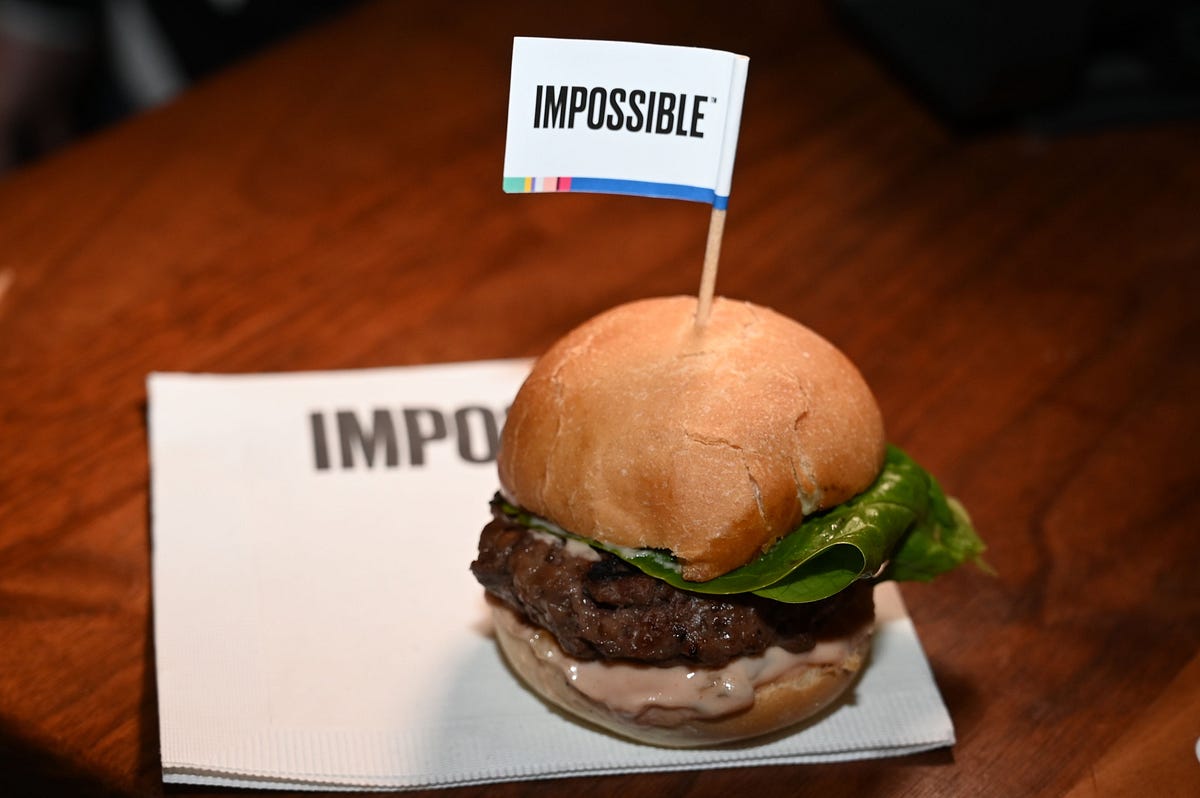
How Fake Meat Could Save the Planet

Despite the growing attention on the environmental impact of our diet, a recent Gallup Poll indicates that the number of Americans who identify as vegetarians has remained fixed at about 5 percent since 2012. Globally, per capita meat and seafood consumption has been increasing steadily, driven largely by growth in the developing world. More meat means more land that must be cleared to support more livestock, driving wild species to extinction. Moral suasion and appeals to the environment will only go so far if we’re going to eat to save the planet, consumers will need plant-based options that fit into their current diets, not the other way around.


What we eat matters to the planet. Meat and dairy production are major contributors to climate change a 2013 study by the UN’s Food and Agriculture Organization estimated that livestock were responsible for more than 14 percent of all man-made greenhouse gas emissions, and more recent research has found even higher numbers. Changing your diet can make a difference a study published last year by the University of Oxford found that plant-based diets could reduce food’s greenhouse gas emissions by up to 73 percent.


Read the story from One Zero by Kim Thomas - “How Fake Meat Could Save the Planet.”

09 April, 2019

35,000 Protestors in Berlin Call for Agricultural Revolution

Organizers said 35,000 people marched through the streets of the German capital on Saturday to say they're "fed up" with industrial agriculture and call for a transformation to a system that instead supports the welfare of the environment, animals and rural farmers.
Demonstrators participate in a protest march over
agricultural policy on Jan. 19 in Berlin, Germany. 
Many held placards reading "Eating is political" at the action in Berlin, which coincided with the so-called "Green Week" agricultural fair.

The protest also featured a procession of 170 farmers driving tractors to the rally at the Brandenburg Gate.


Read the story from EcoWatch by Andrea Germanos - “35,000 Protestors in Berlin Call for Agricultural Revolution.”

01 April, 2019

Bill Shorten treads gently with careful climate change plan

The environment has claimed many political victims since the 2007 election.

John Howard, Kevin Rudd, Julia Gillard, Malcolm Turnbull and even Tony Abbott were all, to an extent, brought down by their response to climate change. And if Scott Morrison is defeated at next month's election there's likely to be a mention of the issue in his political epitaph.


Read the comment from The Age by Shane Wright - “Bill Shorten treads gently with careful climate change plan.”

‘Fake action': Labor will not use Kyoto credits in major new emissions package

Labor will ban the use of Kyoto credits to meet Australia’s Paris climate commitments in a key decision that opens up a gulf between Prime Minister Scott Morrison and Opposition Leader Bill Shorten on the environment just weeks out from the federal election.
Labor leader Bill Shorten knows environment policy carries political risk.
Ridiculing the Coalition's use of carryover credits as “fake action on climate change,” Mr Shorten will end months of secrecy on Monday by unveiling how Labor plans to reduce greenhouse gas emissions by at least 45 per cent on 2005 levels by 2030 if elected in May.

The decision is part of a broad policy platform that includes subsidised solar batteries for 100,000 homes, a $10 billion boost to the Clean Energy Finance Corporation and a national electric vehicle target of 50 per cent of new car sales by 2030.


Read the story from The Age by Eryk Bagshaw - “‘Fake action': Labor will not use Kyoto credits in major new emissions package.”

16 February, 2019

‘The invisible minister': Melissa Price accused of going missing on the environment.

She is being called the “invisible minister”, the cabinet member responsible for the environment who is accused of “disinterest” during Australia’s summer of natural disasters and record-breaking heatwaves.
 Three of Australia’s biggest environment groups say
they have not been able to meet with Melissa Price
since she was appointed minister last year.
Melissa Price has been criticised by three of the country’s biggest environment groups who say they have been unable to meet with her since her appointment last year. A fourth is accusing her office of being in breach of its responsibilities on threatened species.

The criticism comes during a summer that has brought numerous environmental catastrophes, including the mass fish kill in Menindee in far-west New South Wales, fires in Tasmania’s world heritage area, a record-breaking January heatwave, and floods in Townsville that Queensland’s premier Annastacia Palaszczuk described as unprecedented.

While the prime minister Scott Morrison and other senior members of the government including Michael McCormack and David Littleproud have made public appearances in towns affected by the disasters, Price has been absent.


11 February, 2019

Australia is the canary, and the coalmine, for the world when it comes to water stress

The northern hemisphere faced a polar vortex, while Australia during December and January was the hottest on record. People and the environment are suffering at both ends of the planet because of the extreme events.
 Australia’s heatwave has exposed cracks in our
unsustainable water, land-use and climate policies.
Australia’s heatwave has exposed cracks in our unsustainable water, land-use and climate policies.

Fish kills in the Darling River, followed by more in other waterways, are being blamed on drought. More than one million fish died following multiple events in December and January.

The public has been aghast. The catalyst for outrage has been viral videos of hundreds of Murray cod floating dead and being displayed by angry locals. Murray cod is an icon of Australian waterways and one of the world’s largest species of freshwater fish. The biggest Murray cod – allegedly 114kg – was caught in 1902, during the federation drought in a tributary of the Darling, near Walgett.


Read the story from The Guardian by R. Keller Kopf - “Australia is the canary, and the coalmine, for the world when it comes to water stress.”

03 December, 2018

Supermarket ban sees 80pc drop in plastic bag consumption nationwide, retail association says

The ban on single-use plastic bags by Australia's two largest supermarkets has prevented the introduction of an estimated 1.5 billion bags into the environment — and the retail industry is hopeful this is only the beginning.
NSW is now the only state or territory in Australia
 that has not moved to legislate to phase out plastic bags.
Coles and Woolworths' decision to stop offering single-use disposable plastic bags mid-way through the year was initially met with swift public backlash.

But three months on, the radical change has translated to an 80-per-cent drop in the consumption of plastic bags nationwide, according to the National Retail Association (NRA).


02 November, 2018

Making developments green doesn’t help with inequality

Around the world, new developments are increasingly framed as sustainable to both policymakers and prospective buyers. They are seen as a “win-win” for the environment and the economy. However, recent concerns suggest social inequality often results.
Barangaroo is a development on Sydney Harbour
with strong green credentials, but it’s overwhelmingly
 the well-off who enjoy the benefits.
Barangaroo is one such green development on the harbourfront in Sydney, Australia. What was once a contaminated, dilapidated, post-industrial wharf is now home to a six-hectare park, three office towers and two residential complexes. More is to come, in the form of a 275-metre hotel-casino.

Beyond its immense scale, Barangaroo is significant for another reason: it has a commendable sustainability agenda.


Read the piece from The Conversation by a PhD Candidate from University of Technology Sydney, Rupert Legg - “Making developments green doesn’t help with inequality.”

05 October, 2018

Science under siege

While the news from Washington has been dominated by Brett Kavanaugh’s candidacy for the Supreme Court and how it will help cement Donald Trump’s legacy, the administration has been intensifying its attack on science and redoubling its efforts to dismantle regulations designed to protect health and the environment and tackle global warming. The legacy of that campaign could be much more toxic and longer-lasting than the outcome of the Kavanaugh hearings, and not just for the United States.
Presidential polluter: Donald Trump boarding Air Force One
for a trip to a fundraiser in Minnesota earlier this month. 
In the past two weeks alone, reports reveal fresh attacks on independent sources of advice. The Office of the Science Advisor to the Environmental Protection Agency seems set to be dissolved. This senior post offers advice to the EPA and its administrator on science underpinning health and environmental policies, regulations and decisions. The head of the EPA Office of Children’s Health, a respected paediatric epidemiologist, has been placed on unexplained administrative leave following reports that the incumbent has repeatedly clashed with administration officials bent on loosening pollution regulations. The disputes are reported to centre on the planned weakening of mercury emission rules, announced on 30 September, the administration’s failure to act on a recommendation by EPA scientists that the organophosphate insecticide chlorpyrifos be banned, and the proposal to dismantle programs that protect children from lead poisoning.


Read the story by Lesley Russell from Inside Story - “Science under siege.”

28 August, 2018

‘Death certificate': Ex-water chief slams Barnaby Joyce's drought plan

Diverting water earmarked for the environment to help drought-hit farmers would "absolutely" breach the federal Water Act, says David Papps, the former head of the Commonwealth Environment Water Office.
Not enough: storms and showers near Narrabri last week
 brought some water to drought-hit parts of NSW and Queensland.
Mr Papps was responding to Barnaby Joyce, the former Nationals leader and special drought envoy under the Morrison government, who said such diversions were needed to address a "national emergency" as the big dry spreads.

"We have billions of dollars worth of water in the Commonwealth Water Holder's accounts," Mr Joyce told ABC's Radio National on Tuesday. "If we diverted a section of it, we could start growing the fodder [such as lucerne] that is required to keep the stock alive.”

Mr Joyce's comments were rounded on by federal Labor and the Greens, and by former water officials.


Read the story by Peter Hannam from The Sydney Morning Herald - “‘Death certificate': Ex-water chief slams Barnaby Joyce's drought plan.”

02 May, 2018

It will take decades, but the Murray Darling Basin Plan is delivering environmental improvements

Amid the politics, it’s sometimes easy to forget that the Murray-Darling Basin Plan was originally designed primarily to restore the rivers’ environment. While questions have been raised over the plan’s governanceeconomics, and political commitment by the states, it is important to note that, more than five years after the plan’s adoption, the environmental benefits are slowly but surely being seen.
The Murrumbidgee River is one of several sites in
 the Murray-Darling Basin where improvements
are being detected.
The Long-Term Intervention Monitoring Project began in 2014 to monitor and evaluate environmental outcomes from Commonwealth environmental water – the water being delivered into the Murray-Darling Basin by the plan.

We are leading independent teams of researchers and consultants in monitoring seven selected areas across the Murray-Darling Basin, and then scaling up those results to deduce the health of the basin as a whole.


01 May, 2018

There’s a low-energy alternative to cremation

The choices you make in life affect the environment. And so do the choices you make about death. For example, a traditional burial involves embalming chemicals that can seep into the ground. And cremation requires a lot of energy. So some people are now turning to a process that’s been called “flameless cremation.”
The alternative to traditional burial and cremation.
Cattoni: “The process is very similar to what the body intended us to do originally when we pass away, and that’s just to break itself down.”

Ryan Cattoni of Aquagreen Dispositions in Illinois says a warm alkaline solution is used to break down the remains.


Read the story by Eileen Mignoni from Yale Climate Connections - “There’s a low-energy alternative to cremation.”

27 April, 2018

Plastic waste reduced by up to 30 per cent with help from game-changing farmers' invention

Two brothers have taken on the fight to reduce plastic by inventing a solar shrink mulch film to help farmers minimise costs, wastage and to protect the environment.
Mark and Robert Trenchard launched their product
in 2015 and hope to tap into overseas markets.
Brisbane's Hydrox Technologies co-founders Robert and Mark Trenchard's patented solar shrink mulch film invention was named in the top 10 new agricultural products for 2018 at the world's largest agricultural show, The World AG Expo, in California earlier this year.

The film has a solar-powered shrinking action, allowing it to shrink and tighten at low temperatures as soon as it is exposed to the sun, reducing farmers' plastic usage by up to 30 per cent.

Fruit and vegetable growers use the film to control weeds. It stops weeds coming through the soil and taking up nutrients the plants require.


Read the ABC Rural News story by Jessica Schremmer - “Plastic waste reduced by up to 30 per cent with help from game-changing farmers' invention.”