Showing posts with label many more. Show all posts

18 June, 2019

Environment reporters facing harassment and murder, study finds

Thirteen journalists who were investigating damage to the environment have been killed in recent years and many more are suffering violence, harassment, intimidation and lawsuits, according to a study.
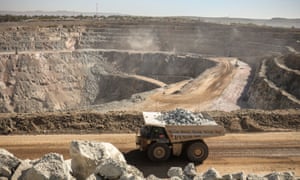
Goldmining in Tanzania.
Goldmining in Tanzania. 
The Committee to Protect Journalists (CPJ), which produced the tally, is investigating a further 16 deaths over the last decade. It says the number of murders may be as high as 29, making this field of journalism one of the most dangerous after war reporting.
On every continent, reporters have been attacked for investigating concerns about abuses related to the impact of corporate and political interests scrambling to extract wealth from the earth’s remaining natural resources.
These resources end up in all manner of products – from mobile phones to pots and pans – with consumers largely unaware of the stories behind them.

Read the story from The Guardian by Juliette Garside and Jonathon Watts - “Environment reporters facing harassment and murder, study finds.” 

24 May, 2018

The farmer wants a hive: inside the world of renting bees

Almonds, blueberries, apples, melons – all of these fruits, and many more, rely on insect pollination. Some crops rely more on pollinators than others. Insect pollination isn’t just about the number of fruits produced – it can also improve the quality of the yield. For example, self-pollinated flowers may produce a fruit, but it might be very small or misshapen.
A bee visits an almond flower – an essential process for almond farmers. 
So how do farmers make sure their crops will produce enough fruit to make a profit? Crops in most parts of Australia have one main blooming period, usually in spring or early summer. The window for pollination usually lasts two to four weeks, depending on the crop. During that time, insects need to be flying around visiting flowers to feed on pollen and nectar to ensure that pollination happens.

To optimise yields, most growers rent European honeybee hives during crop flowering season. Honeybees were first introduced to Australia from Europe in the early 1800s. Today, the beekeeping industry includes around 600,000 managed hives and is worth around A$100 million to Australia’s economy. But it’s not just about honey and beeswax products.


Read the story from The Conversation by a research fellow from the University of New England, Manu Saunders - “The farmer wants a hive: inside the world of renting bees.”

01 April, 2018

Frogs show signs of immunity to chytrid fungus pandemic that has wiped out about 200 species

A disease caused by a highly contagious fungus has wiped out as many as 200 species of frog worldwide since the 1970s, and pushed many more to the brink of extinction.
The Panamanian golden frog is presumed to be extinct in the wild.
But researchers now believe that some frogs may be developing a resistance to the deadly chytrid fungus.

When chytridiomycosis wiped through a biodiversity hotspot called El Cope in Panama in 2004, scientists said the spread was so rapid that, in places, dead frogs littered the forest floor.

In the study published today in Science, researchers have documented the recovery of nine frog species in three regions of Panama, including El Cope, and have observed infected frogs showing no ill effects from the fungus.