Showing posts with label killed. Show all posts

06 January, 2020

Omnicide: Who is responsible for the gravest of all crimes?

As the full extent of the devastation of the Holocaust became apparent, a Polish Jew whose entire family had been killed, Raphael Lemkin, came to realise that there was no word for the distinctive crime that had been committed: the murder of a people. His life work became finding a word to name the crime and then convincing the world to use it and condemn it: genocide. Today, not only has genocide become a dreadful part of our lexicon. We recognise it as perhaps the gravest of all crimes.
Image result for Omnicide: Who is responsible for the gravest of all crimes?
All of us have conspired to create conditions in which
 this mass killing of humans, animals, trees, insects fungi,
ecosystems, forest, rivers - this 'omicide'.
During these first days of the third decade of the twenty-first century, as we watch humans, animals, trees, insects, fungi, ecosystems, forests, rivers (and on and on) being killed, we find ourselves without a word to name what is happening. True, in recent years, environmentalists have coined the term ecocide, the killing of ecosystems — but this is something more. This is the killing of everything. Omnicide.

Read the story from ABC Religion and Ethics by Danielle Celermajer - “Omnicide: Who is responsible for the gravest of all crimes?” 

10 August, 2019

Typhoon Lekima kills at least 13, displaces more than 1 million in China.

Thirteen people have been killed and 16 are missing in eastern China after a major typhoon triggered a landslide and caused widespread transport disruptions and the evacuation of more than 1 million people, state broadcaster CCTV reported.
NASA satellite data shows swirling white typhoons Lekima and Krosa about 1,500km apart, eye-to-eye, over the West Pacific
Typhoons Lekima and Krosa shown about 1,500km
apart, eye-to-eye, over the West Pacific on Thursday.
Typhoon Lekima made landfall early on Saturday in the eastern province of Zhejiang with maximum winds of 187 kilometres per hour, although it had weakened from its earlier designation as a "super" typhoon, the official Xinhua news agency reported.
Thousands of flights were cancelled in eastern China, according to the country's aviation regulator, with most flights into and out of Shanghai's two major airports cancelled on Saturday afternoon, their websites showed.

18 June, 2019

Environment reporters facing harassment and murder, study finds

Thirteen journalists who were investigating damage to the environment have been killed in recent years and many more are suffering violence, harassment, intimidation and lawsuits, according to a study.
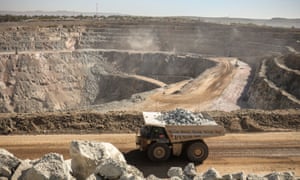
Goldmining in Tanzania.
Goldmining in Tanzania. 
The Committee to Protect Journalists (CPJ), which produced the tally, is investigating a further 16 deaths over the last decade. It says the number of murders may be as high as 29, making this field of journalism one of the most dangerous after war reporting.
On every continent, reporters have been attacked for investigating concerns about abuses related to the impact of corporate and political interests scrambling to extract wealth from the earth’s remaining natural resources.
These resources end up in all manner of products – from mobile phones to pots and pans – with consumers largely unaware of the stories behind them.

Read the story from The Guardian by Juliette Garside and Jonathon Watts - “Environment reporters facing harassment and murder, study finds.” 

29 January, 2019

More than 2,000 flying foxes die from heat stress in eastern Victoria

Heat stress has killed almost a third of an eastern Victorian town's native flying fox population, after extreme weather on Friday.
One of the dead grey-headed flying foxes which
perished in the extreme heat last week.
Victoria's Department of Environment, Land, Water and Planning (DELWP) declared a natural emergency on Friday after officers found dead grey-headed flying foxes near Bairnsdale.

On Friday temperatures soared to almost 46 degrees Celsius in East Gippsland, about 300 kilometres east of Melbourne, accompanied by strong winds.

The department temporarily closed the Mitchell River walking track near nesting areas of the animals at Bairnsdale, to try to protect the flying foxes.

Read the story from The Age by Emma Field and Beth Gibson - “More than 2,000 flying foxes die from heat stress in eastern Victoria.”

07 January, 2019

Hundreds of thousands of native fish dead in second Murray-Darling incident

Hundreds of thousands of fish have been killed along a stretch of the Lower Darling River in New South Wales in a second major incident which has led some experts to fear whole populations of local native fish have been wiped out.
 Photos posted on social media of the fish kill at Menindee on the Darling River. 
Residents near the Menindee Lakes are reporting what is the second major fish kill along a 20km stretch of water near Weir 32.

An incident before Christmas saw an estimated 10,000 fish die.

Locals have been posting photos of dying fish washed up along the shores of the lakes which are about 100km east of Broken Hill.

And local fish experts are saying that it could all but wipe out the populations of Murray cod and other native fish, raising serious questions about the way WaterNSW is managing the lakes system.


Read the story from The Guardian by Anne Davies - “Hundreds of thousands of native fish dead in second Murray-Darling incident.”

06 September, 2018

Devastation as typhoon Jebi's toll rises

Tokyo: At least 11 people have been killed and about 600 injured as Typhoon Jebi ripped through Japan, the most powerful storm to hit the country in 25 years.
Overturned cars are seen on street following
powerful typhoon Jebi in Osaka, western Japan.
The deaths included a man in his 70s who was blown to the ground from his apartment in Osaka prefecture. Police said five others died elsewhere in the prefecture after being hit by flying objects or falling from their apartments.

In nearby Shiga prefecture, a 71-year-old man died when a storage building collapsed on him, and a man in his 70s died after falling from a roof in Mie, officials said.


Read the story from today’s Age - “Devastation as typhoon Jebi's toll rises.”

06 August, 2018

As wildfires rage, California frets over a future of greater perils and higher costs

REDDING, Calif. — The wildfire here that has burned with speed and efficiency through neighborhoods, jumped the wide Sacramento River and killed a half-dozen residents and firefighters, has turned yet another place into a harbinger of what the future holds for this state.


The neighborhoods along the Trinity Highway were tucked among Douglas firs, oaks and eucalyptus, among the nearly 2 million homes statewide that — after years of permissive development in California — sit amid lovely and hazardous tinder.

Now some of them are ashes, only brick chimneys rising from charred foundations. The Carr Fire has burned more than 1,000 houses to the ground.


Read the story by Scott Wilson from The Washington Post - “As wildfires rage, California frets over a future of greater perils and higher costs.”

27 July, 2018

Guilt-free solution to plastics problem is hard to find

If the grisly images of marine life maimed and killed by waste plastics aren’t enough to get our attention, new Australian research linking plastics to smaller penises probably is. As Fairfax Media  reported on Thursday, two University of Melbourne researchers have concluded that exposure to the chemicals in plastics is "the No. 1 reproductive issue for men”.
McDonald's will ditch plastic straws.
It is some of the same chemical additives that make plastics so durable and versatile that are in the spotlight, including BPA (Bisphenol A) and phthalates. These endocrine disruptors can mimic the body’s natural hormones and have been linked to various health issues including infertility. In 2014, a Choice investigation found these additives can leach into food via plastics packaging.


Read the opinion piece in today’s Age by Louise Wiliams - “Guilt-free solution to plastics problem is hard to find.”

24 July, 2018

At least 20 dead in Greece as wildfires rage out of control

At least 20 people have been killed and more than 100 injured as two forest fires rage out of control near the Greek capital of Athens.
A house in Kineta near Athens is engulfed by flames.
Authorities urged people to abandon their homes on Monday after high winds whipped up the worst fires for more than a decade in two areas either side of the capital, destroying properties and closing the main motorway west to Corinth.

The majority of the victims died in their homes or their cars in Mati, a holiday resort 29km (18 miles) north-east of Athens that was devastated by a fast-moving blaze that started at around 5pm local time, government spokesman Dimitris Tzanakopoulos said early on Tuesday.

He said 88 adults and 16 children were injured, 11 of them seriously. One of the youngest victims was thought to be a six-month-old baby who died of smoke inhalation.


Read the story from The Guardian - “At least 20 dead in Greece as wildfires rage out of control.”

21 March, 2018

Who’s to blame when driverless cars have an accident?

The news that an Uber self-driving vehicle has killed a pedestrian in the US has made headlines around the world.
Autonomous vehicles are information-rich platforms
thanks to the range of sensors on board that track,
monitor and measure everything.
It’s a reminder that the era of self-driving cars is fast approaching. Decades of research into advanced sensors, mapping, navigation and control methods have now come to fruition and autonomous cars are starting to hit the roads in pilot trials.

But partial or full autonomy raises the question of who is to blame in the case of an accident involving a self-driving car? In conventional (human-driven) cars, the answer is simple: the driver is responsible because they are in control. When it comes to autonomous vehicles, it isn’t so clear cut.


(We managed to resolve the legal intricacies surrounding the activities, and accidents, involving millions privately owned, individually driven cars and so a self-driving vehicle should not be too complex, just different - Robert McLean)

03 March, 2018

Beast from the East': Four dead in French avalanche as weather system causes chaos

Four skiers have been killed and another injured in an avalanche in the French Alps, as the deadly Siberian weather system nicknamed "Beast from the East" continued to cause chaos across Europe.
People were able to walk and skate on Amsterdam's Prinsengracht canal after it froze.
The group was on a ski touring expedition in an off-trail area near Entraunes, close to the Italian border in the southern Alps.

The identities of the skiers were not immediately released. Prosecutor Jean-Michel Pretre of Nice said in remarks shown on French television that they were "seniors", all with experience in backcountry skiing.

Meanwhile, the extraordinary weather system, which has now claimed more than 50 lives, continued to bring disruption to many countries across Europe.


12 February, 2018

Heatwaves send temperatures soaring in many parts of Australia, but what are they?

Heatwaves are Australia's deadliest natural disaster. They have killed more people than bushfires, cyclones and floods put together.
Because Earth is a sphere, there is proportionally more energy near the equator.
The Bureau of Meteorology defines them as "three days or more of high maximum and minimum temperatures that is unusual for that location”.

During the extreme heatwave that hit south east Australia in 2009, 374 people died in Victoria and evidence exists for up to 500 heatwave-related deaths all together.

Events like 2009 are rare — the last comparable event in south east Australia occurred in 1939.
But it doesn't have to be a once in a generation event to put people at risk.

So what are heatwaves exactly, and why do they happen?


14 October, 2017

Hundreds missing, dozens dead in California wildfires

Sonoma, California: Firefighters have begun to gain ground against the spread of wildfires that have killed at least 31 people in northern California and left hundreds missing in the heart of the state's wine country.
Smoke blankets Santa Rosa, California.  
The infernos burning across the region are now the state's deadliest wildfires on record, their collective death toll passing the 1933 Griffith Park Fire in Los Angeles that killed 29 people.

In Santa Rosa, the hardest hit by the fires, officials said they were stunned by the scale of the destruction. An estimated 2834 homes were destroyed in the city of Santa Rosa alone, Mayor Chris Coursey said.

Flames left entire suburbs and commercial districts in ruins and even destroyed the city's newest fire station.


Read Noel Randewich’s story in today’s Melbourne Age - “Hundreds missing, dozens dead in California wildfires.”

13 October, 2017

Vietnam floods: Death toll rises to 54 as swathes of land washed away

Floods and landslides have killed at least 54 people in Vietnam and left another 39 missing since a tropical depression battered the country earlier this week, officials say.

Two soldiers walk a pig through flood water

Vietnam is prone to destructive storms and flooding due to its long coastline, killing hundreds of people in Vietnam each year.

The heavy rain in the central and northern regions has disrupted travel in some areas, limiting the rescue attempts for the missing.

The storm that hit central Vietnam on Tuesday also injured 31 people and submerged more than 30,000 houses, damaged infrastructure, crops and livestock, the Vietnam Disaster Management Authority said in a statement.

Vietnam is prone to destructive storms and flooding due to its long coastline, killing hundreds of people in Vietnam each year.

07 September, 2017

Hurricane Irma: Eight dead on island of Saint Martin as monster storm barrels towards Florida

Hurricane Irma has killed at least eight people on the island of Saint Martin and injured 23 in French Caribbean island territories as one of the most powerful Atlantic storms in a century barrels towards Florida.
The Saint Martin Airport has sustained
major damage from Hurricane Irma.
Fatalities have been reported on four different islands, with weather forecasters describing Irma as a "potentially catastrophic" category five storm, the highest US classification for hurricanes.

Authorities said at least one person also died in the north-east Caribbean island of Anguila, where 90 per cent of roads are impassable, and another person was killed in Barbuda.

The UK Government said Hurricane Irma inflicted "severe and in place critical" damage to Anguila.


10 January, 2017

21 dead after worst rain 'in 30 years' in southern Thailand


‘Thailand must prepare to handle these problems’

Thailand's flooded south is heavily
reliant on tourism and agriculture.
Twenty-one people have been killed and nearly one million people affected by floods in southern Thailand after days of rain across the country's southern neck.

The "severe flooding is because of the worst rainfall in more than 30 years", Prime Minister Prayut Chan-O-Cha told reporters.

Downpours and flash floods have also disrupted holidays on tourist islands including Samui and Phangan, disappointing tens of thousands of visitors hunting Thailand's peak season sun.

Despite the end of the monsoon season weeks ago, there were no immediate signs of respite for the flood-battered region.

07 December, 2016

Malcolm Turnbull scrambles to back away from any prospect of a carbon tax - or ETS – under Coalition

It seems federal parliament's backbenches
are now calling the shots in Canberra.
Any prospect of an emissions trading scheme or carbon tax under the Coalition has been killed, buried and cremated - again.

Under the threat of revolt on his backbench, Prime Minister Malcolm Turnbull on Wednesday spelt out repeatedly that his government would not put a price on carbon in any form before the next election.

Two days after Environment and Energy Minister Josh Frydenberg put consideration of an emissions intensity scheme on the table, Mr Turnbull said such a scheme had never been part of the Coalition review of its climate policies.

"The position is very clear, it is absolutely clear, this review is business as usual ... The one thing I want to be very clear about, we are not going to take any steps that will increase the already too high cost of energy for Australian families and businesses," Mr Turnbull said.


(Mr Turnbull, it seems is oblivious that we now live in a world that demands we consume less and so use significantly reduced amounts of energy – this is a different world than that imagined by the PM and his Coalition cohort. Rather than pursuing, almost religiously, a national agenda of jobs and growth – both equate with the voracious consumption of energy, Australia’s leaders should be working together to create a country that will function well provide broad contentment in what will most certainly by a low-energy future – Robert McLean)