Showing posts with label continued. Show all posts

04 August, 2019

‘Both sides' of the climate change debate? How bad we think it is, and how bad it really is

Over the past couple of weeks things have been happening on the climate change front but, unfortunately, little is changing in parliament, where the government’s direct action policy has continued to be an utter failure and a Queensland LNP MP suggested in his first speech in the House of Representatives that schools should teach both sides of the climate change debate in school – to prevent them being “brainwashed with extreme left or right ideologies”.
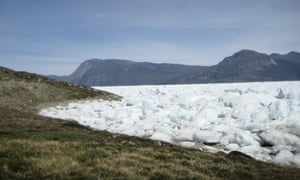
An image taken on 18 June 2019 of the Kangersuneq glacial ice fields in Kapissisillit, Greenland.
‘All efforts at the moment are assuming if
we reduce emissions by 45% by 2030 we
can limit warming to 1.5C. That might now
be rather too optimistic.’
Last week came news that BHP was going to spend US$400m over five years on a “climate investment program to develop technologies to reduce emissions from its own operations as well as those generated from the use of its resources”.

Its CEO, Andrew Mackenzie, stated in a speech in London, “Society’s combustion of fossil fuels and industrial processes like steelmaking and agriculture have released greenhouse gases at rates much faster than at any other time in the geological past.”


09 June, 2019

Carbon dioxide levels in atmosphere hit record high in May

Atmospheric carbon dioxide continued its rapid rise in 2019, with the average for May peaking at 414.7 parts per million (ppm) at NOAA’s Mauna Loa Atmospheric Baseline Observatory.
Atmospheric carbon dioxide continued its rapid rise in 2019, with the average for May peaking at 414.7 parts per million (ppm) at NOAA’s Mauna Loa Atmospheric Baseline Observatory, shown here, on Hawaii's Big Island.
Monthly CO2values at Mauna Loa first
breached the 400 ppm threshold in 2014.
The measurement is the highest seasonal peak recorded in 61 years of observations on top of Hawaii’s largest volcano and the seventh consecutive year of steep global increases in concentrations of carbon dioxide (CO2), according to data published today by NOAA and Scripps Institution of Oceanographyoffsite link. The 2019 peak value was 3.5 ppm higher than the 411.2 ppm peak in May 2018 and marks the second-highest annual jump on record.
Monthly CO2 values at Mauna Loa first breached the 400 ppm threshold in 2014.  
"It’s critically important to have these accurate, long-term measurements of CO2 in order to understand how quickly fossil fuel pollution is changing our climate,” said Pieter Tans, senior scientist with NOAA’s Global Monitoring Division. “These are measurements of the real atmosphere. They do not depend on any models, but they help us verify climate model projections, which if anything, have underestimated the rapid pace of climate change being observed."

Read the story from the National Oceanic and Atmospheric Administration (NOAA) - “Carbon dioxide levels in atmosphere hit record high in May.”

03 March, 2018

Beast from the East': Four dead in French avalanche as weather system causes chaos

Four skiers have been killed and another injured in an avalanche in the French Alps, as the deadly Siberian weather system nicknamed "Beast from the East" continued to cause chaos across Europe.
People were able to walk and skate on Amsterdam's Prinsengracht canal after it froze.
The group was on a ski touring expedition in an off-trail area near Entraunes, close to the Italian border in the southern Alps.

The identities of the skiers were not immediately released. Prosecutor Jean-Michel Pretre of Nice said in remarks shown on French television that they were "seniors", all with experience in backcountry skiing.

Meanwhile, the extraordinary weather system, which has now claimed more than 50 lives, continued to bring disruption to many countries across Europe.


12 January, 2018

Josh Frydenberg concedes Australia's carbon emissions rose in 2017

Environment and Energy Minister Josh Frydenberg concedes Australia's greenhouse gas pollution continued to soar last year, confirming that more than a decade of climate policy bickering has failed to curb harmful emissions.
Environment and Energy Minister Josh Frydenberg said the government's national energy guarantee, announced in October, ...
Environment and Energy Minister Josh Frydenberg said the
government's national energy guarantee, announced in October,
 was "the most effective way" to cut emissions. 
Official data shows Australia's annual emissions have risen for the fourth year running. They were up by 0.7 per cent in the year to June 2017, to 550 million tonnes of carbon dioxide.


Read Nicole Hasham’s story in today’s Melbourne Age - “Josh Frydenberg concedes Australia's carbon emissions rose in 2017.”