Showing posts with label weather. Show all posts

20 February, 2020

What are the full economic costs to Australia from climate change?

It certainly appears that the effects of climate change are happening faster than we thought. We have more destructive hurricanes and devasting fires burn on virtually every continent. Weather is more extreme and water supplies are shrinking in many parts of the world, with droughts threatening landscapes, farms, livelihoods and food security. We also know that sea-level rise is accelerating, threatening not only Pacific Island Nations but major cities (e.g., Miami, Singapore, Shanghai) and coastal areas throughout the world. The ocean is warming and becoming more acidic, destroying coral reefs and harming (or at least translocating) fish populations, and record temperatures are also making many parts of the planet unliveable with the number of climate refugees projected to grow rapidly.
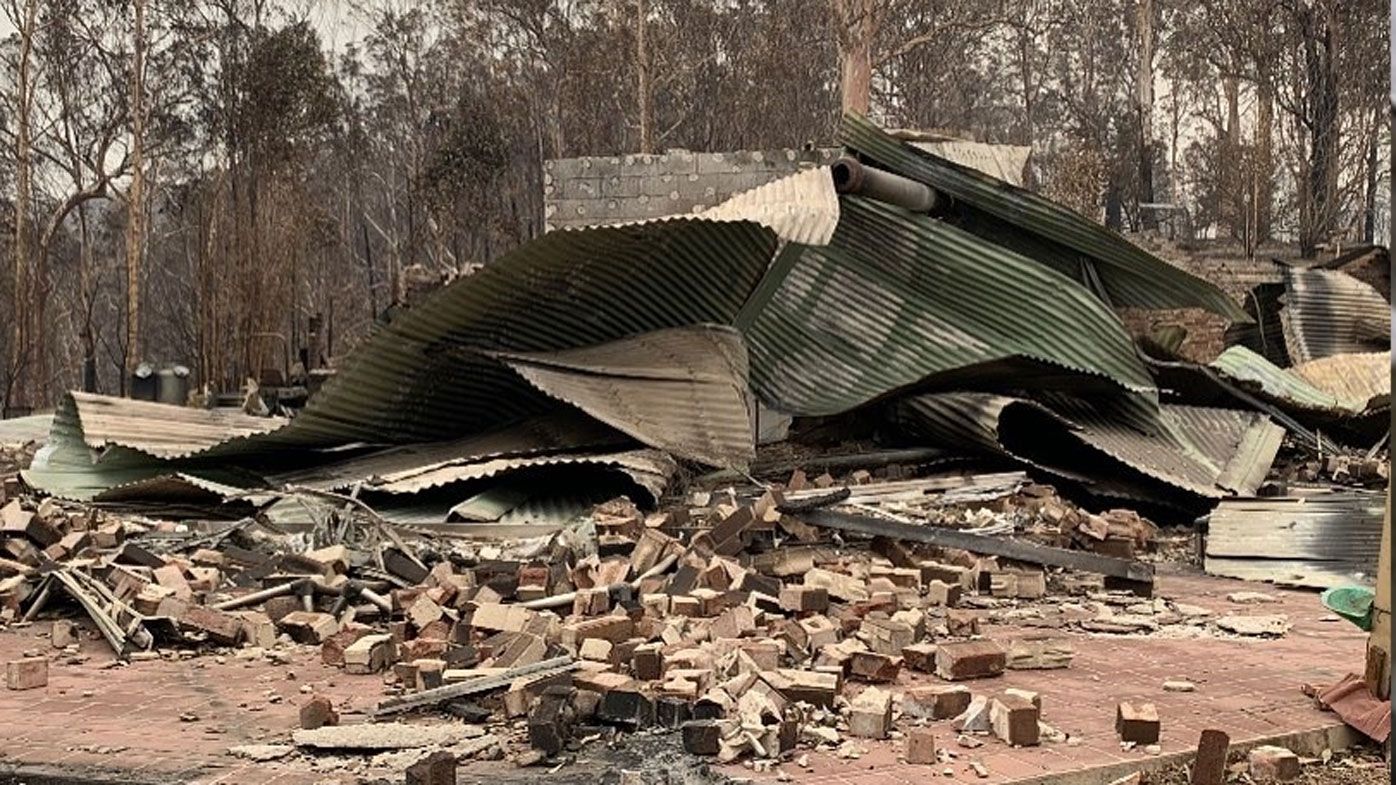
Climate change is costly and happening faster than we thought.
Do we have a full measure of the economic costs from all of these damages, going forward, globally and for Australia? In a word, no. Projections for economic damages under different global warming scenarios are difficult to come by, save for simple, highly aggregated measures drawn from basic computational models (e.g., DICE), which can often be very misleading given their extreme and implicit tendency to average effects. But we do have a start. Projects supported by Climate Council and MSSI have started to better map out damages in large-dimensional global trade and climate models, giving more finely calibrated measures of the costs of climate change.


Read the story from the Melbourne Sustainable Society Institute at the University of Melbourne by Professor Tom Kompass - “What are the full economic costs to Australia from climate change?

08 February, 2020

Climate change could lead to increase in dangerous firestorms that were once ‘rare’

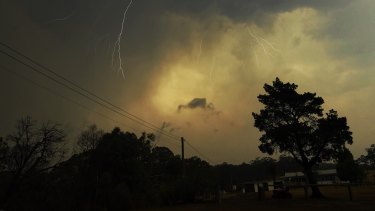
Scientists fear climate change will cause a once "rare and unique" weather event to become more common, as they race to develop predictive modelling and tools to help them better understand pyrocumulonimbus (pyroCB), commonly referred to as firestorms.
Lightning from a pyroCB storm breaks through while bushfires rage nearby.
Lightning from a pyroCB storm breaks
through while bushfires rage nearby.
Jason Sharples, a professor of bushfire dynamics at the University of NSW, records the frequency of these storms around Australia and said between 1998, when relevant records started, and 2018, there were 62 confirmed pyroCBs.
But this bushfire season has seen that figure jump.

Read the story from The Age by Laura Chung and Nick Moir - “Climate change could lead to increase in dangerous firestorms that were once ‘rare’."

04 October, 2019

Global bank urges cities to invest in new infrastructure to adapt to climate change

The impacts of climate change on weather, sea levels, food and water supplies should be seen as an investment opportunity for our cities, says global investment banking firm Goldman Sachs.
Image result for Global bank urges cities to invest in new infrastructure to adapt to climate change
Our cities need to adapt to cope with more extreme
 weather events and other impacts from climate change.
In a report out last month the bank says cities need to adapt to become more resilient to climate change and this could “drive one of the largest infrastructure build-outs in history”.
The bank says cities will be on the frontline of any need to adapt because they are home to more than half the world’s population and generate roughly 80% of global GDP.

Read the story from The Conversation by a Senior Lecturer from the Faculty of Built Environment at the UNSW, Elisa Palazzo -  “Global bank urges cities to invest in new infrastructure to adapt to climate change.”

01 June, 2019

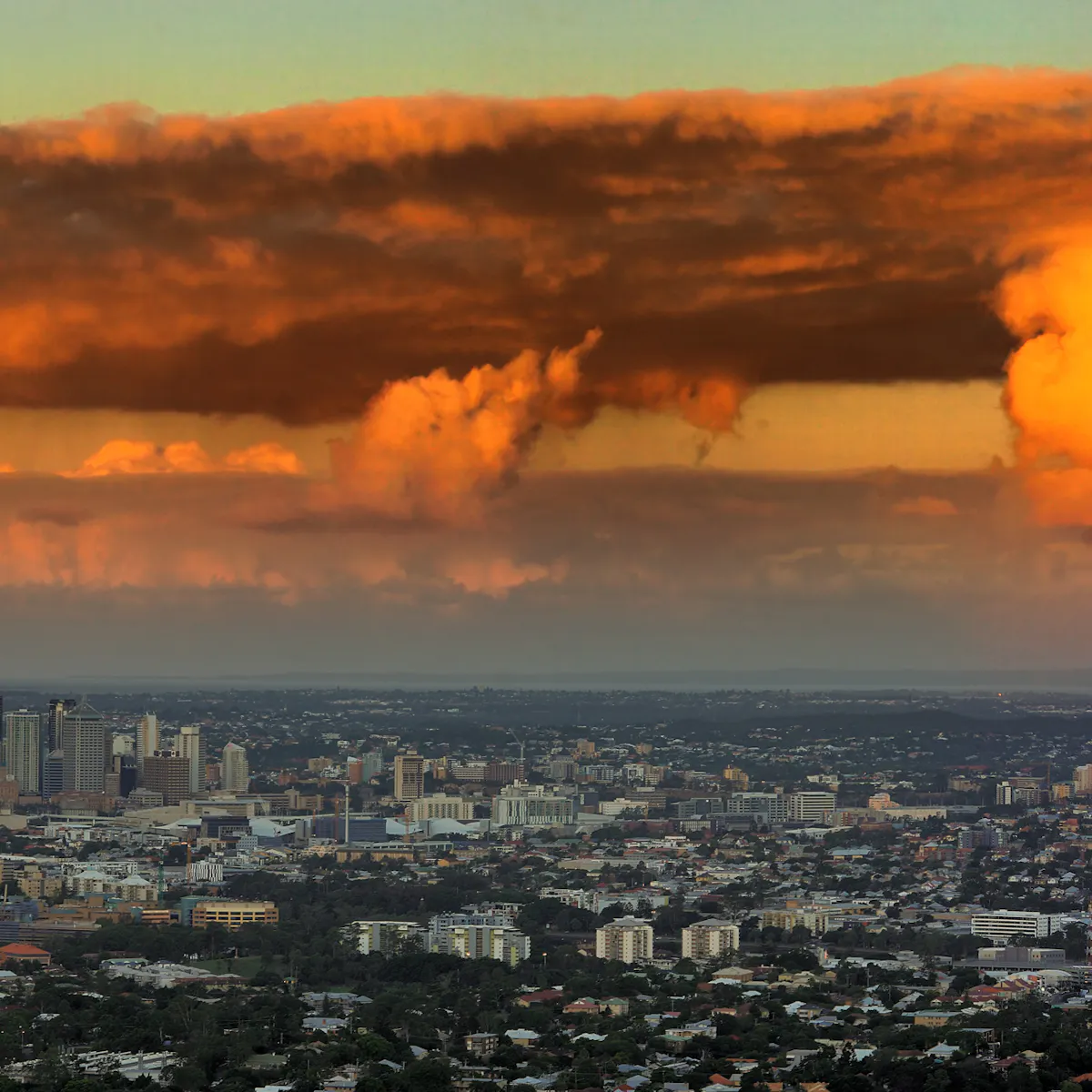
'I know I'm a weather geek, but I'd love to see that': the BoM's new three-week ‘outlooks’

Weather is always moving but every day in Australia, it comes together at a 9.45am conference.
Senior forecaster Steven McGibbony, with a "spaghetti
model" of high and low-pressure systems behind.
Having issued top temperatures for each of their states earlier in the morning, meteorologists around the country dial in for the Bureau of Meteorology's national conference to ensure every bureau starts the day reading from the same script.
In the Melbourne office where the conference is chaired, the eyes of around 50 forecasters are glued to the multi-screen display at the front of the room as the nation's head forecaster for the day begins, pointing out moving pressure systems and a large cold front near Perth. It's May, and even Western Australia isn't immune to some rain.

03 March, 2019

The Uninhabitable Earth by David Wallace-Wells review – our terrifying future

You already know it’s bad. You already know the weather has gone weird, the ice caps are melting, the insects are disappearing from the Earth. You already know that your children, and your children’s children, if they are reckless or brave enough to reproduce, face a vista of rising seas, vanishing coastal cities, storms, wildfires, biblical floods. As someone who reads the news and is sensitive to the general mood of the times, you have a general sense of what we’re looking at. But do you truly understand the scale of the tribulations we face? David Wallace-Wells, author of the distressingly titled The Uninhabitable Earth, is here to tell you that you do not. “It is,” as he puts it in the book’s first line, “worse, much worse, than you think.”
Burning issue … Eagle Creek ablaze near Beacon Rock golf
course in North Bonneville, Washington, in September 2017.
The book expands on a viral article, also titled The Uninhabitable Earth, which Wallace-Wells published in New York in the summer of 2017, and which frightened the life out of everyone who read it. Writing at length, he is even more remorseless in his delineation of what the not nearly distant enough future probably holds for us. The book’s longest section, entitled Elements of Chaos, is composed of 12 short and brutal chapters, each of which foretells a specific dimension of our forecast doom, and whose titles alone – Heat Death; Dying Oceans; Unbreathable Air; Plagues of Warming – are enough to induce an honest-to-God panic attack.

Wallace-Wells identifies a tendency, even among those of us who think we are already sufficiently terrified of the future, to be strangely complacent about the figures. Yes, we know that climate change will cause sea level rises of between four to eight feet before the end of this century, but then again what’s a few feet if you happen to live a couple of miles inland? “That so many feel already acclimated to the prospect of a near-future world with dramatically higher oceans,” he writes, “should be as dispiriting and disconcerting as if we’d already come to accept the inevitability of extended nuclear war – because that is the scale of devastation the rising oceans will bring.”


Read the book review from The Guardian by Mark O’Connell - “The Uninhabitable Earth by David Wallace-Wells review – our terrifying future.”

22 April, 2018

Slipping in climate change amid the daily weather on TV in Colorado

Television meteorologist Mike Nelson has two-and-a-half minutes each night to recap the day’s weather and inform viewers of Denver’s KMGH-TV what to expect in the hours and days ahead. Rarely does he have time to mention the changing climate.

Mike Nelson.
Nelson, though, does speak up when he can. “It’s not just about polar bears. It’s about our children and our grandchildren,” he said on a recent Saturday morning in downtown Denver as he showed a picture of his own grandchildren. “This is really important stuff.”

A handful of representatives from TV stations in Denver, Colorado Springs and Grand Junction were at the session held on the Auraria campus. Nelson, chief meteorologist at Channel 7, had helped organize the program with the Natonal Weather Service, bringing in two climate scientist to talk about how greenhouse gases are warming the planet and changing the climate.

Read the story by Allen Best from Mountain Town News - “Slipping in climate change amid the daily weather on TV in Colorado.”

09 April, 2018

Too wet? Too cold? Too hot? This is how weather affects the trips we make

What sorts of weather lead us to change our daily travel behaviour? How do we respond to scorching heatwaves, sapping humidity, snow and frost, strong winds, or torrential rain? International research shows weather is important in shaping our everyday movements.
Very wet weather is likely to persuade many regular
cyclists and walkers to travel instead by car if
 they can. This is Bondi Junction after a storm hit Sydney.
The research evidence suggests that bad weather can lead to planned journeys being rescheduled, rerouted or cancelled. The consequences of these shifts in daily travel choices can include increases in traffic congestion and accidents, travel delays, mental stress, environmental pollution and general travel dissatisfaction.

Because people who travel by bike or walking are most likely to change travel plans in bad weather, some cities are responding with innovations such as heated bicycle lanes and sheltered walkways.


03 March, 2018

Beast from the East': Four dead in French avalanche as weather system causes chaos

Four skiers have been killed and another injured in an avalanche in the French Alps, as the deadly Siberian weather system nicknamed "Beast from the East" continued to cause chaos across Europe.
People were able to walk and skate on Amsterdam's Prinsengracht canal after it froze.
The group was on a ski touring expedition in an off-trail area near Entraunes, close to the Italian border in the southern Alps.

The identities of the skiers were not immediately released. Prosecutor Jean-Michel Pretre of Nice said in remarks shown on French television that they were "seniors", all with experience in backcountry skiing.

Meanwhile, the extraordinary weather system, which has now claimed more than 50 lives, continued to bring disruption to many countries across Europe.


27 February, 2018

‘Beast from the East' sweeps across Europe as Arctic warming brings freak weather

A freak warming around the North Pole is sending a blast of Arctic cold over Europe in a sign of "wacky" weather that may happen more often with man-made global warming.
Global warming could be causing the Arctic to warm
and cold blasts to be pushed over Europe.
Scientists say the northern tip of Greenland has had a record-smashing 61 hours of temperatures above freezing so far this year, linked to a rare retreat of sea ice in the Arctic winter darkness.

Arctic Ocean sea ice is at a record low for late February, at 14.1 million square kilometres. That is about a million square kilometres less than normal, or roughly the size of Egypt.

Around the entire Arctic region, temperatures are now about 20C above normal, at minus 8C.


24 February, 2018

Queensland weather: Heavy rain eases across south-east, disaster package announced

After more than 24 hours of heavy rain across south-east Queensland, the Bureau of Meteorology (BOM) has cancelled all severe weather warnings for the region, indicating the worst is over for the time being.
A 4WD crosses the flooded Clagiraba Creek
causeway west of Nerang on Saturday.
But the BOM has warned the situation is being closely monitored and that further severe weather warnings would be issued if necessary.

Some drenched Brisbane suburbs exceeded the average monthly rainfall for February in just 24 hours, BOM forecaster David Crock said.


19 February, 2018

Climate change will accelerate extreme weather events in the coming years

Humanity is now facing an ever-increasing threat of unpredictable and extreme weather, climate scientists warn.
This Jan. 4 Geocolor image from the National
Oceanic and Atmospheric Administration
(NOAA) GOES-16 satellite captured the record
"bomb cyclone" nor’easter that battered the
 East Coast of the United States in January 2018.
While global warming is creating more powerful storms and record-breaking, drought-driven wildfires, it would be a mistake to view these events as the “new normal,” they say. The planet has not reached a new climate stability, so the years ahead could be quite a lot worse.

“‘New normal’ implies that we reach some new sort of equilibrium and that's where things stay, whereas what we're looking at is an ever-shifting baseline,” says Penn State professor and atmospheric scientist Michael Mann.


17 February, 2018

Climate change to bring North Texas longer droughts, heavy rains, 120-degree temps within 25 years

The United States has just come off a record year for weather and climate disasters and, by most accounts, it's only going to get worse.
Climate change will make such sights more common in Texas.
Last year hurricanes Harvey, Irma and Maria; the wildfires and floods in California; and tornado outbreaks in the Midwest and the South delivered $306.2 billion in damages, more than any year in history when adjusted for inflation.

Texas is particularly vulnerable to a changing climate. It has had more costly weather-related disasters than any other state, and those events will happen more often as air and ocean temperatures climb, scientists say.


25 January, 2018

Don’t shoot the climate change messenger.

Today, when our weather forecasters tell us a heatwave is coming, we can be quietly confident of the time it will arrive and the temperatures that will be reached. When western Sydney broke records on January 7, hitting 47 degrees, the Bureau of Meteorology had warned us, enabling individuals and organisations to prepare. While analysis of this event is ongoing, researchers at the Australian Research Council's Centre of Excellence on Climate Extremes found a similar Sydney heatwave last year was twice as likely due to the climatic impacts of humans.
Once thriving wetlands close to the Murray River at Mildura in north-west Victoria.
The role of forecasting is to use the best information available at the time to predict conditions, and give us time to prepare, adjust or change course. When we're talking about tomorrow's, or even next week's, weather everyone plans accordingly, without a second thought. Using seasonal forecasts, based on predictions of the El Nino Southern Oscillation (ENSO), industries and governments routinely respond months in advance to forecast patterns of rainfall and wind.


Read the story from The Sydney Morning Herald - “Don’t shoot the climate change messenger.

31 October, 2017

How Climate Change Fueled The Far-Right’s Rise And Why We Need To Stop Both

The notion of changing climates influencing politics in nations that have barely felt the effects of it and have the advanced technology and basic infrastructure to weather its worst effects may seem absurd at first glance. In every discussion of rising global temperatures, we’re talking about diseases and food shortages in the developing world, or political unrest in fragile and failing states while wealthy nations adapt and overcome, and isn’t that what has been happening? Yes, it has. All those assumptions are right. But because those assumptions are correct, the West is being indirectly, but very deeply affected by the effects of all this turmoil, and things are bound to get worse unless we do something serious about climate change.
Newly arrived Somali refugees wait outside a UNHCR
processing center at the Ifo refugee camp outside
Dadaab, eastern Kenya, 100 kilometers (62 miles)
from the Somali border. Human-induced climate
 change contributed to low rain levels in East Africa in
2011, making global warming one of the causes of
Somalia’s famine and the tens of thousands of
deaths that followed, a new study has found. 
You see, borders are not supernatural boundaries that allow nations to live in a vacuum and pretend that what happens in another country will always stay there. A painful transition to a post-industrial knowledge economy marked by wild inequalities and disparity in opportunities taking place in the West has created a lot of toxic strain between rural and exurban communities and their urban counterparts in the developed world. It’s arguably the defining struggle of these societies right now. Tens of millions began to feel as if the world was leaving them behind and changing into something they didn’t understand or really want to learn much about because it was too new, too scary.


06 October, 2017

Finding hope amid the hopeless doom of climate change

After another frigid Canberra winter, I've welcomed the warmer weather with joy. Yet it's increasingly too warm to leave a lasting smile. We are told to brace for punishing summers.

In a new book, Blueprints for a Post-Anthropocene Greenhouse Earth, the Australian National University's Dr Andrew Glikson says there's no turning back the greenhouse clock. He foresees mass extinctions and a breakdown of civilisation. In his book, Defiant Earth, Clive Hamilton of the Canberra-based Centre for Applied Philosophy and Public Ethics foresees something even worse: the possibility of our own extinction by an untameable Earth.

Hamilton writes it will probably be hundreds of thousands of years before most of the large reserves of carbon released during the human age can be rendered immobile again. People have rivalled the great forces of nature so much that we have changed the functions of the planet for an era. The Arctic is vanishing as is the Greenland ice sheet. This won't be reversed for tens of thousand of years.

While drifting into unparalleled catastrophe, I want to cling to hope, be slow to admit that all the facts are in, that all the doors have been tried and all is defeated. But how?


Read the comment by Toni Hassan in today’s Melbourne Age - “Finding hope amid the hopeless doom of climate change.”

01 October, 2017

Costs of Climate Change: Early Estimate for Hurricanes, Fires Reaches $300 Billion

The devastation from hurricanes Harvey, Irma and Maria—plus dozens of wildfires that raged across the West in early August—could result in the costliest string of weather events in U.S. history, according to a new report.

Hurricanes Harvey, Irma and Maria hit U.S. communities and farms
 as powerful storms within weeks of one another, causing
 extensive damage to public and private property.
Over the course of a few weeks, the hurricanes and wildfires left a trail of damage that could add up to nearly $300 billion, according to early estimates from the authors of "The Economic Case for Climate Action in the United States," a report released on Wednesday by the nonprofit Universal Ecological Fund. If they're right, the cost of the damage would be equivalent to nearly half the president's proposed 2018 budget for the Department of Defense.

"The evidence is undeniable. These recent extreme weather events are a continuation of a three-decades trend of increasing numbers, intensities and costs of severe storms, hurricanes, flooding, droughts and wildfires," said report co-author Robert Watson, a former chair of the Intergovernmental Panel on Climate Change. "Simply, the more fossil fuels we burn, the faster the climate continues to change and cost. Thus, transitioning to a low-carbon economy is essential for economic growth and is cheaper than the gigantic costs of inaction.”

Adding up the economic losses from extreme weather events, more frequent weather events and the health impacts from air pollution, the report found that over the last decade, the United States has lost an average of $240 billion each year. And that's projected to go up.

25 September, 2017

This Girl's Letter To Trump Telling Him Climate Change Is Real Is So Poignant

The Earth is warming up and the weather is changing. Say what you will, but this year has shown that global warming and climate change can't be stopped if world leaders and citizens keep ignoring it. It's frustrating to know that people — especially those with power to make actual change — refuse to believe science when so many people are asking them to listen, and that includes kids. Although President Donald Trump won't listen to it, this girl's letter to Trump telling him climate change is real could have the power to make him and other people want to listen.

The girl's letter and Donald Trump.
The letter, written by an 11-year-old Austrian girl, was reportedly handed to Trump during the United Nations General Assembly last week — yes the same United Nations General Assembly where Trump taunted North Korea and called Kim Jung Un "rocket man." Instead of speaking to the world in a way that, according to CNN, "no American President" has ever done, maybe Trump could have paid attention to the letter gifted to him by Austrian President Alexander Van der Bellen, according to NDTV.


24 September, 2017

Abrupt Climate Change: In Hurricane Harvey, Texans Reap What They Sow.

After 25 years of writing regarding looming abrupt climate change and biosphere collapse, nonetheless I find no succor that my predictions have come true with Hurricane Harvey. Firstly, my heart-felt sympathy goes out to the hardy Texans who continue to weather nature’s wrath on the Gulf Coast. I have had the fortune to spend some time in Port Aransas and Rockport areas visiting family and it is a beautiful spot full of warm, generous people.

“Hurricane Harvey is abrupt climate change. And it shows collapse of the atmosphere and ecosystems that threatens to destroy the biosphere and end being… Texas’ war against science and the natural world must draw to an end. Like waking up after a long drinking binge, it is time for Texans to sober up and accept their living large – as if the land, water, and air have no value – has brought them to the edge of utter ruin.” Dr. Glen Barry

However, let there be no mistake (now comes the “tough love” part). Hurricane Harvey is a man-made disaster that has directly resulted from Texans’ oil addiction, anti-science denial, disdain for common sense regulations, and super-sized lifestyles.

So where did all that rain come from anyway? It’s global warming stupid.


The basics of climate science have been known for 100 years. Simply, what has occurred in the Gulf of Mexico with Hurricane Harvey is all about heat, which is growing because of fossil fuel emissions (the greenhouse gases that are released trap heat), including by Texans. Since 1970 the average temperature in the South has risen 3.3° F. Galveston Texas set a shocking 33 record temperatures since Nov. 1st of last year. Across Texas temperatures have been averaging 10° F warmer than usual.

Read the EcoInternet story by Dr Glen Barry - “Abrupt Climate Change: In Hurricane Harvey, Texans Reap What They Sow.

01 September, 2017

Hurricane Harvey: Connecting the dots between climate change and more extreme events

The science of attributing extreme weather to climate change is complicated and developing every day. 

Here’s a guide of what we know about the links between climate change and Harvey to help unpack the elements that contributed to this historic and unfolding storm. 


05 January, 2017

Record-breaking extreme weather in Australia in 2016 devastates ecosystems

 Australia’s extreme weather in 2016 was driven
 by humankind’s burning of fossil fuels as
well as a strong El Niño. 
Australia’s weather was extreme in 2016, driven by humankind’s burning of fossil fuels as well as a strong El Niño, according to the Bureau of Meteorology’s annual climate statement.

That extreme weather led to devastated ecosystems both on land and in the sea, with unprecedented bushfires in regions that don’t usually burn, the worst coral bleaching on record, and has been attributed as the cause of damage to vast tracts of crucial kelp forests, oyster farms and salmon stocks across southern Australia.

The statement, released on Thursday, said the country as a whole had its fourth-warmest year on record, but locally, Sydney and Darwin broke records for both their hottest maximum temperatures and hottest minimum temperatures.

Hobart had its warmest night on record in 2016 and both Hobart and Brisbane had records for their hottest annual mean temperature fall as well. The hot and dry start to the year sparked bushfires in Victoria, Tasmania and Western Australia.

Read Michael Slezak’s story in The Guardian - “Record-breaking extreme weather in Australia in 2016 devastates ecosystems.”