Showing posts with label events. Show all posts

29 November, 2019

Tipping Points That Could Unleash a Planetary Emergency Are Now Active, Scientists Warn

Several active 'tipping points' of irreversible change in the world's climate system threaten to unleash a global cascade of events that amounts to a planetary emergency, scientists warn.
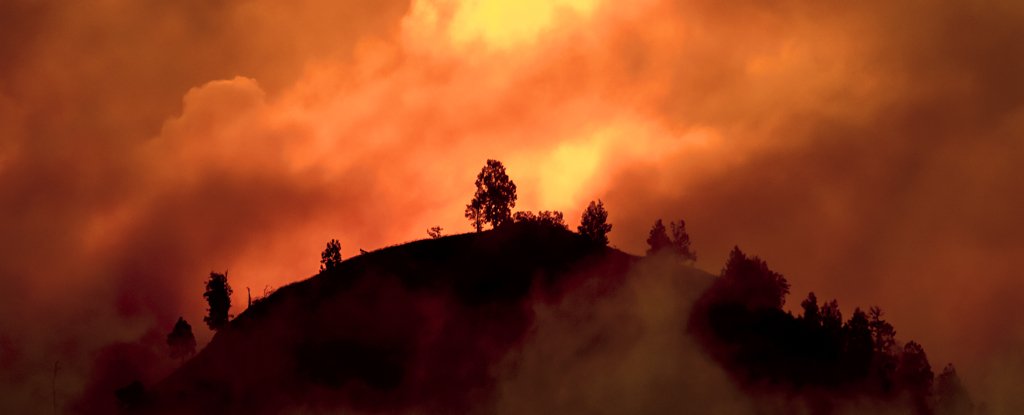
main article image

The concept of tipping points was introduced by the Intergovernmental Panel on Climate Change (IPCC) just over 20 years ago, but researchers now warn that already nine of these vulnerable environmental thresholds are in very real danger of being breached – and much sooner than was ever anticipated.
"A decade ago we identified a suite of potential tipping points in the Earth system, now we see evidence that over half of them have been activated," says climate system researcher Tim Lenton from the University of Exeter in the UK.
"The growing threat of rapid, irreversible changes means it is no longer responsible to wait and see. The situation is urgent and we need an emergency response."
In a new research comment, Lenton and an international team of climate scientists warn that these tipping points – which many assumed were low-probability risks that might only be dangerous if global temperatures rose 5°C above pre-industrial levels – are in fact becoming exceeded at increases of 1–2°C.

21 March, 2018

Turnbull knows better than to deny fire weather link to climate change

Raising the issue of the role of climate change in extreme weather events is always a delicate matter for families battling grief over lost homes and emergency service teams managing the aftermath.
Malcolm Turnbull visit burned out homes in Tathra on Monday.
But that doesn't mean the rest of us can't have a discussion about the issues. If not now, when?

Malcolm Turnbull echoed the comments of his deposed predecessor Tony Abbott when he visited Tathra, the NSW south coastal town hit with huge fires amid record-breaking March heat.

Abbott in 2013 declared in the wake of Blue Mountain bushfires that destroyed 200 homes that "these fires are certainly not a function of climate change, they're a function of life in Australia”.

Unlike Abbott, though, Turnbull is not a denier of climate change, having taken personal efforts to school himself in the issue with scientists from the University of NSW well before becoming Prime Minister.


Read the comment by Peter Hannam from The Age - “Turnbull knows better than to deny fire weather link to climate change.”

01 October, 2017

Costs of Climate Change: Early Estimate for Hurricanes, Fires Reaches $300 Billion

The devastation from hurricanes Harvey, Irma and Maria—plus dozens of wildfires that raged across the West in early August—could result in the costliest string of weather events in U.S. history, according to a new report.

Hurricanes Harvey, Irma and Maria hit U.S. communities and farms
 as powerful storms within weeks of one another, causing
 extensive damage to public and private property.
Over the course of a few weeks, the hurricanes and wildfires left a trail of damage that could add up to nearly $300 billion, according to early estimates from the authors of "The Economic Case for Climate Action in the United States," a report released on Wednesday by the nonprofit Universal Ecological Fund. If they're right, the cost of the damage would be equivalent to nearly half the president's proposed 2018 budget for the Department of Defense.

"The evidence is undeniable. These recent extreme weather events are a continuation of a three-decades trend of increasing numbers, intensities and costs of severe storms, hurricanes, flooding, droughts and wildfires," said report co-author Robert Watson, a former chair of the Intergovernmental Panel on Climate Change. "Simply, the more fossil fuels we burn, the faster the climate continues to change and cost. Thus, transitioning to a low-carbon economy is essential for economic growth and is cheaper than the gigantic costs of inaction.”

Adding up the economic losses from extreme weather events, more frequent weather events and the health impacts from air pollution, the report found that over the last decade, the United States has lost an average of $240 billion each year. And that's projected to go up.