Showing posts with label sea levels. Show all posts

04 October, 2019

Global bank urges cities to invest in new infrastructure to adapt to climate change

The impacts of climate change on weather, sea levels, food and water supplies should be seen as an investment opportunity for our cities, says global investment banking firm Goldman Sachs.
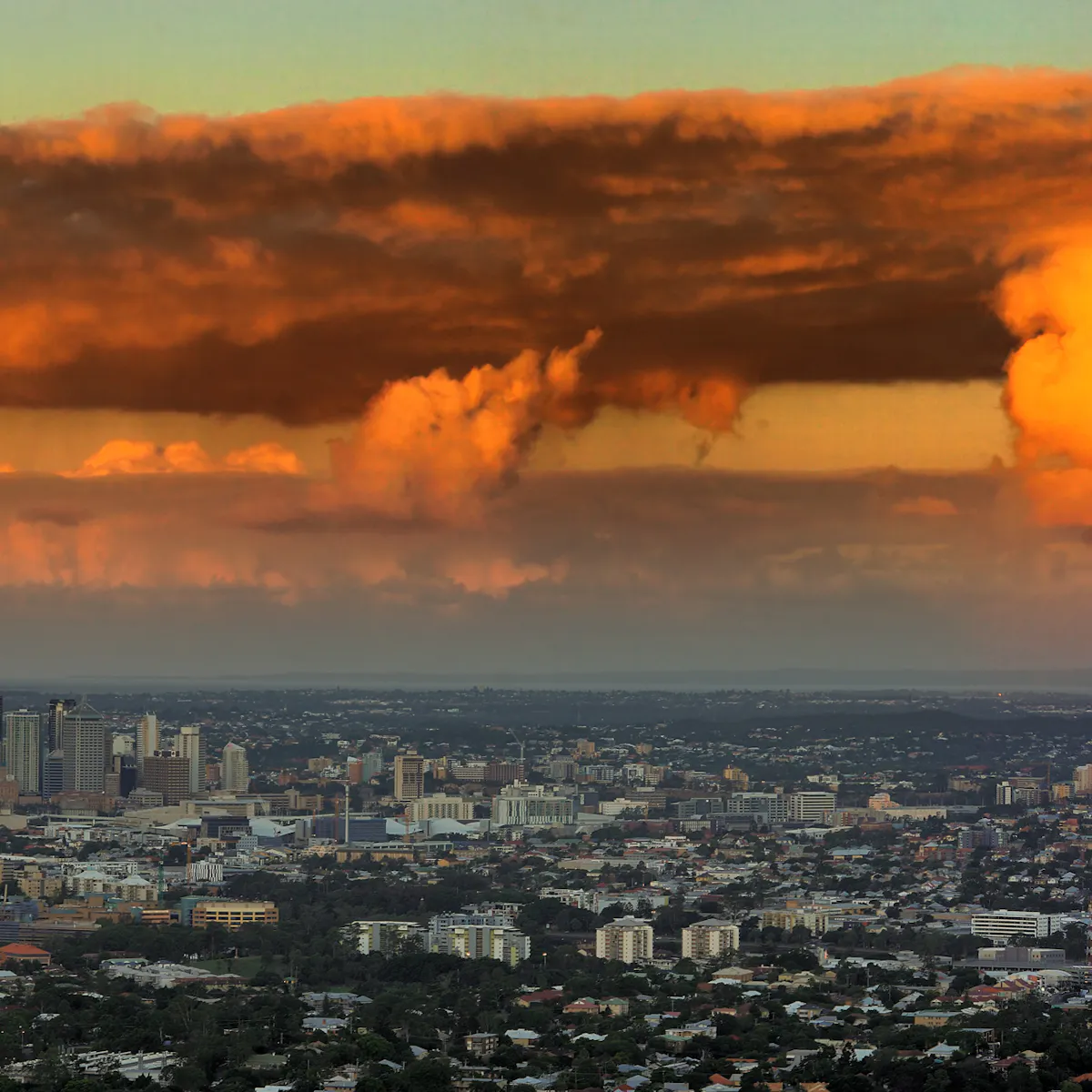
Image result for Global bank urges cities to invest in new infrastructure to adapt to climate change
Our cities need to adapt to cope with more extreme
 weather events and other impacts from climate change.
In a report out last month the bank says cities need to adapt to become more resilient to climate change and this could “drive one of the largest infrastructure build-outs in history”.
The bank says cities will be on the frontline of any need to adapt because they are home to more than half the world’s population and generate roughly 80% of global GDP.

Read the story from The Conversation by a Senior Lecturer from the Faculty of Built Environment at the UNSW, Elisa Palazzo -  “Global bank urges cities to invest in new infrastructure to adapt to climate change.”

28 January, 2019

3 Radical Steps to Prevent Capitalism and Climate Change From Killing Us All

We’re on the brink of a man-made apocalypse; here’s what we can do about it.
We’re on the brink of a man-made apocalypse; 
here’s what we can do about it.

While the sky isn’t falling (per se), global temperatures are warming and sea levels are rising — mostly likely by a few degrees and feet, respectively, according to sensible projections. Doesn’t sound like much but the likely consequences are the hallmarks of a dystopian science fiction: food and water shortages, mass-exodus from coastal cities and other vulnerable areas, airborne pandemics, infrastructure stress, and violent storm surges cascading into an acutely challenged existence to say the very least. With about 11 years of runway to stave off climate change’s worst impacts, we’re truly marching toward an existential crisis, and with each passing day of shameful inaction, the outlook grows unspeakably macabre for future generations. So… what are we going to do about it?

Answering that question first requires us to acknowledge our role in this fuckery (myself included; I’m part of the problem). Frankly, it’s our unchecked consumerism and gratuitous wanting that’s landed us in this hot mess. Simply put, there’s a lot of people on this planet, all of whom want more things — things of increasing production complexity, resource requirements and carbon footprints. And so we burn fossil fuels, cut down rainforests, farm more land, and raise livestock — activities with enormous environmental impacts — to satiate consumer choice and meet the demand for bigger, badder, faster things. This is why many climate scientists agree that one of the biggest levers for fighting climate change is educating women; their inclusion in the workforce (other than inherently being the right thing to do) leads to fewer children, fewer people needing and wanting things.


Read the story from Medium by Swannie Morgan - “3 Radical Steps to Prevent Capitalism and Climate Change From Killing Us All.”

21 September, 2018

At this rate, Earth risks sea level rise of 20 to 30 feet, historical analysis shows

Temperatures not much warmer than the planet is experiencing now were sufficient to melt a major part of the East Antarctic ice sheet in Earth’s past, scientists reported Wednesday, including during one era about 125,000 years ago when sea levels were as much as 20 to 30 feet higher than they are now.

A flotilla of tabular icebergs adrift in the Southern Ocean,
 near the outlet of the Wilkes Subglacial Basin, East Antarctica.
“It doesn’t need to be a very big warming, as long as it stays 2 degrees warmer for a sufficient time, this is the end game,” said David Wilson, a geologist at Imperial College London and one of the authors of the new research, which was published in Nature. Scientists at institutions in Australia, New Zealand, Japan and Spain also contributed to the work.

The research concerns a little-studied region called the Wilkes Subglacial Basin, which is roughly the size of California and Texas combined and contains more than 10 feet of potential sea-level rise. Fronted by three enormous glaciers named Cook, Mertz and Ninnis, the Wilkes is known to be vulnerable to fast retreat because the ice here is not standing on land and instead is rising up from a deep depression in the ocean floor.

Read the story from The Washington Post by Chris Mooney - “At this rate, Earth risks sea level rise of 20 to 30 feet, historical analysis shows.”

25 February, 2018

Sea levels could rise an extra 60cm if emission reductions are delayed until 2035, study finds

Global sea levels will continue to rise until at least 2300 regardless of how much we reduce our greenhouse gas emissions, according to new research published today.
Scientists say sea levels will continue to rise until at least 2300.
But for every five years until 2035 that we delay reaching net-zero carbon emissions, as committed to under the Paris agreement targets, sea levels will rise by about an extra 20 centimetres, the researchers found as part of the study published in Nature Communications.

They estimated average global sea levels would be between 0.7 and 1.2 metres above 2000 levels by 2300, depending on how quickly we can reduce our emissions.

The Paris agreement, to which Australia is a signatory, has a core aim of limiting global temperature rise this century to "well below" 2 degrees C above pre-industrial levels, and to pursue efforts to keep the rise below 1.5 degrees.


29 January, 2018

The land of ice embracing climate change

Greenland's massive ice cap is melting at alarming speed, raising fears of sea levels rising around the world.
A sheep farm in Greenland.
But for many of Greenland's 56,000 residents, melting ice means money.

"I'm quite optimistic," Andrias Olsen, a fleet manager with the State fishing company Royal Greenland, said.

"We're seeing some higher stocks due to climate change — at least due to warmer sea temperatures — but also due to the ice cap melting.

"A lot of nutritious water comes down the big fjord systems, which creates optimal conditions for fishery.”

Almost 80 per cent of Greenland is covered by an ice cap, meaning everyone has to make a living on the coast.


Read the ABC News story by foreign correspondent Eric Campbell - “The land of ice embracing climate change.”

12 November, 2017

The future of climate refugees

As climate change causes sea levels to rise, vulnerable populations in countries like Tuvalu, Bangladesh and Vietnam are threatened with the very real prospect of losing their homes and migrating inland.
Vunidogoloa was moved 2 km inland to escape
 the impacts associated with climate change.
In some places, like Fiji, this is happening already.

In 2014, the entire village of Vunidogoloa on Vanua Levu was forced to move to higher ground 2 kilometres inland to escape coastal erosion and regular flooding - environmental impacts that villagers and the Fiji Government attribute to climate change.


Read the Unversity of Melbourne Pursuit story - “The future of climate refugees.”

10 October, 2016

Why are we being such idiots about climate change?


Veteran environment writer John Carey looks at the reasons we don’t seem to make meaningful progress on climate change — and issues a rousing call to arms for us all to step up and play our part.

When I started covering climate change more than thirty years ago, the underlying science was already clear. Heat from the sun warms the Earth. Gases like carbon dioxide in the atmosphere then act like a snuggly blanket or greenhouse to trap much of that warmth, keeping much of the heat from radiating back out to space.

For humans, this greenhouse effect is a vital — and fortuitous — physical phenomenon. Without it, the Earth would be in a deep freeze. Life as we know it couldn’t exist. We would have no mighty civilizations, no vast fields covered with amber waves of grain. No smart phones or keeping up with the Kardashians.

But like most good things, we can have too much of this greenhouse effect. Spew extra carbon dioxide, methane and other heat-trapping gases into the atmosphere by burning fossil fuels and cutting down forests, as humans have been doing since the dawn of the Industrial Age, and it’s like pulling an extra cozy comforter over the planet. We get warmer. Ice sheets and glaciers melt. Sea levels rise. The extra energy in the atmosphere means more powerful and extreme storms, bringing tempests that wash away Vermont towns and send walls of water into subway tunnels in Manhattan. “Suddenly, climate change isn’t about the polar bears or the distant Sea levels anymore,” a Nashville, TN, flood victim told me for a story I wrote for Scientific American on the growing number of droughts, floods and other Sea levels events, “It’s about the mold on your baby’s crib.”

11 May, 2015

Most Australians blame global warming for extreme weather


G

lobal warming is responsible for weather extremes, according to most Australians.

The same research also shows that few Australians, just three per cent, say there is no such thing as climate change.

An Ipsos survey, the eighth on the subject, found most viewed climate change as behind extreme events, with similar numbers also linking the destruction of the Great Barrier Reef and rising sea levels to warming global temperatures.

An Age story - “Most Australians view climate change as already causing weather extremes: Ipsos” – discusses findings from the survey.

27 March, 2015

'Jammed' ice sheets threaten extra sea level rise


M

elting of floating ice shelves around the continent is accelerating, potentially unlocking extra sea level rise from larger ice sheets jammed behind them The Guardian reports.

Its story, “Antarctic ice shelves are melting dramatically, study finds”, says, “The ice around the edge of Antarctica is melting faster than previously thought, potentially unlocking metres of sea-level rise in the long-term, researchers have warned.

“A team of US scientists looked at 18 years’ worth of satellite data and found the floating ice shelves that skirt the continent are losing 310km3 of ice every year. One shelf lost 18% of its thickness during the period,” is continues.

14 July, 2012

Locally of little worry, but considered more broadly, it is an unimaginable disaster

Sea level rises could be greater than
anticipated.
Sea level rises seem of little consequence to people of the Goulburn Valley, but they are of vital interest in a broader sense to humanity.

A story published by ClimateSpectator tells of sea level rises beyond what was originally predicted that would “be a disaster of unimaginable proportions”.

A story headed: “Sea level risk rising?” reports that “A new analysis released Thursday in the journal Science implies that the seas could rise dramatically higher over the next few centuries than scientists previously thought – somewhere between 18-to-29 feet above current levels, rather than the 13-to-20 feet they were talking about just a few years ago.”