Showing posts with label threat. Show all posts

06 May, 2020

Covid-19 climate lessons

The novel coronavirus pandemic of 2020 has striking parallels with climate disruption. 

The threat was well known and catastrophic, even existential. History’s valuable lessons were ignored. Researchers were clear on what needed to be done, and how to respond. The UN had devoted a whole section to the issue, governments ran risk scenarios and national security analysts warned of the consequences. The developed world had the capacity to be ready. And to support less prosperous nations, or should have been.

When it became fatal, it was conceived by wealthy nations as a threat somewhere else, because they were insulated. Then there was the denial, the delay, wanting to avoid any economic dislocation. Modern society was good at research, solutions would appear, no need to panic. Humans had tamed nature.

Read the story from Climate Code Red by David Spratt and Alia Armsitead - “Covid-19 climate lessons.”

04 December, 2019

Extra pressure on energy grid as scorching summer looms

The national energy market operator has warned extreme heatwaves, a heightened bushfire risk and the deteriorating reliability of ageing coal-fired power stations will imperil the energy grid and raise the threat of blackouts this summer, especially in Victoria.
Summer is set to be hot and dry and the energy market operator says bushfires pose a significant risk to the power network.
Summer is set to be hot and dry and the energy market operator
 says bushfires pose a significant risk to the power network.
The Australian Energy Market Operator (AEMO) said the biggest risk of blackouts this summer would come from the impact of severe weather on power generation and transmission networks.

Read the story from The Age - “Extra pressure on energy grid as scorching summer looms.”

06 July, 2019

‘A messy outcome': Energy expert warns government on gas intervention

The threat of fresh political intervention in the nation's gas market has sparked a warning that the mooted changes could increase prices and worsen the market for consumers.

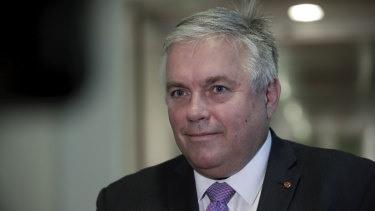
Centre Alliance Senator Rex Patrick has taken up the fight to the gas industry.
Centre Alliance Senator Rex Patrick
has taken up the fight to the gas industry.
On Thursday, Centre Alliance senator Rex Patrick extracted a commitment from the government to address domestic gas prices, in return for his support for the Coalition's tax cut package.

The details of the gas commitment though have not been revealed although Centre Alliance says it features measures to restrain rising prices including improving market transparency, tackling gas pipeline monopolies and securing surplus domestic supplies from future gas projects.

"If you put a cap on prices, inevitably that will flow through to less supply," Grattan Institute energy program director Tony Wood said.


Read the story from The Age by Josh Dye - “‘A messy outcome': Energy expert warns government on gas intervention."

09 March, 2019

Tony Abbott's Paris backflip reveals the emptiness of last year's leadership madness

The threat of an election defeat has just forced Tony Abbott to reveal the emptiness of the climate change argument that brought the government to a halt last year.
The former prime minister argued the federal government
has lost the "emissions obsession" it held under his
predecessor, Malcolm Turnbull.
Abbott did his best to wreck Malcolm Turnbull’s leadership in August by demanding Australia pull out of the Paris agreement to reduce carbon emissions. Now he changes his mind on this core argument.


Read the opinion piece from The Age David Crowe - “Tony Abbott's Paris backflip reveals the emptiness of last year's leadership madness.”

04 March, 2019

Climate change - a 'Real and present danger'

Climate change is proving a threat to our region, exposing us to increasing economic risk.


Greater Shepparton is one of the most successful intensive agricultural areas in the country, rendering us particularly vulnerable to extreme weather events.

As any farmer will tell you, record temperatures and wildly fluctuating rainfall levels, in the case of this summer just past, almost half the average, hurt the farm-gate bottom line.

That hurts our entire community as less revenue flows from our farmers and agricultural workers into the region’s economy.

We all have a vested interest in tackling climate change.

Which is why one of Greater Shepparton City Council’s latest initiatives is particularly welcome.

As we reported during the weekend, installing solar panels on council assets performs a two-fold function.

While the short-term cost is large, the long-term savings will help the council’s bottom line.
The move is also a small piece in the puzzle to combating climate change.

Australians are reportedly installing solar panels at a rate four times faster than similar nations.

We are world’s best when it comes to harnessing renewable energy, of which we have in abundance.

And we are going to need to be the world’s best to bring our emissions down to levels that help in the global climate change fight.

Individuals and local government are proving to be the frontline in that battle.

During a decade of Federal Government instability, we have learnt that we cannot rely on our nation’s politicians to do the job.

Fossil fuels have been a valuable source of energy in decades gone by, but all the scientific evidence points to a need to phase out fossil fuels if we are to stabilise the climate.

Next week, children across the nation will go on strike to demonstrate their commitment to battling climate change and to call on our leaders to heed their call.

Many have criticised them and told them to stay in school and get an education.

We suggest that education is exactly what has convinced them, and us, that climate change is a very real and present danger.

Arguing with science is as futile as arguing with a doctor’s diagnosis.

Pretending the problem will go away will simply make it worse.

As with the summer just past, our meteorologists have been warning autumn is also opening with above average temperatures.

The trends have been increasing for decades.


The Editorial from today’s Shepparton News - “Real and present danger.”

19 January, 2019

Climate change is 'no laughing matter', Fiji's PM Frank Bainimarama tells Australia during Scott Morrison's Pacific trip

Climate change is "no laughing matter" and poses an "enormous" threat to Fijians and Pacific Islanders, Fiji's Prime Minister Frank Bainimarama has warned Australia.

Frank Bainimarama said climate change could
 not be written off as a difference of opinion.
In a speech during his counterpart Scott Morrison's Pacific visit, Mr Bainimarama called on Australia to put the welfare of Pacific peoples before the interests of any single industry.

"Here in Fiji, climate change is no laughing matter," he said.

"From where we are sitting, we cannot imagine how the interests of any single industry can be placed above the welfare of Pacific peoples — vulnerable people in the world over."


30 October, 2018

Australia’s east coast named as 'deforestation front' in WWF Living Planet report

Australia’s east coast has been compared to the Amazon as a “deforestation front” in a new global report by the World Wide Fund for Nature that underscores the threat to populations of koalas and other native species.
 Deforestation means koalas could disappear from the
wild in New South Wales by 2050, WWF warns.
 
The Living Planet report, produced by WWF every second year for the past 20 years, says global populations of vertebrate species have declined 60% since 1970. But koala numbers have disappeared at a much faster rate – more than 20% a decade – to the extent they could disappear from the wild in New South Wales by 2050.

The report assessed 11 deforestation hotspots, where broadscale clearing had occurred at problematic levels since 2010, and where deforestation was expected to continue in the next decade. Eastern Australia was the only location in the developed world to make the list.


16 March, 2018

Emphasizing the need for urgency in addressing climate change

A small part of the preamble of the Paris Accord on climate change action signed by 195 countries in December 2015 says: “Recognizing that climate change represents an urgent and potentially irreversible threat to human societies and the planet and thus requires the widest possible cooperation by all countries, and their participation in an effective and appropriate international response, with a view to accelerating the reduction of global greenhouse gas emissions, Also recognizing that deep reduction in global emissions will be required in order to achieve the ultimate objective of the Convention and emphasizing the need for urgency in addressing climate change…”


Taken from “Unprecedented Crime: Climate Change Denial and Game Changers for Survival” by Dr Peter Carter, and Elizabeth Woodworth.

19 February, 2018

Climate change will accelerate extreme weather events in the coming years

Humanity is now facing an ever-increasing threat of unpredictable and extreme weather, climate scientists warn.
This Jan. 4 Geocolor image from the National
Oceanic and Atmospheric Administration
(NOAA) GOES-16 satellite captured the record
"bomb cyclone" nor’easter that battered the
 East Coast of the United States in January 2018.
While global warming is creating more powerful storms and record-breaking, drought-driven wildfires, it would be a mistake to view these events as the “new normal,” they say. The planet has not reached a new climate stability, so the years ahead could be quite a lot worse.

“‘New normal’ implies that we reach some new sort of equilibrium and that's where things stay, whereas what we're looking at is an ever-shifting baseline,” says Penn State professor and atmospheric scientist Michael Mann.


01 February, 2018

Residents fear anarchy as Cape Town water shut-off looms

Cape Town: It sounds like a Hollywood blockbuster. "Day Zero" is coming to Cape Town this April. Everyone, be warned.
Residents collect water from a communal tap in an
informal settlement in Mitchells Plain outside of Cape Town.
The government cautions that the Day Zero threat will surpass anything a major city has faced since World War II or the September 11 attacks. Talks are underway with South Africa's police because "normal policing will be entirely inadequate". Residents, their nerves increasingly frayed, speak in whispers of impending chaos.


Read the story in today’s Melbourne Age - “Residents fear anarchy as Cape Town water shut-off looms.

13 August, 2017

Counterflow: Alternative Facts and Global Warming

Everyone is entitled to their own opinions. But no one is entitled to their own facts.

Installed capacity values for 2015 (left column in each pair) and
those used in the Jacobson studies (right column in each pair). The 100%
wind, solar, and hydroelectric studies propose installing technologies
 at a scale equivalent to or greater than the entire capacity of the existing
electricity generation infrastructure. The other category includes coal,
natural gas, and nuclear, all of which are removed by 2050.
IMHO, the facts are that climate change is happening, is man-made, and is a threat to mankind. 

How much of a threat, and how imminent the threat, are things we can talk about.

The big question is what to do about it. There are some who peddle the false hope that we can fix climate change on the cheap.

No. Climate change is not going to be fixed on the cheap. Sugarcoating the requisite effort isn’t doing us any favors.

Which brings us to the widely publicized 2015 claim by four academics from Stanford University’s Department of Civil and Environmental Engineering and the Institute of Transportation Studies at the University of California, Berkeley that we can power the entire economy at “low cost” with just wind, water and solar (WWS) resources, using electricity and hydrogen as the delivery systems. The study was led by Stanford’s Mark Jacobson, so let’s call them the Jacobson Group.[1]


Read the story by Steve Huntoon on RTO Insider - “Counterflow: Alternative Facts and Global Warming.”

21 January, 2015

Brutally direct warning puts climate change on leadership radar


Barack Obama has been brutally direct in warning the world about the threat posed by climate change.

U.S. President, Barack Obama puts
 climate change on leadership radar.
The U.S. President used his State of the Union address to warn of the unfolding seriousness of a disrupted climate saying that no challenge poses a greater to future generations.

An Age story, headed: “Greatest threat to future generations: Obama uses State of the Union to highlight climate change” told how Obama put climate change firmly on the leadership radar.

"The Pentagon says that climate change poses immediate risks to our national security. We should act like it," Mr Obama said.

06 April, 2014

Talks about human health and climate change


Just a few weeks ago Shepparton hosted an event at which four speakers explored the direct connections between climate change and human health.

That successful, although poorly attended event, is now a theme being echoed around the world as the realities of the latest Intergovernmental Panel on Climate Change (IPCC) are being absorbed.

The trio of forums – the first at the Rural Health Academic Centre, followed by sessions at Shepparton’s Maguire College and finally a public event at the TAFE College’s Harder Auditorium – brought to Shepparton a message everyone need to hear.

And now health professions around the world are issuing a similar call following release of the latest IPCC report that not only warned of the threats to health, but articulated the opportunities.

A story headed: “Health professionals worldwide demand urgent climate action following IPCC report” published by EcoWatch explained how this health threat could easily be a great opportunity.

16 March, 2014

Understand the urgency of mitigating climate change


by Robert McLean

Prof Richard Somerville.
As kid it seemed that for something as peace on earth to be achieved could only result from a serious external threat to humanity.

That threat would be of such dimension that human survival would hinge, entirely, on the broad sweep of humanity bonding to use all its resources to see off the threat.

The imagined outcome was that good sense and logic would quickly and easily identify that as one, humanity would benefit massively and so a pattern of working together, and its importance, would become obvious.

That didn’t happen, thankfully, but something worse is happening – climate change is upon us, but humanity is so divided on the matter that unless there is an immediate sudden change of the international heart, we are in desperate trouble.

I urge you to spend about an hour watching and listening to world-renowned climate scientist and author of "The Forgiving Air: Understanding Environmental Change," Professor Emeritus Richard Somerville, discusses the scientific case for urgent action to limit climate change.

The Youtube segmentTheScientific Case for Urgent Action to Limit Climate Change” emphasises the need for all of us who care about our climate and the future of our children and grandchildren to act now.

14 March, 2013

U.S. security environment 'crippled' by the real environment


The security environment will likely be crippled by the world’s changing climate.

Commander Samuel
Lockyear.
That, it should be said, is little more than a rather flash way of saying that the world’s armed forces face great difficulty in doing what they usually do as our climate changes bringing with it unpredictable and extreme weather events.

An admission of this quickly emerging difficulty has come from the commander of the US Pacific Command, Admiral Samuel Locklear.

This observation was noted by Mother Jones reporter, Julia Whitty, in her story: Climate Change is Biggest Threat,Says Top Navy Commander in Pacific”.

"Probably the most likely thing that is going to happen... that will cripple the security environment, probably more likely than the other scenarios we all often talk about." Locklear continued: "People are surprised sometimes, [but] you have the real potential here in the not-too-distant future of nations displaced by rising sea level. Certainly weather patterns are more severe than they have been in the past. We are on super typhoon 27 or 28 this year in the Western Pacific. The average is about 17,” Locklear said.

20 September, 2012

The 'critical decade' and the health of Australians


The Climate Commission has released its second major report, The Critical Decade: Climate change and health. The report is a comprehensive and up to date synthesis of the expected impacts of climate change on the health of Australians.

Climate change threatens
 our health and well-being.
Climate change is harming our health in Australia, and poses a significant threat for the future. Our health, and the health of our families and communities is the foundation for our way of life, our society and our economy.

Health is one of the top priorities for Australians. Every year we collectively invest more and more in our health, and in 2008–09 this reached $112.8 billion.

Our health depends on the natural environment for our basic requirements: safe water, clean air, sufficient food, tolerable temperatures and protection from the elements.

A changing climate is already putting pressure on the natural, economic and social systems that sustain good health. Climate change will lead to more injuries, disease and deaths in decades to come. Sustained action by Australia and other nations to reduce greenhouse gas emissions can help prevent the worst impacts.