Showing posts with label Australia’s east coast. Show all posts

07 January, 2020

Doctors warn people may die as public health impact from Australian fire pollution bites

As unprecedented bushfires continue to burn along Australia’s east coast, medical professionals are warning of unpredictable and lasting consequences for public health.

A bushfire
Doctors say the lasting impact of the bushfires and
 ‘the concern with respect to the air quality’ is justified.
“I think for the population, what they feel, and the concern they have about this, is probably reasonable,” said Chris Moy, chair of the Australian Medical Association’s ethics and medico-legal committee. 

Moy said the lasting impact of the bushfires and “the concern with respect to the air quality” was founded. He said “there are people who are going to probably die from these conditions”, particularly those “right at the edge of lung capacity”.


Read the story from The Guardian by Alyx Gorman - “Doctors warn people may die as public health impact from Australian fire pollution bites.” 

20 November, 2019

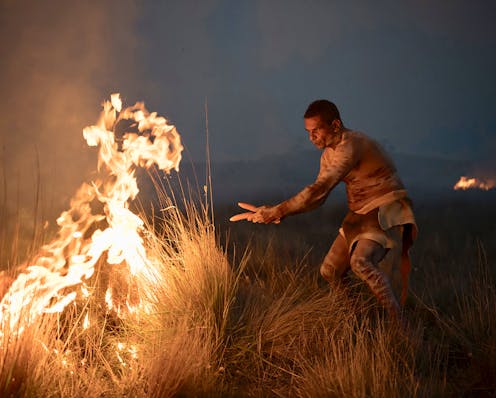
Our land is burning, and western science does not have all the answers

Last week’s catastrophic fires on Australia’s east coast – and warnings of more soon to come – will become all too common as climate change gathers pace. And as the challenges of modern hazard reduction become clear, there is much to learn from the ancient Aboriginal practice of burning country.
Indigenous people learnt to use fire skillfully and to their advantage, including to moderate bushfires. Most of the fires were small and set at dry times of the year, resulting in a fine-scale mosaic of different vegetation types and fuel ages. This made intense bushfires uncommon and made plant and animal foods more abundant. 
Image result for Our land is burning, and western science does not have all the answers
Modern fire managers can learn much from Aboriginal fire practice.
Contemporary fire managers also attempt to lower bushfire risk by reducing fuel loads through hazard reduction burning. To minimise costs, this is often achieved by dropping incendiaries from aircraft. 
Concern is growing that such methods exacerbate biodiversity declines and often do not prevent a subsequent bushfire. As climate change makes bushfires more ferocious and extreme, now is the time to better understand how our First Peoples used fire.

30 October, 2018

Australia’s east coast named as 'deforestation front' in WWF Living Planet report

Australia’s east coast has been compared to the Amazon as a “deforestation front” in a new global report by the World Wide Fund for Nature that underscores the threat to populations of koalas and other native species.
 Deforestation means koalas could disappear from the
wild in New South Wales by 2050, WWF warns.
 
The Living Planet report, produced by WWF every second year for the past 20 years, says global populations of vertebrate species have declined 60% since 1970. But koala numbers have disappeared at a much faster rate – more than 20% a decade – to the extent they could disappear from the wild in New South Wales by 2050.

The report assessed 11 deforestation hotspots, where broadscale clearing had occurred at problematic levels since 2010, and where deforestation was expected to continue in the next decade. Eastern Australia was the only location in the developed world to make the list.