Showing posts with label unprecedented bushfires. Show all posts

01 February, 2020

Getting down to the business of evolving Australia's climate policy

Scorched by unprecedented bushfires, our nation badly needs a global solution to climate change. Evolving emissions policy, as the Prime Minister has suggested, can deliver a more ambitious, durable and trade-neutral approach, and get investment flowing to the industry and the infrastructure we need for a prosperous future. Success requires clarity about what we’re trying to do, and smart policy design that suits the enduring needs of the community and industry.
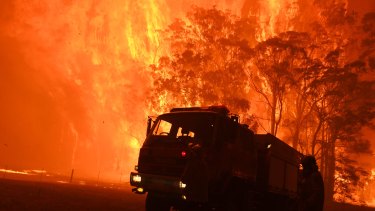
The fire threat will become inescapably worse in a warming climate, but what if global temperatures rise by 3C rather than the target of 1.5C?
The fire threat will become inescapably worse in a warming climate,
but what if global temperatures rise by 3C rather than the target of 1.5C?

Many fear that the recent fires are the "new normal". The truth seems to be both better and worse than that. The specific circumstances that produced the most dire bushfire season in recorded Australian history won’t recur every year. But an underlying increase in average temperatures and shift in rainfall patterns has made more severe bushfires more likely. That shift is guaranteed to deteriorate.

Australia is currently dealing with a 1C increase in global average temperatures over pre-industrial levels. The goal of the Paris Agreement is to keep the total increase to no more than 1.5C – with significantly greater impacts than today and requiring difficult, costly adaptation. But the initial set of commitments that nations have made under Paris puts us on course for 3C or more.

Global central banks say that would seriously threaten the world economy. It is absolutely true that Australia (which accounted for 1.1 per cent of global emissions in 2016) can’t halt climate change alone. Nor can China (23.5 per cent), the United States (11.8 per cent) or the European Union (7.3 per cent). Collectively, emitters of Australia’s size or smaller account for more than 30 per cent.


Read the opinion piece from The Sydney Morning Herald by Innes Willox - “Getting down to the business of evolving Australia's climate policy.”

23 January, 2020

As Earth’s population heads to 10 billion, does anything Australians do on climate change matter?

As unprecedented bushfires continue to ravage the country, Prime Minister Scott Morrison and his government have been rightly criticised for their reluctance to talk about the underlying drivers of this crisis. Yet it’s not hard to see why they might be dumbstruck.

Image result for As Earth’s population heads to 10 billion, does anything Australians do on climate change matter?
The United Nations predicts the world will be home to nearly 10 billion people
by 2050 – making global greenhouse emission cuts ever more urgent. 
The human race has never had to grapple with a problem as large, complex or urgent as climate change. It’s not that there aren’t solutions available. There are already some hopeful signs of an energy transition in Australia. As Professor Ross Garnaut has explained, it would be in Australia’s economic interests to become a low-carbon energy superpower.

To successfully tackle climate change will require some painful transitions domestically, and unprecedented levels of international coordination and cooperation. But that isn’t happening. Global action to cut emissions is falling far short of what’s needed – and meanwhile, though it’s controversial to mention, the world’s population quietly climbs ever higher.


Read the story from The Conversation by the Professor of International Politics from the University of Western Australia, Mark Beeson - “As Earth’s population heads to 10 billion, does anything Australians do on climate change matter?”

11 January, 2020

Increasing fire threat to vulnerable telecommunications networks

Australia's unprecedented bushfire crisis has exposed the vulnerability of phone and internet networks, prompting Communications Minister Paul Fletcher to warn telecommunications giants to prepare for increasingly severe disasters.
Telstra is working to get telecommunications back up and running in fire-ravaged communities in Victoria.
Telstra is working to get telecommunications back up
 and running in fire-ravaged communities in Victoria.
As dozens of mobile towers went dark during this summer's catastrophic bushfires, people have been cut off from contact with emergency services and in some cases unable to pay for essential supplies. Telcos have scrambled to bolster their networks and respond to the outages, rolling out satellite trucks, portable reception towers and restoring disabled mobile base stations.

Read the story from The Age by Fergus Hunter and Zoe Samios - “Increasing fire threat to vulnerable telecommunications networks.”

07 January, 2020

Doctors warn people may die as public health impact from Australian fire pollution bites

As unprecedented bushfires continue to burn along Australia’s east coast, medical professionals are warning of unpredictable and lasting consequences for public health.

A bushfire
Doctors say the lasting impact of the bushfires and
 ‘the concern with respect to the air quality’ is justified.
“I think for the population, what they feel, and the concern they have about this, is probably reasonable,” said Chris Moy, chair of the Australian Medical Association’s ethics and medico-legal committee. 

Moy said the lasting impact of the bushfires and “the concern with respect to the air quality” was founded. He said “there are people who are going to probably die from these conditions”, particularly those “right at the edge of lung capacity”.


Read the story from The Guardian by Alyx Gorman - “Doctors warn people may die as public health impact from Australian fire pollution bites.”