Showing posts with label scorched. Show all posts

01 February, 2020

Getting down to the business of evolving Australia's climate policy

Scorched by unprecedented bushfires, our nation badly needs a global solution to climate change. Evolving emissions policy, as the Prime Minister has suggested, can deliver a more ambitious, durable and trade-neutral approach, and get investment flowing to the industry and the infrastructure we need for a prosperous future. Success requires clarity about what we’re trying to do, and smart policy design that suits the enduring needs of the community and industry.
The fire threat will become inescapably worse in a warming climate, but what if global temperatures rise by 3C rather than the target of 1.5C?
The fire threat will become inescapably worse in a warming climate,
but what if global temperatures rise by 3C rather than the target of 1.5C?

Many fear that the recent fires are the "new normal". The truth seems to be both better and worse than that. The specific circumstances that produced the most dire bushfire season in recorded Australian history won’t recur every year. But an underlying increase in average temperatures and shift in rainfall patterns has made more severe bushfires more likely. That shift is guaranteed to deteriorate.

Australia is currently dealing with a 1C increase in global average temperatures over pre-industrial levels. The goal of the Paris Agreement is to keep the total increase to no more than 1.5C – with significantly greater impacts than today and requiring difficult, costly adaptation. But the initial set of commitments that nations have made under Paris puts us on course for 3C or more.

Global central banks say that would seriously threaten the world economy. It is absolutely true that Australia (which accounted for 1.1 per cent of global emissions in 2016) can’t halt climate change alone. Nor can China (23.5 per cent), the United States (11.8 per cent) or the European Union (7.3 per cent). Collectively, emitters of Australia’s size or smaller account for more than 30 per cent.


Read the opinion piece from The Sydney Morning Herald by Innes Willox - “Getting down to the business of evolving Australia's climate policy.”


29 June, 2019

Heatwave cooks mussels in their shells on California shore

In all her years working at Bodega Bay, the marine reserve research coordinator Jackie Sones had never seen anything like it: scores of dead mussels on the rocks, their shells gaping and scorched, their meats thoroughly cooked.
mussels at bodega head
Scores of dead mussels were on the rocks at Bodega Bay, California.
A record-breaking June heatwave apparently caused the largest die-off of mussels in at least 15 years at Bodega Head, a small headland on the northern California bay. And Sones received reports from other researchers of similar mass mussel deaths at various beaches across roughly 140 miles of coastline.

While the people who flocked to the Pacific to enjoy a rare 80F beach day soaked up the sun, so did the mussel beds – where the rock-bound mollusks could have been experiencing temperatures above 100F at low tide, literally roasting in their shells.


Reads the story from The Guardian by Susie Cagle - “Heatwave cooks mussels in their shells on California shore.”

06 June, 2019

Nuclear power is not the answer in a time of climate change

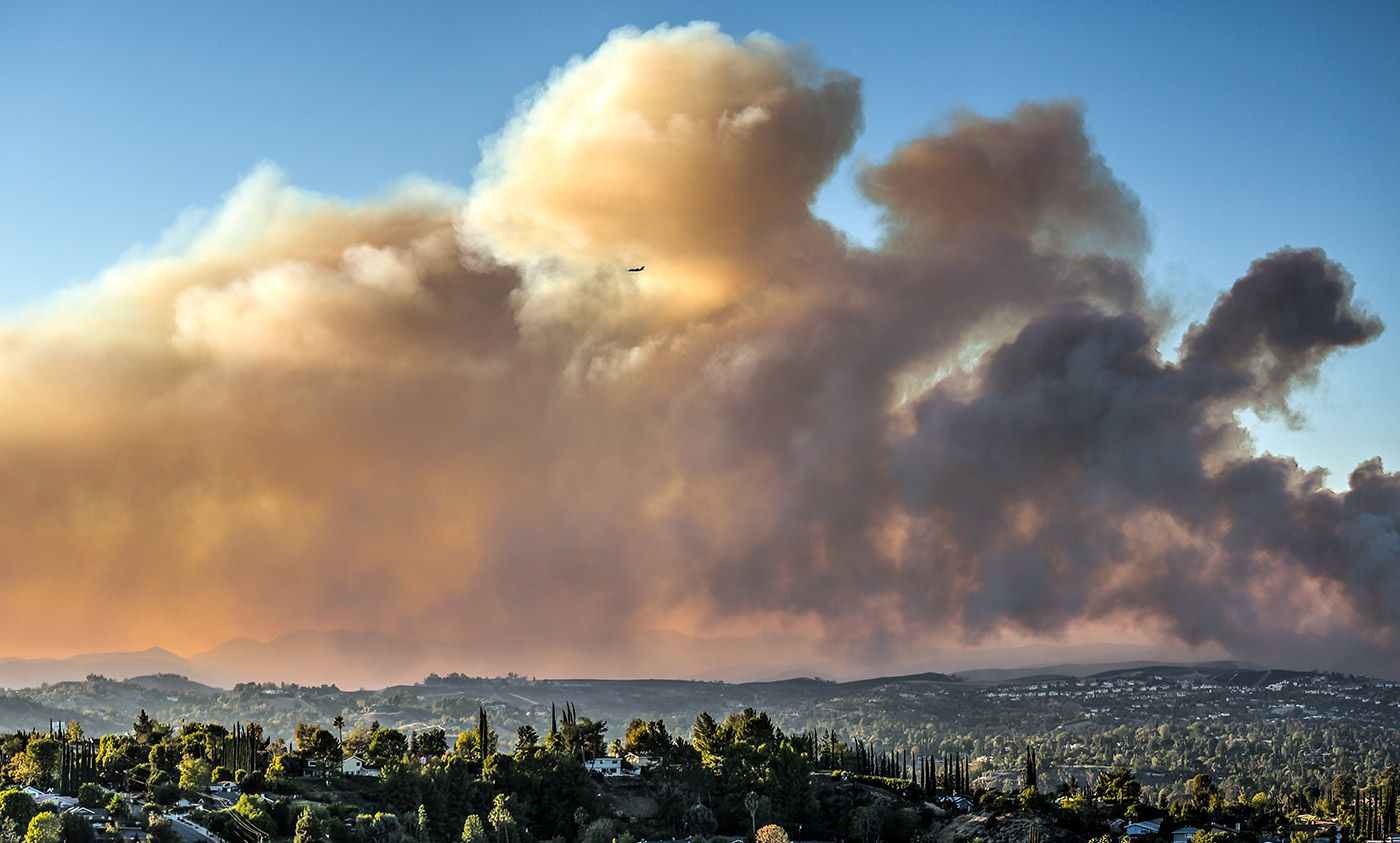
In November 2018, the Woolsey Fire scorched nearly 100,000 acres of Los Angeles and Ventura counties, destroying forests, fields and more than 1,500 structures, and forcing the evacuation of nearly 300,000 people over 14 days. It burned so viciously that it seared a scar into the land that’s visible from space. Investigators determined that the Woolsey Fire began at the Santa Susana Field Laboratory, a nuclear research property contaminated by a partial meltdown in 1959 of its failed Sodium Reactor Experiment, as well as rocket tests and regular releases of radiation.
<p>The Woolsey Fire seen from Topanga Canyon in California. <em>Photo courtesy of Peter Buschmann/USDA/Flickr</em></p>
The Woolsey Fire seen from Topanga Canyon in California.
The State of California’s Department of Toxic Substances Control (DTSC) reports that its air, ash and soil tests conducted on the property after the fire show no release of radiation beyond baseline for the contaminated site. But the DTSC report lacks sufficient information, according to the Bulletin of Atomic Scientists. It includes ‘few actual measurements’ of the smoke from the fire, and the data raises alarms. Research on Chernobyl in Ukraine following wildfires in 2015 shows clear release of radiation from the old nuclear power plant, calling into question the quality of DTSC’s tests. What’s more, scientists such as Nikolaos Evangeliou, who studies radiation releases from wildfires at the Norwegian Institute for Air Research, point out that the same hot, dry and windy conditions exacerbating the Woolsey Fire (all related to human-caused global warming) are a precursor to future climate-related radioactive releases.

Read the Aeon story by Heidi Hutner and Erica Cirino - “Nuclear power is not the answer in a time of climate change.”

26 January, 2019

Climate Change’s Hidden Victim: Your Mental Health

In  December 2017, Jennifer Atkinson flew from Washington to Santa Barbara, California, where her family lives, to celebrate Christmas. The 42-year-old is a senior lecturer in environmental humanities at the University of Washington Bothell, about an hour from Seattle, but she grew up in rural central California, outside the town of Templeton. She remembers cattle ranches and vineyards and fields of oak trees stretching toward the sun. She spent her summers playing in a creek with her dogs. Some nights, she’d sleep outside on lawn furniture and stare at the stars twinkling overhead.
Few appreciate the challenges climate change presents to our mental health.
On this trip, though, in the middle of winter, smoke darkened the skyline in Santa Barbara. By December 14, flames had scorched more than 242,000 acres in Southern California, making it the state’s fourth-largest wildfire to date and the only December-occurring wildfire on the list of California’s 20 largest wildfires, according to a post on what was then the government’s climate website.

During her visit, Atkinson watched her nieces and nephew hook masks over their ears before they could play outside after school. After pulling on dresses and nice shoes to attend a performance of the Nutcracker, they walked back to their cars wearing the masks to filter out the smoke. Atkinson had been getting evacuation alerts on her phone for nearby neighborhoods all evening, and the smoke had become so oppressive that she and her family decided to leave too. She was devastated by the destruction around them, the danger, the loss.


Read the Medium story by Ciara O’Rouke - “Climate Change’s Hidden Victim: Your Mental Health.”