Showing posts with label 000 acres. Show all posts

06 June, 2019

Nuclear power is not the answer in a time of climate change

In November 2018, the Woolsey Fire scorched nearly 100,000 acres of Los Angeles and Ventura counties, destroying forests, fields and more than 1,500 structures, and forcing the evacuation of nearly 300,000 people over 14 days. It burned so viciously that it seared a scar into the land that’s visible from space. Investigators determined that the Woolsey Fire began at the Santa Susana Field Laboratory, a nuclear research property contaminated by a partial meltdown in 1959 of its failed Sodium Reactor Experiment, as well as rocket tests and regular releases of radiation.
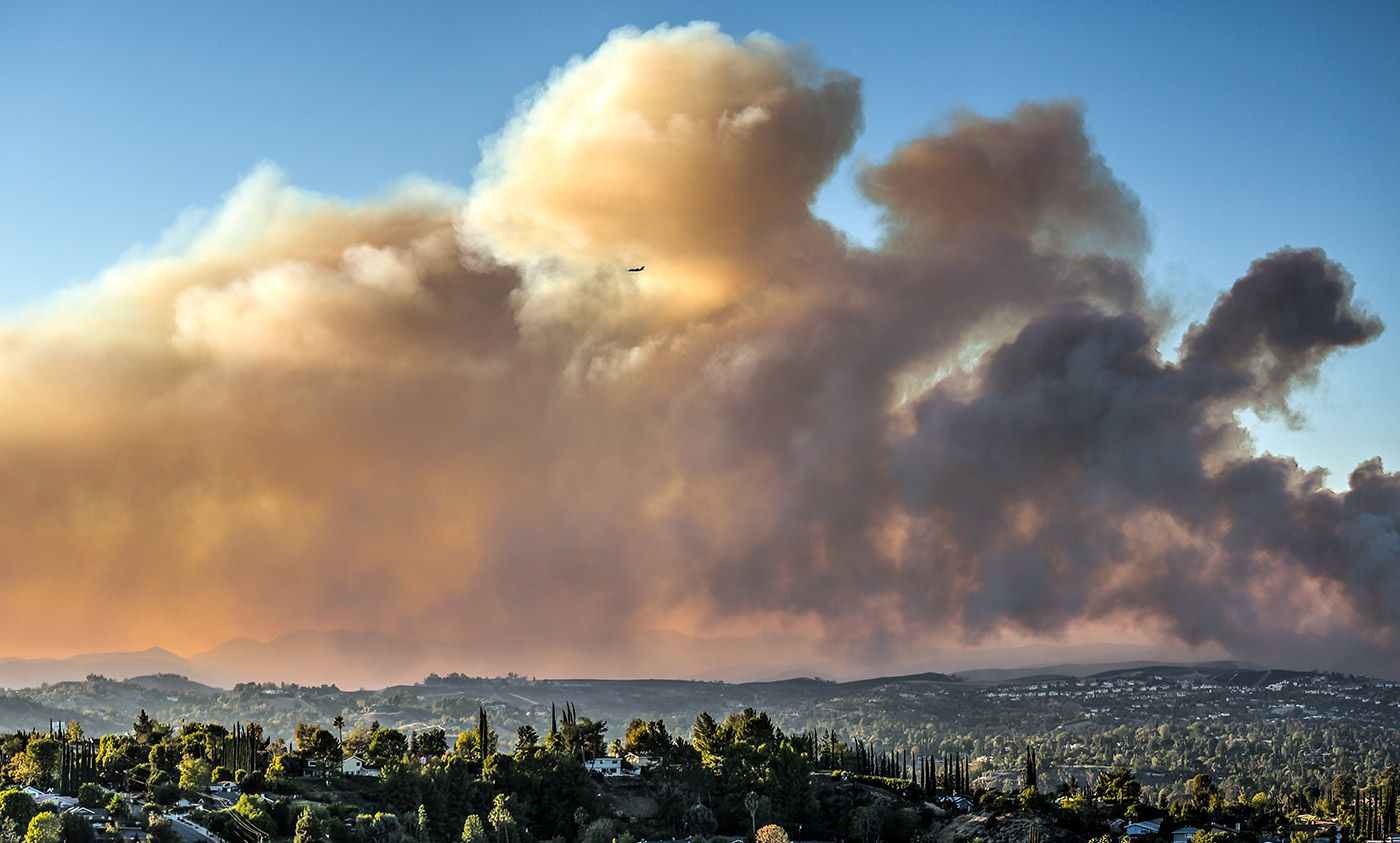
<p>The Woolsey Fire seen from Topanga Canyon in California. <em>Photo courtesy of Peter Buschmann/USDA/Flickr</em></p>
The Woolsey Fire seen from Topanga Canyon in California.
The State of California’s Department of Toxic Substances Control (DTSC) reports that its air, ash and soil tests conducted on the property after the fire show no release of radiation beyond baseline for the contaminated site. But the DTSC report lacks sufficient information, according to the Bulletin of Atomic Scientists. It includes ‘few actual measurements’ of the smoke from the fire, and the data raises alarms. Research on Chernobyl in Ukraine following wildfires in 2015 shows clear release of radiation from the old nuclear power plant, calling into question the quality of DTSC’s tests. What’s more, scientists such as Nikolaos Evangeliou, who studies radiation releases from wildfires at the Norwegian Institute for Air Research, point out that the same hot, dry and windy conditions exacerbating the Woolsey Fire (all related to human-caused global warming) are a precursor to future climate-related radioactive releases.

Read the Aeon story by Heidi Hutner and Erica Cirino - “Nuclear power is not the answer in a time of climate change.”

26 January, 2019

Climate Change’s Hidden Victim: Your Mental Health

In  December 2017, Jennifer Atkinson flew from Washington to Santa Barbara, California, where her family lives, to celebrate Christmas. The 42-year-old is a senior lecturer in environmental humanities at the University of Washington Bothell, about an hour from Seattle, but she grew up in rural central California, outside the town of Templeton. She remembers cattle ranches and vineyards and fields of oak trees stretching toward the sun. She spent her summers playing in a creek with her dogs. Some nights, she’d sleep outside on lawn furniture and stare at the stars twinkling overhead.
Few appreciate the challenges climate change presents to our mental health.
On this trip, though, in the middle of winter, smoke darkened the skyline in Santa Barbara. By December 14, flames had scorched more than 242,000 acres in Southern California, making it the state’s fourth-largest wildfire to date and the only December-occurring wildfire on the list of California’s 20 largest wildfires, according to a post on what was then the government’s climate website.

During her visit, Atkinson watched her nieces and nephew hook masks over their ears before they could play outside after school. After pulling on dresses and nice shoes to attend a performance of the Nutcracker, they walked back to their cars wearing the masks to filter out the smoke. Atkinson had been getting evacuation alerts on her phone for nearby neighborhoods all evening, and the smoke had become so oppressive that she and her family decided to leave too. She was devastated by the destruction around them, the danger, the loss.


Read the Medium story by Ciara O’Rouke - “Climate Change’s Hidden Victim: Your Mental Health.”

15 October, 2017

How climate change and ‘smoke taint’ could kill Napa wine

NICK GOLDSCHMIDT HAS been lucky so far. A wildfire has burned more than 8,000 acres just north of his vineyards in Geyserville, California, but so far his vines are OK. So is his house in Healdsburg, roughly midway between Geyserville and a 36,000-acre fire that destroyed more than 2,800 homes in Santa Rosa.
A vineyard on Napa's Silverado Trail is seen next
to land charred by the Atlas Fire on October 11,
 2017 in Napa, CA.
But now, amid the charred, empty spaces that scar northern California’s winegrowing region, under skies yellowed by smoke, Goldschmidt has a race to win. Wildfires can ruin the flavor of wine grapes, a problem called smoke taint. “I’ve worked with smoke before,” Goldschmidt says. “It is not an easy thing to fix. But in my experience, it’s more about contact time. So the key thing is, if you have vineyards near the fire, you’ve got to get the grapes off.”

Depending on wind, smoke from the Atlas Fire could potentially reach Goldschmidt’s Napa vineyard, where about 15 percent of the fruit remains to be harvested. He now plans to harvest the rest by the weekend.


Read the Wired story by Adam Rogers - “How climate change and ‘smoke taint’ could kill Napa wine.”