Showing posts with label 1. Show all posts

03 November, 2019

Climate emergency declarations in 1,174 jurisdictions and local governments cover 290 million citizens

More than 1,100 jurisdictions in 23 countries have declared a climate emergency.

Populations covered by jurisdictions that have declared a climate emergency amount to 290 million citizens, with 53 million of these living in the United Kingdom. 

This means in Britain now roughly 80 per cent of the population lives in areas that have declared a climate emergency. In New Zealand, the percentage is even higher: 74 per cent of the population. 

It’s around 25 per cent in countries like Switzerland and Italy.


17 October, 2019

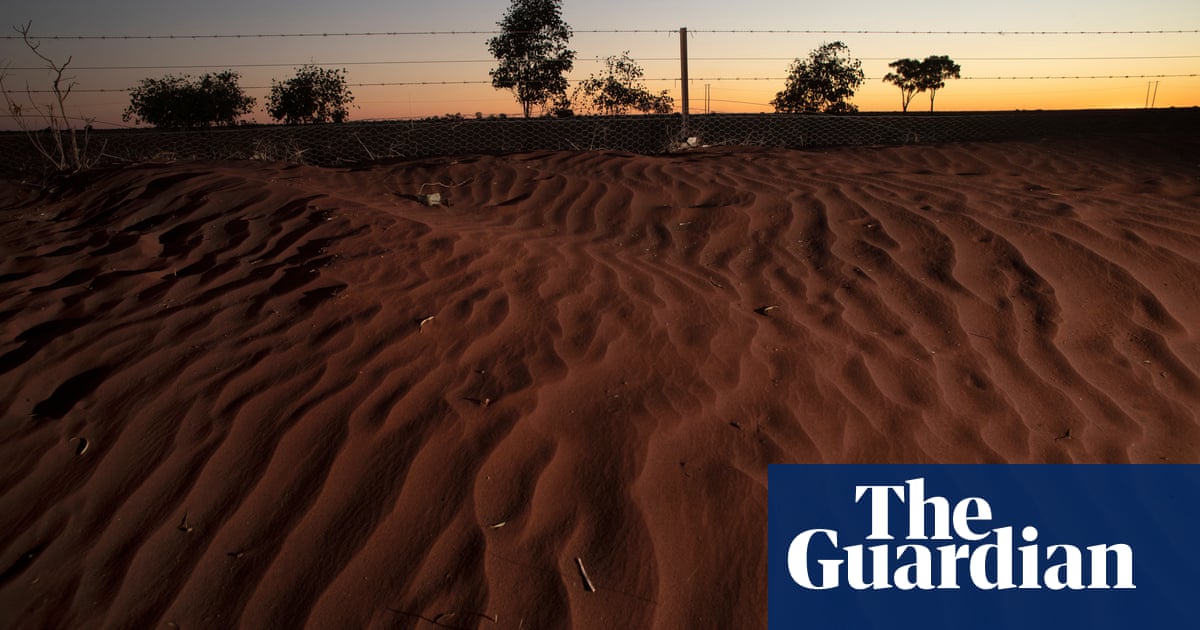
Stripped bare: Australia's hidden climate crisis

Roger Fitzgerald’s family has been farming near Moree since 1925. But these days he feels under siege on his own farm. His 1,700-hectare property, 50km north of the town, is now surrounded by the operations of the sprawling agribusiness Beefwood Farms, which has been steadily buying up land in New South Wales to expand its operations.
Image result for Stripped bare: Australia's hidden climate crisis
An epidemic of land clearing is sabotaging efforts to address
climate change. Farming communities are
bitterly divided over the issue – but it also has global consequences
The old easement to Fitzgerald’s cottage across the sprawling Beefwood property has been planted over with crops. His letterbox has mysteriously disappeared on several occasions, making it hard for visitors to spot the entrance to his farm. But it is the extent of land clearing by his neighbour, Beefwood’s owner, Gerardus Kurstjens, that has upset him the most.
Fitzgerald says the microclimate of the nearby Welbon plains has moved a kilometre further on to his property since losing a tree line on Kurstjens’ property that once sheltered his land. 
Pockets of remaining vegetation have been ripped from the grey soil to expand cultivation and square up paddocks – and the first Fitzgerald knows of it is when the bulldozers arrive.
Read the story from The Guardian by Anne Davies, Mike Bowers, Andy Ball and Nick Evershed - “Stripped bare: Australia's hidden climate crisis.”.
.

05 July, 2019

Doctors call for nonviolent direct action over climate crisis.

More than 1,000 doctors including 40 professors, several eminent public health figures and past presidents of royal colleges are calling for widespread nonviolent civil disobedience in the face of the environmental crisis.
The doctors are backing the school strike movement, which staged another march in London last Friday.
The doctors are backing the school strike movement,
 which staged another march in London last Friday.
In a letter to the Guardian, the doctors say government policies are “woefully inadequate”, and call on politicians and the media to face the facts of the unfolding ecological emergency and take action.
“As caring professionals we cannot countenance current policies which push the world’s most vulnerable towards progressive environmental catastrophe,” they write.
“We are particularly alarmed by the effects of rising temperatures on health and heed predictions of societal collapse and consequent mass migration. Such collapse risks damage to physical and mental health on an unprecedented scale.”

Read the story from, The Guardian by Matthew Taylor - ”Doctors call for nonviolent direct action over climate crisis.” 

24 June, 2019

The mighty mulga grows deep and lives long

Among the nearly 1,000 species of Australian acacias, there are few with a reputation for hardiness, resilience and endurance to match mulga. Once the higher rainfall of the coastal fringes of the continent diminishes, from west to east and south to north, the mulga prevails. 
Image result for The mighty mulga grows deep and lives longIt grows over the vast expanse of about 20% of our continent and is often the dominant woody species of the grassland communities that are themselves known as the mulga. It is also an important shrub component of inland woodlands, such as those dominated by poplar box, Eucalyptus populnea. 
Any species that covers 1.5 million km² of any landmass is clearly a vital part of its ecosystems.

Read the story from The Conversation by the Doctor of Botany from the University of Melbourne, Gregory Moore - “The mighty mulga grows deep and lives long."

06 June, 2019

Nuclear power is not the answer in a time of climate change

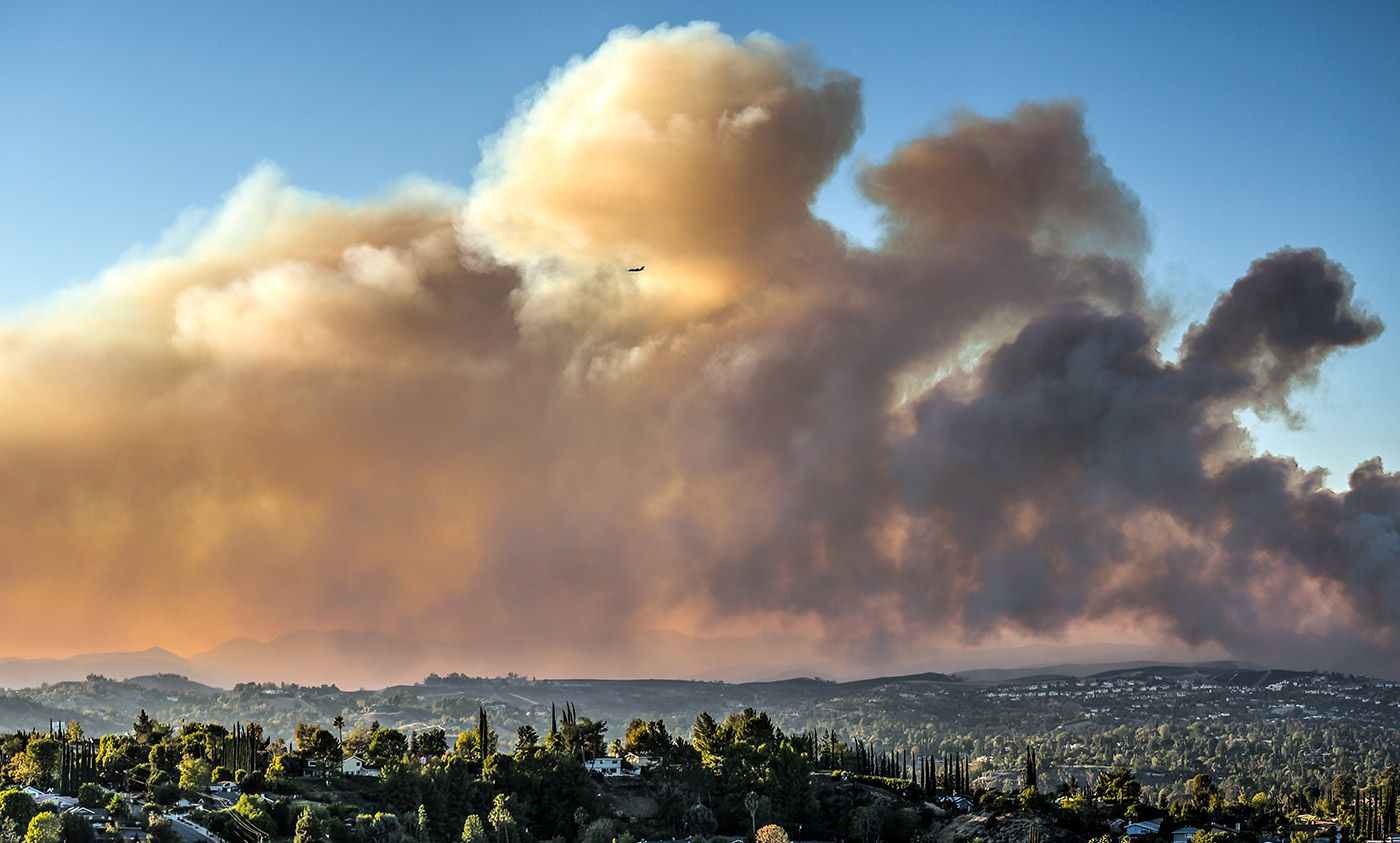
In November 2018, the Woolsey Fire scorched nearly 100,000 acres of Los Angeles and Ventura counties, destroying forests, fields and more than 1,500 structures, and forcing the evacuation of nearly 300,000 people over 14 days. It burned so viciously that it seared a scar into the land that’s visible from space. Investigators determined that the Woolsey Fire began at the Santa Susana Field Laboratory, a nuclear research property contaminated by a partial meltdown in 1959 of its failed Sodium Reactor Experiment, as well as rocket tests and regular releases of radiation.
<p>The Woolsey Fire seen from Topanga Canyon in California. <em>Photo courtesy of Peter Buschmann/USDA/Flickr</em></p>
The Woolsey Fire seen from Topanga Canyon in California.
The State of California’s Department of Toxic Substances Control (DTSC) reports that its air, ash and soil tests conducted on the property after the fire show no release of radiation beyond baseline for the contaminated site. But the DTSC report lacks sufficient information, according to the Bulletin of Atomic Scientists. It includes ‘few actual measurements’ of the smoke from the fire, and the data raises alarms. Research on Chernobyl in Ukraine following wildfires in 2015 shows clear release of radiation from the old nuclear power plant, calling into question the quality of DTSC’s tests. What’s more, scientists such as Nikolaos Evangeliou, who studies radiation releases from wildfires at the Norwegian Institute for Air Research, point out that the same hot, dry and windy conditions exacerbating the Woolsey Fire (all related to human-caused global warming) are a precursor to future climate-related radioactive releases.

Read the Aeon story by Heidi Hutner and Erica Cirino - “Nuclear power is not the answer in a time of climate change.”

10 October, 2017

California wildfires: Ten dead, tens of thousands flee as fires rip through Napa, Orange County

Wildfires fanned by strong winds have ripped through Californian wine country, killing at least 10 people, forcing some 20,000 residents to flee and destroying 1,500 homes and businesses.

Wildfires whipped by powerful winds have
 swept through Northern California.
Governor Jerry Brown declared a state of emergency for northern California's wine-making Napa, Sonoma, and Yuba counties as the blazes raged unchecked and engulfed the region in thick, billowing smoke that drifted into San Francisco and Oakland.

A state of emergency was also declared in Butte, Lake, Mendocino, Nevada and Orange counties.
At least seven people died in the winemaking region of Sonoma, while two died in neighbouring Napa and another was killed in a blaze further north.

At least 100 others were injured, with the majority of those treated for smoke inhalation.


21 September, 2017

Pumped hydro storage 'could make Australia run on renewable energy alone within 20 years’

Australia has the capacity to store up to 1,000 times more renewable energy than it could ever conceivably need, according to an analysis by researchers at the Australian National University (ANU).
How pumped hydro works.
ANU engineering professor Andrew Blakers has conducted a study looking into pumped hydro sites and has concluded that there are at least 22,000 suitable locations nationwide.

Professor Blakers said if storage was built at just a tiny fraction of those places, Australia could transition to 100 per cent renewable power within two decades.

"No matter where you are in Australia, you will find a good pumped hydro site not very far away from where you, or your wind or your solar farm is located," he said.


07 November, 2015

Obama denies Keystone XL pipeline and claims climate 'leadership' for US


P
resident Obama announced Friday that his administration will not issue a permit for construction of the controversial Keystone XL pipeline, arguing that approval would undermine the U.S. effort to curb greenhouse gases.

“America’s now a global leader when it comes to taking serious action to fight climate change,” Obama said. “And frankly, approving this project would have undercut that global leadership. And that’s the biggest risk we face — not acting.”

Denying TransCanada Corp. a permit for the 1,179-mile pipeline between Hardisty, Alberta, and Steele City, Neb., ends a seven-year fight over a project that became a symbol in the political battle over climate change.