Showing posts with label surrounded. Show all posts

03 February, 2020

Scott Morrison is stuck in a time warp – more gas is not the answer.

The prime minister, Scott Morrison, surrounded by advisers out of the fossil fuel industry, is stuck in a time warp.
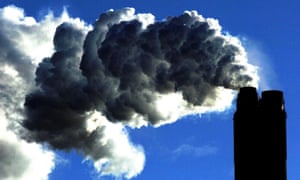
Coal fired power plant
‘Morrison claims we need a lot more gas to continue the
energy transition already in play. The experts disagree.’
His claim that “there is no credible energy transition plan, for an economy like Australia in particular, that does not involve the greater use of gas as an important transition fuel” is demonstrably wrong. There are many.
A decade ago solar and wind were expensive, gas was cheap, batteries had no conceivable role in a power grid and pumped hydro storage was a forgotten technology. Conventional wisdom held that gas was a “transition fuel” – that since gas generation has half the emissions of coal power (if we foolishly turn a blind eye to emissions caused when extracting gas), we could reduce emissions by switching out coal power stations for gas turbines.

Read the story from The Guardian by Simon Holmes à Court - “Scott Morrison is stuck in a time warp – more gas is not the answer.

17 October, 2019

Stripped bare: Australia's hidden climate crisis

Roger Fitzgerald’s family has been farming near Moree since 1925. But these days he feels under siege on his own farm. His 1,700-hectare property, 50km north of the town, is now surrounded by the operations of the sprawling agribusiness Beefwood Farms, which has been steadily buying up land in New South Wales to expand its operations.
Image result for Stripped bare: Australia's hidden climate crisis
An epidemic of land clearing is sabotaging efforts to address
climate change. Farming communities are
bitterly divided over the issue – but it also has global consequences
The old easement to Fitzgerald’s cottage across the sprawling Beefwood property has been planted over with crops. His letterbox has mysteriously disappeared on several occasions, making it hard for visitors to spot the entrance to his farm. But it is the extent of land clearing by his neighbour, Beefwood’s owner, Gerardus Kurstjens, that has upset him the most.
Fitzgerald says the microclimate of the nearby Welbon plains has moved a kilometre further on to his property since losing a tree line on Kurstjens’ property that once sheltered his land. 
Pockets of remaining vegetation have been ripped from the grey soil to expand cultivation and square up paddocks – and the first Fitzgerald knows of it is when the bulldozers arrive.
Read the story from The Guardian by Anne Davies, Mike Bowers, Andy Ball and Nick Evershed - “Stripped bare: Australia's hidden climate crisis.”.
.

04 October, 2018

‘This drought is different': it's drier and hotter – and getting worse

If you don’t fully appreciate the complexity of rural communities, farmer Peter Schmidt is not the sort of bloke you would be expecting in the Mulga Lands. His place is 21,000 hectares – 52,000 acres in the old money – and his family have been there since his grandfather selected blocks in the 1890s. The closest town is Wyandra, a blip on the highway on the way to Cunnamulla from Charleville – a drive that reveals the disused fences of smaller blocks long abandoned as unsustainable.
Scientist farmer Peter Schmidt with his partner Kathryn James
on Alawoona, near Wyandra , Queensland. Monday 20 August 2018.
 
Schmidt though is still at his homestead at Alawoona, its sheds and outbuildings surrounded by a metre-high levee, standing like a bad joke in their sixth year of drought. He put it in after the 2012 flood, which washed a foot of water through his house. Problem is, that flood heralded the start of the dry and it pretty much hasn’t rained since. He jokes with station hand Joe that he cursed the place and might have to break the levee to bring on the rain. But far from being a man of superstition, Schmidt is a rural scientist, with two masters degrees – one each in rural education and cattle behaviour. He has a softly spoken manner and a sense of humour born in the Mulga.


Read the story by Gabrielle Chan from The Guardian - “‘This drought is different': it's drier and hotter – and getting worse.”

04 May, 2018

Melbourne weather: The Pac-Man shaped storm that ate Melbourne

A unique rain formation weather-watchers dubbed 'Pac-Man' surrounded and swallowed up Melbourne as rain and strong winds lashed the state overnight.
The circular 'Pac-Man' stormfront.
The radar image mimicked the iconic video game graphics and showed Melbourne in the eye of a circular storm from about 8pm Thursday.

Keen radar-watchers also called the rain pattern a "force field" and described it as “tie-dyed".

Bureau of Meteorology senior forecaster Chris Godfred said "the image that launched a thousand memes" was actually a fairly common phenomenon. He said when a rain-producing weather system met a downward flow of air, it meant the rain was less likely to fall and instead created a "rain shadow”.


Read the story by Anna Prytz from The Age - “Melbourne weather: The Pac-Man shaped storm that ate Melbourne.”

27 January, 2018

Meet the Man Bringing Cheap Renewable Energy to His Hometown

When Highland Park, Michigan, a predominately Black city surrounded by Detroit, had its streetlights repossessed in 2011, because of a $4 million unpaid street lighting bill, Ryter Cooperative Industries L3C stepped in to help install solar-powered streetlights in the city’s neighborhoods.
Ali Dirul testing out new foldable briefcase solar generator
design for West Side Academy High School.
Energy cost inequality is a problem in many areas throughout the country. Low-income households spend 10% of their income on electricity—four times higher than the average household, according to a recent report. So while the median electricity bill in the United States in 2013 was around $114 a month, many low-income families paid more than $200 a month.

Some renewable energy advocacy organizations have attributed the cost inequality to the lack of community engagement and awareness of renewable energy programs in low-income communities.


Read the Yes! Magazine story by J. Garbiel Ware - “Meet the Man Bringing Cheap Renewable Energy to His Hometown.”