Showing posts with label climate emergency. Show all posts

04 May, 2020

In A Post-Pandemic World, Renewable Energy Is The Only Way Forward

The Economist’s regular cartoonist, KAL, summed it up neatly in his cartoon last week: the battle humanity is waging against the coronavirus is only the preliminary round, and after that, we have a much bigger and stronger opponent waiting for us, called the climate emergency. That some people still may think that something as objectively and scientifically proven is still up for debate could be seen as one of the greatest achievements of the fossil fuel industry. It’s not. It’s the greatest threat to human life.
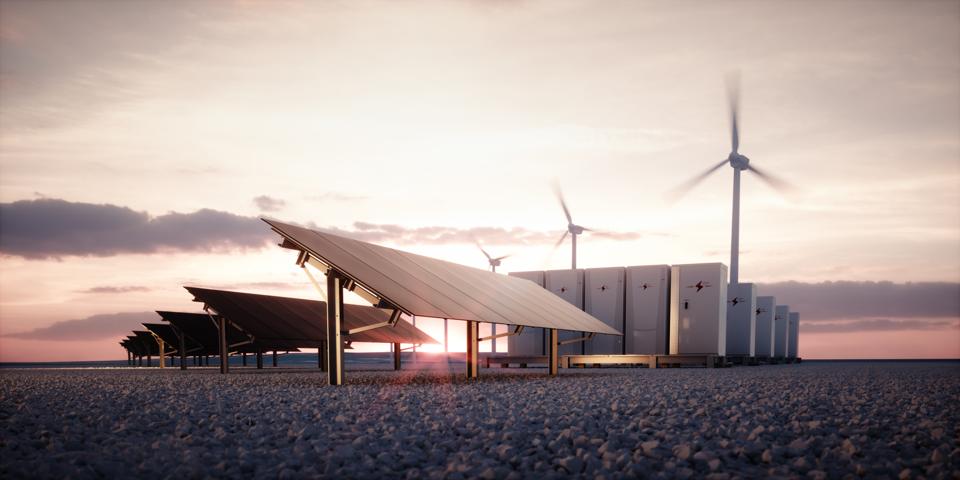
Dawn of new renewable energy technologies. Modern, aesthetic and efficient dark solar panel panels, a modular battery energy storage system and a wind turbine system in warm light. 3D rendering.

Pollution affects us all, very much so. In addition to being responsible for some seven million deaths annually, it makes us more vulnerable to all kinds of respiratory diseases, including, of course, those caused by viruses such as SARS-CoV-2, which could also become seasonal and repetitive. Not only do we know that we need to fix this problem: we also know that not doing so is killing us, and we now have a pressing example of this.
Read the story from Forbes by Enrique Dans - “In A Post-Pandemic World, Renewable Energy Is The Only Way Forward.”

01 May, 2020

COVID-19: What does this mean for the fight against climate change?

What does this mean for our global fight against climate change and what does this mean for our ability to address the climate emergency in the future?
Climate Strikes: “Whose future? Our future!”. | e-mc2.gr
The current global health crisis has created grave uncertainties across the world. In response, governments have brought in unprecedented measures to curb the spread of the virus - the steps to restrict movement and mass gatherings, as well as the implementation of economic stimulus packages across the globe have not been seen during peacetimes.
Whilst COVID-19 has seemingly put environmental diplomacy on hold with the postponement of COP26 and the 15th Biodiversity COP, what does the current global health crisis mean for ongoing climate crisis? In a year in which global political and business leaders are meant to put climate change first, what impact will this pandemic have on our collective ability to address the climate emergency?

10 April, 2020

Well done council on climate call

The Greater Shepparton City Council must be congratulated on the declaration of a climate emergency. All councillors present at the March meeting were united in the view that our council must continue with strong and decisive action on reducing emissions to address climate change.
However, several councillors struggled with the words ‘climate emergency’ and drew a distinction between the COVID-19 ‘emergency’ and the ‘climate emergency’. However, there are similarities between COVID-19 and climate change and how we need to respond.
It is clear to all that the COVID-19 pandemic is an emergency. The science is complicated but the advice is clear. Unless we take decisive early action there will be a doubling in disease contraction every week and our health systems will be overwhelmed.
Governments have heeded this advice and taken decisive action. This early action has placed Australia in a far better position than many other nations around the globe.
The climate change emergency is no different. The science is complicated but the advice is clear. Carbon emissions are irreversibly warming our planet. Many climate-related events we are witnessing are not normal.
We are seeing unprecedented droughts, bushfires, coral bleaching and cyclones with just the 1°C increase in global temperature measured to date.
It is inevitable we will see a further increase in global temperature to between 1.5-2°C even if Paris carbon reduction targets are met.
A further doubling of the temperature increase to 4°C by the end of the century is possible if there is no action to reduce carbon emissions. A 2°C temperature increase will present many challenges. A 4°C increase in temperature may be more than we can adapt to.
The Paris agreement is about flattening the curve so we can limit temperature increase to no more than 2°C.
Climate change is an emergency. Our council serves us well by adding its voice in joining the 84 councils around Australia and 1482 jurisdictions across the world that have now declared a climate emergency.
All levels of government need to heed the science and take urgent early action to limit global emissions of carbon in the same way we have responded to COVID-19.
A letter to The Shepparton News Editor from Derek Poulton on behalf of Slap Tomorrow.

02 April, 2020

Greater Shepparton declares a climate emergency

Greater Shepparton City Council has declared a climate emergency and will spend the next 10 years targeting zero emissions.
A four-way tie between the eight councillors in attendance at Wednesday’s council meeting was broken by a casting vote from Mayor Seema Abdullah, as Cr Les Oroszvary was absent.
Councillors Dinny Adem, Dennis Patterson and Chris Hazelman all voted with the mayor in favour of the declaration. Under council policy, the mayor has the privilege to break the deadlock, allowing her to vote twice in favour of the declaration.
Cr Adem said taking into account the coronavirus pandemic it might seem inappropriate to declare a climate emergency. But he pointed out the hypocrisy in accepting scientists’ concerns regarding the coronavirus but rejecting scientists who have concerns regarding climate change.
‘‘At this crucial time of human history we all turn our eyes and ears anxiously, yet confidently, to the medical scientists whose knowledge and advice we trust in,’’ he said.
‘‘Yet for our less instantiations seemingly inconceivable looming crisis such as climate change, we discuss, debate and even dismiss; yet inevitably and incrementally we adapt.
‘‘Along this journey we question the science from eminent experts of the same calibre we are currently entrusting our lives with right now. I truly believe we are the frog in the pot at this instance.
‘‘. . . climate change is something we still have the ability to affect. We as Australians, we and every other nation must act now.
‘‘Proactive social behaviour changes accompanied with political foresight and leadership will flatten the climate change curve.’’
Cr Patterson admitted he wasn’t originally going to vote for declaring an emergency but announced he had changed his mind.
The word ‘emergency’ played a role in the council nearly rejecting the declaration of a climate emergency.
The four councillors who voted against it — Bruce Giovanetti, Shelley Sutton, Kim O’Keeffe and Fern Summer — all said using the word emergency was ‘‘alarmist’’ and would instil fear in the community.
The four said the council was already making progressive moves to combat climate change and agreed it needed to continue reducing emissions.
‘‘I have had a lot of people in the community speak to me and say they don’t want an emergency,’’ Cr Sutton said.
‘‘I think if we keep going, doing what we’re doing — we’re planting trees, putting solar panels on roofs — we’re doing a lot of things in this space that we should continue to do.
‘‘It’s not an emergency at this stage. The coronavirus is an emergency, a car crash on the causeway is an emergency but I don’t think climate change is an emergency.
‘‘I think it’s something that is happening, maybe, and it’s something we should be doing. I think the weather patterns have changed and I don’t really know whether by us declaring an emergency anything else is going to happen.’’
Cr Sutton said the council could stick to reducing emissions without declaring an emergency.
She said declaring a climate emergency would cause added stress for the younger members of the community.
In response, Cr Adem said the wording was taken out of context.
‘‘In this context the word ‘emergency’ isn’t something comparable to my hair being on fire right now; this is putting a title on a movement,’’ he said.
‘‘Climate emergency is about a movement around the world. It starts small, swells, evolves and it’s about changing the hearts and minds of people to understand this is not an emergency that’s today, tomorrow or next week but it’s all pushing and leading towards a drastic situation in five, 10, 20 or 30 years down the track.’’
Chief executive Peter Harriott told the council the decision to include the declaration motion was on the request of community members.
‘‘A report has been prepared in response to people from the community who asked council to consider it. We did what we normally do, put a report together and present it.’’
By accepting the staff recommendation, the council will adopt a 2030 zero emissions target and now must develop action plans to ensure it sticks with its plan.
“……..Climate change is something we still have the ability to affect. We as Australians, we and every other nation must act now” - Dinny Adem.

Story from The Shepparton News - Council declares a climate emergency

01 April, 2020

Shepparton declares a climate emergency

A climate emergency has been declared by the City of Greater Shepparton.

City of Greater Shepparton Mayor,
Cr Seema Abdullah - her casting
 vote ensured the city would
adopt a climate emergency.
One of the city’s nine councillors was absent from the March 31 meeting, a meeting postponed from two weeks earlier, and voting on a motion calling for a climate emergency was evenly split.

Subsequently, the mayor, Cr Seema Abdullah, who had initially voted for the climate emergency, used her casting vote to see the motion passed.

It was the deputy mayor, Cr Dinny Adem, who appeared remarkably eager to move the motion and did so when he cut in on the mayor before she had even completed outlining details from the council agenda.

Cr Chris Hazelman seconded the motion and a discussion ensured, leading the to a four-all situation and then the need for Cr Abdullah to use her casting vote.


The discussion can be heard on the “Climate Conversations” podcast.

30 March, 2020

Meeting to proceed

(New restrictions introduced today by the State Government about the numbers of people who can meet both indoors and outdoors throws some doubt on tomorrow night's meeting - inquiries today, March 30, revealed that a decision about what was to happen with the scheduled meeting would be made later today)
In the midst of the COVID-19 pandemic, Greater Shepparton City Council will make a decision tomorrow (March 31) on whether it wants to declare a climate emergency.
After the March 17 ordinary meeting was postponed due to a lack of quorum, the meeting will now go ahead this week, but at Riverlinks Eastbank.
Minimal changes have been made to the agenda, and the council will still decide on declaring a climate emergency.
Council is set to start the meeting with a verbal update from the chief executive officer on COVID-19 and council’s response, according to the meeting’s agenda.
Council will also make decisions regarding buying land at Kialla, consider changes to its welcome to country and consider approving a gas supply contract.
Council said the new venue would allow it to practice physical distancing.
Function rooms one and two at Riverlinks Eastbank will be joined to create a space large enough to hold the meeting safely.
Interested members of the public are still able to attend the meeting with strict physical distancing measures to be followed and a limited number of gallery seats available.
The meeting will start at 5.30 pm and the agenda is available on the council’s website.
Council will live stream the meeting on its Facebook page and encourages residents to make use of this function at this time, particularly with the Victorian Government direction to minimise day to day activities outside of your home.
Story by James Bennett from  The Shepparton News.


17 March, 2020

Push for climate emergency

Greater Shepparton City Council has been asked to battle climate change by declaring a climate emergency.
At tonight’s monthly council meeting, the agenda recommends the council declares the emergency, as well as adopt a 2030 zero carbon emissions target and develop action plans to support these issues.
Image result for city of greater sheppThe agenda said the Victorian Food Bowl was at risk of damage caused by climate change and there had been calls by community members to declare a climate emergency.
‘‘By declaring a climate emergency and commencing the considered planning required to manage the emergency, council will be in a prime position to demonstrate strong leadership, maximise opportunities and guide the community forwards in an orderly and just transition to ensure a prosperous and vibrant future under a changing climate,’’ the agenda said.
‘‘If we fail to do so, our livability, ability to attract investment and maintain a level of environmental, social and economic prosperity will diminish and, as a competitive regional city, we risk being left behind.’’
According to the agenda, a recent presentation to councillors by climate advocacy group The Shepparton Statement indicated that declaring an emergency reinforced the importance of action.
‘‘A youth representative commented that youth anxiety over climate change will be reduced by actions on climate change,’’ the agenda said.

Story from The Shepparton News by James Bennett.

(The meeting discussed in the above story was postponed and now will be held on Tuesday, March 31, at Shepparton's Eastbank Centre)

09 March, 2020

Climate decision set for council

A climate emergency, or at least the declaration of one, will be considered next week by the council for the City of Greater Shepparton.
And it is not something councillors have blindly rushed into as over the past few weeks they have heard from locals with a powerful interest in the idea and a handful of people with specialised knowledge.
First of all, it was from four locals led by Bunbartha climate activist John Pettigrew, who has been talking with people locally and around the district for nearly 15 years about what our disrupted climate system will mean to their lives.
Image result for school strike for climate shepparton
Climate activists at the Shepparton School Strike 4 Climate.
With him at the first of those council briefings were Greater Shepparton Lighthouse Project executive officer Lisa McKenzie, Shepparton businessman John Anderson, and the Shepparton School Strike for Climate movement leader Emily Minotti Watson.
The following week they heard, via video link-up, from the leader of the Earth Systems and Climate Change Hub with the CSIRO, Professor David Karoly, and the Department of Agriculture’s climate services department’s Graeme Anderson, who is a specialist in seasonal climate.
Council staff have studied changes to our climate system and the impacts they will have on the Goulburn Valley and how the City of Greater Shepparton should prepare itself to not only survive in these changing circumstances, but thrive.
Of course, Shepparton would not be a leader in declaring a climate emergency as the City of Darebin in Melbourne became the first municipality in the world to declare a climate emergency when it acted in 2017.
On its website, the City of Darebin says:
‘‘We recognise that we are in a state of climate emergency, and we urgently need to take action to avoid dangerous climate change and provide maximum protection for people and nature.’’
It goes on to say: ‘‘Darebin’s Climate Emergency Plan outlines the leadership, advocacy and mobilisation directions this Council is taking to respond urgently, and at the scale required to address the climate emergency.’’
Shepparton council staff have liaised with their counterparts from Darebin, and other places, and so even though council has not formally declared a climate emergency, much of what it has already been doing in its day-to-day operations have been in keeping with how a climate-aware council would behave.
That deserves applause. 
In encouraging the City of Greater Shepparton’s council to act and for people illustrate their support by being in the gallery on March 17, John Pettigrew pointed out that more than 30 per cent of Australia’s population is now under a climate emergency.
Councils operating under a climate emergency are dotted throughout Melbourne and he felt councillors here could also identify with Ballarat City Council and Indigo, Hepburn and Mount Alexander Shire councils.
The adage of ‘‘think globally, act locally’’ is relevant for while any climate emergency declaration needs to be in accord with what is happening internationally, it must be about needs specific to the Goulburn Valley.
Any declaration must lead to emissions reductions, that’s critical, and the adoption of adaptation ideas that ref lect and yet don’t impact unnecessarily on the lives of Greater Shepparton people.

Story from The Shepparton News  by Robert McLean -  “Climate decision set for council.”

22 February, 2020

What U.S. Farming Can Do to Stop Climate Change

The Green New Deal is the only U.S. policy initiative that promises policy reform on a scale that matches the scale of the climate emergency. However, for the Green New Deal to accomplish its climate goals, it must spur two large-scale transitions: the transition away from fossil fuel use toward renewable energy, and the transition away from industrial agriculture, a huge polluter and greenhouse gas emitter in its own right, toward organic regenerative practices that draw down and sequester carbon.
The latter transition would have the added benefit of reducing emissions associated with industrial agriculture, which among other things, include the enormous nitrous oxide and methane emissions from factory farms and synthetic fertilizer production and use.
The potential for regenerative agriculture to reverse global warming is huge—but only if these practices are adopted, rapidly, on a large scale. We can’t address global warming, one small farm or hobby farm at a time.

Read the Yes! magazine story by Ronnie Cummins - “What U.S. Farming Can Do to Stop Climate Change.”

02 February, 2020

As Climate Change Hits the Southeast, Communities Wrestle with Politics, Funding

Like hundreds of other cities, Louisville, Kentucky, is searching for a path to address climate change.
Hurricane Florence flooded out a contaminated Superfund site Cheraw, South Carolina. Credit: The State.
Hurricane Florence flooded out a contaminated
 Superfund site in Cheraw, South Carolina. 
Mayor Greg Fischer has declared a climate emergency, proposed a climate action plan and set a goal of reducing citywide carbon emissions 80 percent by 2050. 
To get there, however, Fischer needs the cooperation of the region's electric utility, Louisville Gas and Electric Co., which depends on coal and, with its related companies, has committed only to cutting carbon emissions 70 percent from 2010 levels by 2050.
Even that more modest commitment, though, is now in doubt, based on recent comments by LG&E's chief operating officer, Lonnie Bellar, at an energy conference last fall, dominated by coal interests. In discussing his company's own carbon reduction plan, Bellar declined to make any promises about a clean energy future.

Read the story from Inside Climate News by James Bruggers  - “As Climate Change Hits the Southeast, Communities Wrestle with Politics, Funding.”

16 January, 2020

Climate crisis fills top five places of World Economic Forum’s risks report

A year of extreme weather events and mounting evidence of global heating have catapulted the climate emergency to the top of the list of issues worrying the world’s elite.
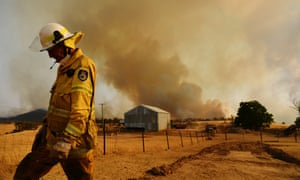
A Rural Fire Service firefighter views a flank of a fire on 11 January in Tumburumba, Australia.
The damage caused by extreme weather events such as
the Australian bushfires is at the top of the WEF’s risks report.
The World Economic Forum’s annual risks report found that, for the first time in its 15-year history, the environment filled the top five places in the list of concerns likely to have a major impact over the next decade.
Børge Brende, the president of the World Economic Forum, said: “The political landscape is polarised, sea levels are rising and climate fires are burning. This is the year when world leaders must work with all sectors of society to repair and reinvigorate our systems of cooperation, not just for short-term benefit but for tackling our deep-rooted risks.”
After a month in which bushfires have raged out of control in Australia, Brende said there was a need for urgent action.

Read the story from The Guardian by Larry Elliott - “Climate crisis fills top five places of World Economic Forum’s risks report.”

10 January, 2020

Australians Want Gov. to Mobilise Against Climate Change Like a ‘World War’

New research from The Australia Institute has found that two thirds of Australians believe the country is facing a climate emergency and that the Government should mobilise all of society to tackle the issue, like they did during the World Wars.
Key findings;
-          Two in three Australians (66%) agree that Australia is facing a climate change emergency and should take emergency action. Only one in four Australians (23%) disagree.
-          Two in three Australians (63%) agree that governments should mobilise all of society to tackle climate change, like they did during the World Wars.
-          A majority of Coalition (56%), Labor (74%) and Greens voters (80%) agree that governments should mobilise all of society to tackle climate change.

Read the story from The Australia Institute - “Australians Want Gov. to Mobilise Against Climate Change Like a ‘World War’.”

12 December, 2019

An open letter to men of a certain age: do you find Greta Thunberg annoying? Good

Some people find Greta Thunberg annoying, particularly men of a certain age who are skeptical about the climate emergency. If you are a man born before the 1980s, that’s not your fault: so was I, and here I am, trying to get to grips with the world around me. And if you’re skeptical about the climate emergency, you’re behaving like an IDIOT, but at least that’s something you can change. So listen up.
Greta Thunberg.
First, take the time to read up on the subject. Understand that your “position”, the one you’ve been boring your family with every year at the Christmas dinner table, contradicts the findings of 99% of the scientific community, which can’t be bothered to argue with you, because it doesn’t need to: they have data, mathematical models you would never understand, along with exhaustively checked research papers. Dude, do you really think you’re seeing something they’ve missed?
Second, Greta is a 16-year-old Swedish girl who long ago grew tired of the nonsense being peddled by her government — and the rest of the world’s governments — about the climate emergency, and instead decided to act. Her parents are supporting her, because children’s rights are taken very seriously in Sweden (which may seem like an aberration to you, but the Swedish education system is way ahead of those of most other nations), and they decided their daughter was mature enough to think for herself, and decided to support her. And while you’re at it, you can park your moral superiority about Greta: Asperger’s is not a disease, it’s a syndrome suffered by many people, in many cases undiagnosed, possibly including some of your friends and family. Asperger’s often means an ability to focus more fully and efficiently on a given topic, so in a sense, Greta is superior to you.

07 December, 2019

Should we call climate change an emergency?

The term Climate Emergency has appeared in public discourse with remarkable speed and is now increasingly the language of not just the climate movement, but also a growing number of cities, states, parliaments and Universities. Yet it is not without its critics who argue the language of emergency may have unintended consequences by providing license for potentially dangerous interventions in the climate system, such as solar geoengineering. This article briefly reviews where the term came from, its current influence, risks and prospects.
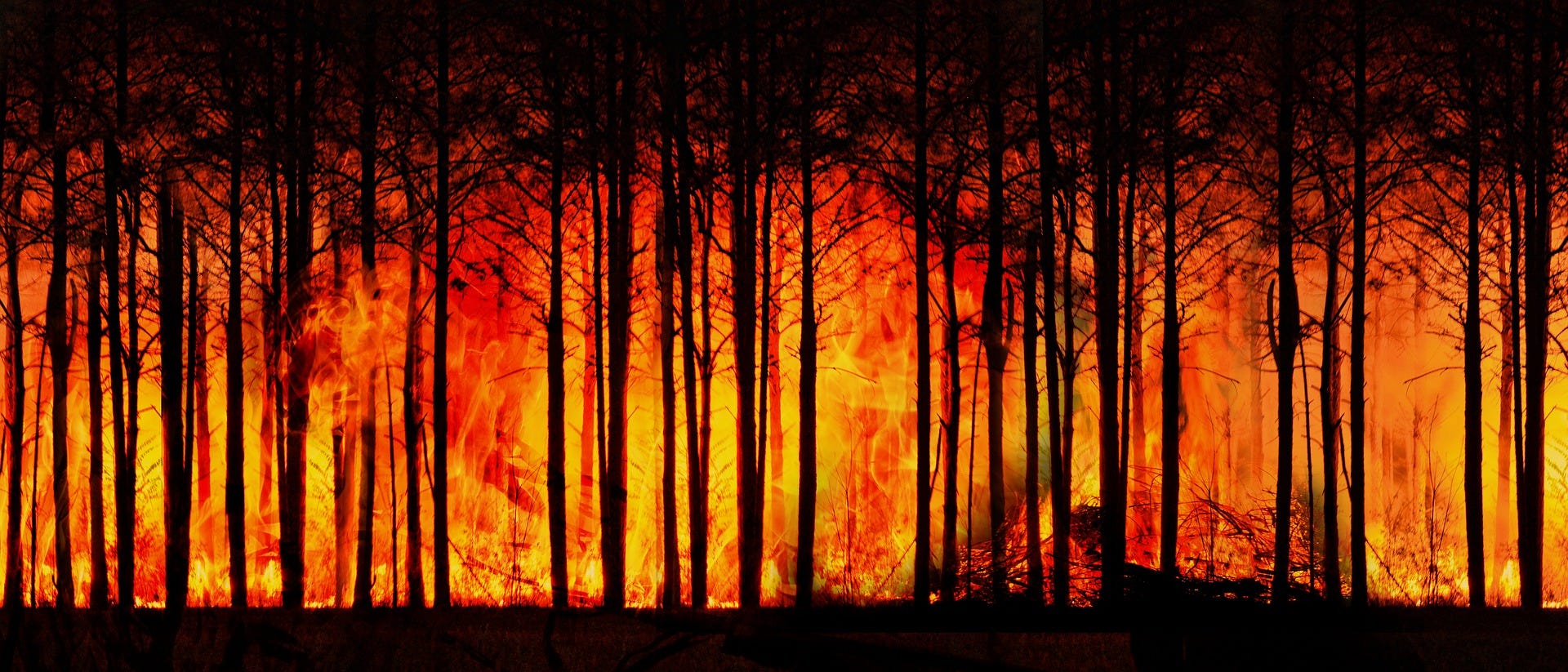
Climate change is increasing the frequency and severity of forest fires.
None of what follows reduces the urgency and seriousness of the climate crisis. In 2018 the Intergovernmental Panel on Climate Change (IPCC) released their most blunt report to date, stating that to stay under 1.5ºC requires the world economies to reach net zero emissions by 2050. Some researchers have since argued that climate change is happening faster than the IPCC has anticipated, potentially breaching the 1.5ºC temperature threshold by 2030. With still rising emissions, and bereft of a politically viable plan to date, current projections point to a 3ºC plus world before the end of this century, with the high risk of crossing climate thresholds from which we may not be able to escape. This is the risk, but not yet the unavoidable future; the world still has capacity to ensure a less dangerous future climate.

Read the story from Medium by Simon Kerr - “Should we call climate change an emergency?”

30 November, 2019

Climate Emergency could be the best thing in our lifetime.

Climate Emergency could be the best thing that will happen in our lifetimes, says Mik Aidt
Image result for the sustainable hour podcast“What if I told you the climate emergency will not only be the biggest and most disruptive, but also potentially the best thing that will ever happen in your lifetime?”
These are the words of Mik Aidt, the climate change activist who was influential in Greta Thunberg’s rise to prominence through his weekly podcast, ‘The Sustainable Hour’.
Mik, an Australian citizen with Danish heritage, is speaking at Recreation Conference in Hamilton/Kirikiriroa and says that the climate emergency has the capacity to bring richness, goodness, value and excitement to our lives.

25 November, 2019

European Parliament to vote on declaring climate emergency

BRUSSELS - The European Parliament is preparing to vote on Thursday, November 28 on a resolution to declare a climate emergency in Europe and on a global level, based on a proposal by the liberals of the Renew Europe (RE) group.

The Conference of Presidents has put the text on the agenda of its plenary session next week in Strasbourg.
"The next five years must be a game changer for our climate," said RE President Dacian Ciolos.

He said the first 100 days of the next European Commission led by Ursula von der Leyen "will be critical to deliver the right level of ambition for the Green Deal" of Europe. "Tabling this motion to declare a climate emergency in Europe, we send a clear signal: The Green Deal will not only be a list of regulations, it's a project for our generation, where Europe needs to show leadership and make a real difference to the health, environment and livelihoods of our citizens”.


09 November, 2019

Climate change: ‘Clear and unequivocal’ emergency, say scientists

A global group of around 11,000 scientists have endorsed research that says the world is facing a climate emergency.
drought
The world faces a climate emergency.
The study, based on 40 years of data on a range of measures, says governments are failing to address the crisis.

Without deep and lasting changes, the world is facing "untold human suffering" the study says.
The researchers say they have a moral obligation to warn of the scale of the threat.


03 November, 2019

Climate emergency declarations in 1,174 jurisdictions and local governments cover 290 million citizens

More than 1,100 jurisdictions in 23 countries have declared a climate emergency.

Populations covered by jurisdictions that have declared a climate emergency amount to 290 million citizens, with 53 million of these living in the United Kingdom. 

This means in Britain now roughly 80 per cent of the population lives in areas that have declared a climate emergency. In New Zealand, the percentage is even higher: 74 per cent of the population. 

It’s around 25 per cent in countries like Switzerland and Italy.


12 October, 2019

Climate emergency is the real 'inconvenience'


Letter from today’s (October 12, 2019) Melbourne Age.

I’m confused, if an overwhelming majority of Australians understand that the first step in negotiating our way out of this human-caused climate mess, is to declare at climate emergency, why can’t our government also see the difficulty?

Continuing the confusion, why did Australians, who apparently are concerned about the damage we are doing to our atmosphere, re-elect a government that is peppered with climate deniers; a group of people, both men and women, who appear to care nought for the future wellbeing of their fellow Australians.

Interestingly it can be explained; well, not explained, but at least understood in some sense.

Sustainability Victoria’s Dianna McDonald recently presented the findings of as large survey two a Melbourne forum, illustrating that while about 70 percent of Victorians care about climate changed want either action on mitigation and adaptation, that concern, the survey found, fell away dramatically  when asked to prioritise state projects.


The projects, it seemed were about “now”, while climate change, in the view of most survey respondents, was still some way off in the future.

11 October, 2019

Councillors need to show leadership

We call on Greater Shepparton City Council to declare a climate emergency.
Not just because other local governments across Australia and internationally have followed this course, but because we as a region based on agriculture and primary industry have much more at stake than urban-based governments if opportunities are missed or decisions are poorly considered.
This is not a radical move, as Greater Shepparton City Council is in many ways implementing accepted initiatives of a climate emergency plan; however, in our judgment, it lacks the public leadership of councillors.
Declaring a climate emergency is essential to focus the region’s attention on mitigating and adapting to climate change.
It targets two critical areas: first, to inf luence state, national and global actions to reduce carbon emissions as quickly as possible; and second, to ensure our region is focused on adapting to climate change.
Greater Shepparton City Council can by leadership inf luence state and federal governments to adopt the strategies and policies required.
Greater Shepparton City Council can show leadership to the community and industry to ensure that we focus on adapting to climate change in every consideration or decision made, whether that is personal, in business or on the land.
Councillors need to show leadership and focus our efforts and resources on adapting our region by being alert to change and taking up opportunities.
We cannot achieve this with division — division over the science, division about the politics and division at various levels of government.

Read the letter from John Pettigrew, Robert McLean, Terry Court published in The Shepparton News on October 11, 2019 - "Councillors need to show leadership".