Showing posts with label language. Show all posts

07 December, 2019

Should we call climate change an emergency?

The term Climate Emergency has appeared in public discourse with remarkable speed and is now increasingly the language of not just the climate movement, but also a growing number of cities, states, parliaments and Universities. Yet it is not without its critics who argue the language of emergency may have unintended consequences by providing license for potentially dangerous interventions in the climate system, such as solar geoengineering. This article briefly reviews where the term came from, its current influence, risks and prospects.
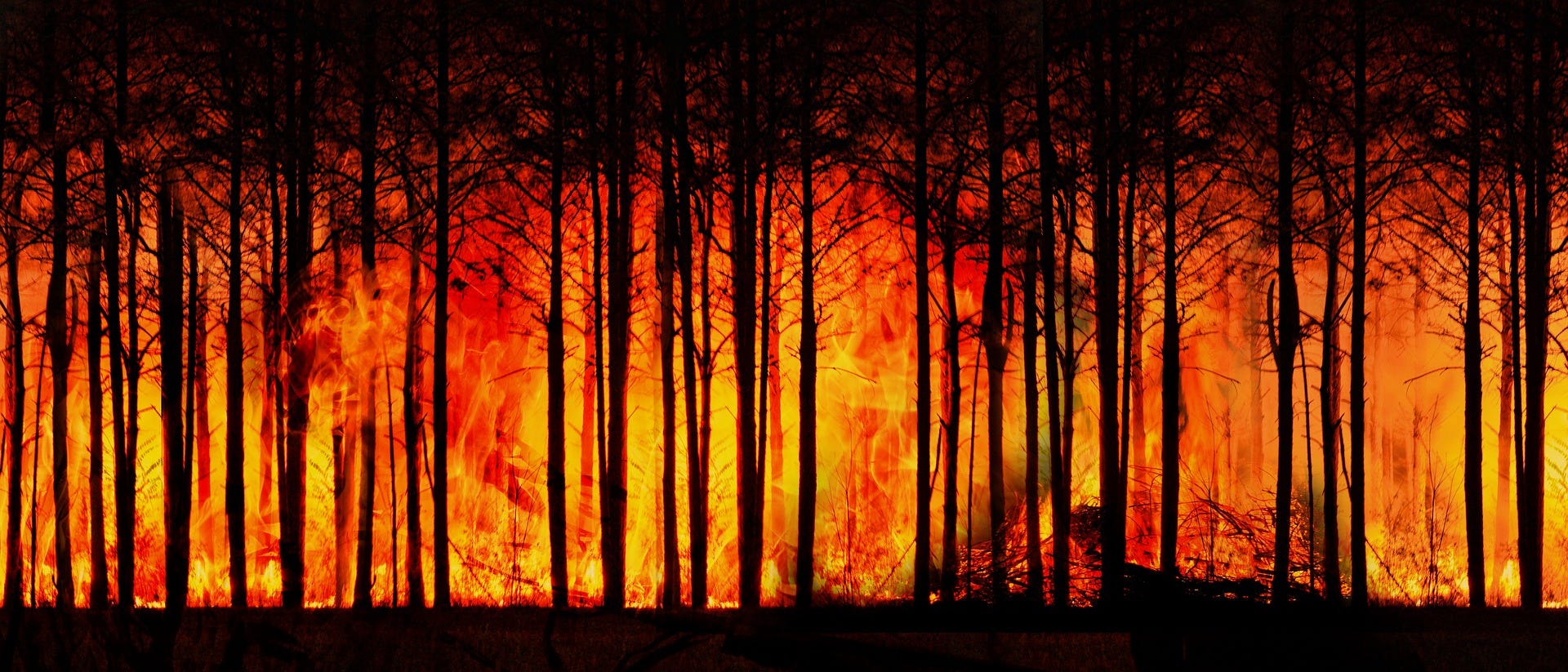
Climate change is increasing the frequency and severity of forest fires.
None of what follows reduces the urgency and seriousness of the climate crisis. In 2018 the Intergovernmental Panel on Climate Change (IPCC) released their most blunt report to date, stating that to stay under 1.5ºC requires the world economies to reach net zero emissions by 2050. Some researchers have since argued that climate change is happening faster than the IPCC has anticipated, potentially breaching the 1.5ºC temperature threshold by 2030. With still rising emissions, and bereft of a politically viable plan to date, current projections point to a 3ºC plus world before the end of this century, with the high risk of crossing climate thresholds from which we may not be able to escape. This is the risk, but not yet the unavoidable future; the world still has capacity to ensure a less dangerous future climate.

Read the story from Medium by Simon Kerr - “Should we call climate change an emergency?

24 May, 2019

Language is the Latest Weapon Against the Climate Emergency.”

The language of our impending environmental disaster is changing. In a note to staff, the Guardian on Friday announced it was responding to increasing concern about climate change by calling it the “climate emergency” instead.
Using language to combat a climate crisis.
The email, as tweeted by BuzzFeed reporter Mark Di Stefano, reads: “Use climate emergency, crisis, or breakdown instead of climate change. Use global heating instead of global warming… Use climate science denier or climate denier instead of climate skeptic.” The memo states that the aim is to “accurately reflect the phenomena they describe,” and points out that the term climate change “sounds rather passive and gentle when what scientists are talking about is a catastrophe for humanity.”

It’s a good point the word “change” hardly captures the self-imposed extinction of humankind, akin to calling an airstrike a “land-changer.” But not everyone agrees. One person on Twitter replied sarcastically: “THIS is what will finally convince people. Lol.” If by “people” they’re referring to those actively promoting denial, then fair enough. But when it comes to non-dogmatic skeptics, the change in language might actually help. And believe me, newspapers like the Guardian take language very seriously.

Read the story from OneZero by Erica Buist - “Language is the Latest Weapon Against the Climate Emergency.”

22 March, 2019

Study shows IPCC is underselling climate change.

A new study has revealed that the language used by the global climate change watchdog, the Intergovernmental Panel on Climate Change (IPCC), is overly conservative – and therefore the threats are much greater than the Panel's reports suggest.
It has been suggested the IPCC is underselling climate change. 
Published in the journal BioScience, the team of scientists from the University of Adelaide, Flinders University, the University of Bristol (UK), and the Spanish National Research Council has analysed the language used in the IPCC's Fifth Assessment Report (from 2014).

"We found that the main message from the reports—that our society is in climate emergency—is lost by overstatement of uncertainty and gets confused among the gigabytes of information," says lead author Dr. Salvador Herrando-Pérez, from the University of Adelaide's Environment Institute and Australian Centre for Ancient DNA.

"The IPCC supports the overwhelming scientific consensus about human impact on climate change, so we would expect the reports' vocabulary to be dominated by greater certainty on the state of climate science—but this is not the case.”

The IPCC assigns a level of certainty to climate findings using five categories of confidence and ten categories of probability. The team found the categories of intermediate certainty predominated, with those of highest certainty barely reaching 8% of the climate findings evaluated.


08 November, 2013

We're beyond 'argument' and 'debate', now it is 'conversation' and 'discussion'


The time for climate change action advocates to be using such words as “argument” or “debate” is over and from here it is more important to say “conversation” or “discussion”.

Understanding the mind
will help us understand
climate change.
Psychological research clearly illustrates that the use of “argument” or “debate” serves only the purposes of the skeptics who cherry-pick facts to convince the uninformed that climate change is not really happening.

In fact the last six words in that sentence “climate change is not really happening” is of itself dangerous and immediately becomes a “truth” for those among the undecided masses with those same people almost automatically and unconsciously attributing that “fact” to whoever made that statement, even if it is an august organization such as the Intergovernmental Panel on Climate Change (IPCC).

No longer can we discuss myths as basic research shows that within just days most people quickly forget what is and isn’t a myth and, equally become confused about the realities, the facts that were unambiguously explained to them.

People tend to hear what they want to hear and if what they are hearing does not within personal frames of reality, then they seem to mysteriously change what they heard.

Further confusing all that, the complexities and realities of climate change are so vast that it is unlikely they fit within the imagined realities of anyone and so while it is challenging and difficult to keep personal understandings in synch with what is really happening, it is doubly difficult to have another understand and accept what is unfolding.

So, be careful with your language, choose your words carefully and remember that even the most precise and accurately engineering statement can be manipulated by dedicated skeptics.