Showing posts with label Guardian. Show all posts

24 May, 2019

Language is the Latest Weapon Against the Climate Emergency.”

The language of our impending environmental disaster is changing. In a note to staff, the Guardian on Friday announced it was responding to increasing concern about climate change by calling it the “climate emergency” instead.
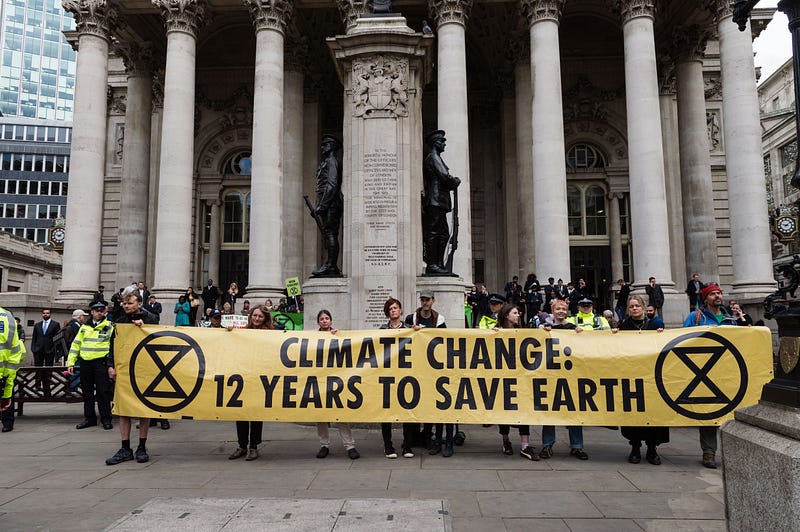
Using language to combat a climate crisis.
The email, as tweeted by BuzzFeed reporter Mark Di Stefano, reads: “Use climate emergency, crisis, or breakdown instead of climate change. Use global heating instead of global warming… Use climate science denier or climate denier instead of climate skeptic.” The memo states that the aim is to “accurately reflect the phenomena they describe,” and points out that the term climate change “sounds rather passive and gentle when what scientists are talking about is a catastrophe for humanity.”

It’s a good point the word “change” hardly captures the self-imposed extinction of humankind, akin to calling an airstrike a “land-changer.” But not everyone agrees. One person on Twitter replied sarcastically: “THIS is what will finally convince people. Lol.” If by “people” they’re referring to those actively promoting denial, then fair enough. But when it comes to non-dogmatic skeptics, the change in language might actually help. And believe me, newspapers like the Guardian take language very seriously.

Read the story from OneZero by Erica Buist - “Language is the Latest Weapon Against the Climate Emergency.”

29 January, 2016

Rebooting the climate movement


Until recently, the climate movement has relied on climate denial — be it outright denial of the science or political denial of the need to act — as a major uniting force.

For the ecosystem of groups, people and organizations that make up the climate movement, it was a metaphorical sun. Now, though, the era of climate denial as we’ve known it is gasping its last breaths. As a Guardian headline read in December, “The Paris agreement signals that deniers have lost the climate wars.” Without that unifying force, cracks in the climate movement are starting to deepen. Looking forward, our challenge is whether we can see these cracks as a chance to learn and adapt to an era where this movement shifts from the defensive to the offensive. To do that, however, we’re going to need to build the DNA of the climate movement.

Read the Waging Nonviolence story - “Why the climate movement needs a reboot.”

17 October, 2015

Charting those doing the most to stop global warming


I

n November, nearly 200 countries meet in Paris for UN talks to agree a new climate deal.

Find out below how their pledges - known as Intended Nationally Determined Contributions or INDCs in UN jargon - compare in our in-depth analysis of 14 key countries and blocs

07 September, 2015

Emma Thompson was wrong, but 'generally justified'


A

Emma Thompson - wrong
 but generally justified.
ctress and Greenpeace activist Emma Thompson was interviewed on BBC Newsnight about Shell’s drilling in the Arctic and associated climate change threats.

In the interview, Thompson made some inaccurate statements about the timescales associated with those climate threats. However, her concerns are generally justified.

22 July, 2015

Can organic agriculture mitigate climate change?


J

Organic farming - playing a role in
mitigating climate change?
ulius McGee asks, “Can organic agriculture mitigate climate change?”

Writing on the Guardian he says: “If you were to simply Google the question – which, being a millennial I have done – you would be led to believe that it does.

“I love a good underdog story and, like The Little Engine That Could, I think a lot of things are possible through optimism and hard work. But advocates of organic farming, like the United Nations Food and Drug Administration, think that it can mitigate climate change without the hard work necessary to truly make it happen.”

17 July, 2015

'Energy positive' house opens in Wales

B
ritain’s first low cost ‘energy positive’ house, which can generate more electricity than its occupants will use, opens on Thursday despite George Osborne axing plans to make house builders meet tough low carbon housing targets from next year.
The modest three-bedroom house built in just 16 weeks on an industrial estate outside Bridgend in Wales cost just £125,000 to build and, said its Cardiff University designers, will let occupants use the sun to pay the rent.
Using batteries to store the electricity which it generates from the solar panels that function as the roof, and having massive amounts of insulation to reduce energy use in winter months, it should be able to export electricity to the national grid for eight months of the year.

30 June, 2015

Naomi Klein and The Pope tackle global warming together


N

aomi Klein is a ferocious critic of 21st-century capitalism and now she has sided with Pope Francis to further the climate change conversation.

Naomi Klein - joining forces with The Pope.
Working with one of the pope’s most senior aides and a professor of climate change economics, Cardinal Peter Turkson, Ms Klein will aid the Pope as he attempts to shift the debate on global warming.

A Guardian story says: “Naomi Klein and Cardinal Peter Turkson are to lead a high-level conference on the environment, bringing together churchmen, scientists and activists to debate climate change action. Klein, who campaigns for an overhaul of the global financial system to tackle climate change, told the Observer she was surprised but delighted to receive the invitation from Turkson’s office.”


12 June, 2015

Many young people simply too busy with life to concern themselves with climate change


A

 recent discussion arrived at the conclusion that many young people are simply too busy with living to worry about and act upon the climate disruption that will severely limit their lives.

While the was a parochial conversation, the Guardian has talked with young people from around the world about why it’s hard for their peers to care about the environment, how they reconcile their fears about the future, what made them start caring, and the little things that give them hope.

Their story - “Young people speak out about their fears and hopes on climate change” – helps us understand why there is not a more sweeping mobilization of young people helping mitigate the causes of global warming.

06 June, 2015

The coal boom that is choking China


C


hinese miners last year dug up 3.87bn tonnes of coal, more than enough to keep all four of the next largest users – the United States, India, the European Union and Russia – supplied for a year.

The country is grappling with the direct costs of that coal, in miners' lives, crippling air pollution, expanding deserts and “environmental refugees”.

Desire for change contends with fears that cutting back on familiar technology could dent employment or slow growth, and efforts to cut consumption do not always mean a clampdown on mining.

Check out the Guardian story – “The coal boom choking China”.

11 February, 2015

Warmer atmosphere, more moisture, uncontrollable rain dumps


A warmer atmosphere will absorb more moisture and then dump it seemingly uncontrollably.

Examples of this can be seen all around the world and Malawi is presently wrestling with just that dilemma.

A Guardian story headed: “Malawi floods devastation far worse than first thought” tells of a disaster evolving from those circumstances that has displaced nearly a quarter of a million people, and threatens disease and malnutrition.

20 December, 2013

We need to reframe, rather than increase the volume


Jonathon Rowson.
Each of us needs to reframe our conversation about climate change.

The director of the Social Brain Centre at the Royal Society of Arts, Jonathon Rowson, list eight points that we need to consider if we are to effectively advance the conversation.

In a Guardian story headed: “Turning up the volume on climate change isn’t changing behaviour”, he notes that the scientific message on climate change is already loud and clear, but we persistently ignore it.

10 January, 2013

Australia's heatwave reaches Great Britain


Australia’s present heatwave is of sufficient intensity to have reached Great Britain.

George Monbiot.
A recent edition of the Guardian newspaper included an article by George Monbiot headed: “Heatwave: Australia's new weather demands a new politics”.

In the article Monbiot takes on Opposition leader, Tony Abbott, asking what he would say now that the country is being ravaged by a record heatwave,

Mr Abbott has repeatedly questioned the science and impacts of climate change, insisting that "the science is highly contentious, to say the least" and demonstrates what some say is a wilful ignorance.

04 December, 2012

Monbiot warns of struggle with plutocracy


Plutocracy reigns supreme everywhere, including Shepparton, and even if it is not genuine members of that genre who rule, it is most certainly plutocratic pretenders.

George Monbiot.
Columnist with Great Britain’s Guardian newspaper, George Monbiot, has written about the influence of the plutocrats and how their ideology makes is impossible to address climate change.

Neoliberalism arose in the 1970 to become a force in world politics in the next decade and now their actions and beliefs put the humanity at serious risk.

Writing in a piece headed “Forbidden Planet”, Monbiot said, “The 1000-year legacy of current carbon emissions is long enough to smash anything resembling human civilisation into splinters.”

04 January, 2012

Links from Terry Court


Tatura's Terry Court provided the following links (thanks Terry)

•••••••  All you need to know about temperatures increases in Australia in 1 graph


•••••••  300 years of fossil fuels in 300 seconds (video)


•••••••  The ultimate climate change FAQ


Building the definitive guide to climate change, covering science, politics and economics                  

•••••••  Naomi Oreskes - Merchants of Doubt


ABC Science Show, 8 January 2011


•••••••  New study suggests climate change would continue even without greenhouse gases


Bill Graveland, The Canadian Press, 12 January 2011

A study predicts there will be havoc akin to a big-budget Hollywood disaster movie in the next 1,000 years even if people stop emitting all carbon dioxide into the atmosphere now.

 
Fire and rain: the lessons of natural disasters


Queenslanders knew this summer's storms would be severe and bad flooding was likely.


Have Insurers Begun to Detect Climate Change in Storm Damage?


Evan Lehmann and Climatewire, SCientific American, January 11, 2011

It's likely that the number of strong storms involving rain, snow and hail is also rising because of warming temperatures, not just urban sprawl and expanding development


Mike Steketee, The Australian, 8 January 2011

Meteorological figures confirm the empirical evidence that temperatures are rising.