Showing posts with label George Monbiot. Show all posts

07 March, 2020

Suing For Survival

Image result for george monbiot
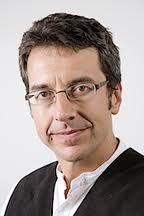
George Monbiot.
Our survival is not an afterthought. The defence of the living planet cannot be tacked retrospectively onto business as usual. Yet this is how almost all governments operate. They slap the word “sustainable” on damaging projects they have already approved, then insist this means they’ve gone green. If we are to survive and prosper, everything must change. Every decision should begin with the question of what the planet can withstand. 
This means that any discussion about new infrastructure should begin with ecological constraints. The figures are stark. A paper published in Nature last year showed that existing energy infrastructure, if it is allowed to run to the end of its natural life, will produce around 660 gigatonnes of CO2. Yet, to stand a reasonable chance of preventing more than 1.5°C of global heating, we can afford to release, in total, no more than 580 gigatonnes. In other words, far from building new fossil power plants, the survival of a habitable planet means retiring the damaging projects that have already been built. Electricity plants burning coal and gas and oil will not secure our prosperity. They will destroy it.
But everywhere special interests dominate. Construction projects are driven, above all, by the lobbying of the construction industry, consultancies and financiers. Gigantic and destructive schemes, such as the Oxford-Cambridge Expressway, are invented by lobbyists for the purpose of generating contracts. Political support is drummed up, the project achieves its own momentum, then, belatedly, a feeble attempt is made to demonstrate that it can somehow become compatible with environmental promises. This is what destroys civilisations: a mismatch between the greed of economic elites and the needs of society.

Read the piece by Guardian columnist,  George Monbiot - “Suing For Survival.”


21 April, 2017

A three-track strategy for climate mitigation

In his analysis of the Paris Agreement on mitigating climate change, The Guardian’s George Monbiot said: “By comparison to what it could have been, it’s a miracle. By comparison to what it should have been, it’s a disaster.” On one hand the outcome was better than predicted as Article 2 states that parties to the agreement will hold global average temperature increases “to well below 2°C” and “pursue efforts” to limit this to 1.5°C.
The "carbon law" for the 2-degree target,
from “A roadmap for rapid decarbonisation”,
 Rockström, Gaffney, Rogelj, Meinshausen,
Nakicenovic and Schellnhuber, Science 355:
 1269-1271, 24 March 2017

On the other hand these goals are only aspirational and current (voluntary) climate mitigation commitments are too limited and too slow to prevent catastrophic outcomes. There is an enormous (and currently unbridgeable) lag between the pace of political, economic and technological change and the rapid (non-negotiable) rate of climate change. 

To ensure safe outcomes the global economy will have to be rapidly restructured. This will require a massive response similar in scale and urgency to the Allied effort in World War II. However, at this time strong international action is a distant dream.


Read the Climate Code Red story by Graeme Taylor - “A three-track strategy for climate mitigation.”

12 February, 2017

'All Together Now '- George Monbiot

  • Community will be that place from which humanity will be best placed to address and mount a defence against climate change. Here, George Monbiot discusses the value and importance of community.
    George Monbiot.
Without community, politics is dead. But communities have been scattered like dust in the wind. At work, at home, both practically and imaginatively, we are atomised.

Politics, as a result, is experienced by many people as an external force, dull and irrelevant at best, oppressive and frightening at worst. It is handed down from above rather than developed from below. 
There are exceptions – the Sanders and Corbyn campaigns for example – but even they seemed shallowly rooted by comparison to the deep foundations of solidarity that movements grew from in the past, and may disperse as quickly as they gather.

It is in the powder of shattered communities that anti-politics swirls, raising towering dust devils of demagoguery and extremism. These tornadoes threaten to tear down whatever social structures still stand.


Read this week’s article by Guardian columnist, George Monbiot - “All Together Now.

12 December, 2016

The Golden Arches Theory of Decline


‘Why is there a worldwide revolt against politics as usual? Because corporate globalisation has crushed democratic choice’

George Monbiot.
A wave of revulsion rolls around the world. Approval ratings for incumbent leaders are everywhere collapsing. Symbols, slogans and sensation trump facts and nuanced argument. One in six Americans now believes that military rule would be a good idea. From all this I draw the following, peculiar conclusion: no country with a McDonald’s can remain a democracy.

Twenty years ago, the New York Times columnist Thomas Friedman proposed his “golden arches theory of conflict prevention”. This holds that “no two countries that both have McDonald’s have ever fought a war against each other since they each got their McDonald’s”.

Friedman’s was one of several end-of-history narratives suggesting that global capitalism would lead to permanent peace. He claimed that it might create “a tip-over point at which a country, by integrating with the global economy, opening itself up to foreign investment and empowering its consumers, permanently restricts its capacity for troublemaking and promotes gradual democratization and widening peace.” He didn’t mean that McDonald’s ends war, but that its arrival in a nation symbolised the transition.

Read the piece by Guardian  columnist, George Monbiot - “The Golden Arches Theory of Decline.”


29 November, 2016

'Unlucky Number' - the challenges we face

George Monbiot.
Climate change, or at least our efforts to measure up to it are unlikely to be realised, according to Guardian columnist, George Monbiot.

Writing about the crises facing us (humanity), Monbiot says (and this is point 10):

National climate change programmes bear no connection to the commitments governments made at Paris. Even if these programmes are fully implemented (they won’t be), they set us on a climate change trajectory way beyond that envisaged by the agreement. And this is before we know what Trump will do.

Point 11 says:

One of the many impacts of climate breakdown – aside from such minor matters as the inundation of cities, the loss of food production and curtailment of water supplies – will be the mass movement of people, to an extent that dwarfs current migration. The humanitarian, political and military implications are off the scale.

Read the latest piece by George Monbiot - “Unlucky Number.”

13 October, 2016

Neoliberalism is creating loneliness. That’s what’s wrenching society apart


(Capitalism has favoured humanity with many wonders, while its unbridled variant, neoliberalism, can equally be attributed with many of humanity’s ills, among them a disrupted climate system that has been worsened and accelerated from the "competitive self-interest and extreme individualism” lamented here by George Monbiot – Robert McLean)

 Illustration by Andrzej Krauze
What greater indictment of a system could there be than an epidemic of mental illness? Yet plagues of anxiety, stress, depression, social phobia, eating disorders, self-harm and loneliness now strike people down all over the world.

The latest, catastrophic figures for children’s mental health in England reflect a global crisis.

There are plenty of secondary reasons for this distress, but it seems to me that the underlying cause is everywhere the same: human beings, the ultrasocial mammals, whose brains are wired to respond to other people, are being peeled apart. Economic and technological change play a major role, but so does ideology. Though our wellbeing is inextricably linked to the lives of others, everywhere we are told that we will prosper through competitive self-interest and extreme individualism.

Read the comment piece by George Monbiot on The Guardian - “Neoliberalism is creating loneliness. That’s what’s wrenching society apart.”

01 January, 2016

Incompetence, ignorance and concessions have us 'going downhill fast' - Monbiot


George Monbiot.
These floods were not just predictable. They were predicted. There were clear and specific warnings that the management of land upstream of the towns now featuring in the news would lead to disaster.

On December 9, one of my readers told me this. “I live in the middle of Foss drainage board land above York, where flooding would not harm a single property but water is sent down as fast as possible to York”. A few days later, another reader wrote to me, warning that “upstream flood banks now protect crops, not the City of York.” On December 26th, the Foss exploded into York.

Read the piece by George Monbiot - “Going Downhill Fast.”

(The incompetence, ignorance and concessions to favoured interests George Monbiot writes about here will be repeated around the world as people, communities and nations wrestle with the consequences of the seriously disrupted world climate system – Robert McLean.)

02 December, 2015

George Monbiot accuses British Government of recklessness


W
here you would expect to see caution and circumspection, instead there is a rush to action. Where you would expect to see determination and resolve, there is only vacillation and delay.

The contrast between the government’s handling of the Syrian crisis and its handling of the climate change crisis could not be greater. It responds to these issues with an equal and opposite recklessness.

“Why is the government so quick to bomb, yet so slow to act on climate change?”
 
“We have to hit these terrorists in their heartlands right now,” David Cameron told parliament last week. While it is hard to contest the principle of fighting Isis, to do so without a clear strategic purpose and intelligible objectives is lunacy.

Read George Monbiot’s latest column - “Churchill Syndrome.”

22 November, 2015

The one matter we can't name - 'population' - is the one that really matters


T
George Monbiot -
the population
crisis.
his column is about the population crisis. About the breeding that’s laying waste to the world’s living systems. But it’s probably not the population crisis you’re thinking of. This is about another one, that we seem to find almost impossible to discuss.

You’ll hear a lot about population in the next three weeks, as the Paris climate summit approaches. Across the airwaves and on the comment threads it will invariably be described as “the elephant in the room”. When people are not using their own words, it means they are not thinking their own thoughts. Ten thousand voices each ask why no one is talking about it. The growth in human numbers, they say, is our foremost environmental threat.

Read George Monbiot’s column - “Pregnant Silence.”

31 October, 2015

Media looks away as the earth burns


“In the greatest environmental disaster of the 21st Century (so far), Indonesia has been blotted out by smoke. And the media”


I
've often wondered how the media would respond when eco-apocalypse struck. I pictured the news programmes producing brief, sensational reports, while failing to explain why it was happening or how it might be stopped. Then they would ask their financial correspondents how the disaster affected share prices, before turning to the sport. As you can probably tell, I don’t have an ocean of faith in the industry for which I work.

George Monbiot.
What I did not expect was that they would ignore it.

A great tract of the Earth is on fire. It looks as you might imagine hell to be. The air has turned ochre: visibility in some cities has been reduced to 30 metres. Children are being prepared for evacuation in warships; already some have choked to death. Species are going up in smoke at an untold rate. It is almost certainly the greatest environmental disaster of the 21st Century – so far.

Read George Monbiot’s comment piece - “Nothing to See Here.”

28 May, 2015

Fossil fuel burning was responsible 250 million years ago - Monbiot


I

t now looks as if the greatest mass extinction on Earth – 250 million years ago – was caused by fossil fuel burning, according to Guardian columnist, George Monbiot.

George Monbiot.
In “A Prehistory of Violence” he writes, “ Do you want to know the real reason for the advances by Isis in Iraq and Syria? Changing lightbulbs in America. This is the explanation given by John McCain, Republican chair of the Senate armed services committee.

“At the weekend he blamed Barack Obama’s inability to magic away Islamic State on the president’s belief that climate change is “the biggest enemy we have”. Never mind the role of the Iraq war – which Mr McCain supported – in destabilising the region, destroying the Iraqi army and creating the opportunities Isis has exploited,” Monbiot wrote.

11 March, 2015

George Monbiot - 'Applauding ourselves to Death'


George Monbiot.
The idea that we might maintain present lifestyles while mitigating climate change is simply self-deception.

Our present energy-intense ways of living is a fallacy and can even be extended to the frequent national and international gatherings of those who call and argue for societal changes.

All these gatherings are of themselves energy-intensive and their very existence contradicts the values they espouse.

Guardian columnist, George Monbiot, writes about this contradiction and apparent lack of action in his latest piece: “Applauding Themselves to Death”.

He writes: “If you visit the website of the UN body that oversees the world’s climate negotiations, you will find dozens of pictures, taken across 20 years, of people clapping. These photos should be of interest to anthropologists and psychologists. For they show hundreds of intelligent, educated, well-paid and elegantly-dressed people wasting their lives.”

27 July, 2014

Monbiot 'slices and dices' his way through the gobbledegook


Thoughtful  and
provoking -
George Monbiot.
George Monbiot is a sharp thinker and someone to whom we should listen.

With that in mind it is well worth investing about one hour and 18 minutes to hear his views about "The Pricing of Everything".

In April this year, Monbiot, who is a thoughtful and thought provoking newspaper columnist, was the invited speaker for the annual SPERI lecture.

Monbiot, in typical “take no prisoner’s” way of writing (in this case talking), slices and dices his way through the often British Government inspired “gobbledegook”.

02 April, 2014

Media 'balance' raise George Monbiot's ire


Media “balance” has raised its disturbing and rather ugly head again as the conversation about climate change continues.

Guardian writer, George Monbiot has turned to the Henrik Ibsen’s play, “An Enemy of the People” to illustrate his point in criticising an editorial piece in a media compatriot, the Daily Telegraph.

Writing in a Guardian story headed: “So, after the IPCC report, which bit of the world are you prepared tolose?”, Monbiot says that the media and most businesses have no intention of seeking to avoid the coming tragedies.

25 March, 2014

George Monbiot discusses the impact humans have had on earth


George Monbiot always has something interesting to say – and today he discusses the obvious impact humans have had on earth.

“You want to know who we are? Really? You think you do, but you will regret it. This article, if you have any love to the world, will inject you with a venom – a soul-scraping sadness – without an obvious antidote,” Monbiot writes in The Guardian.
 
The thoughtful Monbiot article is headed: "Destroyer of Worlds".

06 October, 2013

Voice of reason exposes 'unreason'


George Monbiot.
British journalist, George Monbiot, who is the calm voice of reason, recently wrote about its antithesis in an article headed the “Age of Unreason”.

Monbiot laments the fact the governments of Britain, Canada and now Australia, appear intent on trying to stamp out scientific dissent.

06 September, 2013

Monbiot warns us about the 'Abbottalypse'


George Monbiot.
Britain’s George Monbiot has weighed in on tomorrow’s Australian federal election with an article on The Guardian entitled “Abbottalypse Now”.

Monbiot writes: “Abbott is following a familiar script, the 4Ds of climate change inaction, promoted by fossil fuel lovers the world over. Deny, then defer, then delay, then despair".

Beneath the Wisteria supporters are urged to read what Monbiot has to say, consider it and then vote.

15 March, 2013

Leaving our carbon in the ground make sense, good sense


George Monbiot talks sense, good sense.

Unlike many of those who contest his views, Monbiot, as he has illustrated through an upfront declaration of his income, is not influenced the immensely wealthy and equally powerful fossil fuel lobby,

George Monbiot.
In his latest piece, “Frozen Assets”, Monbiot argues that the only way of knowing whether or not governments are serious about climate change is their position on leaving most of their fossil fuel reserves in the ground.

“We have already discovered far more carbon than we can afford to burn, if we are not to commit the world to very dangerous levels of heating. Only if most of it – four-fifths according to a detailed estimate – is left where it sits is there a good chance of preventing more than two degrees of global warming,” he says.

“It doesn’t matter,” he argues, “how many wind turbines you build, or energy-saving lightbulbs you install, or more economical cars you manufacture: unless most of our fossil fuel reserves are declared off-limits they will, sooner or later, be extracted and burnt.

“The question of whether it is sooner or whether it is later makes little difference: we have already identified more underground carbon than we can afford to burn between now and the year 3000,” he writes.

10 January, 2013

Australia's heatwave reaches Great Britain


Australia’s present heatwave is of sufficient intensity to have reached Great Britain.

George Monbiot.
A recent edition of the Guardian newspaper included an article by George Monbiot headed: “Heatwave: Australia's new weather demands a new politics”.

In the article Monbiot takes on Opposition leader, Tony Abbott, asking what he would say now that the country is being ravaged by a record heatwave,

Mr Abbott has repeatedly questioned the science and impacts of climate change, insisting that "the science is highly contentious, to say the least" and demonstrates what some say is a wilful ignorance.

16 December, 2012

'The Reason' for Beneath the Wisteria


By Robert McLean


George Monbiot has helped me understand the reason for Beneath the Wisteria.


George Monbiot's
Age of Consent.
Writing in “Age of Consent: A Manifesto for a New World Order”, the English thinker, author and newspaper columnist, discussed how rarely an upheaval happens spontaneously and how existing institutions are unable to reform themselves.

Considering that climate change, humanity’s greatest ever threat, will only be abated if our way of life is subjected to an upheaval and if existing institutions are reformed, then those who gather Beneath the Wisteria face a significant challenge.

We are the “specific you” discussed by Monbiot and although it is important we personally instigate changes that will ease the dynamics of climate change; the overriding importance to we, “specifically you”, is to act and behave in such a manner that encourages, enables and ensures the broad sweep of our community to become sensitive to the societal needs and demands of this new and emerging world.

Monbiot discusses the need for a “shift” adding: “This shift, in other words, depends not on an amorphous them, but on a specific you.

“It depends”, Monbiot added, “on your preparedness to abandon your attachment to the old world and start thinking like a citizen of the new; to exchange your security for liberty, your comfort for elation.

“It depends on your willingness to act”, he wrote.

Beneath the Wisteria is the medium through which we can act.

The need to address the foundational paradigm that is manifesting itself as climate change is urgent and demands more than simply gathering each month to really only “talk among ourselves” and so have little or no influence on the unfolding dilemmas.

True, it is beneficial to gather with like-minded souls, have your emotional resources refurbished and refreshed to return to the respective parts of our communities and be willing to again discuss climate change realities with your counterparts.

Many, it seems, acknowledge that our climate is changing and those same people all want to do something that will help, but within that most are unsure what it is they need to do. Changing a few light globes will not help.

Gathering Beneath the Wisteria each month, and supporting the essence of its reason, illustrates that you are conscious that the human story has become somewhat distorted and that we need not simply start a new chapter, but re-write the entire book.

Our society’s adherence to an extremist ideology, namely capitalism, for the past couple of centuries is what has brought us to this troubling position.

Writing in his 1999 book, “The Post Corporate World: Life After Capitalism”, David Korten said “Societies based on extremist ideologies of either the far left (rigid collectivization) or the far right (ruthless individualism) are inherently unstable”.

Korten continues: “There is nothing inevitable or immutable about the ways in which we choose to structure our economic lives. Choices as to the rules and structures that define our economies are human choices. Because those rules and structures play such a powerful role in expressing our values and shaping how we live, it is proper that they be subject to thorough public debate and dialogue informed by serious, critical and non-ideological analysis.”

It has been the voracious appetite of the world’s corporations that has lead us to this point; a place at which inequality abounds, the earth’s environment is in absolute disarray and the “common” upon which we all depend, the atmosphere, has been, and is being, fundamentally changed, putting humanity at risk.

David C. Korten's
'Post-Corporate
World'.
Turning to Korten again: “Although capitalism claims to be an engine of wealth creation, in fact its primary vehicle, the corporation is more accurately described as a powerful engine of wealth extraction – it profits dependent on imposing enormous costs on the rest of society so that a few top executives and large shareholders may enjoy unconsciously large financial rewards.

“If market rules applied, most of the dominant corporations would have long ago found themselves unable to cover their own costs and gone bankrupt or been restructured into smaller, more efficient firms,” Korten wrote.

Korten, an enthusiast of the traditional market, but not the all-consuming corporation notes that far less than one per cent of the world’s population has a consequential partnership in corporate ownership.

“This leads”, he wrote, “to a rather shocking conclusion. The triumph of global capitalism means that more than half of the world’s one hundred largest economies are centrally planned for the primary benefit of the wealthiest one per cent of the world’s people!

“It is a triumph of privatized central planning over markets and democracy. Even more it is the triumph of the extremely wealthy over the remainder of humanity,” Korten wrote.

It is clear that neither the ideologies of either extreme (the far left or far right) have within them the capacity to mitigate the dilemmas of climate change and so we need to choose a middle road built on sharing, co-operation, mutuality and collaboration, values that are somewhat foreign to those extremist ideologies.

The sad and confusing part is that those from the capitalistic side of the spectrum believe they adhere to those values and yet a wounded earth and a community in which the ever-widening fiscal gap between people suggests otherwise.

We gather Beneath the Wisteria in the hope increasing our understanding of the damage we are doing to environment; what we can do about that; enjoying the company of like-minded people; and, hopefully, helping our community to see that the “business as usual” belief of the corporate world is absolutely inadequate and, importantly, inappropriate.