Showing posts with label America. Show all posts

04 November, 2019

The Age of Collapse

You don’t have to look very hard to see that the great theme of the 21st century so far is sudden, ruinous collapse. America, Britain, Europe — all teetering on the brink. But it’s hardly just countries in a political sense. The planet. A mass extinction of life itself. People’s sense of optimism and faith in the future imploding into nationalism, extremism, fascism. Trust, meaning, belonging, purpose. Bang! Everything, more or less, as far as you look, seems to be collapsing in on itself, as wide as you care to see. Why is that?

If collapse is the theme of this new century, then what’s really weird, strange, and remarkable is that when you really look at all these very different kinds of collapse, whether what’s imploding is economies, societies, minds, food chains, or ecosystems, it seems to follow a specific and characteristic pattern too. The glaciers melt from the bottom. The insects and bees and little fish and mammals are dying off first. The oceans are warming faster than the atmosphere. Economies are imploding because a new class of poor has grown — whether in America, Britain, or Europe. Do you see the pattern yet?

Read the Medium story by Umair Haque - “The Age of Collapse.”

17 October, 2019

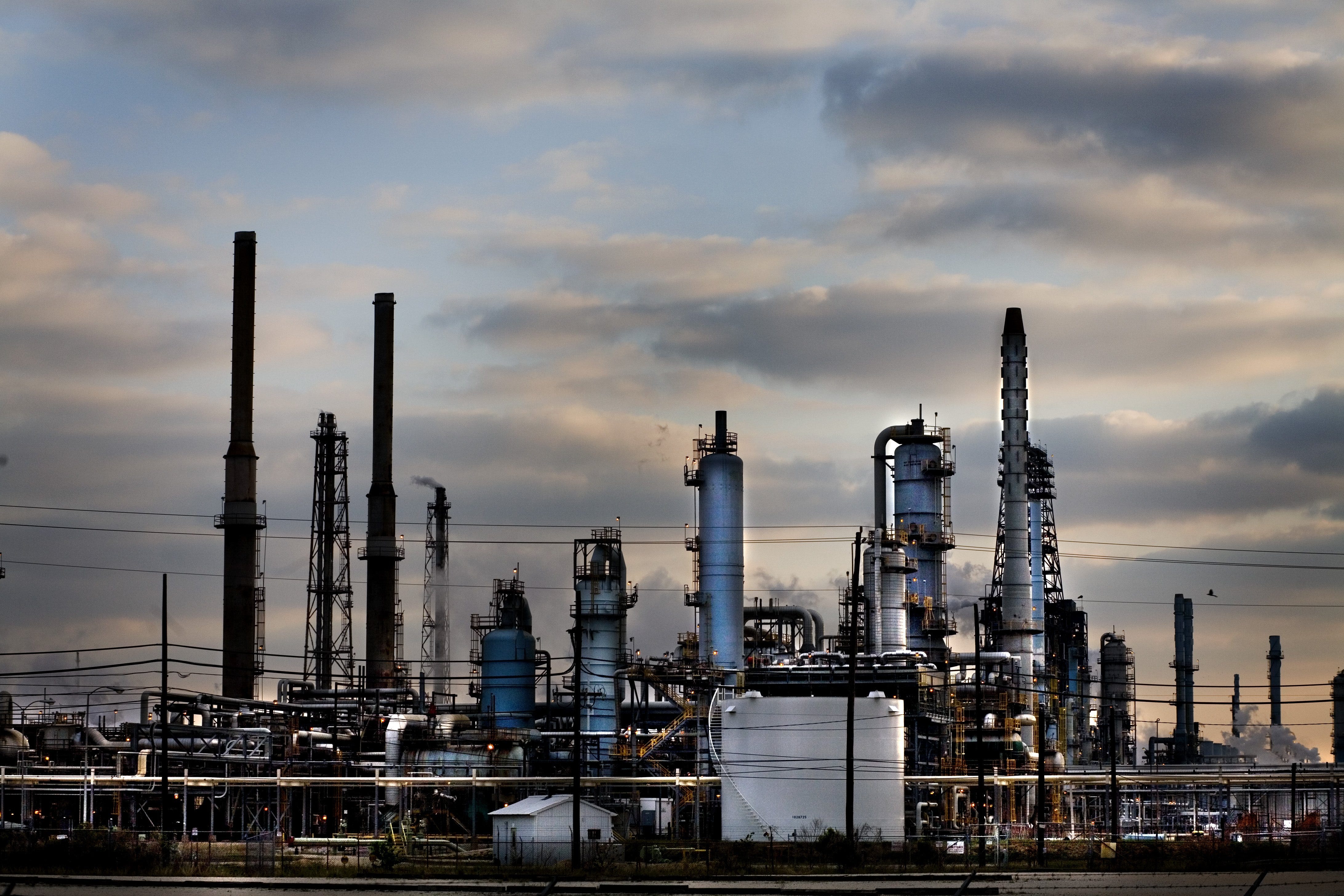
The Truth About Big Oil and Climate Change

In America, the world’s largest economy and its second biggest polluter, climate change is becoming hard to ignore. Extreme weather has grown more frequent. In November wildfires scorched California; last week Chicago was colder than parts of Mars. Scientists are sounding the alarm more urgently and people have noticed — 73% of Americans polled by Yale University late last year said that climate change is real. The left of the Democratic Party wants to put a “Green New Deal” at the heart of the election in 2020. As expectations shift, the private sector is showing signs of adapting. Last year around 20 coal mines shut. Fund managers are prodding firms to become greener. Warren Buffett, no sucker for fads, is staking $30bn on clean energy and Elon Musk plans to fill America’s highways with electric cars.

Even as concerns about global warming grow, energy firms are planning to increase fossil-fuel production. None more than ExxonMobil.

Yet amid the clamour is a single, jarring truth. Demand for oil is rising and the energy industry, in America and globally, is planning multi-trillion-dollar investments to satisfy it. No firm embodies this strategy better than ExxonMobil, the giant that rivals admire and green activists love to hate. As our briefing explains, it plans to pump 25% more oil and gas in 2025 than in 2017. If the rest of the industry pursues even modest growth, the consequence for the climate could be disastrous.

ExxonMobil shows that the market cannot solve climate change by itself. Muscular government action is needed. Contrary to the fears of many Republicans (and hopes of some Democrats), that need not involve a bloated role for the state.

Read the Medium story from The Economist - “The Truth About Big Oil and Climate Change.”

31 December, 2018

Jerry Brown: Climate change challenges as serious as those faced in World War II

WASHINGTON — California Democratic Gov. Jerry Brown warned that America and the rest of the world are falling behind in the fight against climate change and likened the challenge to fighting the Nazis in World War II.
California Democratic Gov. Jerry Brown.
In an interview for Sunday's "Meet the Press," the outgoing governor called on President Donald Trump to take the lead in addressing the issue. "Instead of worrying about tariffs, I'd like to see the president and the Congress invest tens of billions in renewable energy, in more-efficient batteries, to get us off fossil fuel as quickly as we can," Brown said.

"I would point to the fact that it took Roosevelt many, many years to get America willing to go into World War II and fight the Nazis. Well, we have an enemy, though different, but perhaps, very much devastating in a similar way. And we've got to fight climate change. And the president's got to lead on that.”


20 April, 2018

America’s first climate change refugees are preparing to leave an island that will disappear under the sea in the next few years

ISLE DE JEAN CHARLES, Louisiana — America comes to an end here. Connected to the marshes and moss-laced bayous of southern Louisiana by two miles of narrow causeway, waters lapping high on each side, Isle de Jean Charles takes you as far into the Gulf of Mexico as you can go without falling in. But the dolour in the salt air is not just about loneliness and separation. It’s about impending demise.
This used to be a forest of oak and cypress trees.
Don’t call it a death sentence – the intention is the opposite – but state officials in late March made the announcement that had been a long time coming. Some on the island, nearly all members of the Biloxi-Chitimacha-Choctaw Indian tribe, met it with relief; others with hostility.

Marking the kick-off of what will be the first climate resettlement of its kind in the entire United States, land had been chosen an hour’s drive to the north for a whole new town to be thrown up. No one will force them exactly, but the intention is clear: to evacuate those still living on the island to the new site, where at present nothing but sugar cane stands, before it is too late.


13 March, 2018

9 questions about climate change you were too embarrassed to ask

There is a decisive and growing fissure in America right now as climate change science and federal climate change policy move steadily in opposite directions.

In his first year in office, President Donald Trump has shirked all responsibility on the issue, rejecting or beginning to dismantle President Obama’s signature climate policies: the Paris climate agreement and the Clean Power Plan, the main domestic policy for limiting greenhouse gas emissions.

Trump has appointed to key positions more than 20 climate change skeptics, including Scott Pruitt and Rick Perry to lead the Environmental Protection Agency and the Department of Energy. And officials at these and other science agencies have been removing the words “climate change” from government websites and press releases.


05 November, 2017

Liberals have a responsibility too: make climate change a top issue

(In a brutal news sense, this story is a little dated, but the topic is as current as tomorrow - Robert McLean)

On Thursday when the announcement hit that Trump was taking America out of the Paris Climate Accord, my social media feed predictably blew up. As an environmental journalist with a lot of left-leaning friends, you can imagine what it looked like: anger, frustration, shock, sadness, another outrage from the world’s most outrageous leader. All of a sudden every one I knew was talking about climate change; I’ll admit it was a nice change of pace, but after nearly ten years of covering climate change I also knew it would be fleeting.

A firefighter carries a woman from her car after it was caught in street
flooding as a powerful storm moves across Southern California on
February 17, 2017 in Sun Valley, California. After years of severe drought,
 heavy winter rains have come to the state and the evacuation of hundreds
of residents from Duarte, California for fear of flash flooding from areas
denuded by a wildfire last year. Research has shown that California’s
drought was likely worsened by climate change. And climate change,
 as well, is also leading to heavier, more extreme rainfalls worldwide.
Liberals have been the champions of climate action for decades, but they’ve largely championed it as an afterthought, something that comes near the end of a long to-do list, like the brussels sprouts you conveniently forget to pick up at the grocery store (polling bears this out). When I bring up climate change during chats with left-leaning friends, I often get that pause – that suspended moment – when I can see someone in the group look askance. I can see what they’re thinking, “Again, Jeremy, with the climate change?”


Read the story on The Guardian by Jeremy Hance - "Liberals have a responsibility too: make climate change a top issue.”

26 January, 2017

Donald Trump turns his back on the world

Donald Trump's America does not exist in a vacuum. Other nations are calculating and positioning to take advantage.

Much has been said about Russia. But the rising great power competing with the US for leadership in the Asia-Pacific and for authority worldwide is China.

Strikingly, Beijing has decided that Trump represents a great opportunity to win power and influence at America's expense.

Already this year, China's President Xi Jinping has made two prominent speeches aimed at the wider world. He is setting up a contrast with Trump that is deliberate and stark.

Read Peter Hartcher’s story in The Sydney Morning Herald - “Donald Trump turns his back on the world.”

13 October, 2016

Hillary Clinton Finally Campaigns on Climate, With Al Gore at Her Side

Experienced environmental
writer, Marianne Lavelle.
For her first speech of the fall campaign focused exclusively on climate change, Hillary Clinton went to Florida, the state at greatest risk from sea level rise, and one of the tightest and most consequential swing states in this presidential election.

She brought with her to Florida a man she knew could amplify her message on both scores: former Vice President Al Gore. But at times, she almost sounded like she could out-Gore someone whose voice on climate change has echoed in politics for decades.

"Climate change is real, it's urgent and America can take the lead in the world in addressing it," Clinton said. "We can develop new clean energy solutions. We can transform our economy. We can rally the world to cut carbon pollution. And we can fulfill our moral obligation to protect this this planet for our children and our grandchildren."

And as if she sensed a political opportunity like rising wind and waves, she broadened the fight beyond her contest with Donald Trump, a climate change infidel, to take on others of his ilk.

Read the Inside Climate News story by Marianne Lavelle - “Hillary Clinton Finally Campaigns on Climate, With Al Gore at Her Side.”

22 January, 2016

Choosing to be powered by renewable energy sources


In 2013, Greensburg, KS — a town of less than 800 residents about 100 miles from Wichita — became the first city in the United States to go 100 percent renewable, powering their homes, businesses, and municipal buildings via wind power. In 2014, Burlington, VT joined Greensburg, becoming the largest city in the United States to be powered by renewable energy sources. A year later, Aspen, CO, joined the coalition, becoming the third city in the United States to go 100 percent renewable.

It took just three years for three U.S. cities to make the transition to 100 percent clean energy — and experts in the field of renewable energy, as well as several prominent environmental groups, expect that pace only to quicken in the coming years. Just last month, San Diego — the country’s eighth-largest city — made a legally binding commitment to transition to 100 percent renewable energy by 2035. In total, 12 U.S. cities — including San Francisco, CA, Georgetown, TX, and Ithaca, NY — have made commitments to transition to 100 percent clean energy, though many have yet to solidify those commitments as law.


(Australia imitates America in many things and if we can follow this lead, some of our communities are already well ahead of the pack, then renewable energy will become a reality – Robert McLean).

15 December, 2015

Much back-slapping, whopping, hollering after Paris, but now we need action


-       Robert McLean.

Paris ended among much back-slapping, whopping, hollering and claims that global temperatures had been contained at two degrees or less.

Paris climate conversations ended with much
 back slapping, whooping and hollering.
Many said agreements arising from talks involving most of the world’s nations, among them the trio described as the “three gorillas” – America, China and India - were less than perfect, however they were unquestionably a step in the right direction.

Maybe the applause, and in some cases sobbing, was really about a moment in which, for the first time ever, the world community was as one in its acknowledgement that climate change was real and that it was the result of human behaviour.

The “less than perfect” barbs were directed at the fact that many targets were somewhat rubbery and were more about the plasticity of accounting than the hard, unavoidable and measurable facts of actual carbon dioxide emissions.

For some time now many reputable international organizations have said that global temperatures of at least two degrees above pre-industrial temperatures are locked-in and unavoidable regardless of what evolved from the Paris discussions.

Interestingly, the populist view of what happened in Paris would probably be that the world is poised to achieve less than two degrees and probably as low as 1.5 degrees.

That in itself is worrying for an almost certain by-product is a “job done” self-congratulatory rub of the hands that would almost certainly be followed by a return to our carbon-polluting ways.

In the rush of information flowing from Paris, it seems little has been said about the understanding that even if all the promises made by the world’s nations’ in their Intended Nationally Determined Contributions (INDCs) were adhered to global temperatures would rise to an unsettling 2.7 degrees.

Any understanding about how the world would or could cope with a 2.7 degree increase in temperatures would be little more than an educated guess for it is something humans, in their relatively short history,  have never experienced.

Rather than rhetoric, it is a time we should be listening to our scientists who are saying that not only do we need to completely eliminate our carbon dioxide emissions, but we should be achieving negative emissions, meaning we should be removing them in some revolutionary fashion from earth’s atmosphere, and not, as some are suggesting, in some as yet unproved and possibly catastrophic geoengineering idea.

Considering that, we must remember that our arrival at this nexus is the outcome of the massive geoengineering activity by humans prosecuted in ignorance.

04 August, 2015

Australia - from leaders to queue jumpers - to the back of the queue


A

ustralia only recently had a government that was setting the pace on climate change mitigation, but now it has rushed to the back of the queue, and the people here seem happy about that.

U.S. President Barack Obama - prepared
 to tackle climate change
Australian’s are among the world’s best (not a title we should be at all proud of) at denying that humans are responsible for the climate changing global warming.

Americans, like Australians are among the world worst per-capita polluters, and the most strident deniers, but at least the U.S., unlike Australia, has a leader prepared to do something about changing the country’s culture, and its behaviour.

EcoWatch reports: “President Barack Obama declared Sunday that his administration is poised to unroll greater-than-expected cuts to greenhouse gas emissions from U.S. power plants, in what he called “the biggest, most important steps we’ve ever taken to combat climate change.”

20 June, 2015

Feeling a little better about owning an Amazon Kindle


O

wning an Amazon Kindle (an electronic reader) has long left me feeling confused and conflicted.

Personal justification is that the wonderfully convenient and effective device is more environmentally friendly than the use of paper to print books and then transport them around the world.

That is, of course, until consideration is given to the massive power needs of the huge server “farms” Amazon maintains in America.

Softening that concern, just a little, is the news that Amazon has plan to create an 80 megawatt solar farm to help power its web services data centres.

Treehugger writes about this development - “Amazon to build large 80-MW solar farm in Virginia”.
 
Robert McLean.

03 June, 2015

Optimistic, innovative and confident humans face adaptation challenges


H

umans are generally optimistic, innovative and so confident that they can adapt to most things.

Many see global warming and just another of life’s “speed bumps” that will be easily smoothed out through technology and the adaptation that has been the hallmark of homo-species, particularly modern human beings.

However, global warming raises the bar even higher and so the need for adaptation is going to even more pressing and as suggested in a story by Vox, even “messier than we think”.

The story - “Adapting to climate change is going to be a lot messier than we think” – discusses adaptation, saying: It's a hopeful idea. Except you can also find quite a few examples of places where we're doing the exact opposite of that — places where we're actively increasing our exposure to risks like floods and wildfires, either by building more homes in disaster-prone areas or by subsidizing those who do with taxpayer money.”

This is America, but here in Australia, the equation is strikingly similar.

28 May, 2015

Fossil fuel burning was responsible 250 million years ago - Monbiot


I

t now looks as if the greatest mass extinction on Earth – 250 million years ago – was caused by fossil fuel burning, according to Guardian columnist, George Monbiot.

George Monbiot.
In “A Prehistory of Violence” he writes, “ Do you want to know the real reason for the advances by Isis in Iraq and Syria? Changing lightbulbs in America. This is the explanation given by John McCain, Republican chair of the Senate armed services committee.

“At the weekend he blamed Barack Obama’s inability to magic away Islamic State on the president’s belief that climate change is “the biggest enemy we have”. Never mind the role of the Iraq war – which Mr McCain supported – in destabilising the region, destroying the Iraqi army and creating the opportunities Isis has exploited,” Monbiot wrote.

22 April, 2015

Applause to Melbourne Age as it continues to canvass climate change case


T

he Melbourne Age deserves applause for its efforts to alert it readers to the trials evolving from climate change and what should be happening to avoid any worsening of events.

Today it carries two stories that explain that although Australia’s overall carbon dioxide contribution is tiny, just 1.3 per cent, on a per capita basis we are the worst offenders, clearly ahead of Canadians and nearly 10 per cent worse than Americans.

Australia’s leadership has dropped the ball completely, hiding behind mistruths, myths and management of the facts and the last paragraph in - “Australia should 'get off sidelines' with 30 per cent emissionscut by 2025: report” – is not just telling, but alarming: “The report was given to media outlets ahead of its release on conditions that prevented Fairfax Media from seeking comment from the Abbott government.”

The second story - “Climate Change Authority presents a compelling case for deeper Australian emissions cuts” – again illustrates that the Abbott Government has much to do if Australia is to become a decent global citizen.

13 April, 2015

Important water source is disappearing - single digit snowpacks


M

elting snow is an important source of water for many people in many part of the world.

And now the Environmental News Network tells us that nine American states have reported record low snowpacks.

It says, “A report from the US Department of Agriculture states, ‘the largest snowpack deficits are in record territory for many basins, especially in the Cascades and Sierra Nevada where single – digit percent of normal conditions prevail’.”

The story  - “Record low snowpacks in Southwest is bad news for water supplies” – says, “Very low snowpacks are reported in most of Washington, all of Oregon, Nevada, California, parts of Arizona, much of Idaho, parts of New Mexico, three basins in Wyoming, one basin in Montana, and most of Utah.”

07 April, 2015

Considering global warming in the U.S.


A

merican figures for those who agree that global warming is a reality.

U.S, figures, although not the same for many reasons, reflect those of Australia.

Check out the interactive charts here: “Estimated % of adults who think global warming is happening, 2014.”

28 June, 2014

We procratinate and the costs mount


The idea that climate change will be hugely expensive seems to escape most in the business world.

CBC News has written about that topic in its story headed: “Climate change will cost big business dearly, report warns”.

CBC focusses on what is happening in America, but the dynamic is similar in most developed countries.

It quotes a report published by the so-called “Risky Business Project” that argues that American businesses need to start factoring in weather and environmental-related losses, and take tangible steps toward reducing carbon dioxide emissions.

16 April, 2012

Watch what is happening the U.S. and see the reflection in Australia


This is what is happening in America, but the difficulties being experienced there are reflected similarly here in Australia.

The March heat wave finally caught the attention of major television news outlets.

In recent weeks, ABC and NBC have run stories linking the “unprecedented” heat wave to climate change.

Watch the report – “Climate on steroids”.