Showing posts with label ABC. Show all posts

07 July, 2019

Dear Journalists of Canada: Start Reporting Climate Change as an Emergency

On May 6, the United Nations released a scientific report warning that around a million species are threatened with extinction due to human activity, including climate change. But, according to an analysis by Media Matters for America, on the day of that release, the nightly newscasts of ABC and NBC felt it was more important that their audiences learned about the birth of the newest royal baby — someone who will likely never have any say over their day-to-day lives. And I’ve found most of Canada’s 15 most-read English language daily broadsheets felt the same way.
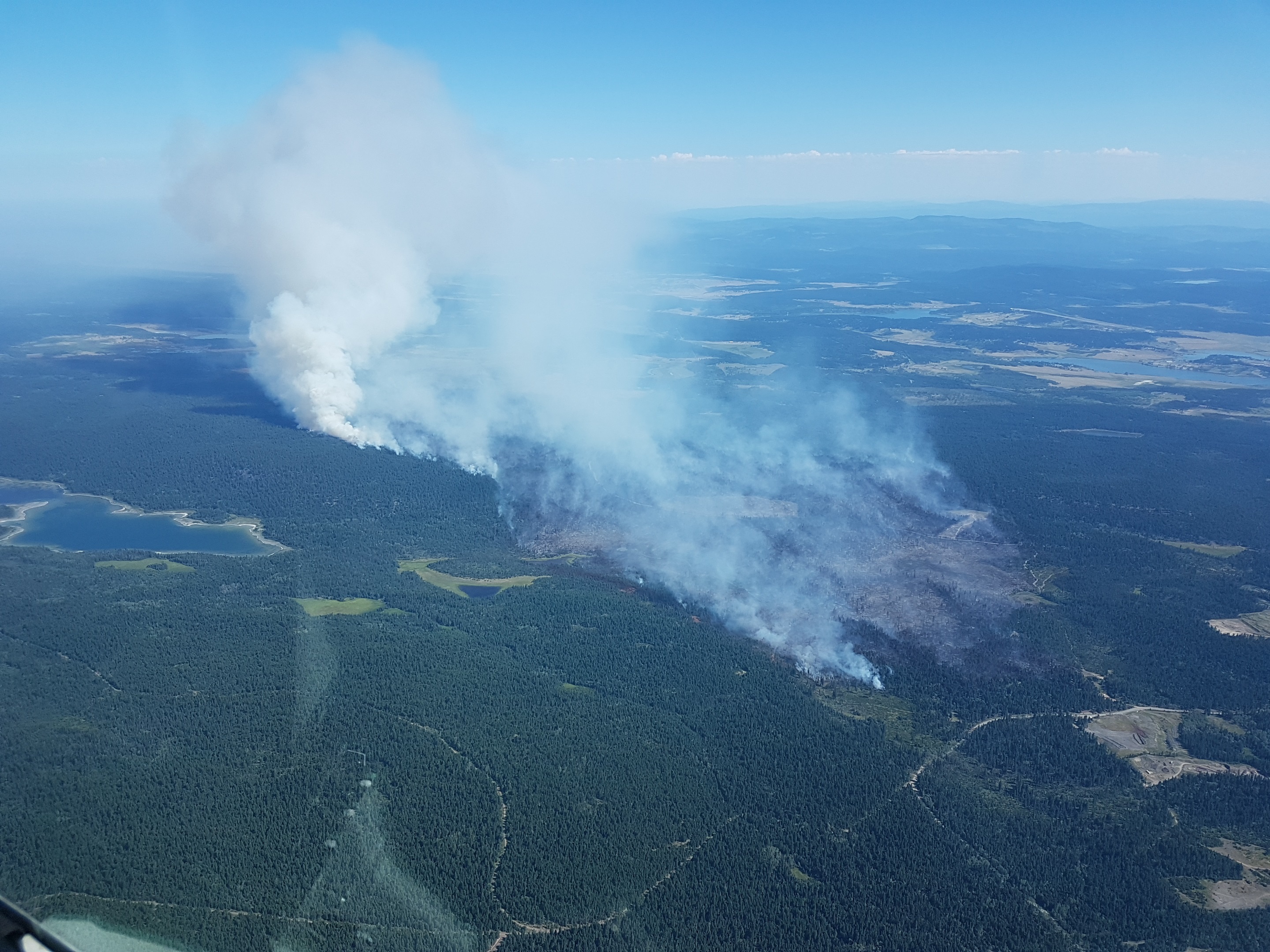
Gustafson-Fire.jpg
Few media stories mentioned the demonstrable connection
between the climate crisis and increasing wildfire activity in
BC last summer, even though it was one of the major reasons
why that season was the worst on record.
Between May 6 and 7, 13 of those newspapers failed to front stories about the United Nations’ devastating finding. Instead, the National Post ran a story about the Duke and Duchess of Sussex’s son, with 10 others teasing that birth on their front pages. Eight of the teasers were placed above-the-fold, next to a photograph, or both — drawing reader attention to pictures of Harry, Meghan and their beaming well-wishers.


Read the story from The Tyee by Sean Holman - “Dear Journalists of Canada: Start Reporting Climate Change as an Emergency.”

02 September, 2017

Don’t Look Now - George Monbiot

George Monbiot - "Our greatest predicament
is blotted from our minds."
It is not only Donald Trump’s government that censors the discussion of climate change; it is the entire body of polite opinion. This is why, though the links are clear and obvious, the majority of news reports on Hurricane Harvey have made no mention of the human contribution.

In 2016, the United States elected a president who believes that human-driven global warming is a hoax. It was the hottest year on record, in which the US was hammered by a series of climate-related disasters. Yet the total combined coverage for the entire year on the evening and Sunday news programmes on ABC, CBS, NBC and Fox News amounted to 50 minutes. Our greatest predicament, the issue that will define our lives, has been blotted from our minds.

This is not an accident. But nor (with the exception of Fox News) is it likely to be a matter of policy. It reflects a deeply ingrained and scarcely conscious self-censorship. Reporters and editors ignore the subject because they have an instinct for avoiding trouble. To talk about climate breakdown (which in my view is a better term than the curiously bland labels we attach to this crisis) is to question not only Donald Trump, not only current environmental policy, not only current economic policy, but the entire political and economic system.

Read the piece by Guardian columnist, George Monbiot - “Don’t Look Now.”

24 March, 2017

How the fossil the fuel industry has screwed energy consumers

As we absorb the hysterical claims – in the ABC, Fairfax, the Murdoch media and commercial TV – about the prospect of imminent power shortages, let’s just cast our eyes back just two and a half years when the fossil fuel industry was predicting …. wait for it …. an unprecedented supply glut.

According to the Australian Energy Market Operator at the time, there would be no need for any new generation for up to 10 years in south-eastern Australia, because of what was then described as that “unprecedented glut”.

“What we’re saying is that is that there’s an oversupply of generation capacity at present,” an AEMO spokesman, Joe Adamo, told the ABC at the time. And you can see that from those forecasts there.


Read the story by Giles Parkinson on RenewEconomy - “How the fossil the fuel industry has screwed energy consumers.”

17 August, 2016

Malcolm Roberts leaves NASA 'flummoxed' with Q&A claims

NASA boss, Gavin Schmidt.
It probably takes a lot to faze Gavin Schmidt, the head of NASA's Goddard Institute of Space Studies, but the outlandish views of Malcolm Roberts, the newly elected One Nation senator, can do it from half a world away.

On Monday night's Q&A program on the ABC, Roberts was venting his now well-worn view that there was no empirical evidence of climate change.

Read Peter Hannam’s story in the Melbourne Age - “Malcolm Roberts leaves NASA 'flummoxed' with Q&A climate claims.”

11 February, 2016

'Sounds more like religion than science' - CSIRO boss

Dr Larry Marshall - 'sounds more
 like religion than science.'
The CSIRO's chief has told the ABC the backlash from his decision to restructure the organisation has made him feel like an "early climate scientist in the '70s fighting against the oil lobby" and that there is so much emotion in the debate it almost "sounds more like religion than science".

Dr Larry Marshall said he would not be backing down on his controversial shake-up of the organisation's climate divisions, telling the ABC he was yet to be persuaded.


(Larry Marshall appears to making and “either, or” call for Australia’s preeminent science body in relation to its approach to climate change. However, the dilemma is so complex, so consuming and so inconsiderate of what we would like to do and spend our money on, that we cannot afford to the choosey about what it is we do. He has argued that the institution needed to get “measurement and modelling” and use its resource to better understand what Australia and world needed to do in terms of adaptation.
Constrained by an ideologically limited budget, Dr Marshall has made a call, but I suggest the wrong one for without the measurement and modelling, our scientists, and others, do not what they are adapting to or how far it is they need to reach.
Both the fundamentals of climate science need to be attended to as do the broader sweep of behaviour and how we must act responsibly in our attempts to adapt to different circumstances that will evolve as climate change unfolds.
The suggestion by Dr Marshall that the climate conversation is so emotional that it sounds more like religion than science is somewhat ironic as any challenge to the market-driven economy (the prime cause of climate change) will bring an emotive, religious-like response from most anyone, including certainly our PM and probably Dr Marshall himself -
Robert McLean).


09 February, 2016

Driverless electric bus to be trialled in Perth

The French-made driverless electric
 bus soon to be trialled in Perth
A driverless electric bus is set to be trialled in Perth in a test run for the use of autonomous vehicles on West Australian roads.

The staged trial is being conducted and funded by WA's RAC later this year using a French-made electric shuttle bus.

With no driver, it will use three-dimensional sensing technology to carry 15 passengers at speeds up to 45 kilometres per hour.


(We need these urgently, we need them to replace the privately owned fossil-fuel powered car, and we need them to be a part of a public transit system which allows people to move quickly, conveniently, easily and energy-efficiently around our urban areas – Robert McLean).

06 February, 2016

Seriousness of climate change escapes CSIRO overlords


by Robert McLean
The seriousness of climate change and the urgency of better understanding this world-wide social dilemma appear to escape the Turnbull-led coalition government.

Larry Marshall - CSIRO chief executive.
Pleading innocence and arguing government organizations such as the CSIRO are both free and independent to decide on internal infrastructure matters, the science body has strangely fallen into lockstep with the government’s protestations that our future is about profit and growth, and ideology that contradicts what is needed if the world is ever to ease exponential problems manifesting themselves as climate change.
According to the ABC, the CSIRO Staff Association reports that about 1,400 jobs had been lost at the organisation in the past two years.

But scientists became far more optimistic when the Prime Minister launched the National Innovation and Science Agenda in December last year, but that brought with it a $90 million commitment to the CSIRO to support increased commercialisation of research.

So although scientists were somewhat more optimistic, these latest announcements have kept them off-balance.

The ABC understands cuts are expected to be made within the Oceans and Atmosphere and Land and Water divisions and up to 350 positions in the organisation will change.

The organisation will attempt to redeploy as many staff as possible into emerging areas such as data science, but there are likely to be redundancies in the process.

And further, the ABC reports, “The CSIRO's climate science divisions are expected to be pared back as part of a massive shake-up of the organisation.”

CSIRO chief executive Larry Marshall, said the Paris conversation conclusively proved the existence of climate change suggesting changes within the CSIRO would see the organisation move away from measuring and monitoring climate change, to instead focus on how to adapt to it.

The ABC reported that the cuts were expected to be made within the Oceans and Atmosphere and Land and Water divisions and up to 350 positions in the organisation will change.

Commercialization of the CSIRO falls in line with the neoliberal and privatization ideologies of the coalition government, but fails dramatically in simply measuring the extent of climate change, for until we know the dimensions of the dilemma, we know not what to adapt too, how extreme our adaption measures need to be and when and where we should do what.

Recently, I was fortunate enough to sight an email from a CSIRO scientist, written to an uncle, that said:

“As you have read the CSIRO has cowered under government pressure to essentially cease climate research and focus on science which has immediate economic value for the organisation. Unfortunately the business leaders in CSIRO continue to demonstrate their ignorance of the science we do, and seem incapable of pushing back against illogical and incompetent political ideology. I'm sure you will hear much more about this as scientists and concerned public voice their opinions!”

14 December, 2015

'Unusual, exteme' burst of heat hits Adelaide


The "unusual, extreme
burst of heat in Adelaide.
Adelaide is set to face six days of temperatures above 35 degrees Celsius in what the Bureau of Meteorology has described as an "unusual" and "extreme burst of heat".

Senior climatologist Darren Ray said a six-day run of such temperatures had only been recorded three times during November and December since European settlement.

Temperatures in the city are forecast to hit 35C today and Tuesday, while Wednesday is expected to reach 36C, Thursday 37C, Friday 38C and Saturday 42C ahead of a change.

13 August, 2015

Heat is our greatest natural enemy


H

eat has proved to be humans’ greatest natural enemy.

According to an ABC story heatwaves have caused more deaths in Australia in the past 200 years than any other natural hazard.

Victoria’s Black Saturday bushfires in 2009 illustrate that perfectly as the bushfires themselves killed about 170 people and resulted in media saturation, but what was very little reported was the fact that extreme heat in the week preceding the fires killed more than 300 people.

And now the ABC reports: “Western Australian researchers say they have discovered the best way to predict the impact a heatwave will have on the health system, through the same formula used to predict the heatwave itself.

“The group from Curtin University and the health department found the formula, developed by the Bureau of Meteorology to predict the severity of a forthcoming heatwave, could also be used to accurately predict the resulting demand on health services.”

11 August, 2015

Government expected announce 26 per cent cut in carbon emissions


T

he Federal Government will announce today it plans to cut carbon emissions by at least 26 per cent of 2005 levels by 2030.

Australia is currently aiming to reduce emissions by 5 per cent by 2020, based on the level of emissions in 2000.

But the Coalition has not set out a plan for beyond 2020, despite previously flagging it would do so mid-year.

13 July, 2015

Tony Abbott defends the indefensible admiting he want the CEFC gone


P

rime Minister Tony Abbott says it is "no secret" he wants the $10 billion Clean Energy Finance Corporation (CEFC) abolished, but while it is still in place it should be as useful as possible.

The Opposition and the Greens have accused the Government of trying to get rid of the taxpayer-funded authority by stealth, by issuing a new directive to stop the CEFC from investing in wind farms and household rooftop solar projects.

"The Parliament set up this corporation with a very expert board and very expert staff to make these decisions free of political interference," Opposition environment spokesman Mark Butler said.

"What we see now is Tony Abbott trying to nobble this corporation for his own ideological purposes."

But Mr Abbott says it is not useful for the CEFC to invest in established technologies that can easily attract private funding.

08 July, 2015

Approval given for mine on prime agricultural land amid protests


T

NSW Farmers Association
president Fiona Simson,
she has objected to the mine.
he ABC reports that the Federal Government has given conditional approval for an open-cut coal mine near prime agricultural land on the Liverpool plains in north-western New South Wales.

In 2008, Chinese company Shenhua paid the former state Labor government $300 million for an exploration licence covering 20,000 hectares of the Gunnedah Basin coal field.

The NSW Planning Assessment Commission approved the project subject to several conditions in January this year.

Federal Environment Minister Greg Hunt stalled the assessment process in April and called for more scientific research into the Watermark project's impacts on water resources in the area.

30 June, 2015

Unprecedented alliance could boost Australia's climate credentials


“

An unprecedented alliance of business, union, environmental, investor and welfare groups has been formed to forge what it sees as urgent common ground on climate policy,” the ABC reports.

“The highly unusual coalition — to be branded the Australian Climate Roundtable — comes as developed nations gear up for the Paris Climate Conference in December, where leaders will be under pressure to update their strategies for dealing with climate change.

“While Australia's main political parties support the international goal of limiting climate change to less than 2 degrees Celsius above pre-industrial levels, the alliance warns the objective will require "deep global reductions".

“The high-profile members cover some influential employer and industry lobby groups, such as the Australian Industry (Ai) Group, the Business Council of Australia (BCA), the Australian Aluminium Council, the Energy Supply Association and the Investor Group on Climate Change.”


Meanwhile, an Associate Professor at Griffith University, Michael Howes has written on The Conversation about the round table.

He writes: “Climate policy is in the media yet again, but this time it might be different. The set of policy principles released by the Australian Climate Roundtable yesterday are extraordinary for two reasons.”

31 May, 2015

Once it was for the birds, but now we can fly by the sun


F

Solar Impulse 2 - helping us
 fly like birds.
lying anywhere was once only for the birds, oh how things have changed!

Now we can fly anywhere we want, pretty much whenever we like, but that very activity has worsened circumstances that led to an ambitious adventure to circumnavigate the world in a solar-powered plane.

That adventure is well advanced not “Solar Implulse 2” is presently on the  most ambitious leg of its knowledge-building journey.

The ABC reports - “Sun-powered Solar Impulse 2 plane begins ambitious Pacific Ocean leg of round-the-worldvoyage” – on the latest exploits of this revolutionary solar plane

26 May, 2015

Aerosols to save our Great Barrier Reef - Prof Mumby


T

hose with a rich understanding of climate change and its causes have long feared geoengineering gaining legitimacy.


Prof Peter Mumby - aerosols
to save our Great Barrier Reef.
All geoengineering techniques are untried, untested, uncertain, and while they have theoretical positive outcomes, the potential unintended consequences are so great that most climate scientists do not include them as potential solutions to the unfolding dilemmas.

In that background of thinking the ABC reports: “A Queensland scientist says blasting aerosols into the atmosphere could save the world's coral reefs from the effects of climate change.”

The story says, “It is an idea which scientists have previously dismissed as "irrational and irresponsible", but University of Queensland professor Peter Mumby said shooting sulphur dioxide into the sky was an option that should be considered if political agreements failed to stop global warming.

“Scientists call it stratospheric aerosol-based solar radiation management — using aerosols to scatter sunlight high above the Earth,” the ABC reports.

10 May, 2015

Agreement on RET target, but energy sources debate goes on


T

he Federal Government and Opposition have reached agreement on a revised Renewable Energy Target (RET), but remain at odds over the energy sources to be included.

The major parties have agreed to cut the target to 33,000 gigawatt hours (GWh), but Labor is objecting to the Government's push to include native wood burning.

The Government and Opposition have been negotiating for months over a cut to the original 41,000 GWh target, which the Coalition wanted reduced to reflect lower overall energy use.

05 May, 2015

James Hansen says the two-degree goal is a 'nonsense'


O

James Hansen.
vernight, more than 40 national nuclear societies from around the world have signed a Nuclear for Climate declaration.
Meeting at the 2015 International Congress on Advances in Nuclear Power Plants in Nice, France, the declaration commits the nuclear societies to limiting global warming to two degrees by 2050.

That's thought by many to be a 'safe' level of climate change, and is the goal that will be on the table at Paris later this year at the UN climate talks, as nations seek agreement on a new post-2020 global climate treaty.

But top US climate scientist James Hansen says the goal is a 'nonsense', and the world is on the wrong track thinking that two degrees of warming is 'safe'.

Listen to the ABC interview by Fran Kelly with James Hansen here -
“Two degrees of global warming is not 'safe': Hansen”.

30 April, 2015

Report warns of health problems as earth warms


A

ustralia's top doctors and scientists are urging the Government to show leadership on climate change after a new report warned human health would feel the most immediate impacts of global warming.


“Australia's top doctors and scientists are urging the Government to show leadership on climate change after a new report warned human health would feel the most immediate impacts of global warming.

“The report from the Australian Academy of Science was endorsed by the Australian Medical Association and highlighted unemployment, population displacement and social inequality as potential impacts to society,” the story says.

14 March, 2015

The U.S. shivers and shovels, but the Artric ice doesn't form


As folks across much of the central and eastern U.S. shivered and shoveled through a cold, snowy winter, the unusual chill didn't extend to the far north, where Arctic ice is at record low levels so far for the winter.

While no one in their right mind would describe the Arctic's weather this past winter as warm or even remotely mild, a large portion of the region did see warmer-than-average temperatures, according to Mark Serreze, director of the National Snow and Ice Data Center.

The warmth in the Arctic -- where some spots were as much as 7 to 11 degrees above average in February -- contributed to the lack of sea ice there. The average wintertime temperatures near the North Pole are about minus 22 to minus 31.

02 March, 2015

Study raises concerns for the future of emperor penguins


The first study of ancient populations of the world's largest penguin, the emperor penguin, has raised serious concerns about the future prospects of the species.

Emperor penguins,
Scientists have studied how climatic changes affected the birds over the past 30,000 years.

They said at the time of the last ice age, the emperor penguin population was around seven times smaller than it is now.

Just three colonies of the bird survived that period as opposed to the almost 50 thriving colonies currently in Antarctica.

The ABC reports on this development in its story: “Study of ancient emperor penguin populations creates concern for future of species”.