Showing posts with label human activity. Show all posts

13 February, 2020

Push for sustainable future

The News is running a series of interviews with community leaders about their views on climate change.
We asked four questions:
1: What is your position on global warming and climate change?
2: Are we doing enough to mitigate the impact of climate change in the region?
3: Do community and business leaders have a role in advocating for more action, and positioning our region to take advantage of emerging opportunities?
4: What is your number one priority to help mitigate the impacts of climate change? Today we feature the responses of Shepparton-based Legislative Council Member for Northern Victoria Wendy Lovell.
Wendy Lovell.
What is your position?
The world’s climate has always changed — the history of the Earth tells us that and that is why we have had ice ages and ice melts. However, I believe that we all need to accept that our climate is now changing more rapidly due to human activity and I accept the scientific evidence that supports this.
Are we doing enough to mitigate the impact of climate change in the region?
The short answer is we could do more but climate change can’t be solved in one region alone. This is a global problem that needs global action.
Governments and industry will have to do more but they also need to act in a responsible manner that doesn’t cause significant hardship and unintended consequences.
For example: industry just packing up and moving to another country, that doesn’t address their responsibilities; or causing power prices to rise to the extent that lower-income households can’t afford.
There is also an onus on all of us as individuals to ensure we reduce our environmental and carbon footprint. We have become a consumer-driven, disposable society and over the past 50 years we have gone from small homes housing large families to extremely large homes that house fewer people but are fully airconditioned and centrally heated. We have numerous cars, TVs and mobile phones and a household’s carbon footprint is now much larger than what it was 50 years ago, let alone a century ago. Governments can assist individuals to reduce their carbon footprint through the provision of, for example, more public transport, but we also need to ask ourselves — what can we as individuals do to assist?
Do community and business leaders have a role in advocating for more action to combat climate change impacts?
Our community leaders have an obligation to advocate for the best outcomes for our region, and that means ensuring we can move to a more sustainable future while limiting the impact and risks it may have on our economy and liveability.
The rest of the population will always look to the leaders to provide solutions and lead by example, and I see that leadership happening in our region now. We have already seen our industries investing in better technology and more sustainable practices.
A good example is our irrigation industry, which has invested in better technology with solar power, and our irrigators, who have invested in irrigation practices that use less water. The recent expansion of solar facilities throughout the district shows that our region is taking advantage of emerging opportunities and also demonstrates a commitment to renewable energy and sustainability.
What is your number one priority?
The first thing that needs to happen is to move the discussion away from the current extremes of ‘Climate Change Deniers’ and ‘Climate Change Alarmists’ to ensure we can achieve an informed plan that will lead to a more sustainable future.
Other than that, investment in education and science to guarantee we are constantly producing better evidence and technology to ensure we make the right choices that produce the biggest gains in addressing climate change and our future sustainability.
However, one thing we could do immediately is to adopt the Victorian Liberal Party’s ‘Zero to Landfill’ waste-to-energy policy, which is based on technology that has already been successfully implemented in central Paris, Amsterdam, Germany and Singapore. This technology, along with reforms to recycling, would allow us to achieve zero waste going to landfill by 2035 and produce a reliable low-emission baseload energy supply to help meet Victoria’s growing needs and reduce reliance on high-emission fossil fuel-based energy production.
I BELIEVE THAT WE ALL NEED TO ACCEPT THAT OUR CLIMATE IS NOW CHANGING MORE RAPIDLY DUE TO HUMAN ACTIVITY AND I ACCEPT THE SCIENTIFIC EVIDENCE THAT SUPPORTS THIS. — WENDY LOVELL

Story by John Lewis from The Shepparton News - “Push for sustainable future.”

07 July, 2019

The African Anthropocene


Every year, human activity moves more sediment and rock than all natural processes combined, including erosion and rivers. This might not shock you. In fact, you’ve probably seen similar soundbites circulating online, signals of the sheer scale of how we’re terraforming the planet in the era of the Anthropocene. Natural and social scientists argue passionately about almost everything Anthropocenic, from the nuances of nomenclature to the start-date of the new geological epoch, but most agree on one thing: the Earth will outlive humanity. What’s in doubt is how long we will populate the planet, and under what conditions.
But who, exactly, are ‘we’?

Consider the cover of Nature in March 2015, in which two Earths, one blue-green and one grey, are entangled in a human body. The title emblazoned across the man’s six-pack invites us to see this body as representative of ‘the human’. But there’s no such thing as a generic human, of course; the image repeats the centuries-old conflation of human with white man. Perhaps the artist sought to subvert such racist overtones by obscuring the man’s eyes, making him an unseeing subject blind to the damage he’s wreaked on his body and his planet. Still, the image impels a common critique of the Anthropocene concept: it attributes ecological collapse to an undifferentiated ‘humanity’, when in practice both responsibility and vulnerability are unevenly distributed.


Read the story from Aeon by Gabrielle Hecht - “The African Anthropocene.”

Dear Journalists of Canada: Start Reporting Climate Change as an Emergency

On May 6, the United Nations released a scientific report warning that around a million species are threatened with extinction due to human activity, including climate change. But, according to an analysis by Media Matters for America, on the day of that release, the nightly newscasts of ABC and NBC felt it was more important that their audiences learned about the birth of the newest royal baby — someone who will likely never have any say over their day-to-day lives. And I’ve found most of Canada’s 15 most-read English language daily broadsheets felt the same way.
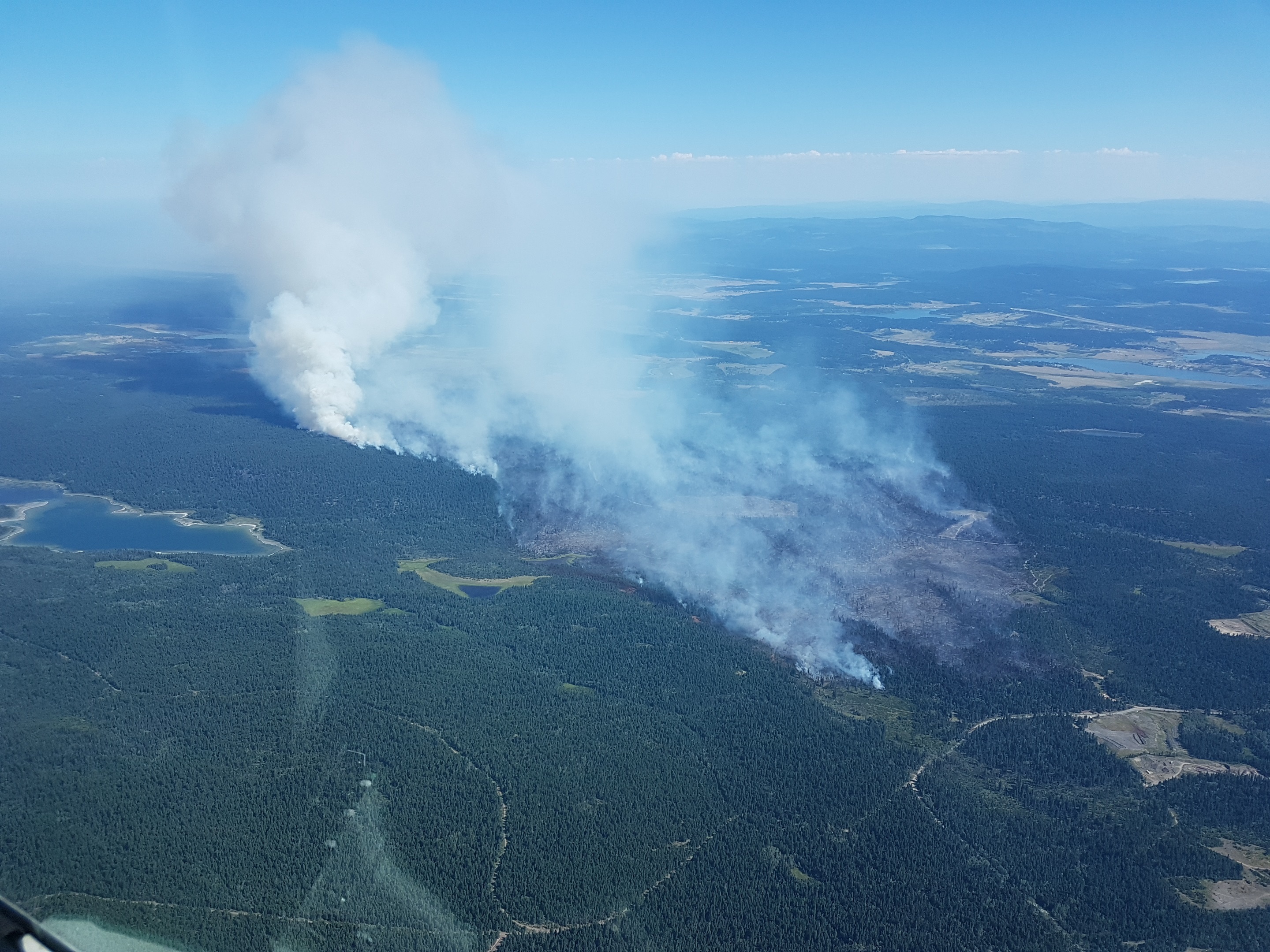
Gustafson-Fire.jpg
Few media stories mentioned the demonstrable connection
between the climate crisis and increasing wildfire activity in
BC last summer, even though it was one of the major reasons
why that season was the worst on record.
Between May 6 and 7, 13 of those newspapers failed to front stories about the United Nations’ devastating finding. Instead, the National Post ran a story about the Duke and Duchess of Sussex’s son, with 10 others teasing that birth on their front pages. Eight of the teasers were placed above-the-fold, next to a photograph, or both — drawing reader attention to pictures of Harry, Meghan and their beaming well-wishers.


Read the story from The Tyee by Sean Holman - “Dear Journalists of Canada: Start Reporting Climate Change as an Emergency.”

04 April, 2019

Those 3% of scientific papers that deny climate change? A review found them all flawed

It’s often said that of all the published scientific research on climate change, 97% of the papers conclude that global warming is real, problematic for the planet, and has been exacerbated by human activity.
Hard to deny.
But what about those 3% of papers that reach contrary conclusions? Some skeptics have suggested that the authors of studies indicating that climate change is not real, not harmful, or not man-made are bravely standing up for the truth, like maverick thinkers of the past. (Galileo is often invoked, though his fellow scientists mostly agreed with his conclusions—it was church leaders who tried to suppress them.)

Not so, according to a review published in the journal of Theoretical and Applied Climatology. The researchers tried to replicate the results of those 3% of papers—a common way to test scientific studies—and found biased, faulty results.

Katharine Hayhoe, an atmospheric scientist at Texas Tech University, worked with a team of researchers to look at the 38 papers published in peer-reviewed journals in the last decade that denied anthropogenic global warming.


20 June, 2018

Ex-Nasa scientist: 30 years on, world is failing 'miserably’ to address climate change

Thirty years after a former Nasa scientist sounded the alarm for the general public about climate change and human activity, the expert issued a fresh warning that the world is failing “miserably” to deal with the worsening dangers.
James Hansen: ‘All we’ve done is agree there’s a problem.’
While Donald Trump and many conservatives like to argue that climate change is a hoax, James Hansen, the 77-year-old former Nasa climate scientist, said in an interview at his home in New York that the relevant hoax today is perpetrated by those leaders claiming to be addressing the problem.


Read the story from The Guardian by Oliver Milman - “Ex-Nasa scientist: 30 years on, world is failing 'miserably’ to address climate change.”

05 November, 2017

Trump administration releases report finding ‘no convincing alternative explanation’ for climate change

The Trump administration released a dire scientific report Friday calling human activity the dominant driver of global warming, a conclusion at odds with White House decisions to withdraw from a key international climate accord, champion fossil fuels and reverse Obama-era climate policies.

To the surprise of some scientists, the White House did not seek to prevent the release of the government’s National Climate Assessment, which is mandated by law. The report affirms that climate change is driven almost entirely by human action, warns of a worst-case scenario where seas could rise as high as eight feet by the year 2100, and details climate-related damage across the United States that is already unfolding as a result of an average global temperature increase of 1.8 degrees Fahrenheit since 1900.


03 July, 2017

Trump’s environment chief pushes effort to question climate change science

Washington: The Trump administration is debating whether to launch a government-wide effort to question the science of climate change, an effort that critics say is an attempt to undermine the long-established consensus that human activity is fuelling the Earth's rising temperatures.

 America's Environmental Protection
Agency (EPA)
administrator Scott Pruitt,
continues to question climate change.
The move, driven by Environmental Protection Agency (EPA) administrator Scott Pruitt, has sparked a debate among top Trump administration officials over whether to pursue such a strategy.

A senior White House official, who asked for anonymity because no final decision has been made, said that while Pruitt has expressed interest in the idea, "there are no formal plans within the administration to do anything about it at this time”.

Pruitt first publicly raised the idea of setting up a "red team-blue team" effort to conduct exercises to test the idea that human activity is the main driver of recent climate change in an interview with Breitbart in early June.


Read the story by Brady Dennis in today”s Melbourne Age - “Trump’s environment chief pushes effort to question climate change science.”

27 June, 2017

Carbon in Atmosphere Is Rising, Even as Emissions Stabilize

CAPE GRIM, Tasmania — On the best days, the wind howling across this rugged promontory has not touched land for thousands of miles, and the arriving air seems as if it should be the cleanest in the world.
The Cape Grim Baseline Air Pollution Station in Tasmania.
But on a cliff above the sea, inside a low-slung government building, a bank of sophisticated machines sniffs that air day and night, revealing telltale indicators of the way human activity is altering the planet on a major scale.

For more than two years, the monitoring station here, along with its counterparts across the world, has been flashing a warning: The excess carbon dioxide scorching the planet rose at the highest rate on record in 2015 and 2016. A slightly slower but still unusual rate of increase has continued into 2017.

Scientists are concerned about the cause of the rapid rises because, in one of the most hopeful signs since the global climate crisis became widely understood in the 1980s, the amount of carbon dioxide that people are pumping into the air seems to have stabilized in recent years, at least judging from the data that countries compile on their own emissions.


Read The New York Times by Justin Gillis - “Carbon in Atmosphere Is Rising, Even as Emissions Stabilize."

24 April, 2017

Architects finally are taking climate change seriously. Sort of

In our recent post American Institute of Architects takes a stand on climate change I ended up by quoting architect and writer Lance Hosey, and his survey that found “as many as a third of architects are skeptical about climate change.”
Lance tweeted me an update that he just published in Architectural record, a new survey which found that the situation has improved significantly, that now fully 93.6 percent of architects actually believe that human activity is changing the climate.

Given that architects design the buildings that are the single biggest source of greenhouse gases, that’s a good thing. Too bad that less than half of them actually know that. (Until recently, based on my analysis, I thought transportation was the biggest source in America, and I teach this stuff).


14 February, 2017

What you do on Sunday morning impacts the city you live in.

Researcher Nick Earl in Melbourne at the
coolest time of the week - early Sunday morning. 
Human activity heats up cities to such an extent that on the weekends when we're having a sleep-in, the centre of town is measurably cooler.

It's a different story at 9am on weekdays when work draws people into the CBD, according to research from Melbourne and Monash universities.

Read Bridie Smith’s story in today’s Melbourne Age - “What you do on Sunday morning impacts the city you live in.

30 December, 2016

The scary, unimpeachable evidence that climate change is already here

Climate change is here and the
 evidence is unimpeachable.
When Fox News’ Chris Wallace asked Donald Trump about his thoughts on climate change, the president-elect responded, “Nobody really knows. Look, I’m somebody that gets it, and nobody really knows. It’s not something that’s so hard and fast.”

He’s not alone; according to Pew Research less than half (48%) of all American adults believe that the Earth is warming mostly due to human activity.

They are wrong, though, and 2016 was the year that news from around the world made climate change undeniable to anyone paying attention

Read the Quartz story by Neha Thirani Bagri - “The scary, unimpeachable evidence that climate change is already here.”

26 September, 2016

Support for world-leading action on climate change skyrockets, according to new poll

A young girl from the remote Turkana tribe in
 Northern Kenya digs a hole in a river bed
 to retrieve water. Over 23 million people across
 East Africa are facing a critical shortage of water
and food, a situation made worse by climate change
Public support for world-leading, federal government-level action on climate change has bounced back, according to a new poll, as people perceive environmental impacts around them and support a larger role for renewable energy production.

According to the Climate Institute's Climate of the Nation poll, 65 per cent of Australians want their country to lead the world on finding solutions, a significant increase since the time of divisive debates about the Gillard government's carbon tax.

The research, conducted by Galaxy with 2000 participants, also found 77 per cent of people now accept that global warming is happening and 60 per cent agree with the science that it is caused by human activity, both notable increases from the organisation's previous figures.

CEO John Connor says this return to public sentiment last seen strongly in 2008, when there was broader political support for strong climate change action, is a result of a combination of factors.

Read the story by Fergus Hunter in today’s Melbourne Age - “Support for world-leading action on climate change skyrockets, according to new poll.”

28 July, 2016

The Remarkable Inconsistency Of Climate Denial

This is a year of politics. That means everyone has opinions about where the world should be headed and how we should get there.

No matter how weird this political season has been, however, there remains a key difference between opinions and facts. That difference comes into the starkest relief when people must face their own inconsistencies in reconciling the two domains.

And nowhere is the gap between opinions and facts more apparent than the subject of climate change. As a recent action by the American Association for the Advancement of Science (AAAS) demonstrates, for climate deniers there is a chasm between what is said and what is done.

The basic dilemma of climate denial is that, for decades, science has pointed to two very clear conclusions. First is the overwhelming evidence that the planet is warming. Second is the overwhelming evidence that the warming is due to human activity (mostly in the form of greenhouse gas emissions from fossil fuel use).

Read Adam Frank’s story on NPR - “The Remarkable Inconsistency Of Climate Denial.”

24 July, 2016

U.S. forests may not help in climate change fight

Margaret Evans - questions about
 U.S. forests being mature enough
 to help fight climate change.
North American forests will not fight climate change by absorbing carbon dioxide at levels once hoped for because the trees may not grow big enough, a study said.

The new research challenges previous studies that said trees could grow larger due to higher temperatures brought on by global warming, said the authors of the study published in the journal Ecology Letters.

Typically, up to a third of carbon-dioxide emissions from human activity, such as automobile driving or steel production, is absorbed by forests, the study's authors said. Carbon dioxide is the main greenhouse gas responsible for global warming.

But if temperatures get too high, tree growth is inhibited and the absorption rate diminishes, said senior author Margaret Evans, a professor at the University of Arizona in Tucson.

"There is a tipping point," she said. "A warmer climate becomes a bad thing instead of a good thing."

Read the Climate Central story - “North American Forests Not a Climate Change Remedy.”

28 September, 2015

We're failing to cope with the dilemmas of the modern world


O

ur moral instincts are failing to cope with the dilemmas of the modern world.

Is it time to use tricks, pills or brain zaps to hack this outdated mind set?

In June, a new voice backed up what many scientists have been saying for a while – that climate change is caused by human activity and we have a moral responsibility to tackle it.

In an historic edict, Pope Francis warned that failing to act would have “grave consequences”, the brunt of which would fall on the world’s poorest people. His words came as a stark reminder that global climate change is among the most pressing moral dilemmas of the 21st century.

It joins a long list. He could have added spiralling inequality, persistent poverty, death from preventable diseases and nuclear proliferation to the ethical challenges that define our times. Some are newer than others, but all could plausibly be fixed. The fact we’re struggling with all of them raises a troubling question: does our moral compass equip us to deal with the threats we face ...

This story – “Morality 2.0: How manipulating our minds could save the world” – is in New Scientist, but you need to be a subscriber to read the whole piece.

27 June, 2015

We listen, only when it is something we want to hear, and agree with


P

eople only ever hear what they want to hear, even if it is wrong.

We all live in echo chambers and so hear largely only our own thoughts bouncing back from the news sources we access, the people we pay attention to and those we socialise with.

And so the latest move from the Republicans in the U.S. will win wide support as it simply reinforces the view that so many people hold; views that are founded on both inadequate and incomplete information.

For decades now environmentalist in the U.S. and elsewhere have challenged decisions to protect what they value, but at the same time threaten the status quo and so disturb the lives of many.

Rain clearly results from changes in the climate and as human activity has impacted on the world’s climate system causing rain to fall with vigour, and excessively in some places and yet result in drought in others.

As the actions of environmentalists has stopped the creation of dams in some parts of California for good ecological reasons, the Republicans blame the state’s present drought on the actions of environmentalists, ignoring the fact that because of a disrupted climate system, rainfall has been way below average.

Undeterred by scientific fact, ClimateProgress reports that, “Republicans Introduce Bill Based OnThe Idea That Environmentalists Caused California’s Drought”.