Showing posts with label environmentalists. Show all posts

29 March, 2020

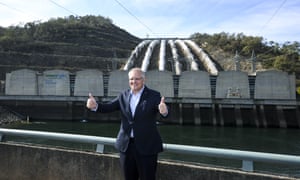
Snowy Hydro 2.0 will cost more and deliver less than promised, 30 experts say

Engineers, economists, energy specialists and environmentalists are calling for a final decision on the Snowy Hydro 2.0 project to be delayed to allow an independent review, claiming it will cost far more and deliver far less than has been promised.
Snowy Hydro 2.0
‘Snowy 2.0 is not as it has been publicly portrayed,’
the group of 30 say in a joint statement.
The group of 30 said the 2,000-megawatt pumped hydro storage project in the Snowy Mountains would permanently damage the Kosciuszko national park.
“Snowy 2.0 is not as it has been publicly portrayed,” they said in a joint statement. “There are many alternatives that are more efficient, cheaper, quicker to construct and incur less [greenhouse gas] emissions and environmental impacts.”

Read the story from The Guardian by Adam Morton - “Snowy Hydro 2.0 will cost more and deliver less than promised, 30 experts say.” 

30 May, 2019

Resources Minister backs new coal plant as Labor reconsiders climate policy.

A new coal-fired power station is back on the federal government's agenda in the wake of its election victory, with ministers supporting a major project in Queensland despite calls from environmentalists to accelerate the shift to renewable energy.
Senator Matt Canavan said "a lot of people make
 comments about the coal market and they have
no bloody idea about the coal market".
Resources Minister Matt Canavan is backing the new power station proposal and pointing to the Coalition's strong vote in his home state of Queensland to warn off critics from southern states who want to halt the project.


Read the story from The Age by David Crowe - “Resources Minister backs new coal plant as Labor reconsiders climate policy.”

31 March, 2019

Be bold now or risk missing zero greenhouse emissions target, state told

The Andrews government has 12 months to show "bold and ambitious" leadership on climate change or Victoria could miss its target for zero net greenhouse emissions by more than a decade, climate experts and environmentalists say.
Interim emissions reduction targets must be set by next March.CREDIT:
Climate Change Minister Lily D’Ambrosio was handed independent advice on Friday from a government-convened expert panel on how to reach the state's commitment of zero net emissions by 2050.


Read the story from The Age by Joe Hinchliffe - “Be bold now or risk missing zero greenhouse emissions target, state told.”

19 September, 2018

Microgrid in the mix

A proposal for a power microgrid has created debate among environmentalists in Tatura.

Some suggest it could help relieve pressure on the town’s energy demands, while others suggest it may only serve as part of a mix in ensuring reliability and reducing prices.

The proposal comes on the back of a bid hatched by a Euroa environment group which was given the green light earlier this month to develop a $6 million energy microgrid in a partnership between businesses.
Large-scale: Tatura Milk is one of several large power consumers in the area.
The bid has been strengthened by more than $600 000 of Victorian Government funding.

Two Goulburn Valley environmentalists are now open to a similar proposal being deployed for Tatura, given the town’s make-up of industry and residential energy consumers.

Transition Tatura’s Ross Musolino believed a microgrid would definitely be suitable for the town, given ‘‘the power that we’ve got coming in, we’re sort of at the limit’’.

He suggested a shortage could be forthcoming if additional large energy-consuming businesses were to open in the town.

‘‘Any alternative power source would be very suitable for the town,’’ he said.

‘‘Even residential areas (in Tatura) would work really well with stuff like that.’’

Goulburn Valley Environment Group president John Pettigrew said Tatura had been identified some time ago in a study as an area that was ‘‘coming under pressure’’ from power shortages.

He believed it was feasible for local companies to be ‘‘joined together in a grid like that’’.

‘‘I saw Tatura as a wonderful example of what could be done,’’ Mr Pettigrew said.

‘‘(Microgrid technology) opens up more avenues for cost sharing . . . the more f lexibility you’ve got in cross-sharing with users, the more opportunity there is for everyone to save.’’

Member for Northern Victoria Jaclyn Symes said the government was ‘‘letting communities lead’’ pushes for microgrid infrastructure, with government ideally supporting it once ready to be funded.

She hoped the Euroa project would offer a testing ground, help indicate whether it could be suitable for other communities and build something of a template to work off.

‘‘It won’t take long to realise how beneficial they are for country communities,’’ she said.

But Ms Symes conceded more than just a microgrid was likely necessary for Tatura’s energy mix, flagging ‘‘a variety of other initiatives that would work in that community’’.

An energy study on Tatura in 2015 suggested the town’s energy transmission and distribution lines were, or would be, facing capacity within the following five years.

Limiting expansion of the town’s industries, the study also said expansion plans of three of the major organisations participating in the study were, or would be, limited by current power capacity to the area.

It flagged that Tatura could experience an up to 35 MW shortfall in energy across the five years to 2020.

Meanwhile, the Euroa microgrid aims to see participating businesses become producers and distributors of power via solar panels and batteries.

‘‘Microgrid projects are part of our plan to drive down energy prices, reduce emissions and create a pipeline of investment in renewable energy, and northeast Victorian communities should be congratulated for driving these projects,’’ Ms Symes said.

A government statement described a microgrid as a small network of electricity users with a local supply of power that could function independently of the electricity grid, delivering potential cost savings for those in the network.

It generally operates while connected to the grid, but can break off and operate on its own using local energy generation in times of demand.


Story by Thomas Moir from The Shepparton News - “Microgrid in the mix.”

28 August, 2018

Barnaby Joyce's call to divert environmental water to drought-hit farmers panned by conservationists

Environmentalists have slammed Australia's new drought envoy Barnaby Joyce, describing his calls to divert water to farmers as "ill-informed" and likely to inflict further harm on river communities.
Barnaby Joyce, envoy for drought recovery and
 assistance, wants to give farmers environmental water.
The former deputy prime minister, who assumed his new role at the weekend, wants the Federal Government to "borrow" water so farmers can use it to grow crops to feed livestock.

He said the drought was an emergency and should be treated like a bushfire, which would allow for resources to be taken without seeking permission.


(Well, Barnaby, climate change is an emergency and wouldn’t it be great if we were to implement the changes necessary to have Australians adapt to the quickly emerging difficulties without asking permission; changes we will soon have to make according to climate activist, Bill McKibben, as we are already in World War Three, the world, at least humanity, is at war with the damage it has done to the world’s environment - Robert McLean)

16 July, 2018

Digging up a lot more coal won't bring more jobs

One thing I admire about greenies is their soft hearts. Whereas big business pushes its self-interest to the exclusion of all else, environmentalists worry that, in their efforts to save the planet, some workers may lose their jobs.
Greenies worry about "just transition" for mining
workers displaced by renewable energy.
What worries me, however, is the greenies’ soft heads. Many of them profess to a soul above such sordid (and boring) matters as economics, but the less you know about economics the more easily you’re taken in by developers’ and politicians’ promises of Jobs and Growth. 

Greenies know that the “green economy” creates jobs and growth, but worry that their opposition to the building of new thermal coal mines would cost jobs and growth.


Read the comment by Ross Gittins from The Age - “Digging up a lot more coal won't bring more jobs.”

27 April, 2018

Climate Change Is Making Deadly Air Pollution Worse in Cities Across the U.S.

Environmentalists worry that climate change could cause problems with rising sea levels and crop failures in the coming decades, but one group of researchers has found it’s already causing health problems now.
Climate change is worsening air pollution in U.S. cities.
Temperature increases linked to climate change are worsening air pollution in communities across the country right now contributing to a range of health problems from asthma to premature death, according to a new report from the American Lung Association.

The total number of Americans exposed to unhealthy air rose to nearly 134 million, according to the group’s 2018 State of the Air report. That represents a spike from 125 million in the previous year.


Read the story by Justin Worland from Time Magazine - “Climate Change Is Making Deadly Air Pollution Worse in Cities Across the U.S..”

10 April, 2018

Tree clearing, not urban sprawl, wiping out koalas in Queensland, WWF says

Environmentalists estimate that tree clearing in regional and rural Queensland is now 15 times more destructive to the state’s koala populations than urban sprawl.
The clearing of agricultural land in Queensland is putting
koalas under threat, say environmentalists. 
Development, and the loss of koala habitat for housing and infrastructure, was considered a key reason why the koala was added to the “vulnerable” species list in 2012.

But analysis by WWF conservation scientist Martin Taylor challenges the idea that the state’s koala populations are most at threat by the growth of Brisbane, the Gold Coast and sunshine coast.

Taylor concludes that of more than 5,000 estimated koala deaths due to loss of habitat in Queensland from 2012 to 2016, almost 94% occurred outside the heavily developed south-east.

Read the story by Ben Smee from The Guardian - “Tree clearing, not urban sprawl, wiping out koalas in Queensland, WWF says.”

17 March, 2018

Mount Morgan abandoned mine site brings environmentalists and farmers together

It is not often you hear environmentalists and farmers asking government to help out a mining company — but that is what is happening in central Queensland as a resources project hangs in the balance.
Local landholder Ian Scott with his mother at the Dee
 River where they saw dead fish during the uncontrolled
 overflow from the old gold mine in 2013.

Ian Scott lives downstream from the old Mount Morgan gold mine, near the Dee River at Wowan, south-west of Rockhampton.


05 February, 2017

Why Environmentalists Are So Worried About Trump's Supreme Court Pick

Neil Gorsuch was named Tuesday night as
 Trump's Supreme Court nominee.
For environmentalists worried about future Supreme Court decisions on climate change, the biggest difference between Donald Trump's nominee to the court and Barack Obama's boils down to one word, Chevron.

Neil Gorsuch, chosen by Trump to fill the vacancy of Antonin Scalia, is seen as a steadfast foe of the Chevron standard. That principle says courts should defer to federal regulatory agencies when the regulators are carrying out laws that are ambiguous. In contrast to Gorsuch, Merrick Garland, nominated last year by Obama but stymied by Senate Republicans, adhered closely to the standard.

Chevron is one of the pillars of modern regulatory law, and it matters greatly to climate change activists because it has provided the Environmental Protection Agency considerable leeway in using the Clean Air Act to control carbon dioxide pollution.
Read The Inside Climate News story - “Why Environmentalists Are So Worried About Trump's Supreme Court Pick.”

02 February, 2017

Coal could get clean-energy subsidy under new Turnbull focus

Malcolm Turnbull has flagged a policy
 switch that is sure to provoke anger
 from anti-coal environmentalists.
Malcolm Turnbull has opened the possibility of using clean-energy subsidies to build new-generation, coal-fired power stations as he branded Labor's heavy focus on renewables "mindless", and a recipe for more expensive, less reliable electricity.

Flagging a policy switch sure to provoke anger from anti-coal environmentalists, but set to please fossil-fuel enthusiasts in the Coalition partyroom, Mr Turnbull said technological advances had made new coal-fired generators viable as a potential foundation in the overall energy mix.

Read Mark Kenny’s story in today’s Melbourne Age - “Coal could get clean-energy subsidy under new Turnbull focus.”

(Clean coal is a misnomer. However it is framed, coal is simply a dirty form of energy and just this morning on ABC TV, the Environment Minister, Josh Frydenburg, argued that clean coal combined with carbon capture and storage (CCS) would result in a reliable power source for Australia, bringing a reduction of some ninety percent in carbon dioxide emissions – two things, coal is a still a dirty form of energy and the idea that it can be made “clean” is, at base, a lie. CCS has not been scaled-up to a point anywhere near a level to where it would be useful, in any sense – CCS is not tried and tested and is a technology that lags far being the well understood and immediately applicable wind and solar energy sources. The Prime and Environment Ministers are doing nought but misleading the Australian public – Robert McLean)

29 August, 2016

Nothing sweet about this Queensland sugar deal

Multi-million-dollar expansion plans for one Queensland sugar miller have come under fire from environmentalists.

MSF Sugar's plans to progress its growth into the bio-futures space at its Fraser Coast operations have caused some to raise concerns about extra sediment and nutrient runoff.

The announcement to progress MSF's expansion was announced last week, with two parcels of land identified as possible sites for cane crops.

If leased to the company, the extra cane land could see MSF's Maryborough Mill achieve one million tonnes of throughput per year.

23 July, 2016

Buyers warned about fake-green homes as sustainablity gains real estate traction

Buyers are being warned to be on red alert for fake-green homes as sustainability gains more traction in real estate.

Developers are increasingly marketing “green design”, but experts say consumers need to look under the hood for “greenwashing”, as some developers exaggerate the environmental benefits of new housing stock.

Off the back of sell-out success of major projects The Commons, Nightingale and Mullum Creek, Melburnians are increasingly looking to invest in eco housing.

But environmentalists say projects softly marketed as “sustainable” are often not always as green as they seem and fail to reach government standards on energy efficiency.

A CSIRO study conducted on 129 new homes last year showed almost half leaked more than they should for their mandated-six star energy rating.

Although projects may achieve high ratings in design stages, a lack of follow-through during construction meant many fell short. The Alternative Technology Association is calling for random audits, compliance programs and penalties for those who fail to fulfil efficiency requirements.

Read Kirsten Robb’s story in today’s Melbourne Age - “Sustainable developments in question as off-the-plan buyers get greenwashed.”

04 July, 2016

Kathryn Burns helps us understand what is hurting Great Barrier Reef

Kathryn Burns from James Cook University.
Coal’s impact on the Great Barrier Reef by causing climate change is one of the reasons why environmentalists oppose the development of coal fields and exports in Queensland. But fossil fuels could have a more direct impact on the reef and the waters around it, through chemicals produced during their production and distribution.

When coal dust is released in the marine environment it can damage marine ecosystems. Coal contains a number of different chemicals, but it is polynuclear aromatic hydrocarbons (PAHs), which are known carcinogens, that are of most concern.

Some components of coal PAHs cause biochemical changes in fish and can lead to cancer. The coal dust has a very slow degradation rate and will build up in the ecosystem from the continuous input.

Coal dust also absorbs chemicals in the coastal zone and transports things like pesticides and herbicides offshore. Oil spills are another source of PAHs in the marine environment.

Read the piece on The Conversation by a Marine Scientist at the James Cook University, Kathryn Burns - “Pollution guidelines leave a blind spot for assessing the impact of coal and oil.”

23 May, 2016

Last remaining relic of an ancient forest faces the axe

A bison in the Bialowieza Forest, a forest
 the Polish Government wants to log.
Warsaw: It is the last remaining relic of an ancient forest that stretched for millennia across the lowlands of Europe and Russia, a shadowy, mossy woodland where bison and lynx roam beneath towering oak trees up to 600 years old.

Conservationists believe the fate of the Bialowieza Forest, which straddles Poland and Belarus, is more threatened that at any time since the communist era due to a new Polish government plan for extensive logging in parts of the forest. The plan has pitted the government against environmentalists and many scientists, who are fighting to save the UNESCO world heritage site.

Seven environmental groups, including Greenpeace and WWF, have lodged a complaint with the European Commission hoping to prevent the large scale felling of trees, which is due to begin within days. Bialowieza has been declared a Natura 2000 site, meaning it is a protected area under European law. EU officials say they are working with the Polish authorities to ensure that any new interventions in the forest are in line with their regulations, but it's not yet clear what the result will be.

Read Vanessa Gera’s story in today’s Melbourne Age - “Logging to begin in last remaining European primeval forest.”

09 November, 2015

Socialism the answer to climate change - Bill Gates


“R
epresentative democracy” has failed; the private sector is “inept”; and only bigger government – led by China and the US – has the power to save the world from climate change.

So says Bill Gates in a dogmatic but somewhat confused interview with The Atlantic in which he simultaneously pours scorn on green tech solutions but insists that more of them are needed – on a scale bigger than the Manhattan Project – if we are to deal successfully with a problem whose nature he admits may well have been exaggerated by environmentalists.

Confused? You should be:

Here are some of things we learn about the mysteries of Gates’s mind.

27 June, 2015

We listen, only when it is something we want to hear, and agree with


P

eople only ever hear what they want to hear, even if it is wrong.

We all live in echo chambers and so hear largely only our own thoughts bouncing back from the news sources we access, the people we pay attention to and those we socialise with.

And so the latest move from the Republicans in the U.S. will win wide support as it simply reinforces the view that so many people hold; views that are founded on both inadequate and incomplete information.

For decades now environmentalist in the U.S. and elsewhere have challenged decisions to protect what they value, but at the same time threaten the status quo and so disturb the lives of many.

Rain clearly results from changes in the climate and as human activity has impacted on the world’s climate system causing rain to fall with vigour, and excessively in some places and yet result in drought in others.

As the actions of environmentalists has stopped the creation of dams in some parts of California for good ecological reasons, the Republicans blame the state’s present drought on the actions of environmentalists, ignoring the fact that because of a disrupted climate system, rainfall has been way below average.

Undeterred by scientific fact, ClimateProgress reports that, “Republicans Introduce Bill Based OnThe Idea That Environmentalists Caused California’s Drought”.