Showing posts with label leadership. Show all posts

22 February, 2020

Companies will fill leadership vacuum on climate, ICC chief warns

London: The head of the world's largest business organisation has defended employers who publicly advocate for action on diversity and climate change, arguing workers are "crying out" for leadership and boardrooms must have a "bigger purpose than just profit".
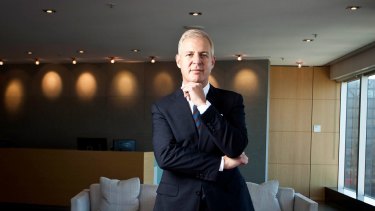
John Denton has moved to Paris to lead the International Chamber of Commerce.
John Denton has moved to Paris to lead
the International Chamber of Commerce.
John Denton, the first Australian to be appointed secretary-general of the Paris-based International Chamber of Commerce, said critics of corporate activism also failed to recognise that small businesses - not just major firms - were some of the most enthusiastic backers of a stronger response to global warming.
"A number of shock jocks and political commentators seem to run this 'stick to your knitting' line but it's just completely ridiculous," Mr Denton said.

Read the story from The Age by Bevan Shields - “Companies will fill leadership vacuum on climate, ICC chief warns.”

31 March, 2019

Be bold now or risk missing zero greenhouse emissions target, state told

The Andrews government has 12 months to show "bold and ambitious" leadership on climate change or Victoria could miss its target for zero net greenhouse emissions by more than a decade, climate experts and environmentalists say.
Interim emissions reduction targets must be set by next March.CREDIT:
Climate Change Minister Lily D’Ambrosio was handed independent advice on Friday from a government-convened expert panel on how to reach the state's commitment of zero net emissions by 2050.


Read the story from The Age by Joe Hinchliffe - “Be bold now or risk missing zero greenhouse emissions target, state told.”

12 March, 2019

Scott Morrison slaps down Barnaby Joyce on coal in damaging Coalition split on energy

Prime Minister Scott Morrison is facing a damaging Coalition split on energy and a bitter Nationals row on leadership after he pushed back at demands to help fund a new coal-fired power plant in Queensland, widening a policy gulf inside the government just two months out from the election.
Barnaby Joyce with Prime Minister Scott Morrison.
Moderate Liberals ridiculed their Nationals colleagues as unworkable and economically illiterate, with one, Brisbane MP Trevor Evans, describing proponents as “a very small and lonely minority whistling Dixie on this”.

Mr Morrison sparked concerns among the junior Coalition partner by countering calls for government help for the power project, putting him at odds with former Nationals leader Barnaby Joyce in a new test for the "marriage" of the two parties.


11 November, 2018

The House Science Committee Is Back in Democrat's Control: What That Means for Science

Last night, the Democrats regained a majority in the U.S. House of Representatives, and with it, leadership of the House Committee on Science, Space and Technology. What will this change mean for science?

The current committee chair, Lamar Smith, R-Texas, who will retire at the end of this term, has repeatedly denied that humans play a role in climate change. He also challenged climate scientists (such as by asking them to release documents and communications they sent amongst themselves regarding a study about the increased rate of global warming) as well as National Science Foundation (NSF).

Smith "not only ignored the problem [of climate change] but abused his authority as committee chair to launch attacks on climate scientists," said Michael Mann, a distinguished professor of meteorology at Pennsylvania State University and an outspoken advocate of combating human-caused climate change. 


Read the LiveScience story by Yasemin Saplakoglu - “The House Science Committee Is Back in Democrat's Control: What That Means for Science.”

19 October, 2018

The Morrison government’s biggest economic problem? Climate change denial

Last week Peter Costello accused Malcolm Turnbull of failing to develop an economic narrative to unite the Coalition. Turnbull promised this when he challenged Tony Abbott for the leadership of the Liberal Party, but, said Costello, it never came, and the result is a government struggling to manage deep differences over social issues. There was “jobs and growth”, but this is really just a goal without much of a story about how to get there, except for the company tax cuts.
The government’s stubborn commitment to coal is alienating
 it from its natural supporters in the business community.
The big question, though, is why the government does not have a coherent economic narrative.

One possible answer is that it has been too preoccupied with social issues such as religious freedom and before that, same-sex marriage, to give the economy sufficient attention. There is something in that.


Read what the Emeritus Professor of Politics, La Trobe University, Judith Brett, has written on The Conversation - “The Morrison government’s biggest economic problem? Climate change denial.”

17 August, 2018

Turnbull loyalists call out colleagues for 'hyperventilating' over energy policy

Malcolm Turnbull’s lieutenants have rallied around his leadership as the energy debate continues to destabilise the government and eyes turn to the home affairs minister, Peter Dutton.
 News Corp reports suggest Peter Dutton is being urged to challenge Turnbull.
A week of internal brawling about the national energy guarantee has seen Tony Abbott escalate his attacks on the policy, and Dutton – while holding the line on the policy – has publicly articulated the circumstances in which he would have to resign from the cabinet, rather than support the policy.

Turnbull loyalist Christopher Pyne sounded a warning shot to restive colleagues through his regular Friday appearance on the Nine Network, criticising Abbott’s supporters for “hyperventilating” over the government’s energy policy.

Read the story from The Guardian by Amy Remeikis and Katharine Murphy - “Turnbull loyalists call out colleagues for 'hyperventilating' over energy policy.”


(We can forget about Australia making any useful contribution climate change mitigation if Peter Dutton and his hard right compatriots snare control of the Liberal Party - Robert McLean)

26 April, 2018

China stakes claim on electric car market with 100 new models at auto show

Chinese car brands are staking a leadership claim in the global race to dominate electric vehicles, unveiling and promoting more than 100 new models at the country's annual auto show.
The LSEV is touted as the first mass-producible
3D-printed electric car in the world.
More than two-thirds of the hybrid and fully electric plug-in cars on display in Beijing are from Chinese brands, despite international car giants trying hard to court the huge local market with the unveiling of several new electric SUVs.

New energy vehicles (NEVs) aren't just fashionable in China's big cities — they are also being actively pushed by China's government through subsidies for manufacturers and a planned cap-and-trade quota system that will force car companies to make at least 10 per cent of their output NEVs or face fines.


Read the Bill Birtles story from ABC News - “China stakes claim on electric car market with 100 new models at auto show.”

22 March, 2018

India, France come together to reiterate their climate commitment

NEW DELHI: India and France came together to reiterate their commitment to provide leadership to slow down global warming and transition to a sustainable and low carbon development pathway to economic growth and development. As the founding conference of the International Solar Alliance got underway in New Delhi, co-hosts Prime Minister Narendra Modi and French President Emmanuel Macron left little room for doubt that concrete action would be the defining principle of the alliance. 
India and France have emerged as proactive leaders on climate
action, even as United States has retreated from global action.
“Now let’s get to work”, French President Macron told leaders at the founding conference of the International Solar Alliance. Macron called on the leaders from the ISA member countries to use the opportunity of the summit make concrete announcements that would pave the way for rapid deployment of solar energy. 

Read The Economic Times story by Urmi Goswami - “India, France come together to reiterate their climate commitment.”


(France and India appear intent on powering their respective countries with renewable energy sources, therefore removing fossil fuel powered generators from their energy infrastructure, leaving the proposed massive Adani Queensland coal mine as a stranded asset and as such  a financial catastrophe for the Indian Adani company, as it will be for Australia, along with being an ethical, moral, and environmental embarrassment - Robert McLean)

15 September, 2017

Environment and energy debate: back to the future as old battlelines re-emerge

Environment and energy debate: back to the future as old battlelines re-emerge.

Prime Minister Malcolm Turnbull during
Question Time at Parliament House.
The cause? A surprising new fluidity in the Prime Minister's environmental, er... convictions.
For Labor, it's an intriguing prospect. Charting how the greenest of all Liberals, who lost his leadership for backing emissions trading in 2009 and crossed the floor to support it, has wound up as chief advocate of retaining coal.

In just months, Malcolm Turnbull has gone from pump-priming a so-called clean energy target, to presenting more as a renewable energy scaremonger pitching hard for the safe harbour of coal-fired power, and firing off Abbott-like taunts, "Black-out Bill" and "Brown-out (Mark) Butler”.

The expansive optimistic government that would honour voters with sophisticated arguments, has reverted to a narrow fear-invoking affair, its eye trained keenly on political dividends.


Read Mark Kenny’s comment in today’s Melbourne Age - “Environment and energy debate: back to the future as old battlelines re-emerge.”

14 May, 2017

Pressure Mounting For Humans To Step Down As Head Of Failing Global Ecosystem

EARTH—Noting that the species’ tenure in the leadership role has been marked by an incompetence and shortsightedness that has caused irreparable damage, sources reported Thursday that humans are facing increased calls to give up their position as head of the world’s failing ecosystem.
Critics of humanity suggest that after hundreds of
millennia at the helm of the earth’s biosphere,
it was time for the species to resign in favor of
a more qualified life form.
The critics clamoring for Homo sapiens to step down argue that as leader of the earth’s environment they have been responsible for one disaster after another, while over the past several decades the global ecological organization has essentially stopped functioning due to humanity’s gross mismanagement.

“Since taking control of the ecosystem, human beings have misallocated its resources and left many of its operations teetering on the brink of collapse,” said Tracy Eldridge, a spokesperson for organisms demanding a change in leadership, noting that humans have overseen massive cuts in species around the world and that thousands more are expected to be eliminated within the next year alone. “Such wastefulness has threatened the long-term viability of the planet’s habitat, but humans appear unable to formulate an actionable plan to keep it running smoothly.”


11 April, 2017

The cry is for leadership, but not as we know it

The cry for leadership from our leaders can be heard across the country, and of course the world.

All that noise is rather subjective for one man’s leader is another’s despot.

Climate change supplants those arguments for now we are being dictated to by something else and although it is natural, it is also man-made and leaders, past and present, and often unknowingly, have led us to this nexus.

'All that noise is rather subjective for one man’s leader is another’s despot'

That plea for leadership, both courageous and decidedly different from what has led us to this collision of circumstances, was made by several people at a recent Shepparton discussion initiated by the National Climate Change Adaption Research Facility (NCCARF).

Sherri Goodman.
Many ideas were tabled and discussed about how communities and broader nation could adapt to the changing state of the climate, and so the weather, but, it was agreed implementation of those ideas needed leadership.

The idea that we need leadership surfaced again when the former U.S. Deputy Under Secretary of Defense (Environmental Security), Sherri Goodman, who is now with the Wilson Centre to America, was answering questions after her recent address at  the University of Melbourne’s Lab-14.

The last question of evening from the audience was on often heard at such events: “What do you suggest should be the first thing we do when we go home tonight?”

“Elect a leader who will act,” she answered, suggesting we need leaders who will move to mitigate the causes of climate change.
Her warnings about the implications of the world’s damaged climate system were dire and she used examples of conflicts around the world, along with potential and emerging catastrophes to illustrate her argument.

Dr Louise Jeffrey talking
with the Director of the
Australian-German College
art the University of
Melbourne.

 Earlier that same day a post-doctoral researcher from Germany’s Potsdam Institute for Climate Impact Research (PIK), in Dr. Louise Jeffery, talked about “Aviation, shipping, and the Paris Agreement”. 

Her message was equally daunting and as there are complications as to who and where the carbon emissions are attributed, there were blatant implications that they were matters whose resolution rested with commanding leadership.

Dr Jeffrey is a 2017 EU Centre Visiting Fellow at the University of Melbourne. 

Leadership is not just about instituting and applying the practical matters that will slow climate change, it also has a sociological aspect for leaders need to help us see the elephant in the room - the emergence in the 20th Century and its solidification in the 21st of individuality and rights that clash with the science that tells us that we must prepared to forego some of individual personal pleasure to allows for the greater good.

10 December, 2016

Federal politicans are left gun-shy in the climate war

Carbon is like kryptonite for our
politicians - they go weak at the knees
and start talking utter bollocks.
There is something about carbon that acts like kryptonite for politicians. Their knees go all wobbly and they start talking utter bollocks.

And this week it’s produced the very sort of vacuous, dumb politics that Malcolm Turnbull had promised to end when he offered a different style of leadership; one that explained the challenges and seized the opportunities.

“A style of leadership that respects the people’s intelligence, that explains these complex issues and then sets out the course of action we believe we should take and makes a case for it. We need advocacy, not slogans,” Turnbull said just hours before becoming Prime Minister last September.

And yet there we were on Wednesday, just five months after the last Federal election, hearing Turnbull rehearse old sloganeering attack lines for the next election in two years time.

Read Andrew Probyn’s opinion in The Western Australian - “Federal politicans are left gun-shy in the climate war.”

17 March, 2016

We need eloquent, charismatic and courageous leadership to avoid climate change

Leadership that is eloquent, charismatic and courageous is critical, especially if humanity is to avoid the worst of climate change.

Nature abhors a vacuum and at local, state, federal and national levels we have just that, a vacuum (mostly) of leadership that ascribes to the science that articulates the damage done by humans to Earth’s atmosphere and along with that the certain resultant catastrophic consequences.

Those who understand climate science and call for action may well be leaders in their respective fields, but are not emboldened sufficiently to step into the political arena and impress populist values with their views. It’s in colloquial terms, “not their bag”.

Leaders at most levels are simply too addicted to values and ideas that are a consequence of the energy-rich fossil fuel era and so with thinking hobbled to thoughts that humanity’s future security is unquestionably linked to profit and growth, they are unable to see that human life on Earth can be done differently.

Some leaders, of course, would like to do much more. but faced with populist opinion reinforced by myths propagated by those addicted to and entrenched in 20th Century values and ideas, among them and primarily the fossil fuels industry and the infrastructure it has spawned, find their positions tenuous and personal political survival threatened.

“Populist” equates with democracy and although many believe we live in a democracy, it is, in fact, something else, maybe an oligarchy that sees just a few corporations (less than 150 trans-national corporations) with sophisticated public relations departments (read propaganda) that have convinced the world that what they are offering is democracy, when it is something else; something that ensures their profit and growth.

It was the Zurich-based Swiss Federal Institute of Technology that looked at 37 million companies and investors worldwide and analyzed all 43,060 transnational corporations and share ownerships linking them.

They built a model of who owns what and what their revenues are and mapped the whole edifice of economic power; a power that in reality will have be challenged and unseated if the world is to ever address climate change.

Those 147 trans-national corporations have pulled some remarkably effective and influential strings, but they have overlooked one, and probably the most important, nature.

It’s a power they can not control and unless they are prepared to listen to the “eloquent, charismatic and courageous” the edifice they have built on fossil fuels will soon come crashing down.

09 March, 2015

Women showing the way on climate change


The UN Framework Convention on Climate Change’s (UNFCCC) Momentum for Change initiative shines a light on women around the world who are making change happen in their communities, cities and countries.
In recognition of International Women’s Day right the UN Climate Change newsroom wanted to celebrate the incredible women who “make it happen” on climate change.

All of the women-led initiatives shown are previous winners of our Momentum for Change Awards.
Should readers have an inspiring example of women’s leadership on climate action be sure to send it to http://momentum.unfccc.int.
See the pictures/details here: “Women Leading Climate Action”.