Showing posts with label engineers. Show all posts

29 March, 2020

Snowy Hydro 2.0 will cost more and deliver less than promised, 30 experts say

Engineers, economists, energy specialists and environmentalists are calling for a final decision on the Snowy Hydro 2.0 project to be delayed to allow an independent review, claiming it will cost far more and deliver far less than has been promised.
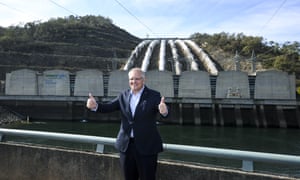
Snowy Hydro 2.0
‘Snowy 2.0 is not as it has been publicly portrayed,’
the group of 30 say in a joint statement.
The group of 30 said the 2,000-megawatt pumped hydro storage project in the Snowy Mountains would permanently damage the Kosciuszko national park.
“Snowy 2.0 is not as it has been publicly portrayed,” they said in a joint statement. “There are many alternatives that are more efficient, cheaper, quicker to construct and incur less [greenhouse gas] emissions and environmental impacts.”

Read the story from The Guardian by Adam Morton - “Snowy Hydro 2.0 will cost more and deliver less than promised, 30 experts say.” 

07 April, 2019

Trump’s Budget Could Have Chilling Effect on U.S. Clean Energy Leadership

At the Ames Laboratory, a national energy lab in the heart of Iowa, scientists and engineers are developing low-cost substitutes for the rare-earth metals used in electric-vehicle batteries and solar cells to reduce the need for imports from geopolitical rivals like China.
It's the kind of foundational research and development being
 carried out at national labs across the country that has helped
 to dramatically lower energy technology costs and pushed
clean energy toward a tipping point.
But that renewable energy work and its local economic impact are at risk in the Trump administration's budget proposal for the coming year.


Read the story from Inside Climate News by David Gearino - “Trump’s Budget Could Have Chilling Effect on U.S. Clean Energy Leadership.”

22 September, 2018

German’s self-driving streetcar puts autonomous tech on track

OF THE MANY acronyms engineers spend their lives internalizing, few are more valuable than KISS: Keep It Simple, Stupid. Constrain the problem, reduce the variables, and make life as easy as possible when designing novel systems—like, say, a self-driving car. The world is a messy, complicated place. The less of it you need to solve, the closer you are to having a working product.
In the past year, Siemens' (passenger-free) street cars
 have puttered through Potsdam more than 450 times.
That's why Waymo tests and plans to deploy its vehicles in Chandler, Arizona, with its reliably sunny weather, calm traffic, and meticulously mapped roads. But even there, its robots are still reportedly running into issues with routine maneuvers, like left turns into traffic. Which makes it easier to understand why engineers in Potsdam, Germany, have taken the KISS idea to an extreme: They've put their autonomous vehicles on tracks. Siemens Mobility has spent the week showing off the first autonomous streetcar-style, light rail project—what Europeans would call a tram—at the giant InnoTrans rail trade show in Berlin.


Read the story by Jack Stewart from Wired - “German’s self-driving streetcar puts autonomous tech on track.”

10 February, 2018

Cape Town is almost out of water. Could Australian cities suffer the same fate?

The world is watching the unfolding Cape Town water crisis with horror. On “Day Zero”, now predicted to be just ten weeks away, engineers will turn off the water supply. The South African city’s four million residents will have to queue at one of 200 water collection points.

With water storages running low, residents of Cape
Town get drinking water in the early morning from a
mountain spring collection point.
Cape Town is the first major city to face such an extreme water crisis. There are so many unanswered questions. How will the sick or elderly people cope? How will people without a car collect their 25-litre daily ration? Pity those collecting water for a big family.

The crisis is caused by a combination of factors. First of all, Cape Town has a very dry climate with annual rainfall of 515mm. Since 2015, it has been in a drought estimated to be a one-in-300-year event.


Read the piece on The Conversation by a Senior Lecturer in Environmental Science, Western Sydney University,  Ian Wright - “Cape Town is almost out of water. Could Australian cities suffer the same fate?

12 July, 2017

From waste to energy: Danish plant flexes the power of wastewater

LONDON (Thomson Reuters Foundation) - Since a Danish wastewater plant produced more energy than it needed last year becoming a "green power station", engineers from Serbia to China have been lining up to learn how it has managed to turn wastewater into a valuable energy source.

Magdalena Mis tells how a waste water
plant produces more energy than it needs.
Most water treatment plants - that convert wastewater and sewage into something that can go back into the water cycle - are energy hogs, with the race on to find technologies to cut electricity usage to save costs and the environment.

So international interest was piqued when the Marselisborg Wastewater Treatment Plant in Aarhus, Denmark's second largest city, generated nearly 70 percent more energy than it needed in 2016 following a 3 million euro ($3.2 million) upgrade.

This put Aarhus on track to become the first city in the world to provide and pump fresh water to all its citizens from energy created solely from household wastewater and sewage, escalating interest in how to make wastewater into a resource.

Read the Reuters story by Magdalena Mis - “From waste to energy: Danish plant flexes the power of wastewater.”

04 May, 2017

NYC Creates Climate Change Roadmap for Builders: Plan for Rising Seas

The nation's largest city has a message for the architects and engineers planning the New York of tomorrow: Fortify new buildings against the ravages of climate change or risk rebuilding as global warming worsens.
To help plan future buildings and infrastructure that avoids the hazards
of sea level rise, the city designed an interactive flood risk map looking
ahead to the end of the century. This image shows how the flood plain
is expected to expand across more city blocks between 2020
 (light blue) and 2080 (white).
New guidelines issued last week by the office of New York City Mayor Bill De Blasio are some of the most comprehensive for how builders should protect infrastructure against rising seas, more powerful storms and climbing temperatures. They draw on science published in 2015 by a city panel of experts that estimates rainfall, sea level rise and other climatic shifts expected for the city in the decades ahead.

For now, developers are not required to follow the recommendations, but the plan is for all city agencies to be using the guidelines for new projects by the end of the year, according to Susanne DesRoches, deputy director of infrastructure policy for the mayor's Office of Recovery and Resiliency.