Showing posts with label technologies. Show all posts

21 September, 2019

We Still Have No Idea How to Eliminate More Than a Quarter of Energy Emissions

Climate discussions typically center on the need to replace fossil-fuel power plants with technologies like wind turbines and solar panels.
We don't really yet know how to eliminate many of the
processes that contribute to  our carbon dioxide emissions.
But a new paper in Science offers a stark reminder that there are still huge parts of the global energy system where we simply don’t have affordable ways of halting greenhouse-gas emissions.
Air travel, long-distance transportation and shipping, steel and cement manufacturing, and remaining parts of the power sector account for 27 percent of global emissions from the energy and industrial sectors. And the authors say we need much more research, innovation, and strategic coordination to clean up these sources.

Read the MIT Technology story by James Temple - “We Still Have No Idea How to Eliminate More Than a Quarter of Energy Emissions.”

23 October, 2018

Geoengineering technologies are the next challenge for climate change law and governance. These are proposals to counteract climate change by removing CO2 directly from the atmosphere, or by reflecting sunlight away from the earth to reduce global temperatures. These proposals may have an important role to play alongside traditional mitigation strategies to meet the Paris Agreement temperature targets. However, they present significant governance and ethical challenges. Public Panel: Geoengineering: The Next Frontier of Climate Change Policy?”

Geoengineering technologies are the next challenge for climate change law and governance. These are proposals to counteract climate change by removing CO2 directly from the atmosphere, or by reflecting sunlight away from the earth to reduce global temperatures. 


These proposals may have an important role to play alongside traditional mitigation strategies to meet the Paris Agreement temperature targets. However, they present significant governance and ethical challenges.


31 October, 2017

The Geoengineering Fallacy

Geoengineering technologies are not yet deployable globally, but support for them is advancing fast, thanks to backing by powerful advocates eager to start experiments. But no silver bullet for climate change exists, and we must not abandon proven methods for the sake of a promise that one will be found.

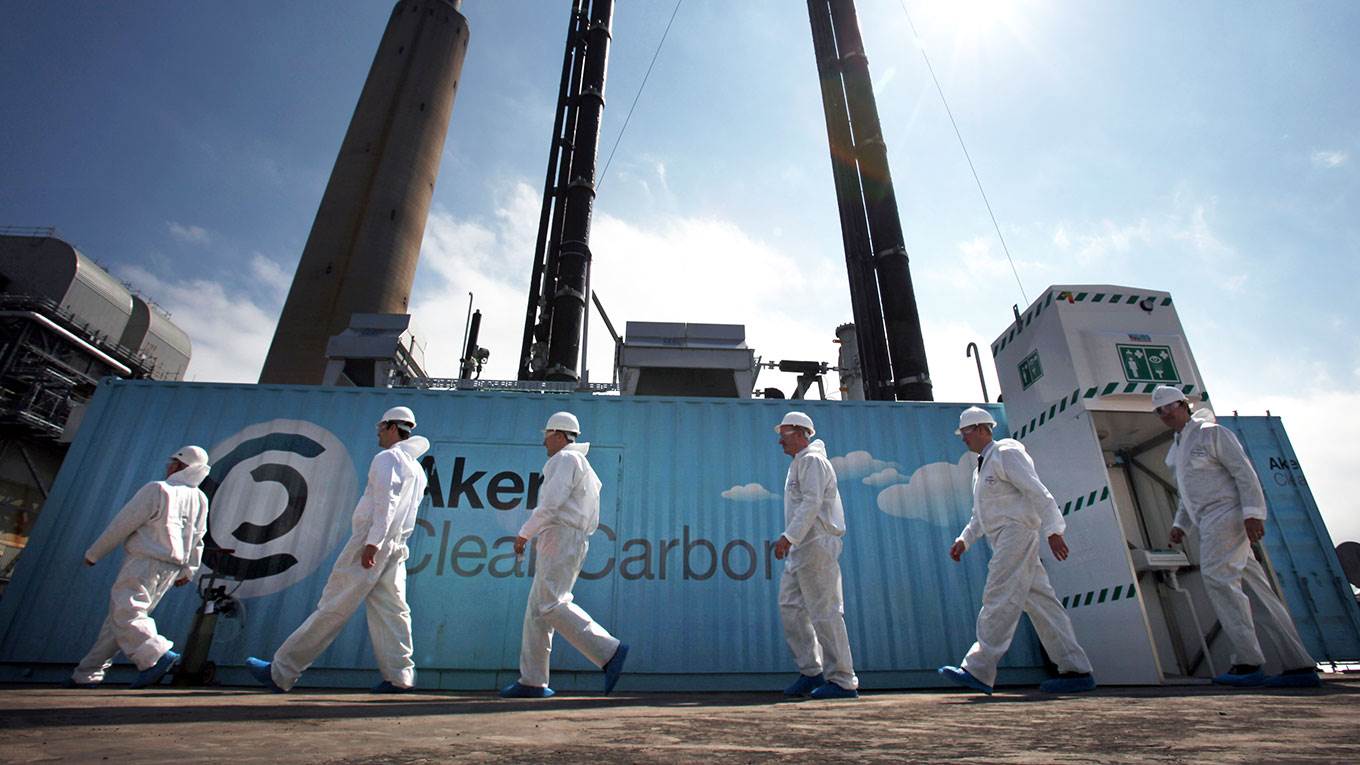
Scientists stand beside a new carbon capture test unit

BERLIN – As the world struggles to rein in emissions of climate-changing gases and limit planetary warming, a new technological silver bullet is gaining supporters. Geoengineering –the large-scale manipulation of the Earth’s natural systems – has been popularized as a means of counteracting the negative effects of climate change.

Proponents of this science feed the illusion that there is a way to engineer an exit from the climate crisis, meet the goals of the 2015 Paris climate agreement, and maintain a consumption-heavy lifestyle.


Read the Project Syndicate story by Barbara Unmüßig - “The Geoengineering Fallacy.”

12 July, 2017

From waste to energy: Danish plant flexes the power of wastewater

LONDON (Thomson Reuters Foundation) - Since a Danish wastewater plant produced more energy than it needed last year becoming a "green power station", engineers from Serbia to China have been lining up to learn how it has managed to turn wastewater into a valuable energy source.

Magdalena Mis tells how a waste water
plant produces more energy than it needs.
Most water treatment plants - that convert wastewater and sewage into something that can go back into the water cycle - are energy hogs, with the race on to find technologies to cut electricity usage to save costs and the environment.

So international interest was piqued when the Marselisborg Wastewater Treatment Plant in Aarhus, Denmark's second largest city, generated nearly 70 percent more energy than it needed in 2016 following a 3 million euro ($3.2 million) upgrade.

This put Aarhus on track to become the first city in the world to provide and pump fresh water to all its citizens from energy created solely from household wastewater and sewage, escalating interest in how to make wastewater into a resource.

Read the Reuters story by Magdalena Mis - “From waste to energy: Danish plant flexes the power of wastewater.”

08 December, 2015

Ministers and climate deniers arrive in Paris


Nearly 200 ministers have arrived in Paris to bargain and negotiate over the final 20 pages of text, and the 290 or so brackets that remain – the outcome of which will decide whether this agreement will fulfil its ambitions, or be full of empty rhetoric.

Australia foreign minister Julie Bishop arrived, delivered her speech to the plenary, and promised  …. $625,000 on promoting the interests of women in climate-related decision-making processes.

If that seemed a little underwhelming, so did the rest of the speech.

Typically of the Australian government at these talks, it was fine on rhetoric – particularly about prime minister Malcolm Turnbull’s innovation plan (this government has edited its slogans down from three words to a single word, innovation) but short on action, particularly on climate and clean energy, using the technologies already available.