Showing posts with label globally. Show all posts

30 December, 2018

2018: A tipping point for climate change

As 2018 comes to an end, it can be said that the year has proved to be a major tipping point for the issue of climate change globally as well as in Bangladesh.

15-year-old Greta Thunberg with a sign that reads
 'School strike for the climate', during her protest
against climate change on November 30, 2018.
Greta has camped outside Swedish parliament in
Stockholm and refused to go to school until
things change.
First we had the publication of the United Nations Intergovernmental Panel on Climate Change (IPCC) Special Report on 1.5 degrees which made two very clear scientific findings. First that there will be a world of difference in the severity of adverse climate change impacts between a temperature rise of 1.5 and 2 degrees. It is not just that poor countries would be the only ones to suffer but all countries will suffer very severe adverse impacts with a 2 degree temperature rise. Just to give one example, it will mean the loss of the entire Great Barrier Reef in Australia, one of the great natural wonders of the world. Secondly, it asserted that, even though it would be difficult, it was still possible to keep global temperature rise below 1.5 degrees if all countries acted together to reduce their greenhouse gas emissions by reducing use of fossil fuels and switching to 100 percent renewable energy no later than 2050.


Read the story from The Daily Star by Saleemul Huq - “2018: A tipping point for climate change.”

29 March, 2018

‘Extreme' fossil fuel investments have surged under Donald Trump, report reveals

Bank holdings in “extreme” fossil fuels skyrocketed globally to $115bn during Donald Trump’s first year as US president, with holdings in tar sands oil more than doubling, a new report has found.
A Shell tailings pond at a tar sands operation
near Fort McMurray, Alberta, Canada.
A sharp flight from fossil fuels investments after the Paris agreement was reversed last year with a return to energy sources dubbed “extreme” because of their contribution to global emissions. This included an 11% hike in funding for carbon-heavy tar sands, as well as Arctic and ultra-deepwater oil and coal.

US and Canadian banks led a race back into the unconventional energy sector following Trump’s promise to withdraw from Paris, with JPMorgan Chase increasing its coal funding by a factor of 21, and quadrupling its tar sands assets.

Chase’s $5.6bn surge in tar sands holdings added to nearly $47bn of gains for the industry last year, according to the report by NGOs including BankTrack, the Sierra Club and Rainforest Action Network (RAN).


Read the story from The Guardian by Arthur Nelson - “‘Extreme' fossil fuel investments have surged under Donald Trump, report reveals.”

23 March, 2018

Coal plant construction extends dive - but not fast enough: report

Coal-fired power is on track to start shrinking globally by 2022, dimming prospects for exporters of the fossil fuel, including Australia, according to a report by environmental groups.
On current trends, coal plant capacity worldwide could peak by 2022.
China and India, which have dominated construction of new power plants for more than a decade, both cut new capacity sharply for the second year in a row in 2017, the annual Boom and Bust report by Greenpeace, Sierra Club and CoalSwarm found.


Read Peter Hannam’s story from The Age - “Coal plant construction extends dive - but not fast enough: report.”

01 January, 2018

A great year for clean energy in Australia ends, while bad news for coal continues

In 20 years we’ll look back on 2017 as a turning point for the climate challenge. It hasn’t been all good news – carbon emissions increased globally and in Australia – but the mission to avoid dangerous climate change no longer appears completely hopeless.
 ‘It’s undeniable that the energy transition is well under way — but
Australians could be forgiven for despairing when coal dominates our politics and media cycle.
Until recently few in the mainstream were calling time on coal – yet numbers out of China and India showed that the coal building spree is fast winding down and the International Energy Agency, who are traditionally coal boosters, reported that coal is facing a “decade of stagnation” after global demand peaked in 2014. In May, the head of infrastructure investment at BlackRock, the world’s largest investment manager, announced that “coal is dead”.

Meanwhile renewable energy broke new records — China installed seven solar panels a second and India’s energy minister now expects to install 200GW of renewables by 2022.

While it’s undeniable that the energy transition is well under way, Australians could be forgiven for despairing when coal dominates our media cycle. Who can forget the federal treasurer, Scott Morrison, brandishing a lump of coal in the first session of parliament, goading: “This is coal — don’t be afraid, don’t be scared”?


Read the piece on The Guardian by Simon Holmes à Court - “A great year for clean energy in Australia ends, while bad news for coal continues.”

19 December, 2017

Watch: How a ‘fixers club’ in Argentina is pushing back against our throwaway culture

December 1, 2017 — According to the World Bank, each year we throw away close to 2 billion metric tons (2.2 billion tons) of trash globally. By 2100, experts predict daily waste production around the world could triple.

As we’ve reported previously at Ensia, our throwaway culture is exposing people to toxic chemicals, increasing greenhouse gas emissions, impacting food security and clogging our oceans with plastic trash.

But what if we took the time to fix broken household items instead?


31 October, 2017

The Geoengineering Fallacy

Geoengineering technologies are not yet deployable globally, but support for them is advancing fast, thanks to backing by powerful advocates eager to start experiments. But no silver bullet for climate change exists, and we must not abandon proven methods for the sake of a promise that one will be found.

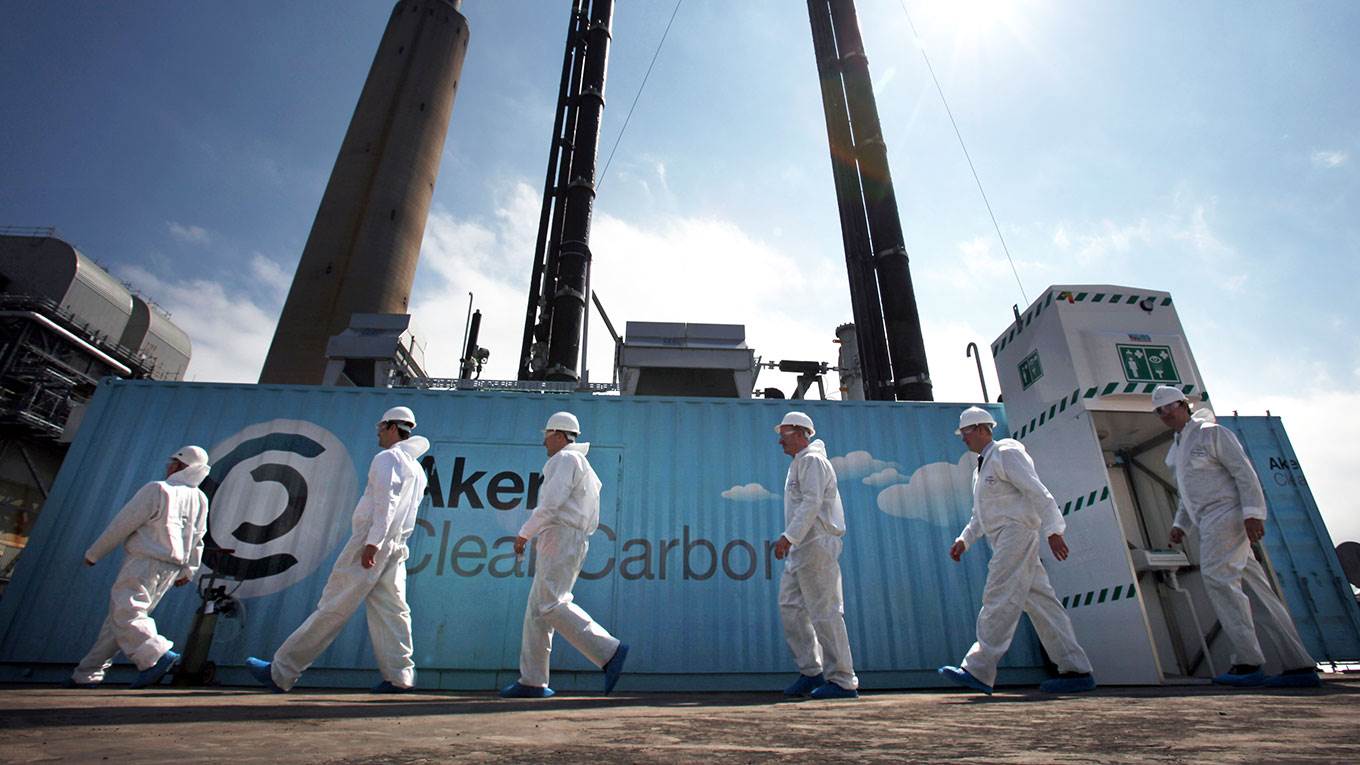
Scientists stand beside a new carbon capture test unit

BERLIN – As the world struggles to rein in emissions of climate-changing gases and limit planetary warming, a new technological silver bullet is gaining supporters. Geoengineering –the large-scale manipulation of the Earth’s natural systems – has been popularized as a means of counteracting the negative effects of climate change.

Proponents of this science feed the illusion that there is a way to engineer an exit from the climate crisis, meet the goals of the 2015 Paris climate agreement, and maintain a consumption-heavy lifestyle.


Read the Project Syndicate story by Barbara Unmüßig - “The Geoengineering Fallacy.”

24 September, 2017

Hostage to myopic self-interest: climate science is watered down under political scrutiny

Three decades ago when serious debate on human-induced climate change began globally, a great deal of statesmanship was on display. A preparedness to recognise that this was an issue which transcended nation states, ideologies and political parties. An issue which had to be addressed proactively in the long-term interests of humanity, even if the existential nature of climate risk was far less clear cut than it is today.

‘In the magical thinking of Australian policymakers, a pathway
 of gradual change, constructed over many decades in a
growing, prosperous, coal-fired world stretches enticingly before us.’
Then, as global institutions were put in place to take up this challenge and the extent of change this would impose on the fossil-fuel dominated world became more obvious, the forces of resistance mobilised. Today, despite the diplomatic triumph of the Paris climate agreement, debate around climate change policy has never been more dysfunctional, indeed Orwellian, particularly in Australia.

In his book Nineteen Eighty-Four, George Orwell describes a double-speak totalitarian state where most of the population accepts “the most flagrant violations of reality, because they never fully grasped the enormity of what was demanded of them, and were not sufficiently interested in public events to notice what was happening. By lack of understanding they remained sane.”

Orwell could have been writing about climate change and policymaking.


13 June, 2016

Air pollition damages both human health and the environment

Air pollution biggest contributor
 to stroke - worldwide study shows.
Air pollution has for the first time become one of the top contributors to stroke worldwide, according to the most detailed study of global risk factors for stroke ever conducted.

The research published in The Lancet Neurology journal found unclean air now causes more stroke-related death and disability than smoking. Globally, it was responsible for nearly 30 per cent of years of healthy life lost to a stroke in 2013, compared with 23 per cent for tobacco smoke.

"It's quite striking when you look at the map showing contribution of air pollution across the globe," said the study's lead author Valery Feigin, from Auckland University of Technology.

"The most significant contribution is in China and India, then it goes further to the west, like a belt.

Read Inga Ting’s story in today’s Melbourne Age - “Air pollution now a leading risk factor for stroke, global research finds.”

18 January, 2015

Warm seas drive up global remperatures


Unusually warm seas helped drive annual global temperatures to a record level in 2014 and are likely to ensure this year has a similarly hot start, climate experts say.

Two leading US agencies, the National Oceanic and Atmospheric Administration and NASA, have declared last year was the hottest, based on data going back to 1880, adding to an earlier confirmation by Japan.

Globally, average land and sea-surface temperatures were 0.69 degrees above the 20th century average, "easily surpassing" the previous high set in 2005 and 2010 by 0.04 degrees, NOAA said.

Victorian news in the Melbourne Age headed: “Warm oceans make 2014 the hottest year on record, Mildura Victoria's hottest town” gives these details.