Showing posts with label increased. Show all posts

23 November, 2019

Scott Morrison contradicted on link between emissions and bushfires

Experts have contradicted Scott Morrison's claim that Australia's level of greenhouse gas emissions could not have increased the current level of risk from bushfires.
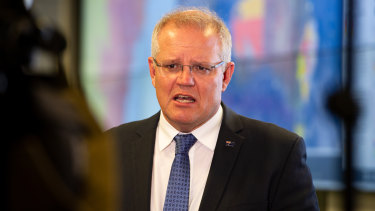
Prime Minister Scott Morrison claimed "Australia is an over-achiever on global commitments" to climate change.
Prime Minister Scott Morrison claimed "Australia is an
 over-achiever on global commitments" to climate change.

The Prime Minister said on Thursday climate change is a "global phenomenon" and Australia is doing its bit to reduce emissions.

He has acknowledged that climate change increases bushfire risk, but said there could be no link drawn between our emissions and any current bushfires.

"To suggest that with just 1.3 per cent of global emissions that Australia doing something differently, more or less, would have changed the fire outcome this season, I don't think that stands up to any credible scientific evidence at all," Mr Morrison said.


Read the story from The Sydney Morning Herald by Mike Foley - “Scott Morrison contradicted on link between emissions and bushfires.”

04 April, 2018

Coal-fired power stations caused surge in airborne mercury pollution, study finds

Airborne mercury pollution from coal-fired power stations in Victoria’s Latrobe valley increased 37% in just 12 months, according to an annual national survey of toxic emissions.
The mercury output from Loy Yang B coal-fired power station alone
 more than doubled to 831kg in 2016-2017, the national survey of
toxic emissions found.
The mercury output from Loy Yang B power station alone more than doubled to 831kg in 2016-2017, an increase of 123% over five years.

The brown coal burning power station produced more than 640 times the airborne mercury pollution of Eraring power station near Newcastle, New South Wales.

Eraring, Australia’s largest coal-fired power station, produces three times the energy of Loy Yang B power station but reported just 1.3kg of airborne mercury pollution in 2016-17, a reduction of 97% over the past five years.


Read Calla Wahlquist’s story from The Guardian - “Coal-fired power stations caused surge in airborne mercury pollution, study finds.”

04 February, 2018

The Pentagon Warned That Climate Change Threatens Half of America's Military Installations

Nearly 50% of U.S. military installations across the globe face increased risk of a slew of climate change-related threats including extreme temperature, flooding and drought, according to a Pentagon report.

The report, which comes in response to a request from Congress to study the issue, comes as the Trump Administration has sought to discredit the science of climate change including by removing the issue from its National Security Strategy last year.

But the report, which relied on a survey of military officials located at bases across the globe, outlines in detail the specific threats facing a variety of outposts as well as military installations that harmed by past extreme weather events linked to climate change. Sites along the West, East and Gulf coasts all face flooding from storm surge. Drought threatens facilities across the country with a particularly high concentration in California and parts of the prairie states. Wildfires pose threats across the Mountain West.


30 January, 2018

Turnbull government MPs ridicule claims of 'looming backbench revolt' over electric cars

A Liberal MP purportedly leading the charge against increased taxpayer support for electric cars says there is no looming backbench revolt, as other Liberals dismissed divisions over the issue as “nonsense".
Liberal MP Craig Kelly at Parliament House in Canberra.
Craig Kelly, the chair of the Coalition's energy and environment committee, played down ructions despite having warned that electric vehicles have a bigger carbon footprint than conventional cars - a view that has since been rubbished by the expert who created the website upon which the assertion was based.

Read the story by Nicole Hasham and Mark Kenny in today’s Melbourne Age - “Turnbull government MPs ridicule claims of 'looming backbench revolt' over electric cars.”


(It has been argued that only a child sees a project half completed and that is what has happened in the electric car debate - Craig Kelly argues that an electric car using power generated by a fossil-fuelled power station is more carbon intensive than existing traditional, existing cars, ignoring the fact that power drawn from solar plants would significantly reduce that carbon footprint. The electric car must be paired with solar or wind power - Robert McLean)

05 January, 2018

‘Rather startling': Study finds rapid increase in frequency of coral bleaching

The frequency of severe coral bleaching events has increased fivefold in four decades because of climate change, a pace already exceeding the time needed for some species to recover, a new global study has found.
Coral reefs are bleaching at shorter intervals around the world. 
Of 100 reefs examined worldwide, just six have escaped severe bleaching since 1980.


Read the story by Peter Hannam on today’s Melbourne Age - “‘Rather startling': Study finds rapid increase in frequency of coral bleaching.”

01 January, 2018

A great year for clean energy in Australia ends, while bad news for coal continues

In 20 years we’ll look back on 2017 as a turning point for the climate challenge. It hasn’t been all good news – carbon emissions increased globally and in Australia – but the mission to avoid dangerous climate change no longer appears completely hopeless.
 ‘It’s undeniable that the energy transition is well under way — but
Australians could be forgiven for despairing when coal dominates our politics and media cycle.
Until recently few in the mainstream were calling time on coal – yet numbers out of China and India showed that the coal building spree is fast winding down and the International Energy Agency, who are traditionally coal boosters, reported that coal is facing a “decade of stagnation” after global demand peaked in 2014. In May, the head of infrastructure investment at BlackRock, the world’s largest investment manager, announced that “coal is dead”.

Meanwhile renewable energy broke new records — China installed seven solar panels a second and India’s energy minister now expects to install 200GW of renewables by 2022.

While it’s undeniable that the energy transition is well under way, Australians could be forgiven for despairing when coal dominates our media cycle. Who can forget the federal treasurer, Scott Morrison, brandishing a lump of coal in the first session of parliament, goading: “This is coal — don’t be afraid, don’t be scared”?


Read the piece on The Guardian by Simon Holmes à Court - “A great year for clean energy in Australia ends, while bad news for coal continues.”

27 June, 2017

Rate of global sea level rise jumps 50 per cent in two decades

The rate of global sea level rise has increased by 50 per cent in a little over increased   study from Australian and international researchers has found. 

The Greenland Ice Sheet contributed 5 per cent of
 the total sea level rise in 1993, by 2014 this figure
increased to about 25 per cent. 
The study, published by Nature Climate Change, used refined satellite estimates to show global sea level rise has increased from 2.2 millimetres each year in 1993, to 3.3 millimetres each year in 2014.

It was launched in an effort to understand why an accelerated rate of sea-level rise, between 1993 and 2014, had not been accurately represented in data from altimeters [satellite instruments used to measure height or altitude], despite accelerating contributions from ice sheets.

According to researchers from Qingdao National Laboratory for Marine Science and Technology, CSIRO Australia and the Universities of NSW, Tasmania and Arizona, the dramatic increase is thought to be mostly related to the melting of the Greenland ice sheet.


Read Lucy Cormack’s story in today’s Melbourne Age - “Rate of global sea level rise jumps 50 per cent in two decades.”

04 January, 2017

Federal government plan to improve fuel quality and vehicle efficiency worthwhile

The federal government's draft plan to improve the quality of fuel and the efficiency of vehicles on Australia's roads may annoy some motorists concerned about the increased cost of driving.

Certainly the motoring lobby would like them to get angry. Its representatives have reacted predictably to the draft proposals. As The Age has reported, the Australian Automobile Association, the peak body for state-based organisations such as the RACV, is already making warning noises about costs.

Read the Editorial in today’s Melbourne Age - “Federal government plan to improve fuel quality and vehicle efficiency worthwhile.”