Showing posts with label experts. Show all posts

02 May, 2020

Australia listened to the experts on coronavirus. It's time we heard them on climate change

We’re already being swamped with ideas about “reforms” needed to recover from the pandemic crisis. But the word reform is like gift wrap – a handy cover for any offering, thought-through or otherwise.
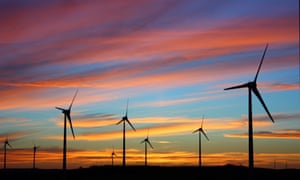
Renewables
‘The energy market operator says Australia could
accommodate levels of up to 75% “instant” wind
and solar penetration in its main grid by 2025.’ 
Perhaps we should ditch the word entirely, and with it the forest of feelpinions about what governments “must” do to advance an author’s previously-held ideological positioning in the post-corona world.

Imagine if we took just two lessons from the way Australian governments responded to the coronavirus: that good decisions are made when they consider the evidence and the best available expert advice; and that policy-making can accommodate reasonable differences of opinion, without becoming a “war”.

Think, as Laura Tingle did in a piece for the ABC’s 7.30 this week, of the difference it would make if interviewers and commentators allowed room for discussion of complex and competing ideas, before demanding that politicians rule them “in” or “out”, or before finding a backbencher who will say they might cross the floor on a policy that conflicts with their ideological prejudice – even if that policy hasn’t yet been outlined.

23 November, 2019

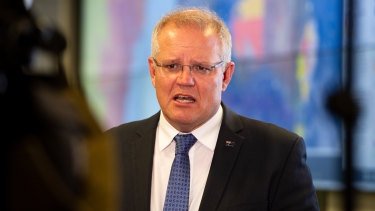
Scott Morrison contradicted on link between emissions and bushfires

Experts have contradicted Scott Morrison's claim that Australia's level of greenhouse gas emissions could not have increased the current level of risk from bushfires.

Prime Minister Scott Morrison claimed "Australia is an over-achiever on global commitments" to climate change.
Prime Minister Scott Morrison claimed "Australia is an
 over-achiever on global commitments" to climate change.

The Prime Minister said on Thursday climate change is a "global phenomenon" and Australia is doing its bit to reduce emissions.

He has acknowledged that climate change increases bushfire risk, but said there could be no link drawn between our emissions and any current bushfires.

"To suggest that with just 1.3 per cent of global emissions that Australia doing something differently, more or less, would have changed the fire outcome this season, I don't think that stands up to any credible scientific evidence at all," Mr Morrison said.


Read the story from The Sydney Morning Herald by Mike Foley - “Scott Morrison contradicted on link between emissions and bushfires.”

11 May, 2019

Experts cast doubt on Coalition's power price pledge

Energy Minister Angus Taylor has pledged to slash wholesale power prices, but experts say he is seeking to take credit for a result that was already predicted and largely outside the government's control.
The government says it will lower the wholesale electricity price by 25 per cent.
Mr Taylor on Friday announced that a re-elected Morrison government would introduce a "price target" to cut the average wholesale electricity price to less than $70 a megawatt hour by the end of 2021 – a 25 per cent reduction on current levels.

The wholesale market is where energy generators and retailers trade electricity. Wholesale costs comprise about one-third of household electricity bills, and a greater share for industrial customers.

Mr Taylor's announcement was an attempt to refocus public attention on the government's election promise to make electricity more affordable and reliable. The Coalition has been under heavy scrutiny throughout the election campaign for its lack of ambition on climate policy, including the absence of measures to cut emissions from the polluting electricity sector.


Read the story from The Age by Nicole Hasham and Cole Latimer - “Experts cast doubt on Coalition's power price pledge."

07 January, 2019

Hundreds of thousands of native fish dead in second Murray-Darling incident

Hundreds of thousands of fish have been killed along a stretch of the Lower Darling River in New South Wales in a second major incident which has led some experts to fear whole populations of local native fish have been wiped out.
 Photos posted on social media of the fish kill at Menindee on the Darling River. 
Residents near the Menindee Lakes are reporting what is the second major fish kill along a 20km stretch of water near Weir 32.

An incident before Christmas saw an estimated 10,000 fish die.

Locals have been posting photos of dying fish washed up along the shores of the lakes which are about 100km east of Broken Hill.

And local fish experts are saying that it could all but wipe out the populations of Murray cod and other native fish, raising serious questions about the way WaterNSW is managing the lakes system.


Read the story from The Guardian by Anne Davies - “Hundreds of thousands of native fish dead in second Murray-Darling incident.”

21 September, 2018

Snakes, Rats & Floating Corpses

It happened in July 2016. A flash flood roared through Ellicott City, Maryland, killed two people and caused tens of millions of dollars in damages to the historic buildings along Main Street. The experts said it was one of those rare 1,000-year flood events. The city set about the job of rebuilding. It takes a long time – often years – for a community to recover from a devastating flood.
Ellicott City in the 2016 flood.
Then last May, while Ellicott City was still getting over the 2016 disaster, it happened again, another one of those “extremely rare" 1,000-year floods.

For something that has only a 0.1% chance of happening in any given year, there are a lot of those floods going around lately. There have been nine 1,000-year events since 2010 in the United States. Three of them took place in the first seven months of 2016. In the likely event we'll have more of them, it will be important to make a distinction between 1,000-year floods and 1,000-year rains. A record rain does not necessarily result in a record flood. It depends on things like how fast and relentlessly the rain falls, how much moisture plants and soils can absorb, and how much impermeable surfaces a city has. It was concrete, asphalt and rooftops that made the damage in Houston so severe during Hurricane Harvey last fall.


Read the post from blogger Bill Becker -  “Snakes, Rats & Floating Corpses.”

27 June, 2018

Australian climate policy ignoring billions in potential health savings, experts say

Australia is missing out on billions in short-term health savings that could come with tougher greenhouse emission targets, experts say.
Burning fossil fuels not only produces greenhouse 
gases, but pollution that can cause health problems.
Air pollution can lead to premature deaths and problems such as heart attacks and asthma, but the economic cost of this is not being pitted against the apparent benefits to the economy of burning fossil fuels, according to Tony Capon, professor of planetary health at the University of Sydney.

He and others point to ballpark figures suggesting the energy and transport sectors alone cost Australia at least $6 billion a year in health problems.


17 February, 2018

No record of some threatened species in area government says it's protecting them

Experts have cast doubt on government claims the Coalition is funding a conservation project in Victoria’s Endeavour Fern Gully to benefit threatened species – because the listed species are unlikely to occur in the area.
Growling grass frog unlikely to be found at Endeavour
Fern Gully, despite Josh Frydenberg saying so
Endeavour Fern Gully is a 27-hectare (65 acre) rainforest property on the Mornington Peninsula. The environment and energy minister, Josh Frydenberg, says the government had funded a broad Green Army project that “improves habitat through weed control and promotes greater conservation awareness of native vegetation in remnant bushland at Endeavour Fern Gully”.

“This is where a number of threatened species are known or likely to be, including the grey-headed flying-fox, the southern brown bandicoot (eastern), the growling grass frog and the clover glycine.”


30 January, 2018

George Monbiot discusses 'System Failure'

James C. Scott's "Against
the Grain" - considered
by Monbiot as 'fascinating'.
It’s a good question, but it seems too narrow. “Is Western civilisation on the brink of collapse?”, the lead article in this week’s New Scientist asks. The answer is probably. But why just Western?

Yes, certain Western governments are engaged in a frenzy of self-destruction. In an age of phenomenal complexity and interlocking crises, the Trump administration has embarked on a mass deskilling and simplification of the state. Donald Trump might have sacked his strategist Steve Bannon, but Bannon’s professed intention, “the deconstruction of the administrative state”, remains the central – perhaps the only – policy.

Defunding departments, disbanding the teams and dismissing the experts they rely on, shutting down research programmes, maligning the civil servants who remain in post, the self-hating state is ripping down the very apparatus of government. At the same time, it is destroying the public protections that defend us from disaster.

Read the latest piece by Guardian columnist George Monbiot - “System Failure.”

18 January, 2018

Renewable energy investment 'bonanza' is coming to Australia, experts say

Investment experts say Australia is fast becoming an attractive destination for large-scale batteries and renewable investment, which should ultimately bring down the costs of gas and electricity for households.
Tesla's lithium-ion battery's success in SA has
drawn the eyes of the global investment community.
The world's second-most powerful battery could be built in the Top End as part of a plan to produce more renewable energy for the Northern Territory, following the installation of Elon Musk's 100-megawatt battery in South Australia.

The Climate Council has called it a renewable investment bonanza.

"We will see I think a boom over the next decade in battery storage and also solar thermal, we're starting to see that play out now in South Australia," the Climate Council's Andrew Stock said.

Mr Musk drew plenty of media attention when he announced he would build a 100-megawatt battery in South Australia.


19 October, 2017

National energy guarantee would cut 6 per cent off power bills in best scenario

Even the best energy policy will do little to reduce costs for consumers, experts have warned, as the Turnbull government resists pressure to substantiate claims its new policy will save Australians $2 a week on power bills. 
Minister for Environment and Energy Josh Frydenberg, Deputy
 Prime Minister Barnaby Joyce and Prime Minister Malcolm
 Turnbull during Question Time at Parliament House in
 Canberra on Wednesday.
 
 In Parliament on Wednesday, Labor seized on suggestions the reduction could be closer to 50¢ a week but Energy Minister Josh Frydenberg stood by the claim of an average $115-a-year saving between 2020 and 2030.

"The national energy guarantee is a credible, workable, pro-market policy that will deliver lower power prices for Australians and involves no taxes, no subsidies and no emission trading schemes," he said. 

A report this week from the Australian Competition and Consumer Commission found a 63 per cent power price rise since 2007 had put consumers under "unacceptable pressure"
  

Read Eryk Bagshaw’s story in today’s Melbourne Age - “National energy guarantee would cut 6 per cent off power bills in best scenario.”

02 March, 2017

Just who are these 300 'scientists' telling Trump to burn the climate?

Physicist William Happer stands inside the elevator
in the lobby of Trump Tower in New York,
U.S., on Friday, Jan. 13, 2017. Happer, who
is under consideration to be Trump’s science
advisor, signed a letter asking him to withdraw
from the UN Convention on Climate Change. 
If you read my articles regularly, you may have noticed multiple times I have stated that the scientific argument is over; there are no longer any reputable scientists that deny the overwhelming human influence in our climate. An open letter published last week by the anti-environmentalists proves my point. 

If you read the headlines, it might have seemed impressive: “300 Scientists Tell Trump to Leave UN Climate Agreement.” Wow, 300 scientists. That’s a lot right? Actually, it’s a pitiful list.

First of all, hardly anyone on the list was a climate scientist; many were not even natural scientists. It is almost as though anyone with a college degree (and there are about 21 million enrolled in higher education programs just in the USA) was qualified to sign that letter.

Okay but what about the signers of the letter? Surely they are experts in the field? Not so much. It was very difficult to find the list of signers online however I was able to acquire it with some help. 

See for yourself - Google “300 scientists letter climate change” in the past week. You will see many stories in the press, but try finding the actual letter or the list of names. The version I obtained was dated February 23, 2017 which helps narrow your searching. In an era of Dr. Google, it is unbelievable that the letter itself was not made more available. 


Read John Abraham’s story on The Guardian - “Just who are these 300 'scientists' telling Trump to burn the climate?”

18 January, 2017

Australia should invest in coal power to reduce emissions, minister says

Matt Canavan - "misreported".
Research touted by the resources minister that reportedly suggests Australia can rely on coal to meet emissions reduction has been attacked by experts and appears to have been misreported.

The Australian reported on Tuesday that research conducted by the Department of Industry, Innovation and Science – and commissioned by Matt Canavan, the federal minister for resources – showed Australia could cut its emissions by 27% if it replaced its existing coal power stations with the more efficient “ultra-supercritical” technology.

If true, that would get the country close to its 2030 target, which is a reduction of 28% below 2005 levels.

However, a summary of the analysis seen by Guardian Australia suggests the new coal technology – under a very expensive demolition and construction program – could reduce Australia’s emissions by 12% at most.

In fact, to reduce Australia’s emissions by 27% by relying on reductions in the electricity industry alone, the sector’s emissionswould need to be reduced to almost zero. Australia’s entire electricity sector only accounts for about a third of its carbon emissions.

Read Michael Slezak’s story on The Guardian - “Australia should invest in coal power to reduce emissions, minister says.”

04 March, 2016

Summit statement about Australia's preparedness for extreme heat

Dr Elizabeth Hanna - helped
report on Australia's
preparedness for increasing
extreme heat.
For the last two days, twenty-four experts representing a wide variety of disciplines including emergency management and medicine, nursing and midwifery, workplace health, health policy, community services, planning and the built environment, environmental science, and physiology, came together to discuss how to improve Australia’s preparedness for increasing extreme heat.

All the experts agreed that extreme heat is a critical and growing health issue for Australians. While the health sector is key, it is only one part of the response.

Read the Climate Council report - “Statement from the Australian Summit on Extreme Heat and Health.”