Showing posts with label Energy policy. Show all posts

16 February, 2020

I would cross floor on climate: Canavan

Outspoken Nationals senator Matt Canavan would consider crossing the floor of parliament on climate or energy policy if it wasn't in the interests of his Queensland constituents.

Matt Canavan says he would vote against the government's climate policy if he didn't agree with it.
 Matt Canavan says he would vote against the
government's climate policy if he didn't agree with it.
Senator Canavan, who returned to the back bench as a result of the recent leadership spill in the National Party, is a strong supporter of coal for Australia's energy source.

Asked on Sky News whether he would be willing to cross the floor and vote against the government on climate or energy policy, Senator Canavan said: "Well, the short answer is yes, the longer answer is it depends on the detail.”


Read the story from The Canberra Times by Colin Brinsden - “I would cross floor on climate: Canavan.”

23 November, 2019

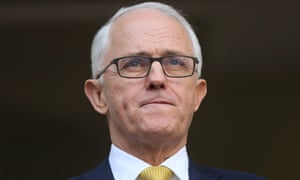
Malcolm Turnbull says Liberals' struggles with climate denial are hurting Australia

Former prime minister Malcolm Turnbull
Former prime minister Malcolm
Turnbull has slammed the Liberals’
 lack of climate policy.
Malcolm Turnbull says Australia will struggle to meet its Paris emissions target without rapid decarbonisation of the energy sector, and he says the Liberal party’s continuing failure to develop a coherent climate and energy policy is costing the country much-needed new investment in power generation.
In a wide-ranging interview with Guardian Australia’s politics live podcast ahead of the publication of his memoir next year, the former prime minister said the Liberal party had struggled with climate change denialism since 2007 because climate change had morphed into an issue of “identity” rather than fact.

Read the story from The Guardian by Katharine Murphy - “Malcolm Turnbull says Liberals' struggles with climate denial are hurting Australia.” 

19 November, 2019

We’re way off course for Paris, says World Energy Outlook

You probably won’t be surprised to hear that energy policy is way off course around the world. At the Paris climate conference, governments committed to reducing emissions to try to hold the rise in global temperatures to 1.5 degrees. Four years later, global emissions are increasing — and if nations’ energy policies are any guide, they will end up driving temperatures far above the Paris goal.
Grand coalition needed: International Energy Agency
executive director Fatih Birol launching the latest
 
World Energy Outlook report yesterday in Paris. 
That’s hardly new. What’s important is who is saying it this week: the International Energy Agency, the Paris-based global data source and think tank established and funded by more than fifty governments, including Australia, as the world’s authoritative source of advice on energy policy.
The IEA’s annual flagship review, World Energy Outlook 2019, puts it bluntly. On current policies, the world is on track for a “relentless upward march in energy-related emissions, as well as growing strains on almost all aspects of energy security.” Even governments’ stated policies, including promised changes in future, would merely slow that growth a little, leaving the world far short of meeting its goals in 2040.

Read the story from Inside Story by Tim Colebatch - “We’re way off course for Paris, says World Energy Outlook.”

21 June, 2019

Liberal states in talks to revive Turnbull's dumped energy policy

Liberal states are caucusing in an attempt to revive Malcolm Turnbull’s ditched national energy guarantee (Neg), or an energy policy with similar characteristics, ahead of a meeting with the federal energy minister, Angus Taylor, expected in late July.
Emissions are released from a factory chimney
The energy sector wants the
Morrison government to implement
a policy that integrates emissions
 reduction – as the Neg did.
Guardian Australia understands there have been discussions between New South Wales, South Australia and Tasmania with a view to rebooting the policy Scott Morrison dumped after taking the leadership from Turnbull last August.
The states are under intense pressure from stakeholders to try to revive the Neg – which has widespread support in the energy sector and from energy users – to create a framework that will give investors certainty.
The energy sector, which has a fractious relationship with Taylor, has also ramped up public calls after the election for the Morrison government to implement an energy policy that integrates emissions reduction – as the Neg did.

Read the story from The Guardian by Katharine Murphy - “Liberal states in talks to revive Turnbull's dumped energy policy.”

17 May, 2019

Australians disagree on how important climate change is: poll

Climate change, the environment and energy policy are all key issues in this election campaign, fuelled by compelling evidence of our accelerating impact on the environment and climate. While voters agree more than you might think, there’s still a serious split on the importance of acting on climate change and preventing harm to the environment.


Australia’s major political parties fall into two broad camps on these issues. The Labor party is spruiking policies that control emissions and move towards renewables, consistent with its rhetoric about taking on the “top end of town” – including the mining industry.


Read the story from The Conversation - “Australians disagree on how important climate change is: poll."

03 March, 2019

Angus Taylor again falsely claims Australia's greenhouse emissions are falling

The energy minister has again insisted Australia’s emissions are going down, when the government’s official figures show emissions continue to increase, as the government struggles to sell the latest incarnation of its energy policy.
Angus Taylor repeatedly stated emissions had decreased by
 1% in an interview on the ABC’s Insiders program. 
In an interview with the ABC program Insiders, Angus Taylor repeatedly stated emissions had decreased by 1% repeating the line first said by the prime minister, Scott Morrison, that Australia would meet it’s Paris commitments in “a canter”.

“Yes, they’re coming down and the department rightly believes they’re going to continue to go down and the result of this is we will reach, not just our Kyoto targets and still in the Kyoto period, we will reach our Paris targets,” he said.

The latest report released by the environment department, looking at emissions between September 2017 and September 2018, showed total emissions in Australia had increased by 0.9%, continuing a pattern of increases over the past five years.


Read the story from The Guardian by Amy Remeikis - “Angus Taylor again falsely claims Australia's greenhouse emissions are falling.”

18 February, 2019

Coalition’s last minute energy policy continues to unravel before its eyes

The federal Coalition’s energy policy moves continue to unravel before its eyes, with the latest blow coming from legal opinion that suggests that the government would need to get funding for any new fossil fuel generation through parliament if it is to have any legal force.
Minister for Energy, Angus Taylor (left), and Prime
Minister Scott Morrison talk at a press conference
.
The opinion comes just days after the federal Coalition decided to pull its so-called “big stick” legislation after discovering that Labor and the independents would support an amendment by The Greens that would ban the government from funding new coal investments.

The “big stick” legislation is a lead-footed attempt by the government to try and “control” the energy market, drawing on some aspects of an ACCC report into market gaming and manipulation, but introducing others – such as a threat to force companies to sell assets – that the ACCC, and just about everyone else, says is a really bad idea.


Read the RenewEconomy story by Giles Parkinson - “Coalition’s last minute energy policy continues to unravel before its eyes.”

02 February, 2019

Julie Bishop calls for climate change consensus ahead of election

Hong Kong | Former deputy Liberal leader Julie Bishop has revived calls for the Coalition to secure bipartisan support with Labor on energy policy and resolve divisions within the party on climate change ahead of the federal election as she urged voters not to "write us off”.
Former deputy Liberal leader Julie Bishop has revived
 calls for the Coalition to secure bipartisan support
with Labor on energy policy, and resolve differences
 within the party on climate change.
In a speech to the Hong Kong business community on Friday, Ms Bishop will also stress the conundrum facing politicians pitching to an electorate comfortable with decades of economic comfort and divided over whether the government was interfering too much or doing too little.

Ms Bishop singled out energy policy and climate change as being at the heart of political disruption in Australia, noting the National Energy Guarantee was the closest the Coalition had come to achieving consensus with Labor.


Read the story from the Financial Review by Michael Smith - “Julie Bishop calls for climate change consensus ahead of election.”

19 December, 2018

NSW slams federal Coalition over “extraordinary” refusal to reinstate emissions in NEG

Relations between one of Australia’s last remaining Coalition state governments and the Morrison government continue to go south at a rapid rate, after NSW energy minister Don Harwin slammed his federal counterpart’s “out of touch” energy policy at the 21st COAG Energy Council meeting in Adelaide today.

In a brief, but stinging rebuke, Harwin said he was “very disappointed” by the federal government actions at the meeting, in particular its continued refusal to restore the emissions component of the National Energy Guarantee, after it was dumped from the policy in August.

“The refusal, on procedural grounds, to let the vital matter of restoring an emissions obligation into national energy policy be discussed is extraordinary,” Harwin wrote in an emailed statement.


24 November, 2018

‘Disappointing': Business leaders slam Morrison government on energy policy

The federal government faces a mounting business backlash over energy policy as leaders of some of nation's biggest companies and most influential lobby groups have publicly lamented the ditching of the National Energy Guarantee and blasted its proposed replacement.
BlueScope CEO Mark Vassella said the government has
 wasted the potential of the National Energy Guarantee.
CREDIT:
One of the country's biggest manufacturers, Bluescope, on Friday singled out the decision to scrap the National Energy Guarantee as disappointing.

BlueScope chief executive Mark Vassella said the steelmaker, which employs thousands of people around Australia, understood energy policy was "complex and political" but the challenges in the sector needed to be addressed.


22 November, 2018

On climate policy, Bill Shorten has learnt from the political disasters that swamped Gillard and Rudd

A decade of political pain on climate change has told Australians not to expect too much from their politicians on energy policy.
Bill Shorten has learnt from Julia Gillard
and Kevin Rudd's political disasters.
CREDIT:
Bill Shorten is making sure he does not repeat the pain of the last Labor government if he is fortunate enough to lead the next one.

Julia Gillard negotiated with the Greens to put a price on carbon emissions with what became known as a carbon tax. She broke an election promise and never recovered.

Kevin Rudd tried to negotiate with the Coalition to put a price on carbon with an emissions trading scheme. The Coalition split, the Greens voted against the plan and Rudd was forced to retreat.


23 September, 2018

Energy policy captive to lobbyists and 'mad ideologues', Tim Flannery says

Five years since the Abbott government scrapped the Climate Commission, the environmentalist Tim Flannery says our energy policy remains hostage to lobbyists, political self-interest and “mad ideologues”.
‘We’re being held hostage at a federal level,’
Tim Flannery told Guardian Australia.
But the organisation Flannery helped start from the ashes of Abbott’s climate bonfire, the Climate Council, says that attitudes have shifted substantially since 2013 – at least those outside federal parliament.

“We’re being held hostage at a federal level,” Flannery told Guardian Australia.

“It has been a disgrace. Our failures are the failures of a small group of politicians who are supposed to be acting in the national interest. Instead, they’re using energy policy as a cudgel, they’re listening to paid lobbyists and doing their bidding.”


Read the story from The Guardian by Ben Smee - “Energy policy captive to lobbyists and 'mad ideologues', Tim Flannery says.”

09 September, 2018

‘Disappointed': Josh Frydenberg sorry to see Neg dumped

Josh Frydenberg says he’s disappointed the energy policy he spent months formulating is now dead, and he says the Coalition’s message at the next federal election will be that both the major parties have failed to land durable policies to reduce emissions.
 Josh Frydenberg says reducing emissions is
‘a challenge that has dogged both sides of politics’.
The treasurer told the ABC on Sunday “no one is more disappointed than I am” about the government dumping the national energy guarantee, which Scott Morrison confirmed remained the official government position over the weekend.

Frydenberg, who as energy and environment minister spearheaded the Neg, said “a lot of work went into the national energy guarantee” but he had to recognise the reality that colleagues refused to support it.


Read the story by Kathrine Murphy from The Guardian - “‘Disappointed': Josh Frydenberg sorry to see Neg dumped.”

06 September, 2018

Cabinet ministers rejected Turnbull's $1.6 billion plan to cut power bills before leadership implosion

Cabinet ministers rejected a $1.6 billion plan to cut power bills for thousands of Australians in the days before a Liberal Party brawl on energy policy that helped bring down Malcolm Turnbull.
Energy policy and power affordability played a role
in Malcolm Turnbull's demise as prime minister.
Fairfax Media can reveal the Coalition government had drafted plans for a one-off bonus to help pensioners and others in financial stress pay their electricity bills, in a bid to demonstrate stronger action on power prices alongside tougher consumer laws.

Mr Turnbull put the plan to federal cabinet in early August at the same time he was trying to shore up support for the National Energy Guarantee against threats from Tony Abbott and others to cross the floor.

In a crucial decision, cabinet members rejected the plan to lower power bills and left the government without new measures to address household energy costs in the face of the backbench revolt over the NEG.


01 September, 2018

Options on energy policy leave Coalition in a sticky situation

We’ve lost another prime minister in the front bar brawl that is Australian politics, but we’ve lost something else as well, something that’s a bit harder to see.
The imperative of emissions reduction now hangs over
 Liberal leaders like the sword of Damocles. 
For the last decade or more, a group of people in the political system have been trying to land a bipartisan consensus on energy policy and climate change, persevering through all the dispiriting cycles of trying to achieve that end, hoping that a corner could be turned.

That animating current in politics, and it’s been a significant one, now seems to have hit a dead end. That’s the feeling. We’ve reached a point of no return.


Read Katharine Murphy’s story from The Guardian -  “Options on energy policy leave Coalition in a sticky situation.”

25 June, 2018

Big business sends a warning to Coalition MPs over scuttling the National Energy Guarantee

Business leaders will lobby federal government MPs on Tuesday to urge them to hold their nerve on energy policy in a growing effort to stare down objections from conservatives and Greens that could lead to another impasse on climate change.

BlueScope chief Mark Vasella and BHP Billiton commercial chief Arnoud Balhuizen will warn Coalition MPs against backsliding on the National Energy Guarantee after former prime minister Tony Abbott last week left the door open to crossing the floor on the policy.

BHP, which spent $620 million on electricity across Australia last year, will outline detailed modelling that shows the government plan can bring greater reliability to the electricity grid while meeting emission targets.


20 June, 2018

Carbon tax: the two most loaded words in Australian politics make a return to Canberra

A new skirmish on energy policy is pitting Malcolm Turnbull against Tony Abbott in an argument about one of the most loaded terms in Australian politics: carbon tax.
Carbon tax protesters outside Parliament House in 2011.
The Prime Minister had to tough out another challenge from his predecessor on Tuesday morning when Abbott urged a rethink of Coalition policy on energy and climate change.

It is hard to see this as anything other than a grudge match. Abbott tried to reopen old decisions about cuts to greenhouse gas emissions that were made under his own government, pinning the blame on Turnbull instead.


Read the opinion piece from The Age by David Crow - “Carbon tax: the two most loaded words in Australian politics make a return to Canberra.”

30 May, 2018

Tony Abbott fires warning shot at party leadership on energy

Energy Minister Josh Frydenberg has assured Coalition MPs that electricity customers were “through the worst” of the price spikes of recent years, as former prime minister Tony Abbott fired another warning shot over the government’s energy policy.
Former Australian Prime Minster, Tony Abbott.
Mr Frydenberg told Liberal and Nationals colleagues that he expected prices to fall in Queensland and stay relatively flat in NSW and South Australia according to forecasts for the next pricing period from July.

The assurance came as several MPs expressed their concern about energy and Mr Abbott sought an assurance that the government’s policy would go back to the Coalition party room for a decision by all members.


Read the story from today’s Age - “Tony Abbott fires warning shot at party leadership on energy.”

20 April, 2018

Environment Minister Josh Frydenberg says energy deal is close

Environment and Energy Minister Josh Frydenberg is confident of striking a deal with the states on a national plan to merge climate and energy policy, but remains adamant he won't yield to demands by some Labor states to raise emission reduction targets.
Josh Frydenberg, Minister for Environment and Energy.
The nation’s energy ministers will meet at a Council of Australian Governments meeting on Friday to thrash out the future of the federal government’s national energy guarantee (NEG), and are expected to agree to move on to the final design stage of a deal.

Mr Frydenberg was the last of the COAG leaders to arrive for a pre-gathering dinner on Thursday night at Cecconi's, an up-market Italian restaurant on Melbourne's Flinders Lane.


Read Nicole Hasham’s story from The Age - “Environment Minister Josh Frydenberg says energy deal is close.”

04 April, 2018

Tony Abbott-led push on energy policy struggles to find serious numbers to threaten PM

Prime Minister Malcolm Turnbull is spurning a backbench push to ramp up support for coal as critics including Tony Abbott work to force a shift in direction on energy policy but struggle to secure widespread support.
Take my advice, mate: Malcolm Turnbull and local
 Norm Clarke at a community lunch in Brisbane.
The government is confident of sealing an agreement with the states within weeks on its National Energy Guarantee, clearing a key hurdle for national rules that require energy retailers to improve reliability and reduce emissions.

Mr Turnbull’s allies on Tuesday blamed a backbench “ginger group” for trying to undermine the Prime Minister ahead of any agreement, and the government's expected loss of its 30th Newspoll survey next week.

The rebel MPs claim 20 signatures or more for a statement that backs the use of coal for electricity generation and calls for an end to renewable energy subsidies, reviving demands they made in the Coalition party room last year.