(Rushworth’s Lou Costa is passionate about protecting our environment and equally passionate about not creating situations that weaken our environmental protection and biodiversity conservation laws. Subsequently, she has written to the Victorian Premier Dan Andrews articulating her feelings and pointing out to the Premier that while humans are suffering because of the present COVID-19 pandemic the environment is benefitting.
Here is a copy of the letter Lou has written to Dan Andrews)
Here is a copy of the letter Lou has written to Dan Andrews)
 |
| Rushworth's Lou Costa. |
Dear Premier Andrews
I am writing to you to strenuously object to the decision that RFA’s (Regional Forestry Agreements) will be extended for another ten years with EPBC (Environmental Protection and Biodiversity Conservation) exemptions.
I couldn’t believe my eyes when I read the news today.
Another ten years of logging?
Another ten years of logging?
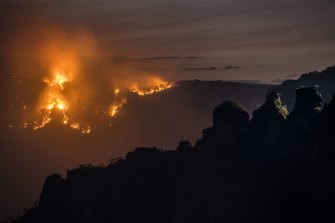
Due to the most recent global disaster, it’s easy for some to trivialise the events of Summer past but we must remember that the world watched in horror only a few months ago while our precious forests incinerated; taking with them an immeasurable number of animal lives.
The news of the loss of our unique landscapes and species resonated with tourists from home and abroad as people cancelled their bookings, flights and tours of Australia, afraid there wouldn’t be any natural places left to visit. Many people’s primary concern was the fate of Australia’s animal species.
The news of the loss of our unique landscapes and species resonated with tourists from home and abroad as people cancelled their bookings, flights and tours of Australia, afraid there wouldn’t be any natural places left to visit. Many people’s primary concern was the fate of Australia’s animal species.
My husband and I run an eco-retreat in north-central Victoria, far from the nearest fire ground, and even we experienced cancellations and loss of income due to this event which is now being exacerbated by recent COVID 19 restrictions.
Indeed, we promote our business by highlighting Victoria’s natural environment and in a typical year, host guests every single weekend who’s main objective is to be immersed in the natural environment. They all contribute to the local economy while they are here.
Indeed, we promote our business by highlighting Victoria’s natural environment and in a typical year, host guests every single weekend who’s main objective is to be immersed in the natural environment. They all contribute to the local economy while they are here.
Premier Andrews, in November your government made some enlightened and progressive announcements about phasing out logging in Victoria. Protections were given to some areas and hope was given to others. But that was before the bushfires and ‘phasing out’ seemed reasonable.
Now, with so little remaining unburnt forests, especially across the east of Victoria, a decision to continue logging seems ludicrous at best and irresponsible at worst.
We don’t even know yet, what lasting effect the bushfires will have on Victorian biodiversity and the affected ecosystems.
This announcement seems to be more a Liberal government directive than a Labour attitude and an incredible shame that the legacy of a Bob Hawke-style Labour government is not being defended.
We don’t even know yet, what lasting effect the bushfires will have on Victorian biodiversity and the affected ecosystems.
This announcement seems to be more a Liberal government directive than a Labour attitude and an incredible shame that the legacy of a Bob Hawke-style Labour government is not being defended.
I am deeply alarmed by the hypocrisy around your government’s attempts to protect native species affected by bushfires.
A recent statement by Environment Minister, Lily D’Ambrosio leads us to believe that all care is being given to help native species’ recovery.
“While we’re all working hard to slow the spread of coronavirus, it’s good to know our bushfire affected wildlife hasn’t been forgotten and resources are continuing to hit the ground.
The Federal Government has allocated $3 million for a range of projects that boosts the $17.5 million our Government is already investing and will help us continue supporting the recovery of the state’s wildlife and biodiversity through these tough economic times.
We’re partnering with Zoos Victoria to support the captive breeding aspects of population management and long-term resilience should they be needed in the wild. And with Greening Australia and the Royal Botanic Gardens Victoria for reseeding in key areas.”
How can we support wildlife recovery whilst simultaneously destroying its remaining areas of refuge?
We’re spending so much money on piecemeal solutions only to ignore the single most effective way to aid wildlife recovery - to leave it alone to recover naturally and to protect areas of intact, unburnt bushland.
Long term resilience in nature can only be achieved if we don’t interfere.
Indeed you could infer that the coronavirus is an indication of what happens when we do interfere with the natural balance.
Extracted from The Conversation article March 31 2020 - ‘
Coronavirus is a wake-up call: our war with the environment is leading to pandemics.
Coronavirus is a wake-up call: our war with the environment is leading to pandemics.
“The COVID-19 pandemic sweeping across the world is a crisis of our own making.
That’s the message from infectious disease and environmental health experts, and from those in planetary health – an emerging field connecting human health, civilisation and the natural systems on which they depend.
They might sound unrelated, but the COVID-19 crisis and the climate and biodiversity crises are deeply connected.
Each arises from our seeming unwillingness to respect the interdependence between ourselves, other animal species and the natural world more generally.
To put this into perspective, the vast majority (three out of every four) of new infectious diseases in people come from animals – from wildlife and from the livestock we keep in ever-larger numbers.”
Logging cannot be undertaken without upsetting the natural world, no matter how sensitive the technique and many more animals and species will lose their lives if this forestry agreement goes ahead.
Is this the legacy we want to to leave to our children who are already facing a grim future of economic gloom and climate catastrophe?
Premier Andrews, while we’re all working hard to slow the spread of coronavirus, the environment is breathing a sigh of relief.
Humans may be suffering right now but the environment is recovering.
It seems to me to be an excellent opportunity to contribute to that recovery by doing everything we can to ensure the state of the environment is as healthy as possible so that when we come out of this pandemic, we will have a tourism industry to fall back on and an intact environment from which to tackle the even bigger global disaster, climate change.