Showing posts with label geoengineering. Show all posts

23 October, 2018

Geoengineering technologies are the next challenge for climate change law and governance. These are proposals to counteract climate change by removing CO2 directly from the atmosphere, or by reflecting sunlight away from the earth to reduce global temperatures. These proposals may have an important role to play alongside traditional mitigation strategies to meet the Paris Agreement temperature targets. However, they present significant governance and ethical challenges. Public Panel: Geoengineering: The Next Frontier of Climate Change Policy?”

Geoengineering technologies are the next challenge for climate change law and governance. These are proposals to counteract climate change by removing CO2 directly from the atmosphere, or by reflecting sunlight away from the earth to reduce global temperatures. 


These proposals may have an important role to play alongside traditional mitigation strategies to meet the Paris Agreement temperature targets. However, they present significant governance and ethical challenges.


01 April, 2018

Learning about geoengineering

Climate geoengineering refers to large-scale schemes for intervention in the earth’s oceans, soils and atmosphere with the aim of reducing the effects of climate change, usually temporarily.


Learn more about what is happening and what is proposed from Geoengineering Monitor.

31 October, 2017

The Geoengineering Fallacy

Geoengineering technologies are not yet deployable globally, but support for them is advancing fast, thanks to backing by powerful advocates eager to start experiments. But no silver bullet for climate change exists, and we must not abandon proven methods for the sake of a promise that one will be found.

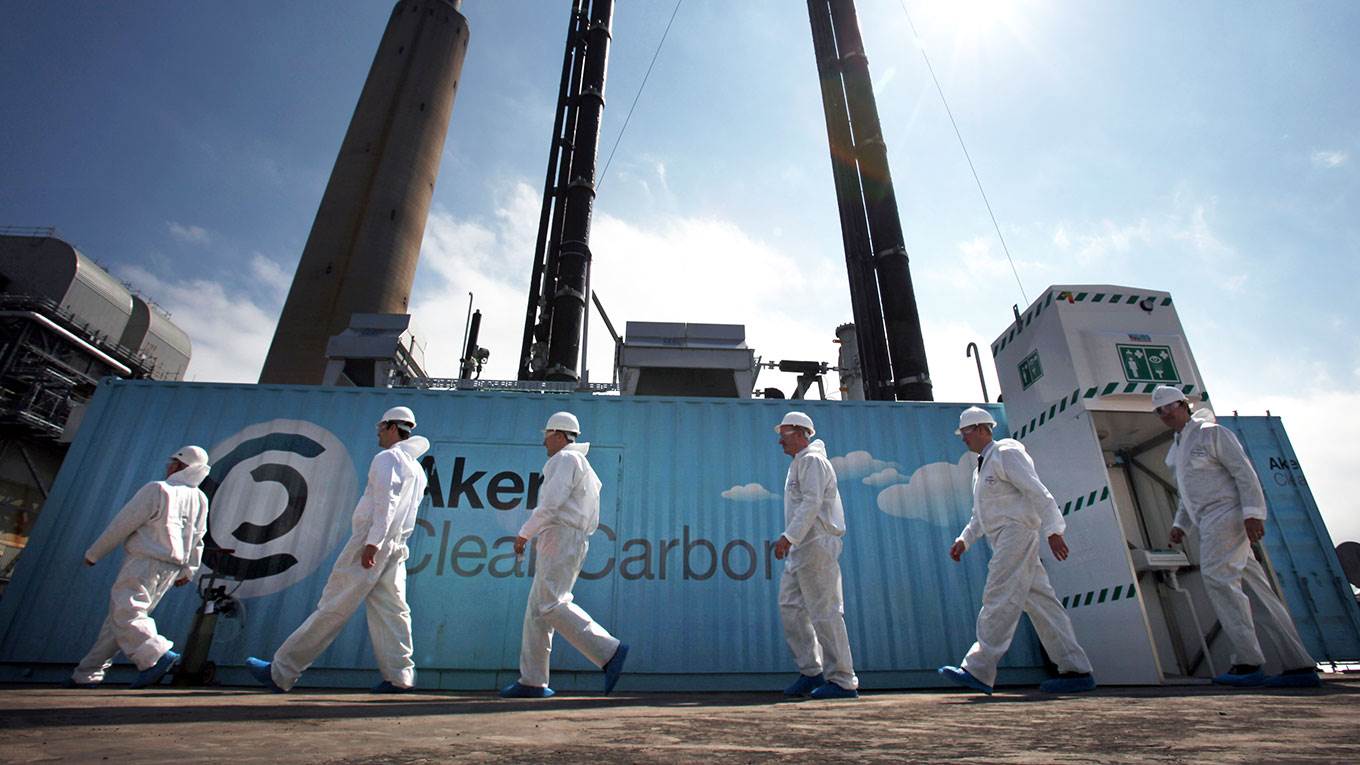
Scientists stand beside a new carbon capture test unit

BERLIN – As the world struggles to rein in emissions of climate-changing gases and limit planetary warming, a new technological silver bullet is gaining supporters. Geoengineering –the large-scale manipulation of the Earth’s natural systems – has been popularized as a means of counteracting the negative effects of climate change.

Proponents of this science feed the illusion that there is a way to engineer an exit from the climate crisis, meet the goals of the 2015 Paris climate agreement, and maintain a consumption-heavy lifestyle.


Read the Project Syndicate story by Barbara Unmüßig - “The Geoengineering Fallacy.”

13 May, 2017

Should we 'hack the climate' to fight global warming?

The Paris Agreements won't be enough to reverse global warming, whether President Trump pulls the US out or not.

Is it time to try altering the atmosphere by what's called "geoengineering?"

We hear about unintended consequences, international relations… and ethics.


26 April, 2017

Rules for Geoengineering the Planet

The 2015 Paris climate agreement was a major milestone, but the truth is, achieving its ambitious goal of keeping temperatures to within 1.5 °C to 2 °C of preindustrial levels would require rates of mitigation far in excess of what’s been achieved—or even what’s been planned.
Because of this, more people are contemplating geoengineering—notably solar radiation management, which involves reflecting a portion of the sun’s radiation back into space. The idea raises many questions. We don’t know how effective it would be, and we don’t fully understand its potential impacts. There are also ethical issues about its use and its governance.

We need to acknowledge that the aggregate environmental and socioeconomic risks of solar radiation management would probably be small in comparison with the benefits of reducing global temperatures. But those benefits and harms would be unequally spread among regions of the world, and between current and future generations.

Read the observations of Janos Pasztor on MIT Technology Review - “Rules for Geoengineering the Planet.”

28 April, 2016

The Royal Society helps us understand geoenmgineering

Questions about geoengineering were answered with the advice that Britain’s Royal Society would be a good place to begin research.

Dr Jolene Cook, who spoke recently event presented by Australian-German Climate and Energy College in collaboration with the EU Centre on Shared Complex Challenges and who had studied geoengineering, said study done by the society and subsequent reports provided a good foundation for inquiry into the matter.

Dr Cook spoke at the Carlton Connect Initiative’s LAB-14, which is a part of the University of Melbourne, and explored the role of science in climate policy.

A search for the Royal Society and reports on investigations into geoengineering turned up the report: “Geoengineering the climate: science, governance and uncertainty.”

In the forward to the 2009 report, the then President of the Royal Society,  Lord Rees of Ludlow OM, said:

The continuing rise in the atmospheric concentration of greenhouse gases, mainly caused by the burning of fossil fuels, is driving changes in the Earth’s climate. The long-term consequences will be exceedingly threatening, especially if nations continue ‘business as usual’ in the coming decades. Most nations now recognise the need to shift to low-carbon economy, and nothing should divert us from the main priority of reducing global greenhouse gas emissions. But if such reductions achieve too little, too late, there will surely be pressure to consider a ‘plan B’—to seek ways to counteract the climatic effects of greenhouse gas emissions by ‘geoengineering’.

Many proposals for geoengineering have already been made—but the subject is bedevilled by much doubt and confusion. Some schemes are manifestly far-fetched; others are more credible, and are being investigated by reputable scientists; some are being promoted over-optimistically. In this report, the Royal Society aims to provide an authoritative and balanced assessment of the main geoengineering options. Far more detailed study would be needed before any method could even be seriously considered for deployment on the requisite international scale. Moreover, it is already clear than none offers a ‘silver bullet’, and that some options are far more problematic than others.

This report is therefore offered as a clarification of the scientific and technical aspects of geoengineering, and as a contribution to debates on climate policy. The Society is grateful to all the members of the Working Group, and especially to John Shepherd, its chairman. We also acknowledge the valuable inputs from the Council’s review group, and the expert support, throughout the exercise, of the Society’s Science Policy team.

Read the Royal Society’s 2009 report – “Geoengineering the climate: science, governance and uncertainty.”

14 April, 2016

Learning something about the dangers of 'Plan B'

Geoengineering, it has been said is about the intentional manipulation of the planetary systems at a global scale with the aim of combatting climate change.

Taking to the planet
with a spanner.
It is often introduced as a “plan B”: an alternative solution in case “plan A”, reducing emissions, fails.

This framing is typically deployed as part of an argument that research and development is necessary in case robust conventional mitigation is not forthcoming, or proves insufficient to prevent dangerous climate impacts. Though sometimes used to refer to geoengineering as a whole, the plan B framing is associated particularly strongly with stratospheric sulfate injection (SSI) techniques.

Teaching Fellow and Online Learning Specialist with Leeds University, Dr Joe Saunders, says: “We argue that the plan B framing oversimplifies a complex issue in a misleading and deceptive way.

“For instance, it highlights extreme positions, presents SSI as an alternative independent from mainstream policies, ignores the multiplicity of options available, and neglects threats of morally indecent SSI in a context of ongoing political inertia.

“We are particularly concerned about the way ‘Plan B’ risks conveying an implicit hyper-optimism about SSI, and so obscures the need for ethical standards. One upshot of our analysis is that rather than a comparative assessment of mitigation and geoengineering, we should encourage a more integrative approach,” he said.

Read about the University of Leeds online seminar - “Stephen Gardiner - Why Geoengineering is Not ‘Plan B’,” and registration for the event is through Dr Saunders.

Considering SRM to control anthropogenic greenhouse gas emissions

Solar radiation management (SRM) has been proposed as a form of geoengineering to reduce the climate effects of anthropogenic greenhouse gas emissions.

Modelling studies have concluded that SRM, through a reduction in total solar irradiance by approximately 2%, roughly compensates for global mean temperature changes from a doubling of carbon dioxide concentrations.

This paper examines the impact of SRM on the terrestrial hydrologic cycle using the Community Land Model, version 4, coupled to the Community Atmosphere Model, version 4, with reductions in solar radiation relative to simulations with present-day and elevated CO2 concentrations. There are significant global and regional impacts due to vegetation–climate interactions that are not compensated when reductions in total solar irradiance of 1%, 2%, and 3% are imposed on top of a doubling of present-day CO2 concentrations.


(Any form of intentional geoengineering of our planet is indicative of systemic failure by humanity. Surely we are intelligent enough to see the damage we are doing, understand the cause, recognize why it is happening, and subsequently change our behaviour without resorting to a technology or process that could have an even more damaging unintended consequence – Robert McLean.)

09 April, 2016

Paris climate agreement may force geoengioneering move

Geoengineering may have to move from the fringes of the climate debate towards the mainstream if the world is to meet the climate targets included in the Paris Climate Agreement, say some policy analysts and scientists.

At the rate that the world is burning coal, gas and oil, even rapid adoption of low carbon technologies might not keep warming within 1.5C, while the 2C target, also included in the agreement, looks even further out of reach.    

But geoengineering is dangerous stuff – it involves countering climate change by manipulating the planet’s weather without being able to guarantee or calibrate the outcomes. Even leading researchers who spend their lives working on the concept acknowledge that these technologies could have huge unintended, and harmful, consequences.


(Man, it could be argued has been party to geoengineering ever since he/she first began to plod about the planet.

True or not, the human influence on the world’s weather became influential and measurable with the advent of the Industrial Revolution in the 18th Century and in recent decades that change has become noticeable, even for the doubters, with extreme weather events around the world.

It’s human behaviour, primarily our voracious appetite for fossil-fuel created energy, that has worsened the damage inflicted on Earth’s climate system and now the technophiles among us are clamouring for us to innovate our way out of this dilemma using geoengineering.

However, as Olivia Boyd points out in the China Dialogue story “geoengineering is dangerous stuff”; dangerous for it may well bring unintended consequences leaving the Earth or at least humanity, in a situation far worse than that now unfolding – Robert McLean.)

19 March, 2016

We can't agree on simple matters, but some are ready to bet the planet on untried and untested technology

Clive Hamilton, who questions
geoengineering, talks
talks with an audience member
after Thursday night's
Melbourne 'conversation'.
The world community cannot agree on relatively simple matters and yet many are arguing for planet-wide cooperation to introduce some form of geoengineering that will not succeed unless there is hitherto unseen international teamwork.

Further complicating the equation are the unknown and unintended consequences of ideas that can only be trialled on such massive scales that Earth could be tipped into a catastrophic change in climate paradigms beyond our control.

Geoengineering pundits argue climate change has reached such dire levels that to sit on our hands and do nought is worse than foolhardy, it’s simply irresponsible and denies our humanity.

Many are not arguing for a “sit on our hands” approach, rather they are saying we should switch immediately (and that is today!) to renewable energy and equally quickly change our consumptive behaviours to reduce fossil fuel energy needs to zero and slow, seriously our extraction from the earth of various resources.

It was just on Thursday night that Australian author and a Professor of Public Ethics at the Centre for Applied Philosophy and Public Ethics, a joint centre of Charles Sturt University and the University of Melbourne, Clive Hamilton, noted that those corporations which had long denied climate change could see profits for them in geoengineering and where putting forward proposals for such an idea.

Geoengineering pundits stand with the “builders”, those who like to do something that they see as practical while those with differing opinions are more interesting in fine-tuning, finessing what exists, making it work more efficiently, more sustainably, and as was the case in those times of depression, making do with less.

Paul Beckwith, in saying “Why WE MUST a) cool the Arctic, b) lower CO2 levels” argues we have run out of time on climate change.

“All heck is breaking badly. We must zero fossil fuel emissions, but this is not enough to restore climate stability.”

In this YouTube clip, he says: “I discuss why and how we will cool the Arctic, and why and how we will remove carbon dioxide from the atmosphere and/or oceans. There is no other option. If you are against this then do not understand how severe abrupt climate change is, and what it will cost us.”

09 August, 2015

Extreme to piddling proposals no value unless we reduce our emissions


P

roposals ranging from extreme to piddling in impact will be of no consequence unless we substantially reduce our carbon dioxide emissions.

Inside Climate News reports: ”Waiting to tackle ocean acidification caused by climate change through yet-to-be developed geoengineering schemes will be too little too late to prevent mass extinction of ocean life, a new study concludes.

“Cutting carbon emissions is the only way for oceans to recover from the devastating effects of climate change, according to the new research published in Nature Climate Change.”

12 February, 2015

Renewable energy safe 'known' compared to geoengineering 'unknown'


Donald Rumsfeld wasn’t talking about climate change when he referred to “known knowns” or “unknown unknowns”, but he could have been.

The former U.S. Secretary of Defence was confusing and distracting listeners when talking about weapons of mass destruction in Iraq.

He said in 2002 “There are known knowns. These are things we know that we know. There are known unknowns. That is to say, there are things that we know we don't know. But there are also unknown unknowns. There are things we don't know we don't know.”

The conversation around climate change is equally confusing and achieves “lift-off” when it wanders into geoengineering, a dynamic loaded with “known knowns” and “unknown unknowns”.

Climate Spectator has bravely ventured into this risky space with its story: “Renewables still better than 'risky' geoengineering” pointing out that the known realities of renewable energy and vastly better than the “unknown unknowns” of geoengineering.