Showing posts with label human-induced. Show all posts

25 April, 2020

There are 10 catastrophic threats facing humans right now, and coronavirus is only one of them

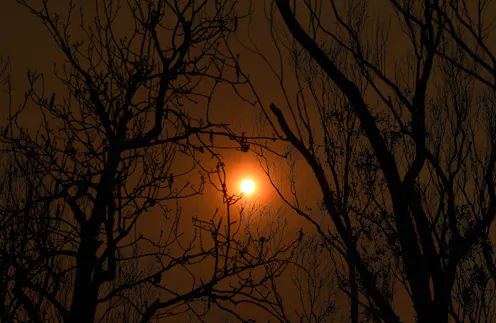
Four months in, this year has already been a remarkable showcase for existential and catastrophic risk. A severe drought, devastating bushfires, hazardous smoke, towns running dry – these events all demonstrate the consequences of human-induced climate change. 
There are 10 catastrophic threats facing humans right now, and ...

While the above may seem like isolated threats, they are parts of a larger puzzle of which the pieces are all interconnected. A report titled Surviving and Thriving in the 21st Century, published today by the Commission for the Human Future, has isolated ten potentially catastrophic threats to human survival. 
Not prioritised over one another, these risks are:
  1. decline of natural resources, particularly water
  2. collapse of ecosystems and loss of biodiversity
  3. human population growth beyond Earth’s carrying capacity
  4. global warming and human-induced climate change
  5. chemical pollution of the Earth system, including the atmosphere and oceans
  6. rising food insecurity and failing nutritional quality
  7. nuclear weapons and other weapons of mass destruction
  8. pandemics of new and untreatable disease
  9. the advent of powerful, uncontrolled new technology 
  10. national and global failure to understand and act preventatively on these risks.

24 September, 2017

Hostage to myopic self-interest: climate science is watered down under political scrutiny

Three decades ago when serious debate on human-induced climate change began globally, a great deal of statesmanship was on display. A preparedness to recognise that this was an issue which transcended nation states, ideologies and political parties. An issue which had to be addressed proactively in the long-term interests of humanity, even if the existential nature of climate risk was far less clear cut than it is today.

‘In the magical thinking of Australian policymakers, a pathway
 of gradual change, constructed over many decades in a
growing, prosperous, coal-fired world stretches enticingly before us.’
Then, as global institutions were put in place to take up this challenge and the extent of change this would impose on the fossil-fuel dominated world became more obvious, the forces of resistance mobilised. Today, despite the diplomatic triumph of the Paris climate agreement, debate around climate change policy has never been more dysfunctional, indeed Orwellian, particularly in Australia.

In his book Nineteen Eighty-Four, George Orwell describes a double-speak totalitarian state where most of the population accepts “the most flagrant violations of reality, because they never fully grasped the enormity of what was demanded of them, and were not sufficiently interested in public events to notice what was happening. By lack of understanding they remained sane.”

Orwell could have been writing about climate change and policymaking.


15 September, 2017

Hostage to myopic self-interest: climate science is watered down under political scrutiny

Three decades ago when serious debate on human-induced climate change began globally, a great deal of statesmanship was on display. A preparedness to recognise that this was an issue which transcended nation states, ideologies and political parties. An issue which had to be addressed proactively in the long-term interests of humanity, even if the existential nature of climate risk was far less clear cut than it is today.
‘In the magical thinking of Australian policymakers, a
 pathway of gradual change, constructed over many
decades in a growing, prosperous, coal-fired
world stretches enticingly before us.’ 
Then, as global institutions were put in place to take up this challenge and the extent of change this would impose on the fossil-fuel dominated world became more obvious, the forces of resistance mobilised. Today, despite the diplomatic triumph of the Paris climate agreement, debate around climate change policy has never been more dysfunctional, indeed Orwellian, particularly in Australia.


01 November, 2016

The Attribution Question

“Did climate change have anything to do with this?”

Often in the wake of an extreme weather event, the “attribution question” gets asked. Did human-induced global warming play a role in the heat wave, rainstorms or drought?

Scientists are now able to answer this for many types of extremes. But the answer may vary depending on how the question is framed.

Read the World Weather Attribution story - “The Attribution Question.”

19 October, 2016

Climate change has doubled Western U.S. forest fires

Forest fire in the Rocky Mountains.
A new study says that human-induced climate change has doubled the area affected by forest fires in the U.S. West over the last 30 years.

According to the study, since 1984 heightened temperatures and resulting aridity have caused fires to spread across an additional 16,000 square miles than they otherwise would have -- an area larger than the states of Massachusetts and Connecticut combined.

The authors warn that further warming will increase fire exponentially in coming decades. The study appears in the journal Proceedings of the National Academy of Sciences.

"No matter how hard we try, the fires are going to keep getting bigger, and the reason is really clear," said study coauthor Park Williams, a bioclimatologist at Columbia University's Lamont-Doherty Earth Observatory. "Climate is really running the show in terms of what burns. We should be getting ready for bigger fire years than those familiar to previous generations."

Read the Science News story - “Climate change has doubled Western U.S. forest fires.”

20 August, 2016

Feeling financially the impact of climate change

A man brings French baguettes to his
 mother's flooded house in
Chalette-sur-Loing Montargis, near
 Orleans, France on June 1, 2016.
Many argue that climate change will not be understood or accepted by many until they begin to feel its impact financially.

Well, whether we can personally see it or not, financially feel it or not, the world it paying dearly for what is a human-induced difficulty.

Some of the costs the world community are incurring are obvious natural disasters (some do argue, however, that some of those “natural disasters” are brought on by human activities), but human-induced climate change bears responsibility for many clearly identifiable and human-induced .

22 April, 2016

Climate change a threat to human health

Climate change is a significant threat to the health of the American people.


The impacts of human-induced climate change are increasing nationwide. Rising greenhouse gas concentrations result in increases in temperature, changes in precipitation, increases in the frequency and intensity of some extreme weather events, and rising sea levels.

These climate change impacts endanger our health by affecting our food and water sources, the air we breathe, the weather we experience, and our interactions with the built and natural environments. As the climate continues to change, the risks to human health continue to grow.

29 November, 2012

It is not 'what you know' rather 'who you are'


Ben Newell.
Human-induced climate change is clearly a reality and equally clearly proved by the science of climatology, but according to Ben Newell it not so much “what you know”, rather “who you are” when it comes to making up your mind.

The associate professor of cognitive psychology at the University of New South Wales has explored the complications of the climate conversation in a story on The Conversation headed: “Science alone won’t change climate opinions, but it matters”.