Showing posts with label burned. Show all posts

21 December, 2019

Australia fires: The huge economic cost of Australia's bushfires

Australia is facing a massive bill from unprecedented, deadly fires that have burned an area bigger than Belgium.
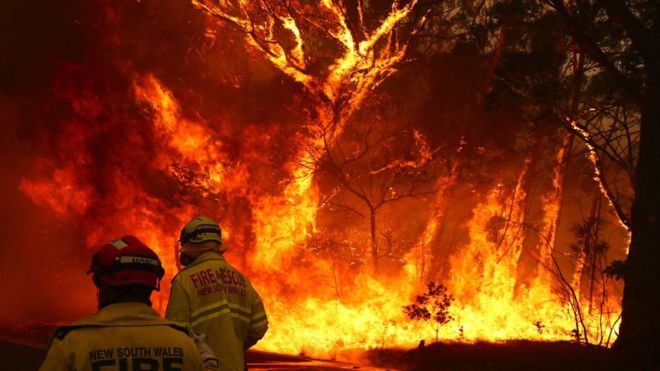
Fire fighters in front of a bushfire
It's time the government started talking
about the cost of the bushfires,
Insurers have received claims worth A$240m (£126m ; $165m) since October, and they expect the number will grow significantly.

Medical bills from the fires and smoke haze could also run into the hundreds of millions.
And one analysis suggests disruptions caused by the fire and smoke haze could cost Sydney as much as A$50m a day.

The bushfires have killed eight people and destroyed 700 homes.

There appears to be no reprieve in sight, as temperatures are expected to hit 40C on the weekend, stoking fears of more fires.

The director of the Fire Centre Research Hub at the University of Tasmania, Prof David Bowman, has labelled them "absolutely transformative and unprecedented" and said they underscored a need for governments to rethink how they approach fires.


Read the BBC News story by Tim McDonald - “Australia fires: The huge economic cost of Australia's bushfires.”

06 June, 2019

Nuclear power is not the answer in a time of climate change

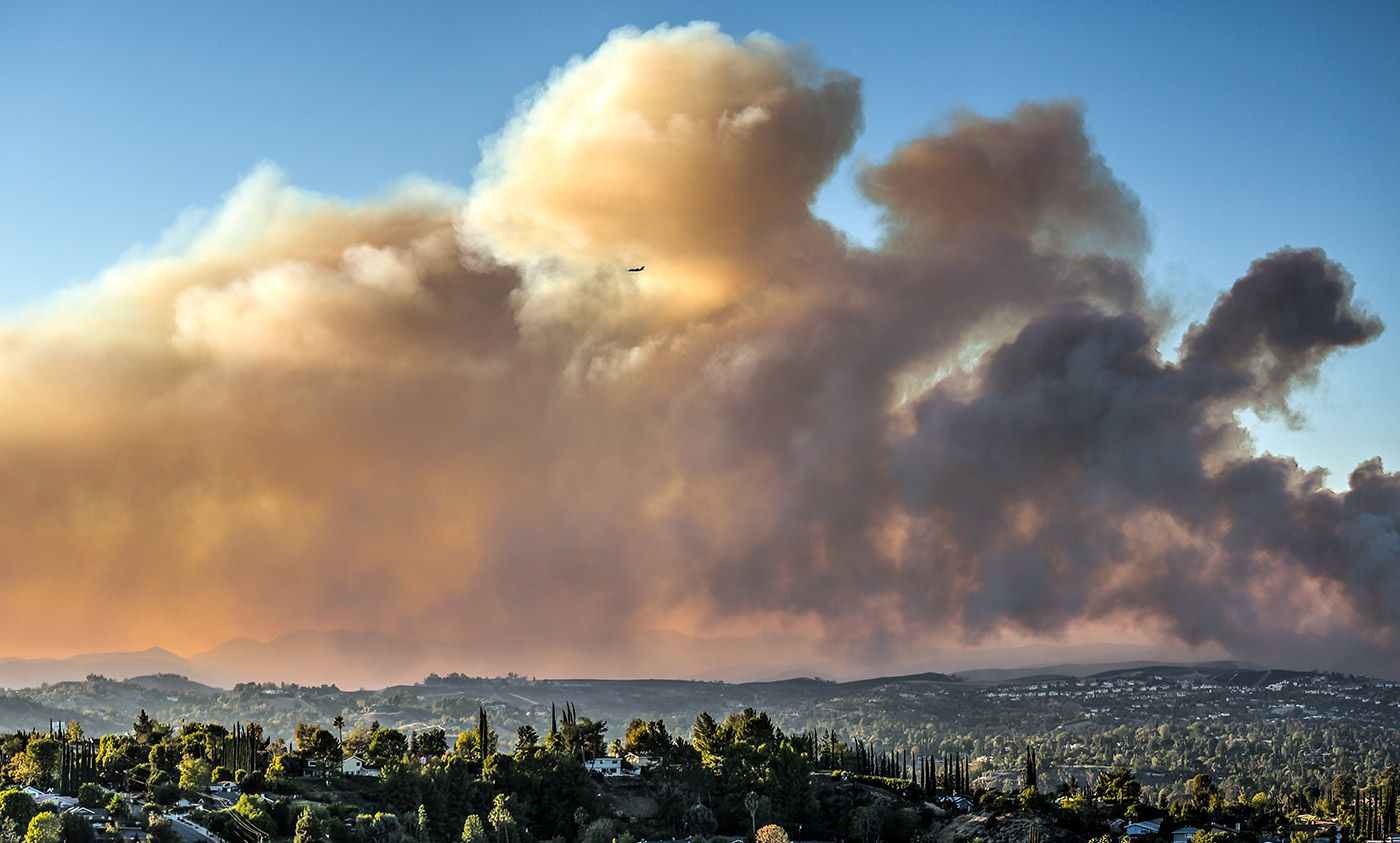
In November 2018, the Woolsey Fire scorched nearly 100,000 acres of Los Angeles and Ventura counties, destroying forests, fields and more than 1,500 structures, and forcing the evacuation of nearly 300,000 people over 14 days. It burned so viciously that it seared a scar into the land that’s visible from space. Investigators determined that the Woolsey Fire began at the Santa Susana Field Laboratory, a nuclear research property contaminated by a partial meltdown in 1959 of its failed Sodium Reactor Experiment, as well as rocket tests and regular releases of radiation.
<p>The Woolsey Fire seen from Topanga Canyon in California. <em>Photo courtesy of Peter Buschmann/USDA/Flickr</em></p>
The Woolsey Fire seen from Topanga Canyon in California.
The State of California’s Department of Toxic Substances Control (DTSC) reports that its air, ash and soil tests conducted on the property after the fire show no release of radiation beyond baseline for the contaminated site. But the DTSC report lacks sufficient information, according to the Bulletin of Atomic Scientists. It includes ‘few actual measurements’ of the smoke from the fire, and the data raises alarms. Research on Chernobyl in Ukraine following wildfires in 2015 shows clear release of radiation from the old nuclear power plant, calling into question the quality of DTSC’s tests. What’s more, scientists such as Nikolaos Evangeliou, who studies radiation releases from wildfires at the Norwegian Institute for Air Research, point out that the same hot, dry and windy conditions exacerbating the Woolsey Fire (all related to human-caused global warming) are a precursor to future climate-related radioactive releases.

Read the Aeon story by Heidi Hutner and Erica Cirino - “Nuclear power is not the answer in a time of climate change.”

02 January, 2019

Campers evacuated as fire in south-west Tasmania brings smoke to Hobart

A fire in Tasmania's south-west wilderness has burned through more than 2,500 hectares and forced the evacuation of bushwalkers in the area, as the state is warned to brace for a scorcher on Friday.
Traveller Teagan Fone-Stephenson snapped this
 photo of the Gell River fire from the helicopter.
Two separate fires, both started by lightning last Friday, joined together and are burning at Gell River, approximately 6 kilometres north-west of Lake Rhona, the Tasmania Fire Service said.

Parks and Wildlife personnel, supported by waterbombing aircraft, are working to contain the fire.

Leah Soo and two friends were camped at Lake Rhona on Friday and saw the fire on their way to a nearby peak.


Read the ABC News story by Ellen Coulter and Lucy MacDonald - “Campers evacuated as fire in south-west Tasmania brings smoke to Hobart.”

06 August, 2018

As wildfires rage, California frets over a future of greater perils and higher costs

REDDING, Calif. — The wildfire here that has burned with speed and efficiency through neighborhoods, jumped the wide Sacramento River and killed a half-dozen residents and firefighters, has turned yet another place into a harbinger of what the future holds for this state.


The neighborhoods along the Trinity Highway were tucked among Douglas firs, oaks and eucalyptus, among the nearly 2 million homes statewide that — after years of permissive development in California — sit amid lovely and hazardous tinder.

Now some of them are ashes, only brick chimneys rising from charred foundations. The Carr Fire has burned more than 1,000 houses to the ground.


Read the story by Scott Wilson from The Washington Post - “As wildfires rage, California frets over a future of greater perils and higher costs.”

30 March, 2018

Could incinerators reduce our waste glut and generate clean energy?

With its acrid, billowing black smoke that caused scratchy throats and eyes as rubbish burned in the grate, the old backyard incinerator has become a relic.
How a waste to energy plant proposed for Melbourne's western
suburbs by upper house Labor MP Cesar Melhem could look.
But could a similar process, albeit on a much larger scale, be an environmentally friendly solution to both our glut of waste and problems with our energy supply?

It’s an idea that’s gaining traction in Australia at various levels of government – although not everyone agrees.

As councils wrestle with increasing amounts of waste going to landfill after China restricted the importation of recyclables, and state and federal ministers feud over energy supplies, a solution to both these vexed issues can’t come quickly enough.
Read Debbie Cuthbertson’s story in The Age - “Could incinerators reduce our waste glut and generate clean energy?

15 October, 2017

How climate change and ‘smoke taint’ could kill Napa wine

NICK GOLDSCHMIDT HAS been lucky so far. A wildfire has burned more than 8,000 acres just north of his vineyards in Geyserville, California, but so far his vines are OK. So is his house in Healdsburg, roughly midway between Geyserville and a 36,000-acre fire that destroyed more than 2,800 homes in Santa Rosa.
A vineyard on Napa's Silverado Trail is seen next
to land charred by the Atlas Fire on October 11,
 2017 in Napa, CA.
But now, amid the charred, empty spaces that scar northern California’s winegrowing region, under skies yellowed by smoke, Goldschmidt has a race to win. Wildfires can ruin the flavor of wine grapes, a problem called smoke taint. “I’ve worked with smoke before,” Goldschmidt says. “It is not an easy thing to fix. But in my experience, it’s more about contact time. So the key thing is, if you have vineyards near the fire, you’ve got to get the grapes off.”

Depending on wind, smoke from the Atlas Fire could potentially reach Goldschmidt’s Napa vineyard, where about 15 percent of the fruit remains to be harvested. He now plans to harvest the rest by the weekend.


Read the Wired story by Adam Rogers - “How climate change and ‘smoke taint’ could kill Napa wine.”