Showing posts with label Unfortunately. Show all posts

04 August, 2019

‘Both sides' of the climate change debate? How bad we think it is, and how bad it really is

Over the past couple of weeks things have been happening on the climate change front but, unfortunately, little is changing in parliament, where the government’s direct action policy has continued to be an utter failure and a Queensland LNP MP suggested in his first speech in the House of Representatives that schools should teach both sides of the climate change debate in school – to prevent them being “brainwashed with extreme left or right ideologies”.
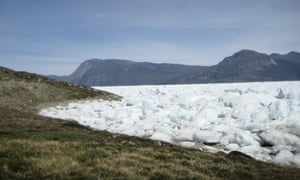
An image taken on 18 June 2019 of the Kangersuneq glacial ice fields in Kapissisillit, Greenland.
‘All efforts at the moment are assuming if
we reduce emissions by 45% by 2030 we
can limit warming to 1.5C. That might now
be rather too optimistic.’
Last week came news that BHP was going to spend US$400m over five years on a “climate investment program to develop technologies to reduce emissions from its own operations as well as those generated from the use of its resources”.

Its CEO, Andrew Mackenzie, stated in a speech in London, “Society’s combustion of fossil fuels and industrial processes like steelmaking and agriculture have released greenhouse gases at rates much faster than at any other time in the geological past.”


25 May, 2019

Australia is a global leader in species extinctions.

Australia is unfortunately a global leader when it comes to extinction, with 29 mammal species becoming extinct since the arrival of Europeans — that's a third of the world's total mammal extinctions in that time.
Australia is a global leader with regard to the extinction of its mammal species.
Now scientists say a further 1,800 species are at risk of extinction from a range of threats.

Martine Maron, a Professor in the University of Queensland's school of Earth and Environmental Sciences, told PM that the biggest threat to species in Australia are habitat destruction, over-extraction and introduce species.


13 February, 2019

Australia won’t meet the Paris targets despite what recent research claims.

The Australian National University has been making headlines for its analysis that, with the current rate of renewable energy growth, Australia will achieve its Paris agreement targets five years early – by 2025. Unfortunately, after a careful review, we find their analysis doesn’t stack up.
The government's policies are aimed at slowing renewable energy rollout.
The ANU briefing note has surprised, if not shocked, many in the expert and analytical community with detailed knowledge of Australia’s climate and energy policy.

Numerous international and national efforts to examine Australia’s climate and energy policy have all concluded that the government will not reach, on present policy settings, the 26-28% reduction from 2005 levels by 2030 it has put forward under the Paris agreement.

Read the story from The Guardian by Bill Hare - “Australia won’t meet the Paris targets despite what recent research claims.

(Lead author of the ANU report, David Balkers, discusses his work on the "Climate Conversations" podcast - Robert McLean)

12 April, 2018

Australia’s 2017 environment scorecard: like a broken record, high temperatures further stress our ecosystems.

While rainfall conditions were generally good across Australia in 2017, record-breaking temperatures stressed our ecosystems on land and sea, according to our annual environmental scorecard. Unfortunately, it looks like those records will be broken again next year – and again in the years after that.
Indicators of Australia’s environment in 2017 compared to the
 previous year. Similar to national economic indicators
they provide a summary, but also hide regional variations,
complex interactions and long-term context.
Our terrestrial environment has done relatively well in 2017, mainly thanks to good rainfall and leftover soil moisture from the year before. However, such a short summary for a country the size of a continent is bound to hide large regional differences. 2017 was no exception.

Western Australia and the Northern Territory received good rains, with vegetation growth, river flows and wetland area all coming in above average. By contrast, Queensland and particularly New South Wales saw a reversal of the previous year’s gains.